India-UK FTA: A win for whisky lovers?
- Featured Spirits
 Staff Writer
- 17 minutes read

By Geetika Sachdev
With the India-UK Free Trade Agreement (FTA) announcing a reduction in import duties across categories, including Scotch, there’s a wave of joy among the spirit drinkers. How does it pan out for international players and do homegrown brands stand to lose?
Black Label, Johnnie Walker or The Glenlivet–these are a few British whiskies that Indians have always had a ‘soft spot’ for. For generations, scotch has been an aspirational drink for Indians – a marker of good taste, class and culture. As per data shared by global agency International Wine and Spirits Research (IWSR) in 2023, nearly two-thirds of the spirits sales in India is dominated by whisky.
Besides, scotch consumption in India, says the Scotch Whisky Association (SWA), has grown 200% over the last decade. In 2023, the country surpassed France as the world’s biggest buyer of the spirit by volume.
While expensive single malts are beginning to find favour among a larger population, blended whisky continues to be the preferred choice – owing to its affordable price point. Things are likely to change, with the signing of the India-UK Free Trade Agreement (FTA). A landmark moment in furthering bilateral ties, the trade deal will ensure comprehensive market access for goods, across all sectors, covering all of India’s export interests, reads a note by the Press Information Bureau (PIB).
Under the deal, duties on gin and imported whisky will dramatically reduce from 150% to 40% over a ten-year period, bringing down the cost of whisky brands in India. “The UK-India free trade agreement is a once in a generation deal and a landmark moment for Scotch whisky to the world’s largest whisky market,” reads an official statement by Mark Kent, Chief Executive of the SWA.
Interestingly, the shares of Allied Blenders and Distillers (ABDL), the maker of Officer’s Choice whisky, rose by over 30% in eight trading sessions (despite a 2% decline), reported a media publication.
In a press statement, Alok Gupta, MD of ABDL shared, “Our export into India with duty payable is about Rs 150 crore. Once this new tariff comes into place, we expect about Rs 75 crore of duty release or lower cost of goods,” he said. Besides, the company is all set to boost investments, with the board approving a 1,000 crore fundraising plan. They also have another malt manufacturing setup on the cards in Telangana.
A welcome change
While the agreement has been publicly announced, many brands may choose not to immediately reduce retail prices, driven by two strategic objectives, mentions Hemanth Rao, Founder and Chief Whisky Officer Single Malt Amateur Club (SMAC) India. “One is to preserve or enhance profit margins in a price-sensitive market; and two, to reinvest those margins into expanding their portfolio, allowing mainstay expressions to carry the commercial weight while enabling niche and premium labels to find space on Indian shelves,” he adds.
Nonetheless, scotch is finally set to become more aligned with international pricing, which is a welcome change. For far too long, India has been paying an unnecessarily inflated premium to enjoy fine spirits from abroad, points out Mumbai-based F&B writer and a hospitality consultant, Nikhil P.Merchant. “India is one of the leading global consumers of Scotch whisky. But it’s worth noting that those consumption numbers are also driven by our vast population and the ready availability of mass-market whiskies,” said Merchant.

A broader perspective
From a macro lens, it is a strategic win for Scotch whisky as a category. Production is currently at an all-time high, while key markets like the UK and EU have either stagnated or contracted in recent years. “The US has faced setbacks with punitive tariffs. In contrast, India continues to show healthy growth in whisky consumption, making it a critical market for expansion,” Rao notes. In a nutshell, it will help shrink the price gap between entry-level and mid-tier Scotch, making it a more attractive proposition for aspirational consumers.
“For luxury expressions, the drop could encourage broader trial and repeat purchase, ultimately boosting consumption in the segment,” highlighted Angad Singh Gandhi, Founder of boutique alco-bev consulting firm, Drams with Drama.
Calling the India-UK FTA a ‘transformative moment’ for the Indian spirits industry, Ipsita Das, Managing Director, Moët Hennessy India (LVMH) said India has always shown immense curiosity and appreciation for premium spirits. But prohibitive pricing has been a barrier to wider consumption. “This shift reinforces our commitment to growing the category by enhancing consumer access and deepening engagement through curated experiences that highlight the craftsmanship, legacy, and distinct character of brands like Glenmorangie,” she adds.

With the reduction in import duties, Das foresees a significant uptick in demand—not just in metropolitan cities, but across emerging markets as well.
Greater access to independent brands
This move is likely to bring greater visibility for boutique Scotch labels, lesser-known single malts, and even newer expressions from established players like Gordon & MacPhail, Compass Box or BenRiach. “It could also give newer or independent distilleries, especially those producing in smaller volumes, the confidence to enter the Indian market,” shares Gandhi. Rao agrees. He believes the trade deal is likely to spark an exploratory phase, where many small-scale Scotch producers assess the Indian opportunity.
But success won’t come overnight — India’s fragmented state-wise excise regulations, complex logistics, and licensing frameworks demand time, guidance, and patience. “Profitability in India hinges on scale. While we will see more independent bottlers testing the waters, it’s the blended Scotch segment — with its higher volumes and broader consumer base — that may experience the most noticeable shift,” Rao predicts.
A double edged sword?
While the FTA brings potential benefits in the form of cheaper raw material imports, not all inputs will see meaningful impact. For instance, most Indian manufacturers already use six-row Indian barley, which remains a viable and cost-effective option, says Rao. “However, the reduced cost of importing peat and high-quality casks could aid in improving maturation strategies and flavour development,” he explains.

In the short term, Indian single malt manufacturers may stand to lose. Over the past few years, homegrown brands have made significant inroads into the single malt segment, even outpacing Scotch in some consumer preferences — a clear indicator of changing tastes.
If the reduced import duty is passed on to consumers, it could reverse this momentum by making imported Scotch more price-accessible. That said, the broader whisky market in India — dominated by standard blended or IMFL whiskies — may not be significantly affected. This situation would be advantageous only to the distillers who order blended scotch or blended malt scotch in bulk because the cost of incorporating these scotch into Indian products would reduce substantially.
“It will definitely adversely affect the Indian distillers, who have been at the forefront of creating direct jobs by distilling more malt whiskies in house vs importing them,” believes Rao. “A lot of direct and indirect jobs will be adversely affected as it disincentives manufacturing in India and will push distillers to buy finished products directly from scotch manufacturers.”
Long road ahead
As for Indian manufacturers entering the UK market — that’s a long game. While the FTA opens doors, building reputation and securing shelf space in competitive markets takes sustained effort. “Only a few Indian brands currently have the advantage of an established distribution network in the UK, and the highly sought-after supermarket shelf space remains elusive for most,” highlights Rao.
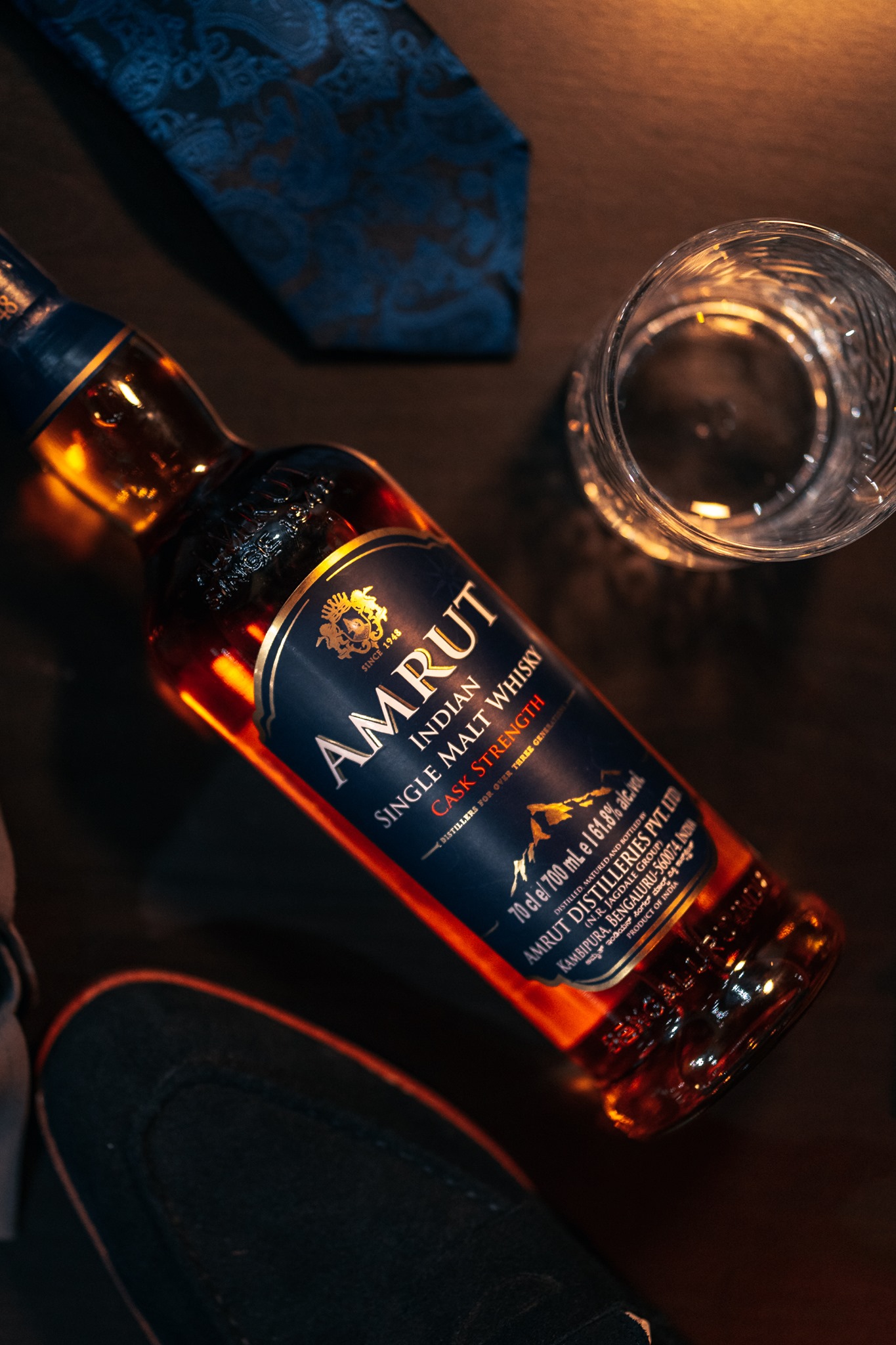
However, Rakshit Jagdale, Managing Director of Amrut Distilleries begs to differ. He highlights how a recent proposal from the company to impose a minimum import cost on these scotch whiskies was rejected. “As a result, the whisky industry is going to be affected by the low-cost scotches that would be introduced in huge numbers in India. This would highly affect the premium and super premium IMFL spirits in terms of market share and positioning, “ he shares.

Others are of the view that it is both an opportunity and a wake-up call for Indian players. Indian single malts and premium IMFLs both will face intensified competition from imported Scotch, now with a narrower price gap. “Retailers, bars and consumers may prioritise international brands with stronger marketing budgets and global appeal. But it will also be advantageous for Indian whisky brands to lower their Ex-Distillery Price and hence Maximum Retail Price. Indian brands will be compelled to level up product quality, packaging, and storytelling to stay competitive,” says Paritosh Bhandari Advisor, 55°North whisky (Three Brothers Distillery).
As international brands seek deeper market penetration, collaborations and joint ventures with Indian players could become more common, Merchant opines. “This could lead to knowledge transfer, investment, and an uplift of the entire ecosystem. And let’s not forget—trade liberalisation works both ways. Lower tariffs could eventually make it easier for Indian spirits to access UK and EU markets as well. To me, this looks like a win-win,” he shares.
Opening doors ahead
This move is a much-needed and strategic step forward — it opens up possibilities in a market that has long been restrained by prohibitive import duties. The FTA offers Scotch producers a compelling reason to refocus on India, and for Indian consumers, it marks the beginning of wider access to a richer diversity of brands. “However, success is far from guaranteed. Much depends on how brands adapt their strategies to India’s complex tax structure, fragmented regulations, and high entry costs,” says Rao.
Much also depends on how the FTA provisions are implemented, especially on the export side for Indian whisky to the UK. For instance, clarity is still awaited on whether regulatory barriers—such as minimum maturation requirements—will be adjusted to genuinely improve market access for Indian producers. “That said, this agreement does set the stage for a more vibrant, competitive, and consumer-friendly alcobev landscape in India. If supported by smart execution and policy alignment, it can catalyse long-term value creation for producers, trade, and consumers alike,” says Ankur Sachdeva, CEO and Co-founder of Uppal Brewers and Distilleries.

The FTA also remains silent on other alcoholic beverages from the UK other than Scotch and gin. Apart from the above stated benefits (or challenges), there’s more needed. “There should be focus on state-level taxation reforms, careful opening up of the alco-bev sector to the media (currently being a media-dark industry) and improvement in retail formats as well as proper education to consumers/drinkers at large,” says Bhandari.
Price parity may remain elusive in the short term, and whether consumers truly benefit at the retail level will vary brand-to-brand, and state-to-state. A significant portion of the opportunity also hinges on consistent and fair implementation of the tariff reduction roadmap over the coming years. “One of the most immediate impacts will likely be felt by duty-free stores — historically the go-to source for Indians looking to buy Scotch at better prices. But duty-free retail isn’t cheap either,” Rao adds.
Behind the scenes, brands pay hefty development fees for display visibility, shelf presence, and promotional placement at airports. In comparison, domestic retail outlets, especially in places like Gurugram with its competitive L1 stores, have started to match or even outprice duty-free on certain expressions.
It’s currently more of a wait and watch game, which will determine if the Indian whisky market is at an advantage. Until then, let’s raise a toast to bright prospects!
Read our whisky issue here.