The FTA Shake-Up & Its Impact on India’s Luxury Sector
- Featured News
 Yashita Damani
- 23 minutes read

In a landmark series of negotiations in 2026, India and the EU signed a Free Trade Agreement, effectively eliminating duties on 99.5 per cent Indian exports to the EU. This follows pacts already concluded with nations such as Australia, UAE, Mauritius and EFTA (including Switzerland, Norway, Iceland and Leichtenstein). Similarly, the India-UK FTA, signed in mid-2025 signalled a fresh era for trade relations with the country, a bilateral agreement that meant a major shift in how trade, including luxury trade will happen in the foreseen future.
Collectively, these agreements mark a structural pivot in how India trades with the world. For the luxury sector, the shift cuts both ways. On one hand, lower tariffs strengthen India’s export competitiveness in décor, jewellery, textiles and artisanal categories. On the other, reduced import duties also make foreign luxury brands more affordable in India, intensifying competition for homegrown players in fashion, automobiles, spirits and accessories.
At its core, an FTA lowers import duties on select goods, simplifies customs processes and creates a clearer regulatory framework. For India, this translates into sharper pricing power in large Western markets: a meaningful lever at a time when global luxury is grappling with margin compression and value scrutiny.
The new Free Trade Agreements across the world signals a structural pivot in how India trades with the world and how its impacted the luxury sector in a shifting global market. At a time when tariff volatility has made sourcing unpredictable and upended several businesses in the US, India finds itself at a strategic advantage.
Pricing and its Aftermath
The real story lies not in paperwork but in pricing power and long term market access. Rising apparel prices in the US have created ripple effects across retail categories. As fashion retailers confront higher sourcing costs, home and decor segments are also recalibrating their vendor networks. India’s improved tariff position allows it to enter conversations that were previously price sensitive.

Yogesh Chaudhary, Managing Director of Jaipur Rugs, a premium export house based out of Jaipur commented on the topic, “The evolving trade landscape between India and the United States marks a pivotal moment for Indian craftsmanship, moving it beyond the realm of traditional exports into the heart of global luxury. As global consumers increasingly demand transparency and a deeper emotional connection to their possessions, India’s decentralized network of artisans offers a storytelling depth that mechanized factories cannot replicate.
This trade synergy not only opens doors for Indian brands to establish a flagship presence in cities like New York and Milan but also invites global brands to invest in our local ecosystems. We are not just participating in a trade deal; we are weaving a new global narrative where Indian artistry is the cornerstone of the world’s luxury value chain.”
Why This Happened: The Tariff Reality
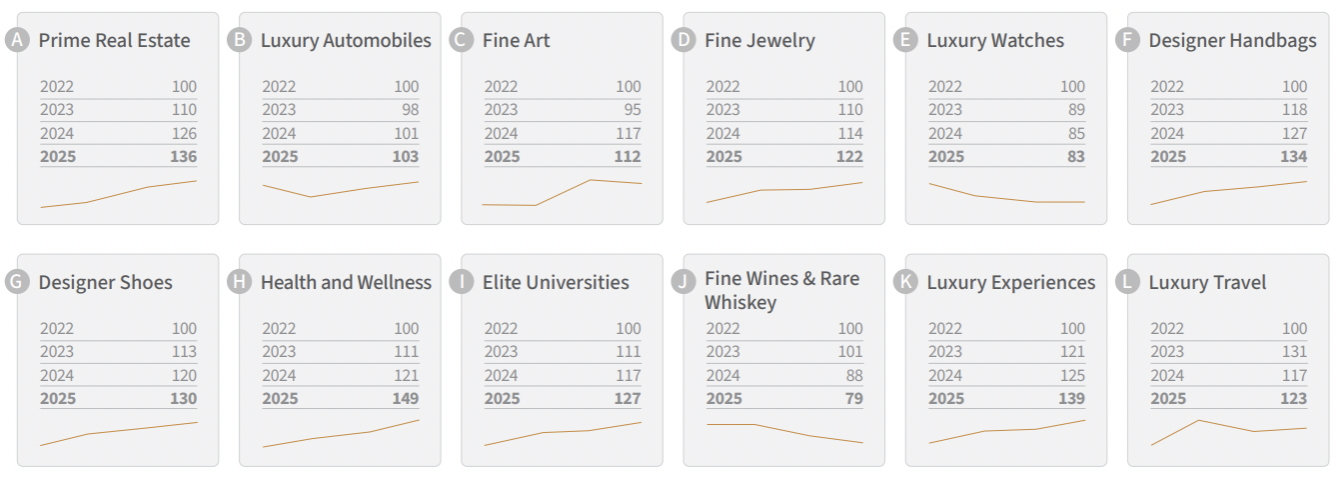
As the Kotak Private Luxury Index 2025, an inaugural report that throws light on the luxury sector in India notes, “Overall, the KPLI had risen to 122 by 2025, reflecting a 6.7% annual increase over the last three years,” with category-wise CAGR data highlighting how fine art, luxury real estate and designer handbags outpaced broader market benchmarks.
The Kotak Private Luxury Index Report, published by Kotak Mahindra Bank’s private banking division, is an annual proprietary study that tracks pricing trends, category-wise performance and broader market dynamics across global luxury segments to gauge how luxury goods are performing relative to traditional financial benchmarks.
The FTA push comes at a moment when global luxury is under visible price pressure. After years of steep hikes, sometimes outpacing inflation, consumers across the US, Europe and China are pushing back, with 2025 data showing nearly 40 percent of designer goods moving on discount, levels not seen in over a decade. Major groups like LVMH and Kering have slowed expansion, reassessed portfolios and tightened costs as margins hover near 15 to 16 percent, close to 2009 levels. When profitability compresses in core markets, brands recalibrate pricing, sourcing and supply chains globally. Trade agreements such as this FTA are therefore not isolated economic events but strategic responses to margin stress, shifting sourcing geographies and a luxury consumer who is increasingly questioning value over pure prestige.
In a global environment shaped by supply chain diversification away from single-country dependence, India is positioning itself as a reliable alternative manufacturing hub. Retailers have responded by passing on costs, compressing margins, or actively searching for alternative sourcing destinations, a reality for the luxury sector as well.
As supply chains diversify, luxury brands are recalibrating too. When input costs rise, maisons cannot endlessly increase prices without softening demand, so they either absorb margin pressure or rethink sourcing. India’s expanding FTA network offers a timely hedge with tariff efficiency and craftsmanship intact. In luxury, supply chains are now central to margin strategy.
Relevance in the Luxury Sector

“The recent India-U.S. trade agreement is a positive reset for our industry. In the short term, the estimated reduction in the tariffs is an immediate relief for our manufacturers. This helps natural diamonds compete more effectively. We expect demand in the US to strengthen over the coming quarters. From a long term perspective, this deal is about much more than pricing, it’s about confidence. It reinforces India’s stature as the global heart of diamond craftsmanship. We are moving from a period of resilience to a new era of growth and global leadership.”
Richa Singh, Managing Director, Natural Diamond Council commented on the issue, “In India, Free Trade Agreements (FTAs) are highly relevant to the luxury sector because high import duties traditionally make luxury goods: such as fashion, jewelry, automobiles, cosmetics, and premium spirits (significantly more expensive). Through agreements such as the India-United Arab Emirates Comprehensive Economic Partnership Agreement and the India-Australia Economic Cooperation and Trade Agreement, tariff reductions and improved market access can lower landed costs, enhance price competitiveness, and expand consumer accessibility within India’s growing affluent and high-net-worth segments. Additionally, stronger intellectual property protections, improved services access, and investor safeguards under such agreements help global luxury brands reduce counterfeiting risks, establish retail operations more efficiently, and make long-term investments in one of the world’s fastest-growing luxury markets.

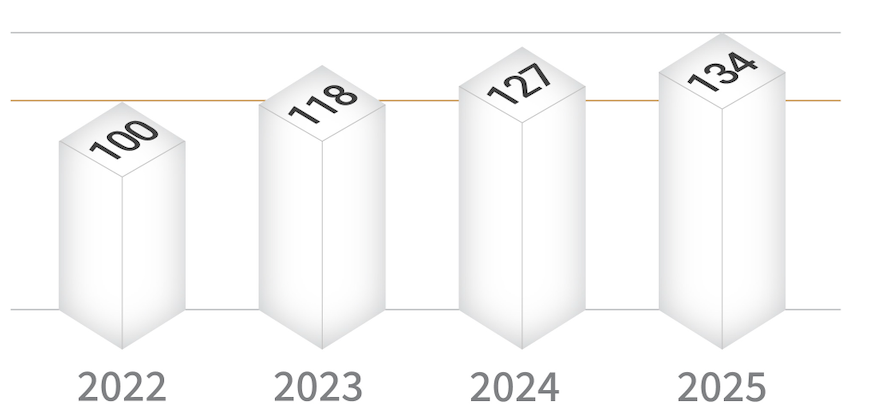
The KPLI recorded a 10.2% annual increase in designer handbag prices between 2022 and 2025. Luxury houses such as Chanel have continued their biannual price-increase strategy, preserving exclusivity and status.” Kotak Private Luxury Index Report
Luxury brands operate on perception, but pricing discipline remains fundamental to long-term positioning. Lower tariffs under new trade agreements could make Indian luxury décor and handcrafted goods more competitive globally, particularly in premium handmade segments such as artisanal rugs, bespoke textiles and home accents, where even marginal duty reductions can meaningfully improve landed costs. Stronger margins in turn allow brands to reinvest in design, sustainability and artisan ecosystems without diluting exclusivity.
That said, the equation is not entirely linear. If raw material imports such as specialty yarns, rare woods or precious components become costlier due to shifting tariff structures elsewhere, luxury brands may still face input volatility. While the sector enjoys greater margin flexibility than mass retail, sustained tariff realignments have the potential to permanently reshape sourcing geographies. In luxury, trade policy does not simply influence cost sheets; it quietly redraws the global map of craftsmanship.
Why It Is Cheaper for India Now?
With tariff reductions, Indian exporters can land goods in foreign markets at more competitive prices. For decor and textile driven segments, even a small duty cut can significantly alter the final retail price. For instance, if a handcrafted carpet valued at 1,000 dollars earlier attracted a 10 percent duty in the US, the landed cost would rise to 1,100 dollars before retail markups. Even a reduction of a few percentage points under an FTA meaningfully narrows that gap, making the product more competitive on showroom floors. For companies such as Jaipur Rugs, which operate in premium global markets, that difference can either translate into sharper pricing for buyers or stronger margins that fund artisan wages, design innovation, and global brand building. In luxury, where perception meets pricing discipline, even incremental tariff relief can reshape long term competitiveness.

Yogesh Chaudhary, Managing Director of Jaipur Rugs opines, “By reducing fiscal barriers and formalizing trade ties, we are creating a predictable environment that allows our heritage industries: from hand-knotted rugs to bespoke jewellery— to compete on design and ethical integrity rather than just labor costs. This shift empowers our grassroots artisans, turning remote villages into specialized hubs for the world’s most prestigious fashion houses. It is a transition from being a supplier of raw skill to a recognized partner in high-end design, where “Made in India” becomes synonymous with purposeful, sustainable luxury.”
Lower tariffs also improve margins, allowing brands to reinvest in design, technology, and sustainability. This is critical for luxury decor houses that operate in a premium positioning bracket but remain sensitive to input cost fluctuations.
The US Equation and Export Advantage

Exports to the United States stand to gain meaningfully. As American retailers grapple with higher apparel prices due to tariff adjustments elsewhere, they are actively diversifying sourcing strategies. For example, if a diamond necklace exported at 5,000 dollars earlier attracted a duty that pushed its landed cost meaningfully higher, a tariff reduction directly improves competitiveness. The US retailer can either maintain the same retail price and expand margins or offer sharper pricing to stimulate demand without diluting brand positioning.
For brands such as Tanishq, this creates strategic flexibility. In the short term, it strengthens export conversations and private label partnerships. Over the long term, it positions India more firmly as a global jewellery manufacturing and design hub rather than just a sourcing base. In a market recalibrating value and margin discipline, tariff relief becomes a silent but powerful advantage.
Premium international markets, could see stronger demand and improved negotiation leverage.If sustained, this shift could translate into deeper supply partnerships rather than seasonal buying cycles.
Short Term Implications
In the immediate term, exporters are likely to see a spike in inquiries and order negotiations. Businesses agile enough to scale production and maintain compliance standards will capture the early advantage. However, there may be temporary volatility as supply chains rebalance and buyers test new sourcing arrangements. The luxury consumer in New York or Los Angeles may not track trade agreements, but they will notice price stability and wider availability.
Long Term Structural Shift
Over the long term, FTAs tend to reshape industries rather than merely boost quarterly numbers. Increased foreign investment in Indian manufacturing, greater brand building in global markets, and a shift toward value added exports are likely outcomes. In the long term, this recalibration positions India as a resilient and sophisticated alternative to mass-manufacturing markets by leveraging our unique ‘human-centric production model’ according to Chaudhary.
The nature of the industry has already changed. It is no longer purely about cost efficiency. It is about sustainability benchmarks, ethical sourcing narratives, and design differentiation. Luxury decor brands that align with these evolving global expectations will lead the next chapter.
A ‘Spirited’ Reset
”The rise in consumption of higher-end American spirits in India is now set to truly boom.” Nikhil Agarwal

“I am confident that both the value and volume of American spirits sold in India will continue to grow.” The value and volume of American spirits sold in India will continue to grow as the market expands. US spirits exports to India increased by about 10 to 12 percent in the first half of 2025 and the rise in consumption of higher-end American spirits is now set to truly boom.
There are several reasons why bourbon and rye are becoming increasingly popular.
First, the further reduction in duties on American spirits will play a significant role in bringing more premium bourbons into India. Second, cocktail culture has really taken off across the country. People want to enjoy cocktails not only in top-tier cities but also in Tier 2 and Tier 3 cities. Bourbon plays an important role in cocktails since some of the world’s most well-known classic cocktails feature bourbon. Its versatility makes it a favorite among bartenders across India who include it extensively in their cocktail menus. Third, there is a growing segment of consumers who truly enjoy high-end bourbon. Over the last two to three years, there has been an influx of excellent bourbons into the market, satisfying the demand of those who enjoy whiskey neat, with a cube, or over ice.
“The sheer variety available to consumers will expand, offering more opportunities for enthusiasts and casual drinkers alike to explore and enjoy premium American whiskies.”
Nikhil Agarwal
India’s expanding FTA network is hence, clearly poised to significantly reshape the premium spirits landscape. As Geetika Sachdev reports in LuxeBook in the context of the India–UK FTA, steep import duties of up to 150 per cent had long kept Scotch and other premium imports prohibitively priced, limiting wider access despite strong consumer appetite. The phased reduction of duties to 40 per cent over a decade signals a structural shift. For international players, this opens the world’s largest whisky-consuming market to deeper penetration, broader portfolio launches and more competitive pricing. For Indian premium and single malt producers, however, it is a double-edged sword.
While cheaper access to inputs such as casks or peat may aid production quality, a narrower price gap between imported Scotch and homegrown labels could intensify competition in the premium and super-premium segments. In effect, FTAs are not merely lowering tariffs at the top end of the bar; they are accelerating premiumisation, raising quality benchmarks and reshaping competitive dynamics across India’s luxury alcobev market.
Luxury on Four Wheels
Import duties on high-end American cars above 3,000cc have reportedly been reduced to around 30 per cent, while large American motorcycles are set to receive zero-duty access. For India’s affluent buyers, this meaningfully narrows the historical price differential in the super-premium internal combustion segment, potentially stimulating demand in a category long constrained by steep tariffs.
However, electric vehicles remain outside the ambit of these concessions, with high import duties still intact, reflecting India’s continued policy emphasis on protecting and building domestic EV manufacturing. For global luxury automakers, the shift creates selective opportunity; for domestic players, it signals intensifying competition at the very top end of the market.
Under the interim trade deal framework, India will slash tariffs on high-end American cars to around 30 per cent from as high as 110 per cent, while duties on large US motorcycles such as Harley-Davidson models are being eliminated. Electric vehicles have been explicitly excluded from tariff concessions under the current arrangement.
The Ultra Luxe Take

In the ultra luxe universe, trade policy may seem distant from marble clad showrooms and couture interiors. Yet, behind every handcrafted rug and bespoke textile lies a supply chain shaped by policy. This FTA moment underscores a larger truth. Luxury today is geopolitical as much as it is aesthetic. And India, with its heritage craft clusters and expanding manufacturing ecosystem, stands at a compelling crossroads.
Luxury operates on aspiration, but economics still matter. Even ultra premium decor brands must account for logistics, duties, and compliance costs. An FTA provides breathing room. It strengthens India’s image not merely as a low cost manufacturer but as a value driven luxury origin. Hand-knotted carpets, artisanal textiles, and bespoke furnishings gain a sharper global edge when tariffs no longer dilute competitiveness.
In the words of Vodhi Chakravartty, Head of Strategy, Kotak Private Banking, Kotak Mahindra Bank Ltd, “Ultra-HNIs are no longer buying luxury to belong; they are spending it to experience and evolve.”