Lexus collaborates with Royal College of Art in London
- Automobile Featured Trending
 Schenelle Dsouza
- 8 minutes read

Schenelle Dsouza
Lexus partnered with England’s Royal College of Art to launch a project called ‘Lexus 2040: The Soul of Future Premium’ in September 2021. The project was handed out to students from the Intelligent Mobility MA stream to explore what luxury transportation, specifically automobiles will look like by the year 2040.
The project was supported by Lexus along with mentorship from leading creatives at the European Design Development Centre, ED2, in the South of France. This helped the students get a deeper insight into the automotive industry, look into real-life model designs and building techniques.
Dr Chris Thorpe, who is the Head of Programme for the Intelligent Mobility MA at the RCA, spoke about the RCA’s project with Lexus, “The current MA cohort reflects the interests and concerns of a global Gen Z mindset – bringing an invaluable perspective to this project and highlighting the value of the IMDC, which combines MA students and design research teams to deliver vision.”
#Units by Zhenyu Kong

#Units focuses on digital personalisation as a future space. It uses digital technology to expand the connection between individuals and groups while tapping into social media for sharing opinions and emotions. The vehicle can connect virtually where it can be used as a projector device, to join concerts or parties virtually. The interior can also be personalised using blockchain technology, so NFT artworks can be brought on a journey.
Alto by Richard Newman
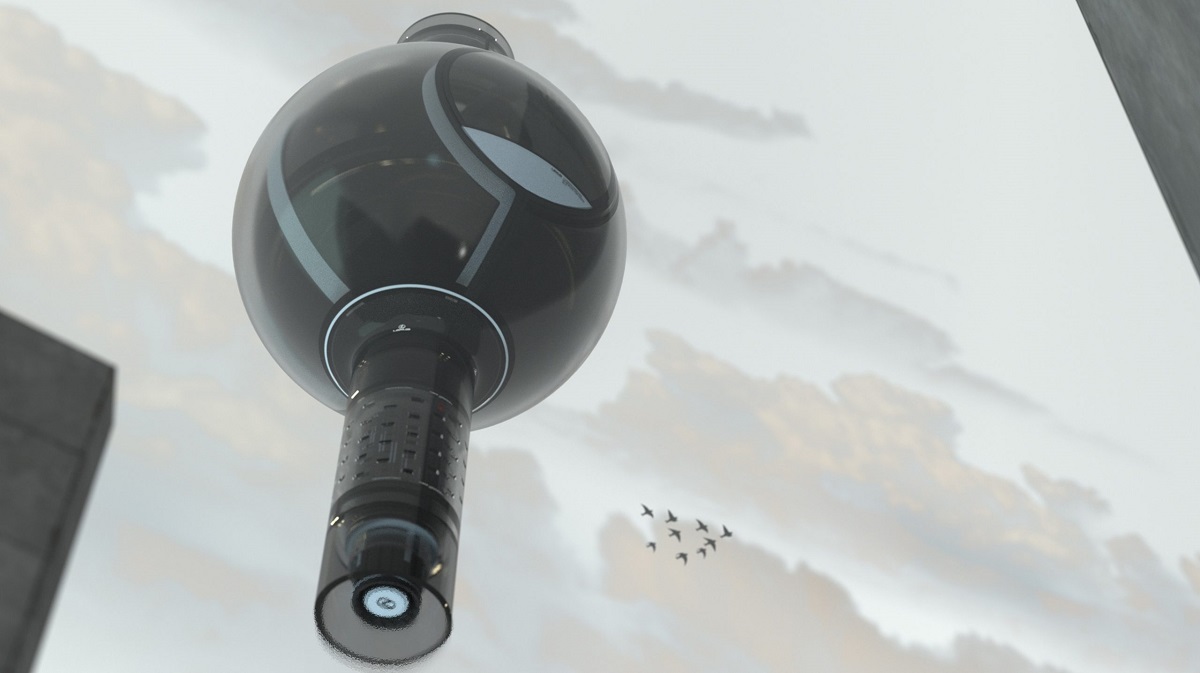
A vertical take-off and landing vehicle, Alto is designed for a premium experience that translates to the celebration of every day. The hydrogen-powered vehicle is a cross between a plant terrarium and a hot-air balloon, with a pendant-style airborne design that can be described as a piece of jewellery in the sky. The top of the vehicle could be personalised like a ring, to feature different ‘stones.’ Its architecture would include unified cladding so the vehicle could dock onto the side of buildings.
Crucible by Benjamin Miller

Another hydrogen-powered vehicle, the Crucible is a highly personalised vehicle whose interiors can be customised daily for different drivers of the same vehicle. Users could choose a different vehicle for weekdays and for weekends when they want to explore and meet others. In reference to Lexus design cues, Miller reinterpreted the Lexus spindle grille and created a light and airy vehicle that is easy to get in and out of, with seats that can be reclined for comfort.
Neko by Jan Niehues

Inspired by Japanese culture, Neko is a micro-mobility concept designed to represent an insect-like exoskeleton. The vehicle is battery-electric operated and comes with two driving modes: conventional driving as an independent vehicle and a sharing mode. It comes with sensor cameras and an intelligent recording device that records the scenery from previous journeys which can be played for occupants when in the sharing mode. The vehicle also uses 4D technology for optimised ergonomics and can perform traditional Japanese bowing, while microbots allow complete flexibility for speed in urban areas.
UrbanSwarm by Maxime Gauthier

UrbanSwarm gives a sense of luxury to an everyday urban mobility experience to ensure transportation with more fluidity. This modular and seamless way to travel provides the flexibility and convenience of micro-mobility with the efficiency of mass transportation systems through its tessellation feature in which it can link with other ‘pods’ while ensuring full inclusivity for all.
Vision In-season by Bangning An