Rado at 40: In Conversation with Smriti Mandhana & CEO Adrian Bosshard
- Featured Retail
 Anushka Manik
- 7 minutes read

Long before materials innovation became a buzzword in luxury, Rado had already built its identity around it. Founded in 1917 in Lengnau, Switzerland, the brand began as a movement manufacturer before evolving into one of the industry’s most design-forward watchmakers. Its turning point came in 1962 with the launch of the DiaStar, that’s often cited as the world’s first scratch-resistant watch. By the 1980s, Rado had doubled down on experimentation, pioneering the use of high-tech ceramic, a material that would go on to become synonymous with the brand’s DNA. Forty years later, that same innovation continues to define its place in the luxury landscape.
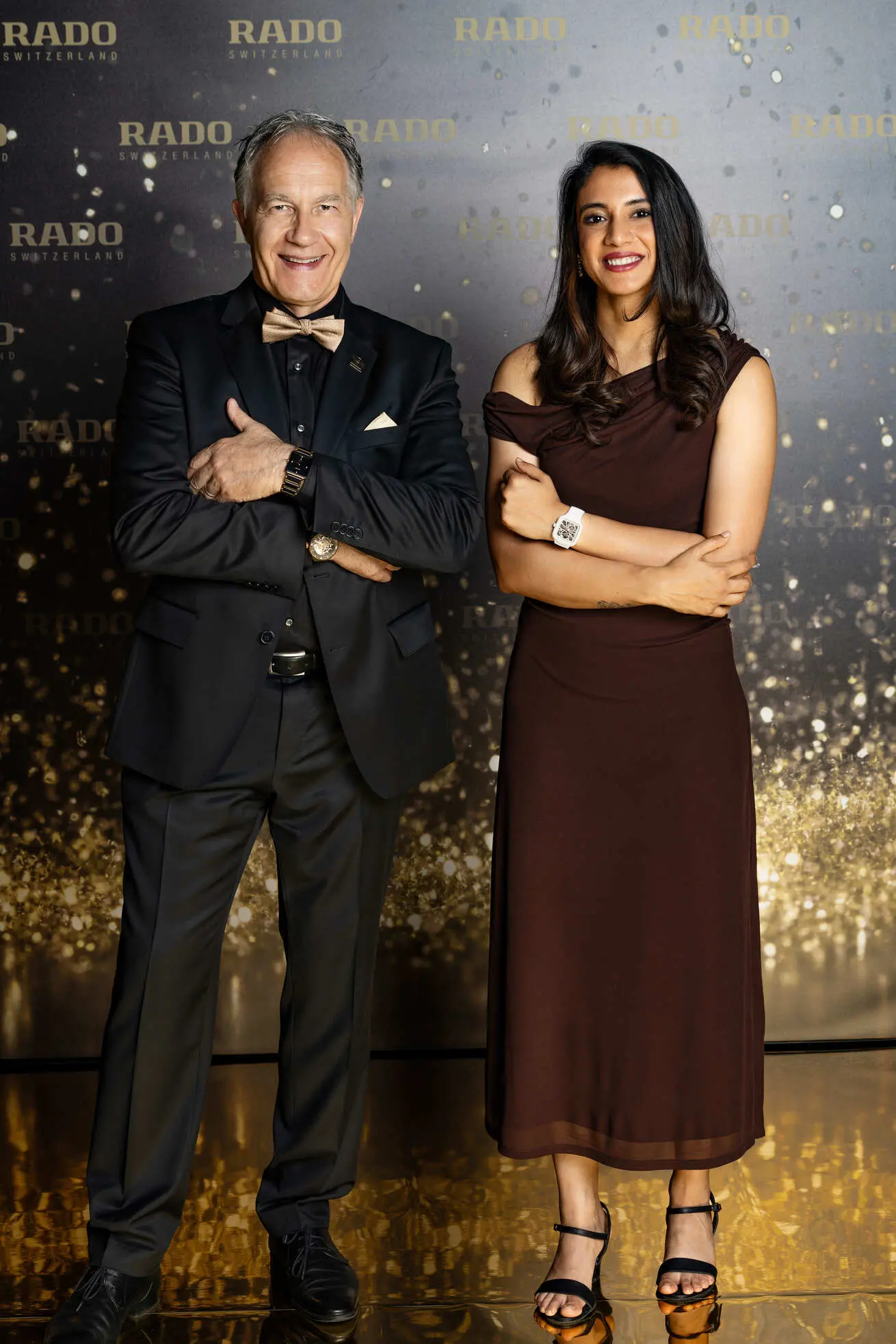
As the brand marks 40 years in the making, the introduction of Smriti Mandhana as a Friend of the Brand arrives at a time when sport, style, and identity are increasingly intertwined. In conversation with LuxeBook, Adrian Bosshard, CEO at Rado offers a sharp perspective on how the brand is adapting to a new generation of consumers that is younger, more discerning, and increasingly drawn to craftsmanship and meaning over mere brand visibility. This shift is especially evident in India, where the luxury watch market has matured from logo-led consumption to a more nuanced appreciation of design, material innovation, and longevity. Bringing this into dialogue with Smriti Mandhana, the conversation unfolds at the intersection of watchmaking and sport, precision and instinct, heritage and reinvention. Read on.
LuxeBook: You’ve built a career on precision and timing. How do you personally relate to the idea of ‘time’ today, both on and off the field?
Smriti Mandhana: On the field, everything happens very quickly, so you don’t consciously think about time, it’s more about instinct and preparation. A lot of your decisions come from the work you’ve put in before that moment.
Off the field is where you really understand the value of time. How you manage your training, recovery, and rest plays a big role in how clear and prepared you feel when you step onto the field. Over the years, I’ve realised that time is what helps you grow, understand your game better, and keep improving.

LuxeBook: Cricket is evolving rapidly, especially in how women athletes are perceived globally. Do you see your association with a brand like Rado as part of a larger cultural shift where sport, style, and identity are intersecting?
Smriti Mandhana: I do think there’s a larger shift happening. There’s more recognition today, not just for what athletes do on the field, but also for their journeys and individuality beyond the sport. At the same time, I feel the most important change is that we are being seen as athletes first. Associations like this reflect that balance, where performance, personality, and style can coexist. With Rado, the connection feels natural because it’s built on shared values like consistency, precision, and evolving over time.
LuxeBook: As someone constantly travelling and performing, what does ‘everyday luxury’ look like to you today? Has that definition evolved over the years?
Smriti Mandhana: For me, everyday luxury is about comfort and simplicity. It’s about things that fit easily into your routine and make your day feel effortless. Over time, that definition has become more about functionality as well. It’s not just about how something looks, but how it performs and how comfortable it feels through the day. Whether it’s what I wear or how I spend my time, I value things that feel easy and reliable.
LuxeBook: Luxury consumers today are younger and far more culturally aware. How is Rado adapting its storytelling to remain relevant without losing its design DNA?
Adrian Bosshard: Today’s consumer is more informed and engages with brands in a very different way. They are looking for authenticity, meaning, and a clear point of view. For us, the key is not to change who we are, but to communicate it in a way that feels relevant today. Our design DNA and expertise in materials, especially high-tech ceramic, remain at the core. What evolves is how we tell that story more globally, more digitally, and with a stronger connection to real performance and cultural context.
LuxeBook: India has emerged as a key market for luxury watches. What nuances do you see in the Indian consumer today compared to a decade ago?
Adrian Bosshard: There has been a significant shift. A decade ago, the focus was more on brand recognition and external design. Today, the Indian consumer is far more informed and discerning. There is a deeper interest in understanding materials, craftsmanship, and the story behind the product. This maturity aligns very well with Rado’s positioning, as our strength lies in innovation and long-term value rather than just surface appeal.
LuxeBook: Rado has spent four decades innovating with high-tech ceramic. In a world increasingly focused on both performance and sustainability, how has the material’s relevance evolved today?
Adrian Bosshard: High-tech ceramic has always been about durability, lightness, and longevity, and these qualities are even more relevant today. From a performance perspective, it offers comfort and resistance that make it ideal for everyday use. At the same time, its long-lasting nature means that the product maintains its appearance and functionality over many years, which aligns with a more considered and sustainable approach to consumption. So its relevance has only grown, as consumers increasingly value products that combine performance with long-term reliability.
You may also read: Samantha Ruth Prabhu on Designing for a Life in Motion