Architect, Apoorva Shroff’s Travel Diaries to the Bamboo U School
- Design Featured Travel & Hospitality
 Staff Writer
- 5 minutes read

An Essay by Apoorva Shroff
Nestled amidst the verdant landscapes of Bali lies a place where imagination meets nature, where structures are not just built but breathed into existence— the Bamboo U School. My journey to this haven of bamboo innovation was more than a workshop; it was a transformative experience that challenged my perspectives, awakened my creativity, and deepened my connection with nature.
The idea of attending a bamboo design workshop had initially felt like a whimsical indulgence. “Why bamboo?” I had questioned. As an architect accustomed to concrete and steel, this natural, flexible material seemed almost too simple. Yet, as the date drew closer, excitement mingled with nervous anticipation. I had signed up for the Bamboo U Design and Build course—a decision that would soon take me on a ride of discovery.
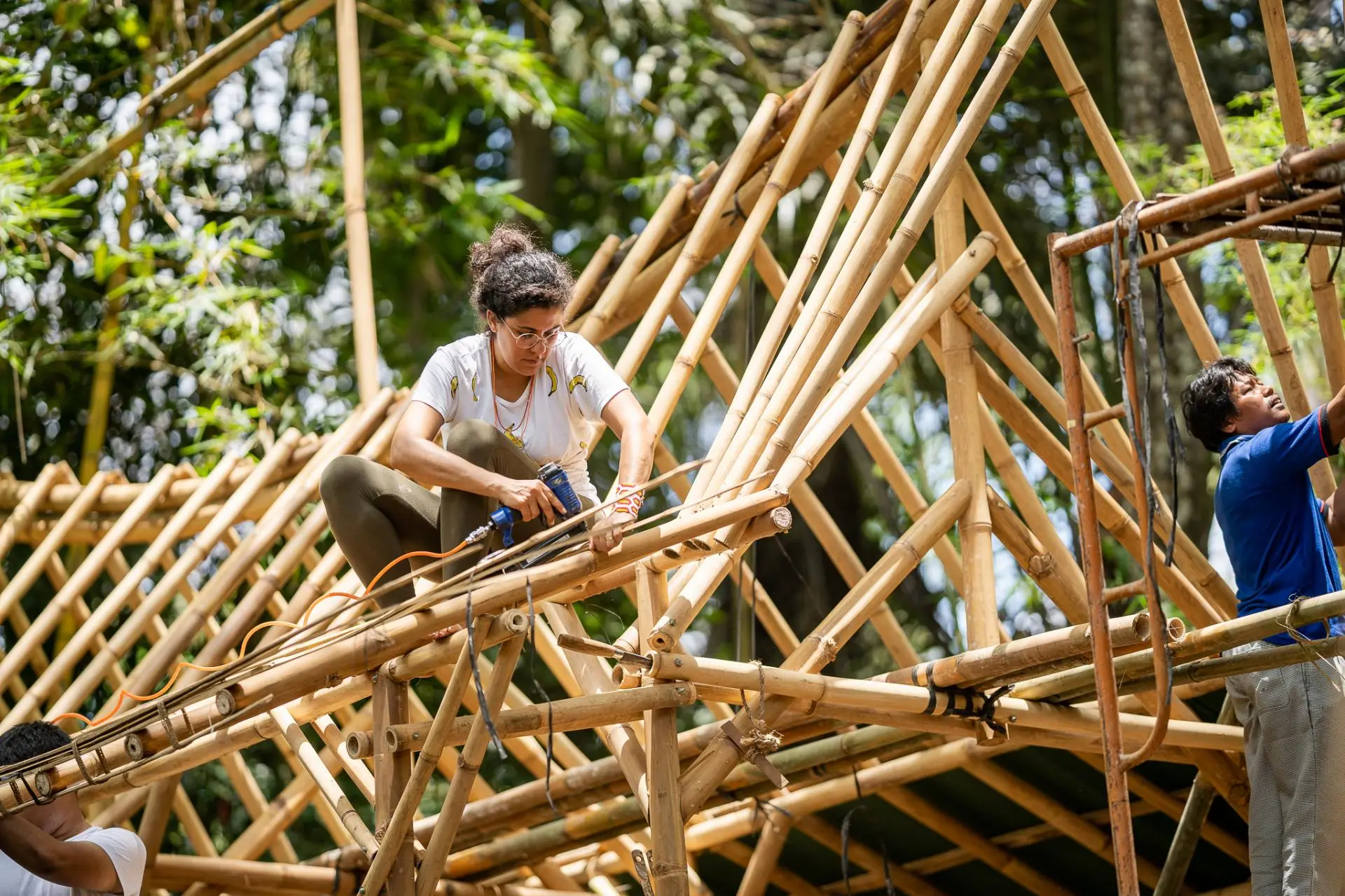
Arriving at the workshop, I found myself in the company of 45 individuals from 12 different countries, all gathered for one purpose: to learn from the masters of sustainable design. Ages ranged from the spirited 22-year-old dreamers to seasoned 75-year-old veterans. The environment buzzed with excitement and curiosity as strangers quickly became collaborators, united by a shared goal and an open mind.
The first few days were a deep dive into understanding bamboo, each morning began with the tropical delight of dragon fruit yoghurt bowls and Bali’s aromatic coffee, setting the stage for immersive learning. Our program manager, Luis, exuded contagious energy as he guided us through icebreakers and team-building exercises. Slowly, our group transformed into a quirky family of designers, engineers, and artists. We explored the nuances of bamboo—its tensile strength, its flexibility, and its innate beauty. Through hands-on activities and theory sessions, I realised that bamboo is not merely a construction material; it is a symbol of harmony between human ingenuity and nature’s bounty.
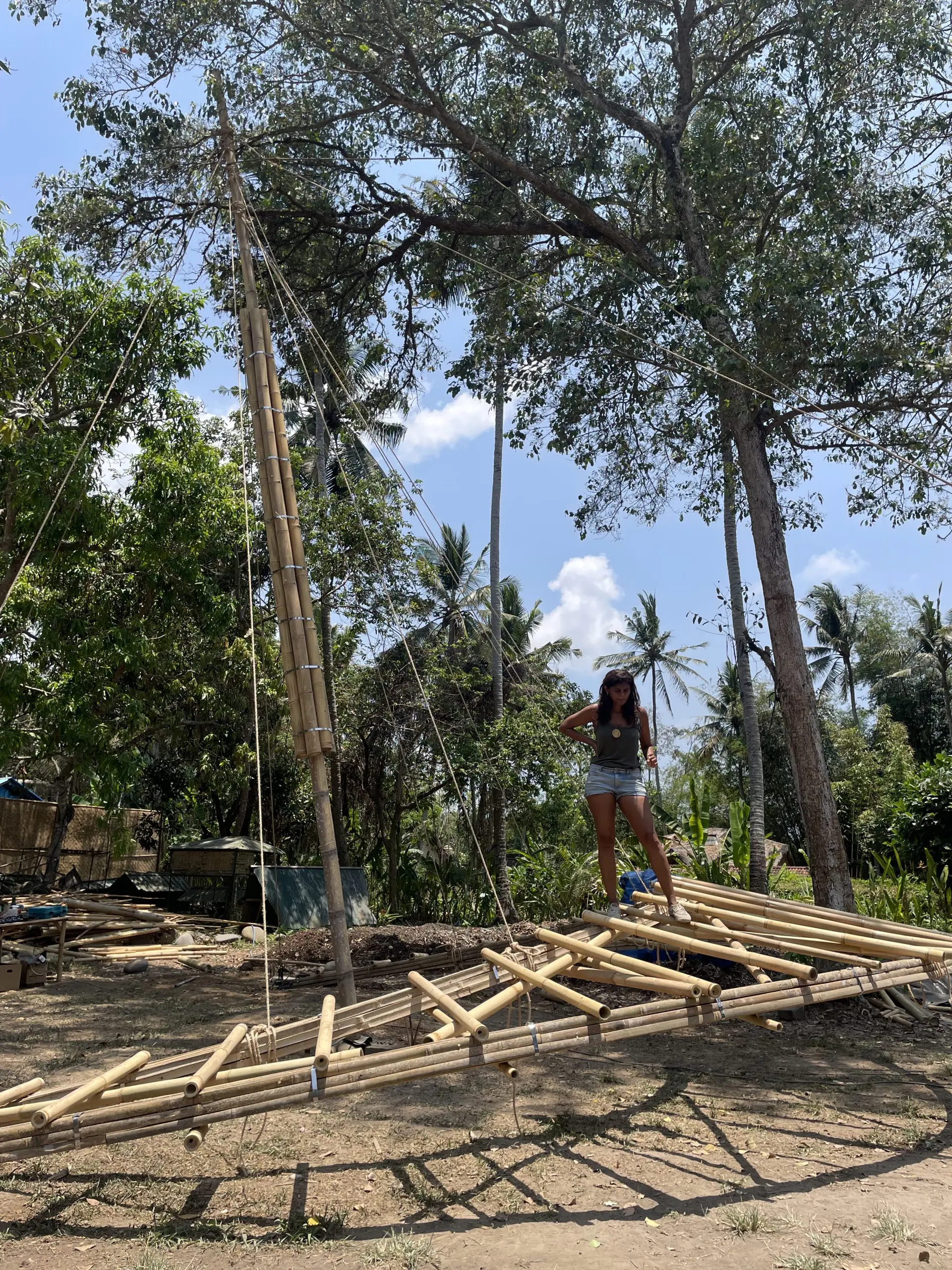
One of the most memorable aspects of the workshop was building a bamboo bridge. Enter Neil Thomas – a structural consultant whose passion for innovation was matched only by his ability to inspire. Split into teams, we unleashed our imaginations, sketching and debating until to my surprise and delight, Neil selected my design to bring to life.
Building the bridge proved to be an exercise in problem-solving, resilience, and teamwork. Challenges came in waves: finding the right tools, working with the natural imperfections of bamboo, and balancing innovative ideas with structural practicality. From welding a drill bit extension to sourcing materials locally, every obstacle taught us to think on our feet. Under the watchful eyes of our mentors, we learned the art of tying bamboo knots, creating foundations, and reinforcing structures. The work was physically demanding, yet immensely rewarding.

The tactile process of working with bamboo was both humbling and exhilarating. Unlike manufactured materials, bamboo demanded attention to detail and an understanding of its natural form.
On the final day, with the sun rising behind us, our team gathered for a group photo. The bridge stood before us—a testament to our collective effort, resilience, and creativity. As we removed the supports and watched it hold its weight, a wave of triumph swept through us. It was wobbly, yes, but it was ours—a physical manifestation of our learning and determination.
Luis, who had tirelessly guided and supported us throughout the project, deserved immense credit. His leadership and steady humour kept our spirits high, even during the most challenging moments. The carpenters, who followed our instructions without fully understanding our plans, became silent heroes of the project.

This journey to Bamboo U was a reawakening. As I left Bali, I carried with me not just the skills to build with bamboo but a renewed sense of purpose. Bamboo U ignited in me a deep respect for nature and a belief in the power of sustainable architecture.
The tactile connection with bamboo changed the way I approach design. It taught me to value the imperfections in materials and to see them as opportunities rather than obstacles. The bridge we built maybe just a small structure in the vast world of architecture, but it stands as a powerful reminder of what is possible when we work in harmony with nature.