Sixteen Course Tasting Menu at Avatara an Ode to the Indus Civilisation
- Featured Food & Beverage
 Yashita Damani
- 9 minutes read

In a city where vegetarian food is too often dismissed as “restricted,” Avatara Mumbai sets the record straight- and then some. With its new 16-course tasting menu, the fine-dining outpost redefines vegetarian gastronomy as limitless, global, and deeply rooted in Indian tradition.
There are restaurants that feed you, and then there are restaurants that initiate you. Avatara belongs, unapologetically, to the latter. Omkar, the restaurant’s gentle narrator and guide, describes the space with a reverence usually reserved for shrines; walls echoing the rippling waves of the Gangotri glacier, the floor a sculpted memory of the Himadri mountains, chairs sprouting like trees on a slope. The Ganga herself seems to flow from the open kitchen. Dining here isn’t a transaction- it’s a pilgrimage.
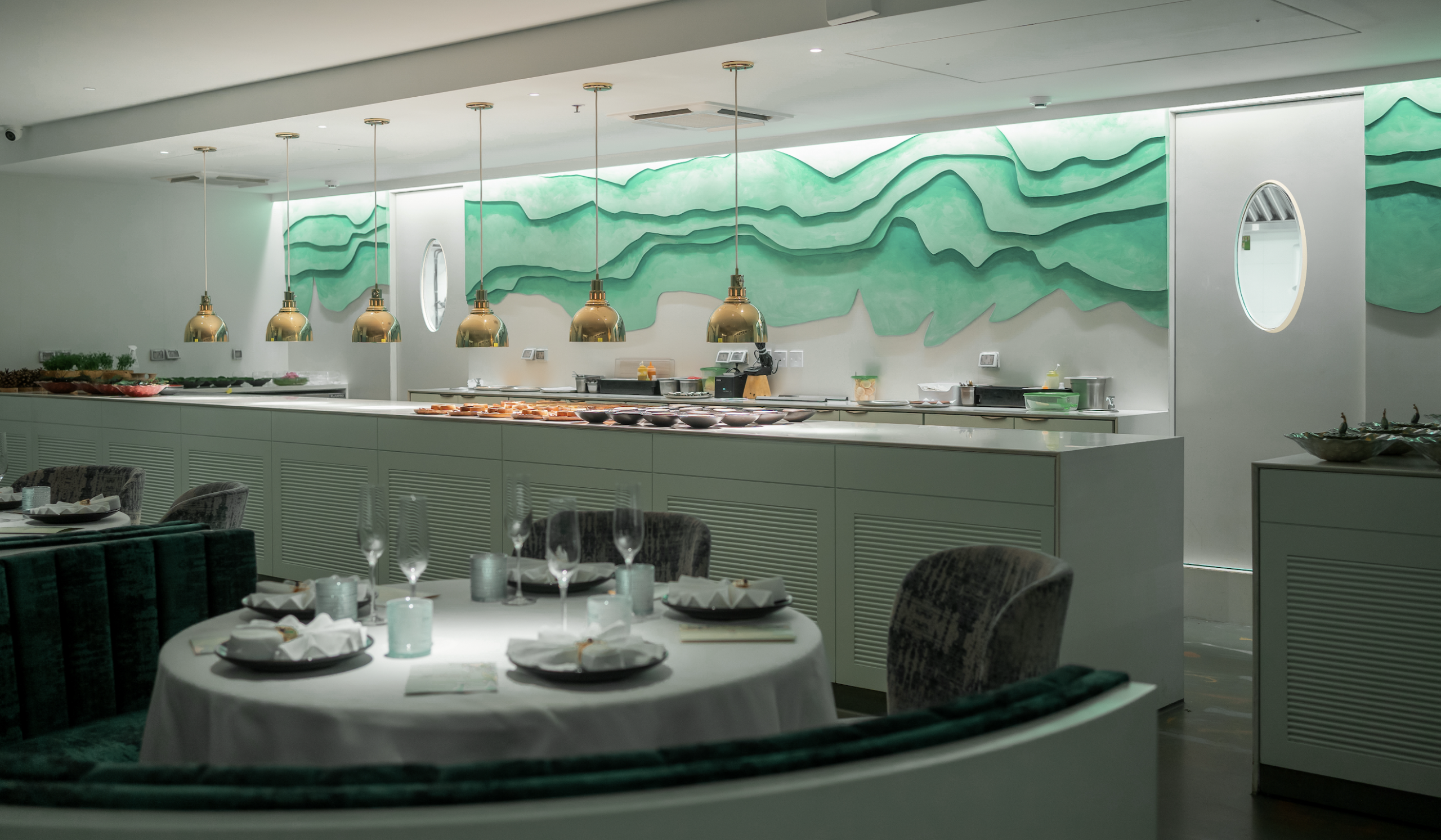
The Sanskrit word Avatara means revelation, and that is what the restaurant attempts- to strip dining down to its essence, where eating becomes meditation. “Having food is the most sacred thing you can do in a day,” Omkar reminds me. His words hang in the air, somewhere between scripture and philosophy.

The new 16-course tasting menu is an ode to farming traditions of the Indus Valley Civilisation: a celebration of the first ingredients ever coaxed out of the soil: corn, mustard greens, tender cashew. It is entirely vegetarian, yet it never panders to the clichés of vegetarian dining. Instead, it dazzles.
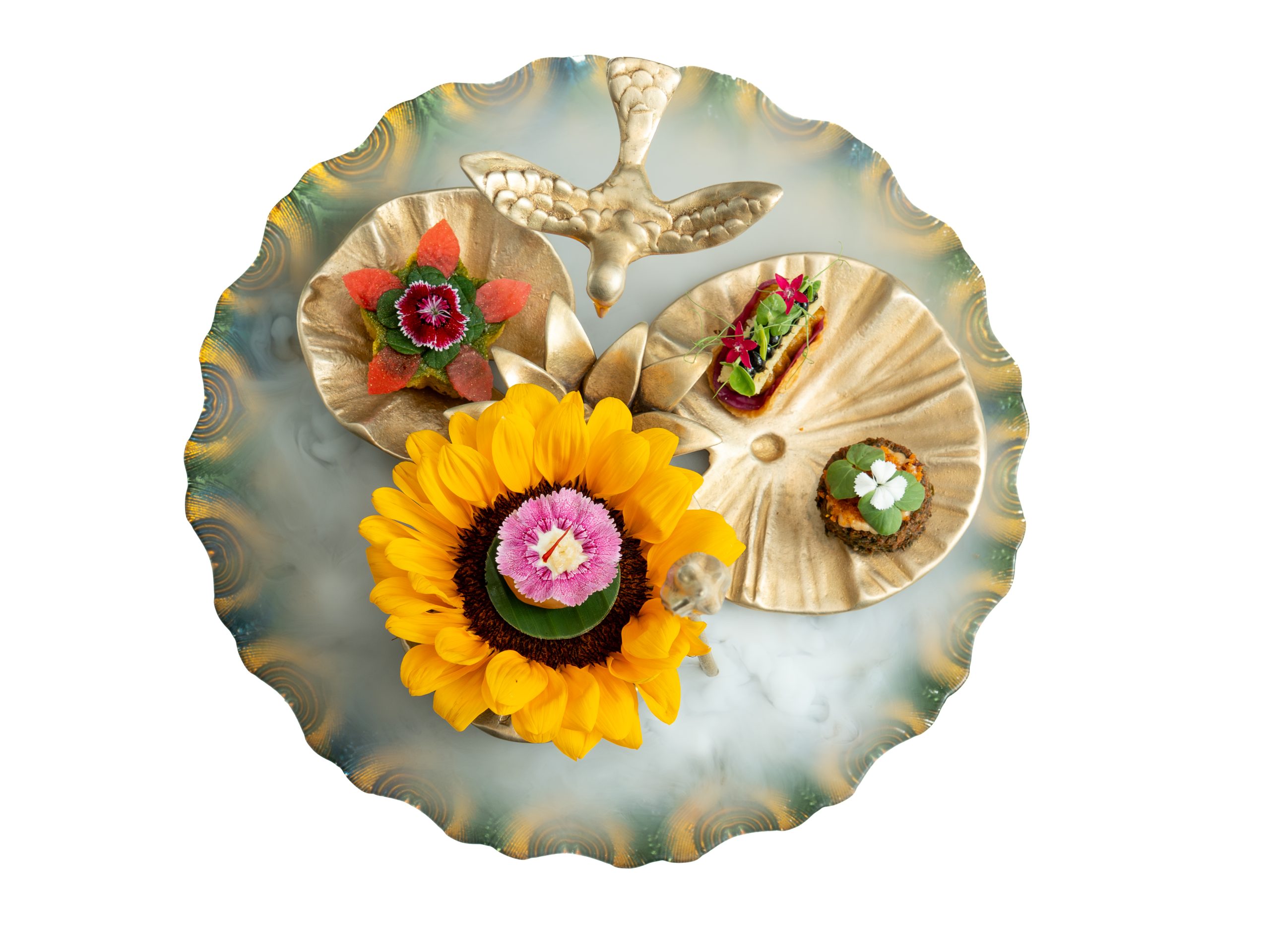
The courses arrive like carefully timed chapters: a 16-Course Odyssey begins with four rasas- encompassed in a sunflower and smokey dry ice. My favourite, however, was a whimsical phafda course that redefined comfort food, a butternut taco with dhokla and black lime that lands playfully alongside other dishes like ghevar with saag and pickled radish, walnut emulsions and pungent curry leaf oil.

A surprisingly delicate bitter gourd chokha is paired with chilli makhani, while potato kasundi curry comes with tadka dahi vada. There are moments of sheer nostalgia (the warm crunch of phafda, reimagined with finesse), and others that challenge the palate, teaching you to value aroma as much as flavour.
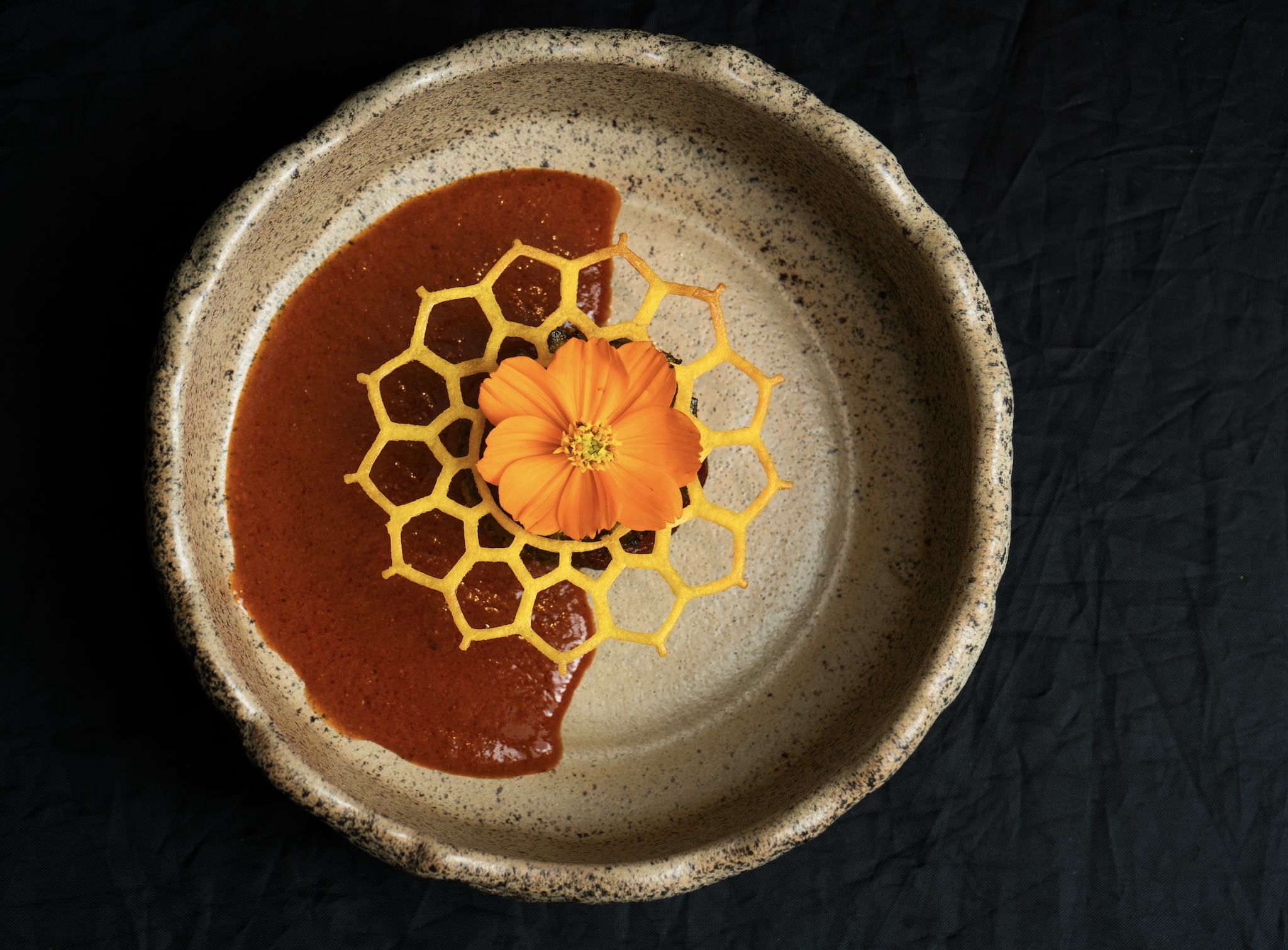
Standouts include the tender coconut idli with curry leaf podi and malai pepper fry, the young cashew bell pepper mole inspired by the chef’s father’s recipe, and the mango chenna with pandan ice cream- a dish that feels like a tropical dream rewritten in fine dining grammar. By the end, it’s easy to lose count of courses, but not memories.
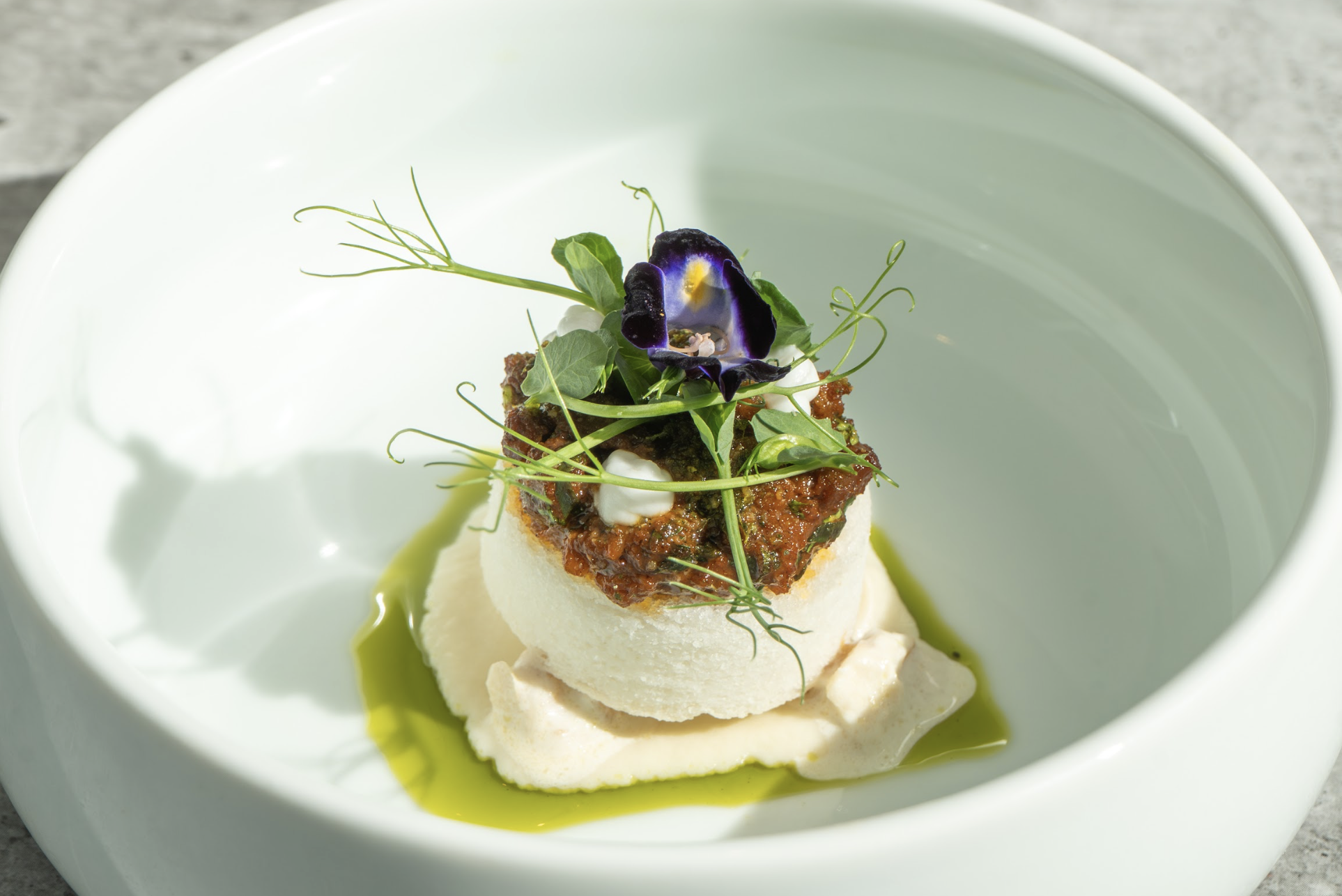
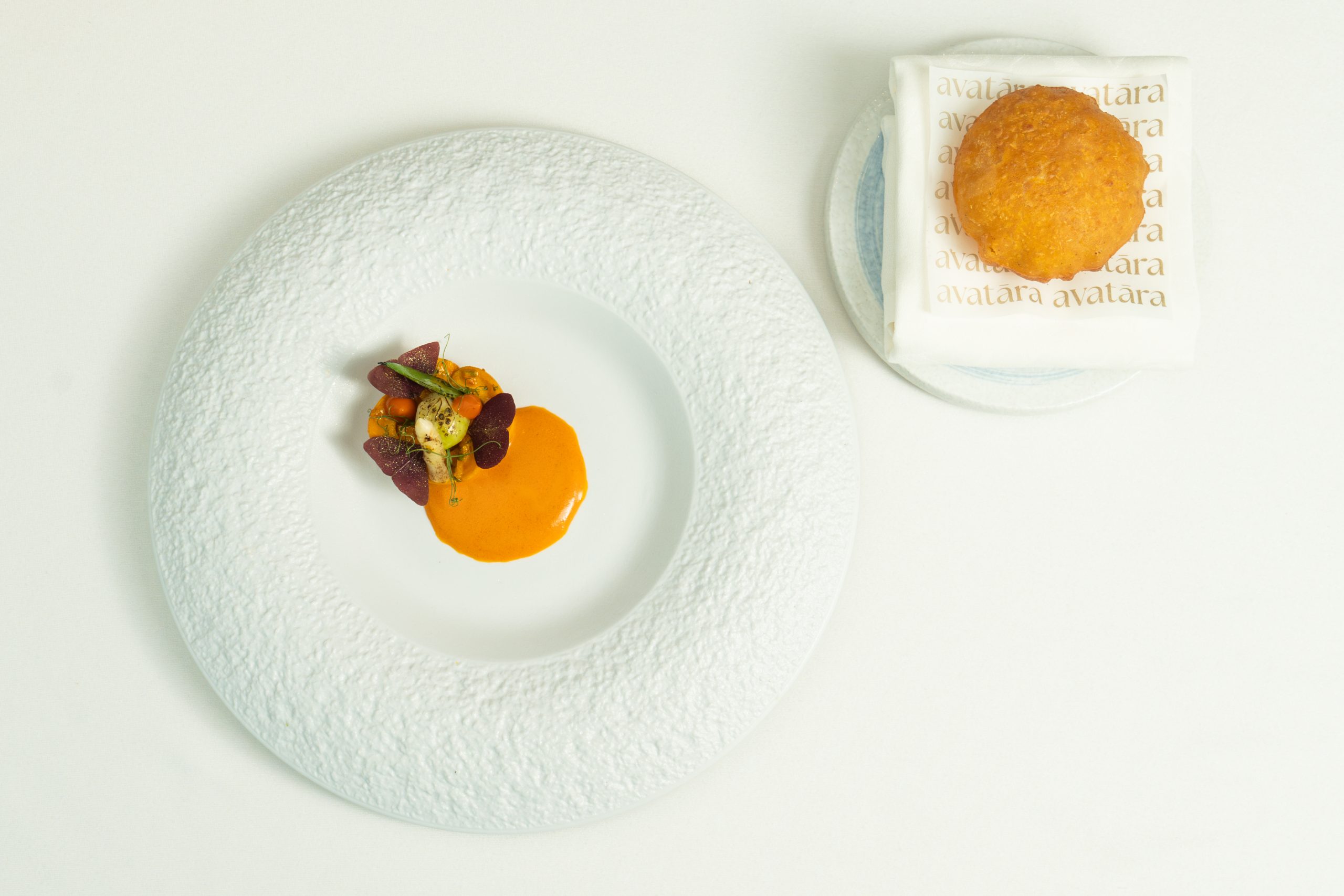
A puri made without maida or wheat, stuffed with young cashew nut, is paired with a bell pepper mole: a recipe borrowed from the chef’s father.

If the food charts a journey through the soil, the cocktails, named after the Pancha Maha Bhutas, the five elements of ancient Indian philosophy- lift you into the cosmos. Akash, Vayu, Agni, Jala, Prithvi are more than just mixology gimmicks. Each glass embodies movement, transformation, or fluidity, reminding us that balance is not just for the palate but for life itself.
The attention to detail is almost obsessive. Too cold? A shawl arrives. Too greasy after a fried medu vada? A wet towel appears. And then there’s the violinist, who scores the evening with heartbreaking sensitivity, shifting from soft rhythms timed from ‘Photograph’ to a rendition of ‘Tum Se Hi’ that nearly brought me to tears.
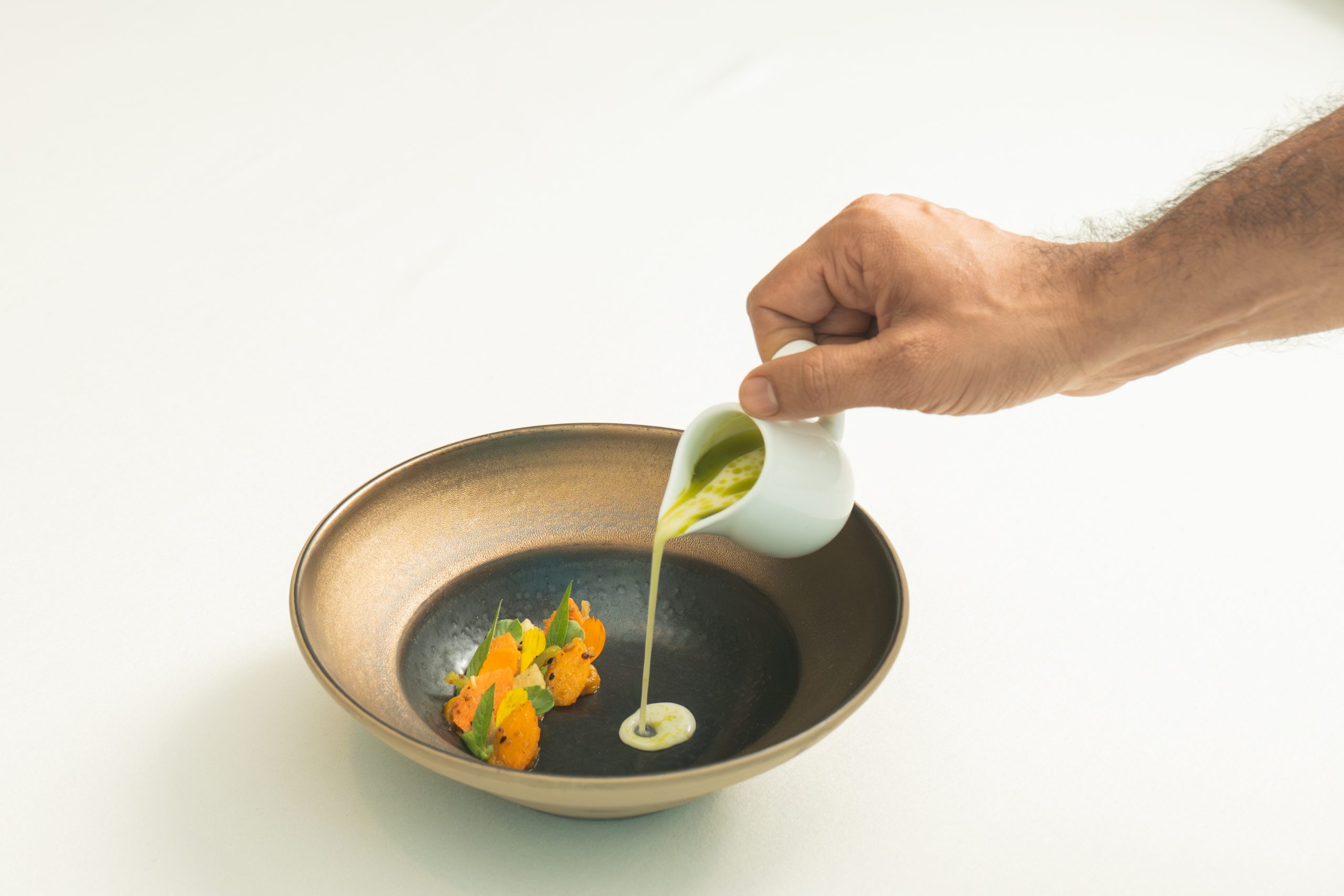
Sixteen courses is, of course, a lot. You will not remember every plate. But Avaatara doesn’t demand memory- it demands presence.
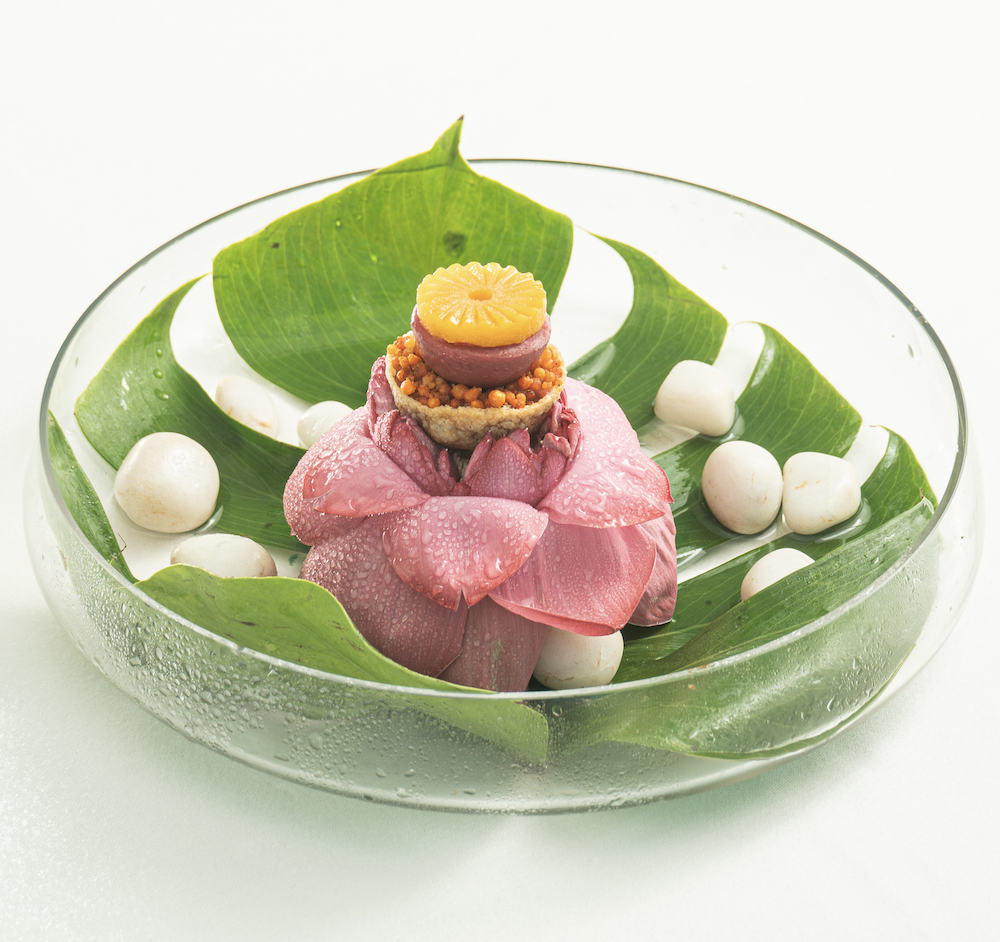
Like meditation, it works in the moment. You’ll sit there, spoon in hand, suddenly aware of how rare it is to eat slowly, consciously, reverently. The restaurant calls itself modern, but its roots are ancient. Fermentation and farming, akin to sustainability (how they use every fibre of the corn) and storytelling. Above all, it is proof that food, when treated as revelation, transcends nourishment and becomes ritual.
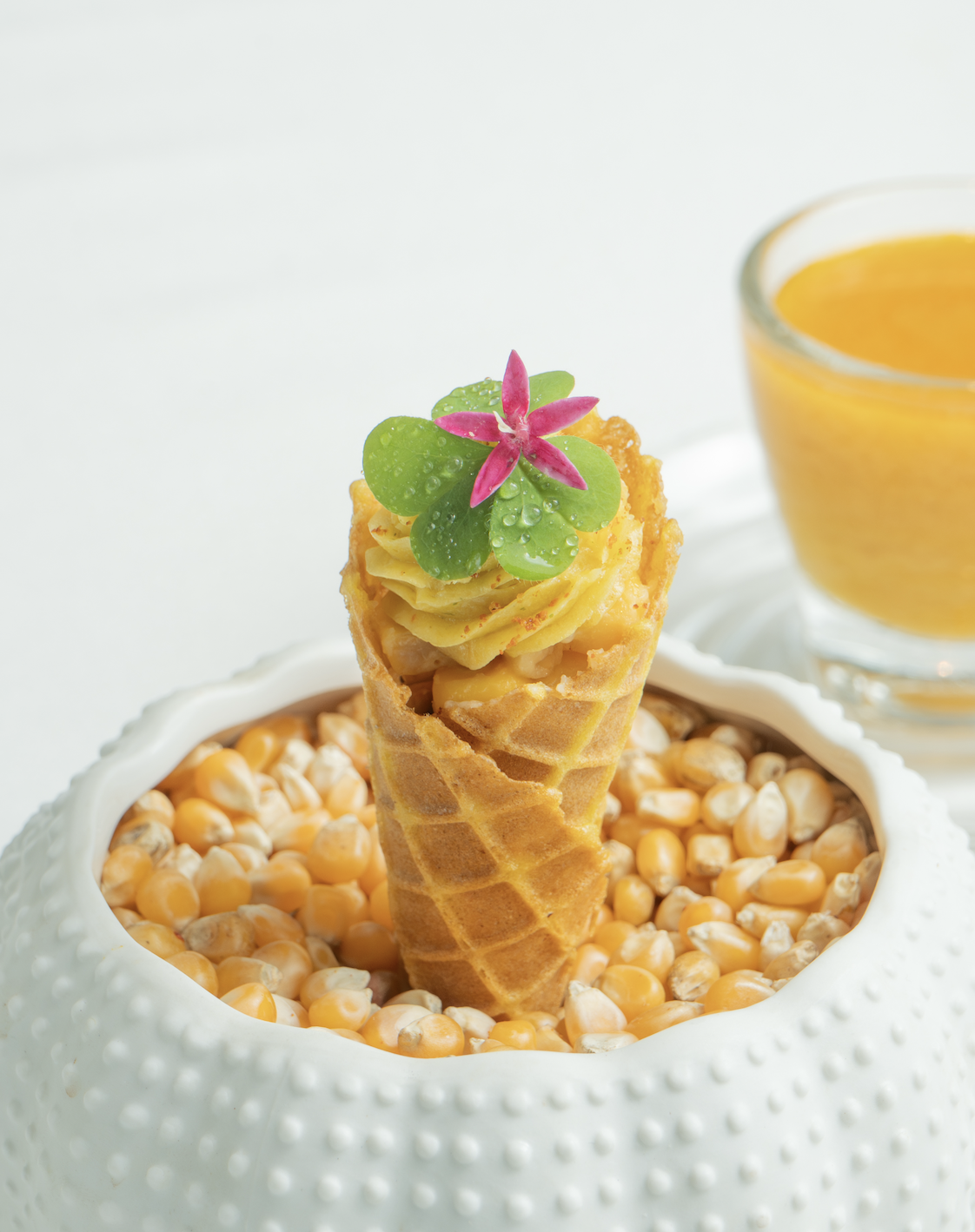

Avatara Mumbai’s Transcending Journey is not just dinner, it’s a pilgrimage of the palate where farming legacies meet modern artistry, and where vegetarian cuisine emerges not as a limitation but as a revelation. A bitter gourd dish, often dreaded, turns out to be unexpectedly thrilling and even the wallpapers echo the human body’s chakras: the Third Eye, Throat, Crown, and Heart: signifying how each of us carries a different energy centre.
The Third Eye Chakra represents intuition and awareness, the Throat Chakra communication and self-expression, the Crown Chakra consciousness and connection to the divine, and the Heart Chakra love, compassion, and emotional balance.
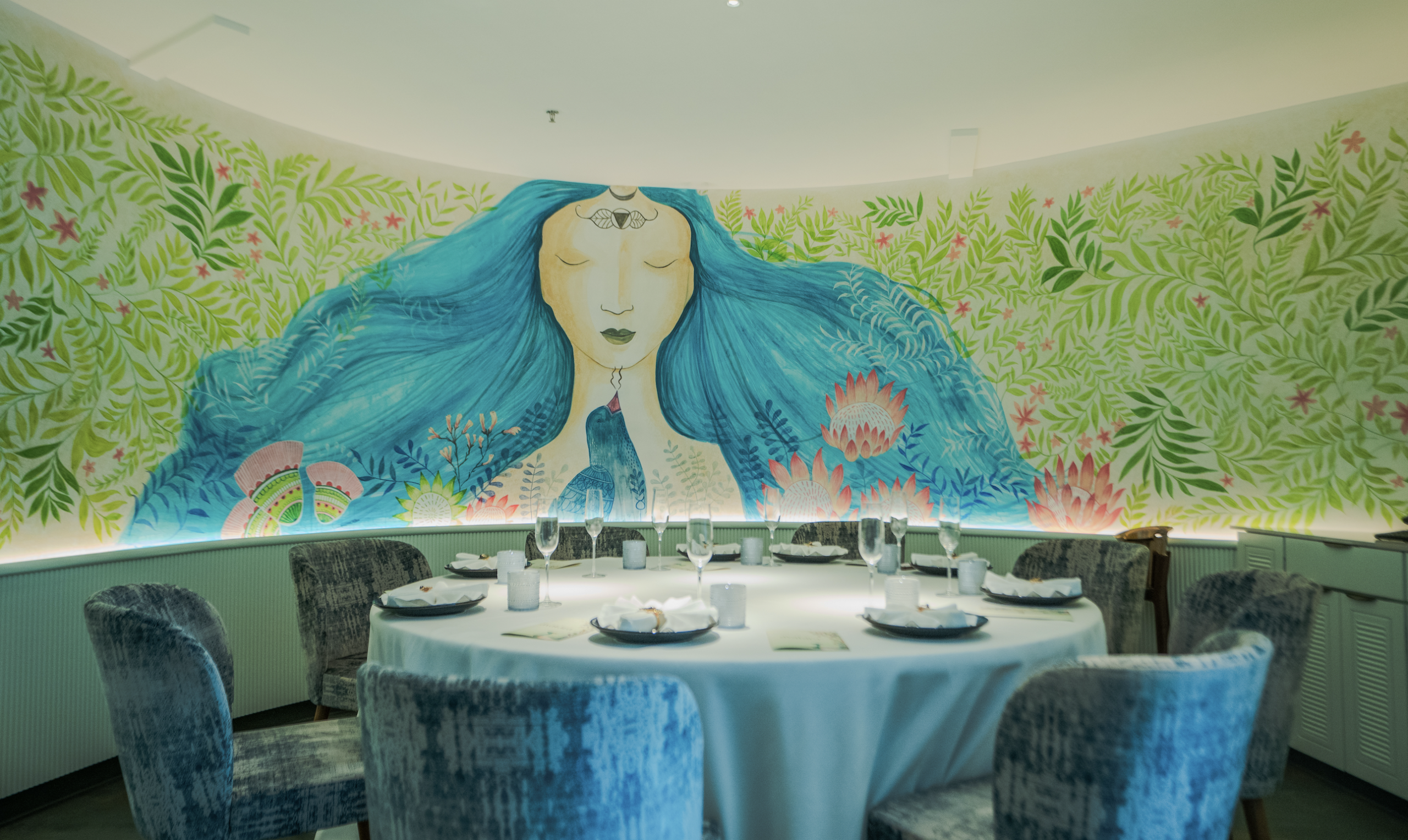
Dining here feels like aligning those energies through food, where every dish is an act of balance and awakening. If you’re celebrating an anniversary, a milestone, or simply the fact that you survived another week in Mumbai traffic, Avatara is where you go. Because some meals don’t just end- they linger, like memory, perfume, and good champagne.
You May Also Read:
In Conversation with Chef Ritu Dalmia on 25 Years of DIVA
Onam on a Plate: Where to Relish Sadhya in Mumbai & Bengaluru