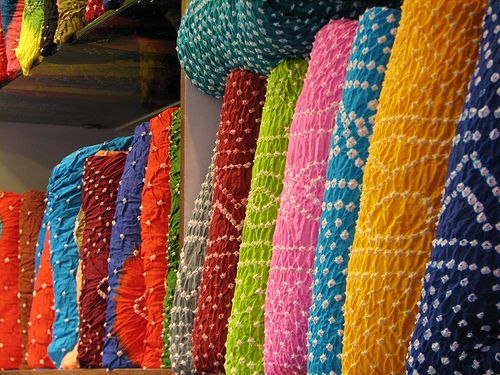
India and Denmark come together to support artisan driven bandhni, ikat and other ancient handicrafts
- Art Fashion Featured
 Arushi Sakhuja
- 11 minutes read

Payel Majumdar Upreti
They say there is no bigger draw than art, and the two countries of India and Denmark are banking on it for a unique program for 2023.
The external affairs ministries of both India and Denmark have announced a collaboration, where artisans from both countries will live together, and work together in a special program called Textile Master Program. Dutch screen printers will explore five different kinds of Indian handicrafts, including Hand Block Print, Hand Applique, bandhani tie-and-die, kantha stitch embroidery and ikat weaving. In a press conference last month, the collaboration was announced, attended by two master artisans and the Danish ambassador to India H.E. Freddy Svane.
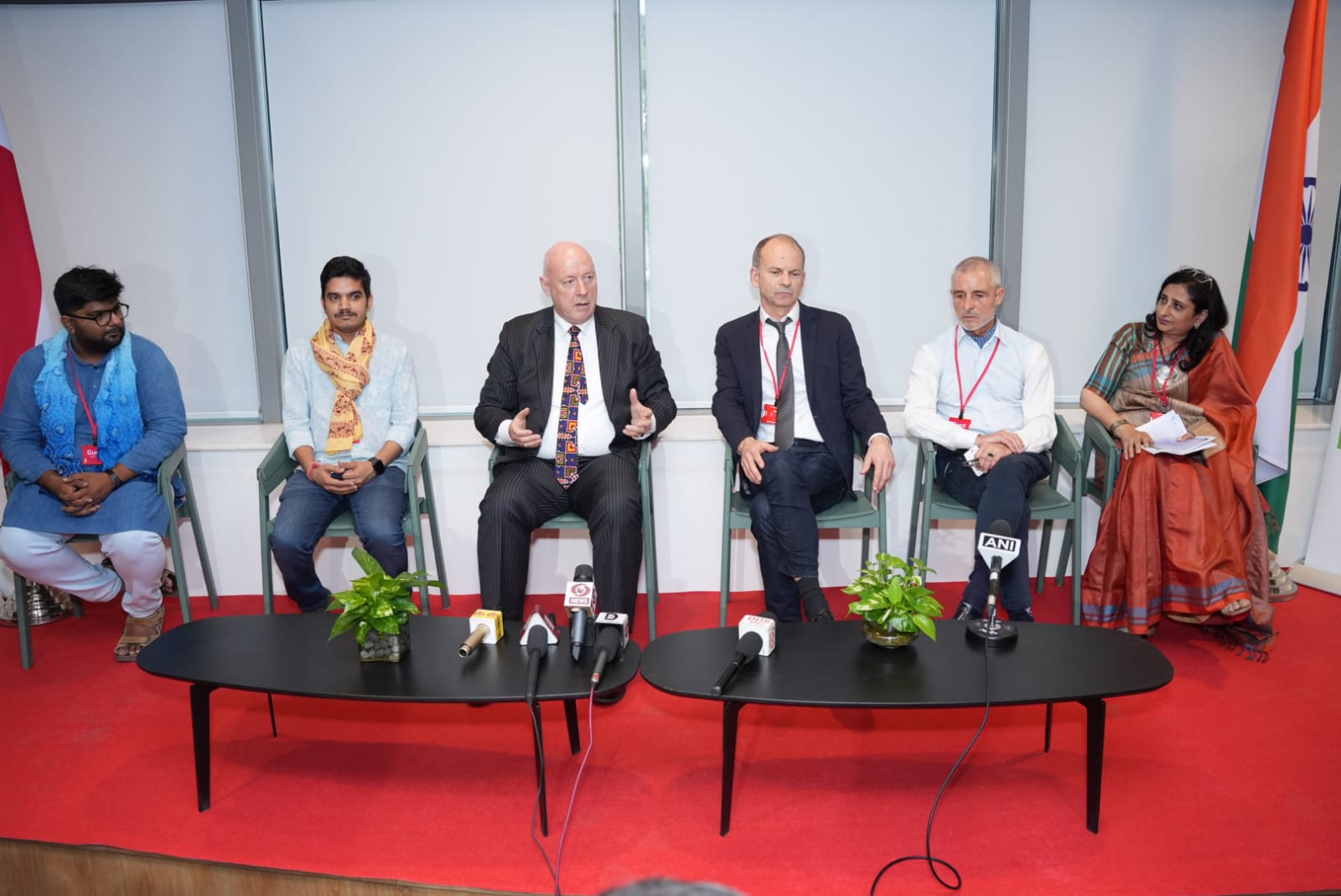
The program is supported by the Ministry of Culture, Denmark and the Ministry of Foreign Affairs of Denmark, in partnership with All India Artisans and Craftworkers Welfare Association (AIACA) and Danish Art Workshops.
The program is going to go on in 2023, starting early on where five Dutch artists will travel to India to work and stay with the five chosen Indian master artisans.
Sometime later in the year, Indian master artisans will travel to Denmark to conduct workshops for Danish artists, hosted by The Danish Arts Workshops, Copenhagen. The artists chosen include Khushiram Pandey for hand-block painting, with Danish artist Anne Fabricius Møller. Khushiram Pandey is a fifth-generation block printing artisan and designer from Chhipa Community Sanganer. Anne Fabricius Møller from Denmark is an esteemed textile designer, who has worked extensively with block print in alternative ways. She is also the recipient of the Danish Arts Foundation’s Honorary Award and wants to use block printing techniques on textiles. Gaurav Choudhary, with eight years of experience in training artisans in the Craft and Begitte Lynge Andersen from Denmark, is a textile designer with years of experience in applique work. Begitte operates within the hand-crafted field, with mainly screen printing as a focal point but also involves other integrated techniques. Adil Mustak Khatri with Katrine Hoff.
Adil Mustak Khatri, who was present at the venue, is a fourth-generation artisan from Kutch, who revived his family tradition of bandhej. He will be working with Katrine Hoff, who is a Danish visual artist who is fascinated by the ancient knowledge and craftsmanship within the world of textiles. We caught up with the ambassador to ask him about the program.
What is the link between this art project and sustainability?
Art has been developed through many generations, we have had rich cultures with centres established thousands of years back. India is a living civilisation, as a nation, you have been able to develop traditional cultural ways of expression. Therefore, sustainability is also keeping in mind what has been developed thousands of years ago. These traditions and artisans are part of the same past, and it is so important to utilise the knowledge that has been passed on for generations for a more sustainable way of living.
View this post on Instagram
What do you hope to achieve with this programme?
The Denmark artists will be coming in the late autumn of 2023. According to him, “How can you have a collaboration which is not two-way around? Art is not just about doing something, it’s also about understanding why people are passing on their lifestyles from generation after generation. Art is not just for display in museums, it is an intervention, for a way of living.”
India has so many art traditions spread across the country. We had to start somewhere, if you drop a stone in a lake, then you see ripples spreading, and that is what we hope to achieve with this programme.