Luxury’s flatline year: 2026’s Desire Deficit
- Featured Retail
 Yashita Damani
- 14 minutes read

The pendulum has swung from exuberance to restraint. Even the world’s largest luxury conglomerate, LVMH, is feeling the strain. The group’s shares have plunged nearly 28% in early 2026, marking their worst start to a year on record and signalling growing investor anxiety about the future of the luxury sector.

The Gilded Plateau: Why Luxury Can’t Just Raise Prices Anymore
Luxury brands, once buoyed by successive waves of price hikes, are now facing a sharp recalibration. In 2022, average prices across the sector rose by an aggressive 8%. By early 2025, that rate has slowed to approximately 3% – the most subdued pace since before the pandemic. (McKinsey & Company Bain). This deceleration reflects a clear shift in consumer sentiment, driven by widespread “price fatigue” and compounded by broader macroeconomic pressures, including the looming threat of US import tariffs on European luxury goods.
Put simply, luxury brands are now reckoning with a reality their consumers have long internalised: the price has outpaced the desire.
From ‘Limited Edition’ to ‘Limited Demand’
While maisons like Hermès and Richemont’s jewellery houses continue to thrive through controlled supply and focused targeting of ultra-high-net-worth individuals, others including giants like LVMH and Kering are contending with declining sales and a slowdown in organic growth. Industry analysts largely concur: a meaningful recovery is unlikely before late 2026. LVMH posted a ~2% drop in 2024, while Kering saw steeper decline of around 12%.

War Clouds Over the Gulf’s Luxury Boom
Even the Gulf, long considered one of luxury’s most resilient growth engines, is beginning to show signs of strain. In Dubai (often dubbed the region’s luxury capital), retailers are reporting softer footfall as geopolitical tensions linked to the ongoing Middle East conflict weigh on tourism and discretionary spending across the United Arab Emirates. According to industry estimates cited by RBC Capital Markets, the Middle East accounts for roughly 5–10% of global luxury spending, with the UAE contributing nearly half of the region’s sales.
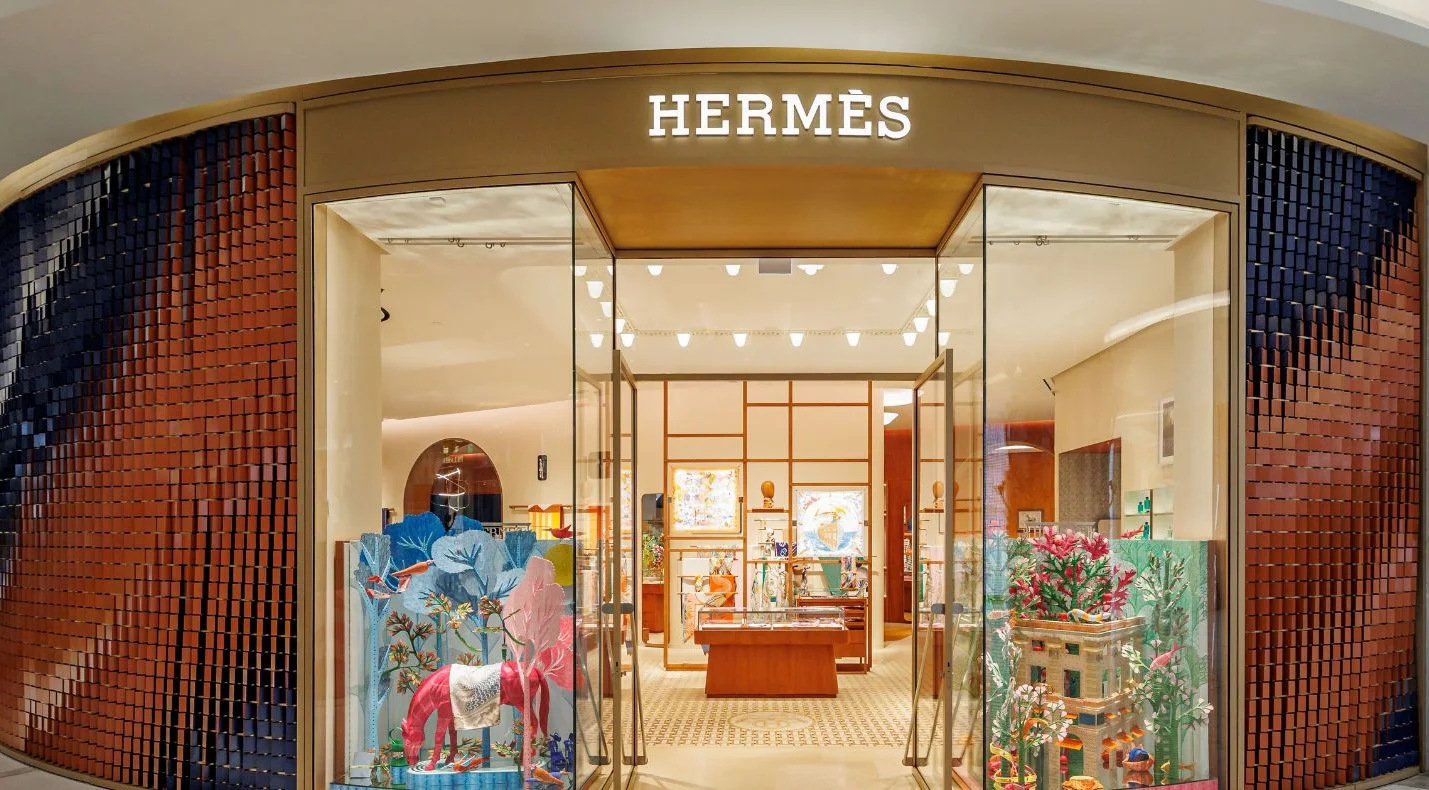
The immediate impact is already visible in the region’s retail hubs. Daily footfall at destinations such as Dubai Mall, one of the world’s busiest luxury retail centres— has reportedly fallen from around 250,000 visitors a day to roughly 190,000, as tourism slows and regional uncertainty dampens shopping activity.
For global luxury houses such as LVMH and Hermès, the Gulf had become one of the few bright spots as demand cooled in China and Europe. But with travel disruptions, shifting consumer priorities and geopolitical instability clouding the outlook, even this once-reliable luxury corridor is showing early signs of moderation.
A Fragile Facade

As 2025 progresses, the sheen of luxury appears increasingly vulnerable- not in craftsmanship or quality (or aura so to speak), but in consumer conviction. What once signified aspiration now risks being perceived as excess.
Luxury equities, long overvalued, have seen a correction over the past year, with valuations inching closer to reality. The pendulum has swung from exuberance to restraint. The aspirational consumer, once the lifeblood of the sector- is now beginning to question the premium. This is not merely a cyclical correction; it represents a deeper shift in sentiment.
Five Key Themes Reshaping Luxury in 2026
The Rise of Homegrown Luxury in China
While China remains a crucial player in the global luxury ecosystem, the landscape is shifting. Following a sharp sales slowdown in 2024, Chinese consumers (once the industry’s most reliable growth engine), are now more cautious. Despite government stimulus packages aimed at reviving domestic spending, recovery has been patchy and uneven.
What’s more, a new wave of national pride is propelling the rise of homegrown luxury brands that reflect Chinese craftsmanship and cultural codes.
Labels like NEEMIC, Icicle, and Shang Xia (Hermès-backed) are capturing attention for their minimalist aesthetic and sustainable ethos. Consumers are increasingly choosing brands that reflect their identity and values, rather than blindly gravitating toward Western logos. This isn’t just a reaction to global economic turbulence-it’s a cultural recalibration.
According to Istituto Marangoni, these domestic labels are outperforming international names in certain categories, a trend likely to redefine how global brands approach marketing and product development in Asia.
Price Recalibrations Replace Premium Inflation
Between 2021 and 2023, many luxury brands hiked prices aggressively: some by more than 20% (under the guise of exclusivity and inflationary pressure). That strategy, while lucrative in the short term, has begun to backfire. The luxury customer today is more discerning, often younger, and increasingly vocal about perceived value.
In 2024 and early 2025, several major houses including Chanel, Cartier, and Louis Vuitton quietly began stabilising prices, especially on entry-level goods like small leather goods, fragrances, and accessories. Rather than chase hyper-premium margins, brands are now focused on sustainable, long-term loyalty: often through improved product quality, exclusive services, and flexible pricing in emerging markets. This shift signals a broader recalibration: luxury is moving from ostentatious pricing toward meaningful differentiation.
Currency Volatility as a Double Edged Sword
Currency swings: especially involving the Euro, Yen, and Chinese Yuan- have created complex challenges and surprising opportunities for luxury houses. A weakening Euro, for instance, has made European-made products more attractive to foreign buyers. At the same time, fluctuating currencies complicate supply chain planning, pricing uniformity, and marketing strategy.
Brands with high geographic exposure in Asia are particularly vulnerable. For instance, when the Japanese Yen plunged in 2024, luxury shopping in Tokyo spiked among tourists but dwindled among locals. Similarly, brands heavily invested in Europe may see short-term export gains, but face squeezed margins on imported raw materials.
In this climate, financial agility is no longer optional. Luxury houses are increasingly relying on hedging tools and regionalised pricing models to navigate this economic minefield.
Store Consolidation and a Digital Shift
Luxury’s retail footprint is undergoing a quiet but significant transformation. After years of rapid expansion (especially in Asia-Pacific), brands are now consolidating their physical presence, shuttering underperforming stores and doubling down on experiential flagships in key cities.
Cities like Hong Kong, Bangkok, and Seoul have seen notable luxury exits in secondary retail zones, as brands react to dwindling foot traffic and shifting consumer expectations. In contrast, flagship stores in cities like Tokyo’s Ginza, Paris’ Rue Saint-Honoré, and Shanghai’s West Nanjing Road are being upgraded with interactive tech, private lounges, and bespoke services to deepen client relationships.

The ripple effects are already visible across the Middle East’s luxury retail hubs. In cities like Dubai, long considered a resilient luxury marketplace whereas now retailers are reporting a noticeable slowdown in store traffic. Footfall at destinations such as Dubai Mall has softened as regional uncertainty and reduced travel flows weigh on consumer activity across the United Arab Emirates. Even categories beyond fashion, including luxury automobiles from marques like Ferrari and Maserati, have reported delivery slowdowns as the conflict disrupts regional demand.
This move reflects a shift from ubiquity to exclusivity: fewer stores, but better experiences.
The U.S. Market: Stable, Not Soaring
While consumer spending in the U.S. remains healthy, it’s no longer exceeding expectations. Brands like Gucci and Tiffany & Co. have seen consistent, if unspectacular, performance across flagship cities, with growth being driven more by brand activations and VIP clienteling than new customer acquisition.
Let’s just say- once hailed as a post-pandemic growth miracle, the American luxury market has now plateaued. This stagnation is tied to economic headwinds: rising interest rates, election-year uncertainty, and slowing real estate (all of which temper aspirational luxury purchases).
For now, the U.S. continues to be a reliable but mature market, one that demands innovation and emotional storytelling to maintain attention. In Asia, underperforming locations are being shuttered or repurposed. At the same time, omnichannel approaches and digital investments are accelerating as consumer behavior shifts
The Mechanics Behind the Slowdown
The reasons behind this deceleration are multifaceted but fundamentally anchored in two realities: a growing resistance to relentless price increases, and macroeconomic headwinds such as prospective US tariffs on European and Swiss luxury goods.
What Are “Catch-Up Opportunities”?
“Catch-up opportunities” refer to brands that held off on aggressive pricing during the pandemic and are now adjusting upwards to align with competitors and restore margins. Richemont’s portfolio: particularly Cartier, Buccellati, and Van Cleef & Arpels – exemplifies this trend. Their restrained approach between 2019 and 2023 now enables them to increase prices selectively, maintaining brand loyalty while offsetting rising operational costs.
Pricing Responses to US Tariffs
Several luxury houses have already acted to mitigate the impact of new US tariffs on European imports. For instance: Hermès executed targeted price hikes in May 2025 specifically to counteract tariff-induced costs whilst Gucci and Bvlgari, under the Kering and LVMH umbrellas respectively, have also adjusted US pricing to sustain profitability without triggering global consumer backlash.
India’s Rising Role in Global Luxury
India’s luxury market is gaining significant traction. With a rising population of affluent millennials and Gen Z consumers, a booming wedding economy, and increased brand literacy, the country has evolved from a “future potential” to an active hedge against traditional market slowdowns.
Retail players such as Reliance Brands Limited and Aditya Birla Fashion & Retail are investing heavily in mono-brand boutiques, bespoke events, and expansion into Tier-2 cities. Yet the true differentiator lies in the strategic cultivation of perceived scarcity – a lever that resonates deeply with Indian consumers, especially in the context of legacy brands.
The Year Luxury Was Left on Read
Whether due to luxury fatigue or economic reality, the era of blind loyalty among aspirational shoppers is waning. As consumers globally reconsider notions of value- and as markets such as the US and China evolve unevenly; luxury brands must rediscover how to cultivate desire without leaning exclusively on price elevation.
For India, this represents not a pause, but a pivotal opportunity. If brands can successfully navigate the nuanced balance between premiumisation and inclusivity, India may not only serve as a rebound market – but emerge as the frontline of luxury’s next phase of growth.
In 2025, fashion may have been ghosted by its most devoted admirer. But for those willing to adapt, this moment of humility may yet become a renaissance. The bags stayed in the store, the wallets stayed shut.
You may also read: The Original Birkin: From Airlines to Art, Sold for ₹85.7 Crore