Soho Theatre and NCPA present ‘The Gentlemen’s Club’ in Mumbai and London
- Art Featured Lifestyle
 Zara Flavia Dmello
- 11 minutes read

I’ve always thought Rekha would make the perfect muse for a drag act. In the West, drag performers channel icons like Cher, Tina Turner, and Patti LuPone—celebrating hyperbolised gender expression through legendary pop-culture personas. Bollywood’s golden era, with its dazzling costumes and exaggerated flair, offers similarly ripe material, yet India’s drag scene has been slow to embrace its own cinematic legends. What might Indian drag look like if it didn’t just borrow western formats but drew instead from the rich history of pop culture and the country’s delicious expressions of gender?
Last month, when I watched some of India’s most wonderful stage actresses boogey across Experimental Theatre in complete men’s get ups, I didn’t have to wonder anymore. To watch Srishti Dixit go from performing household comedy skits on a 9:16 screen to seeing her rap in Punjabi with a turban, fake beard, and gold chains—it was a sight to behold, and an entertaining one at that.
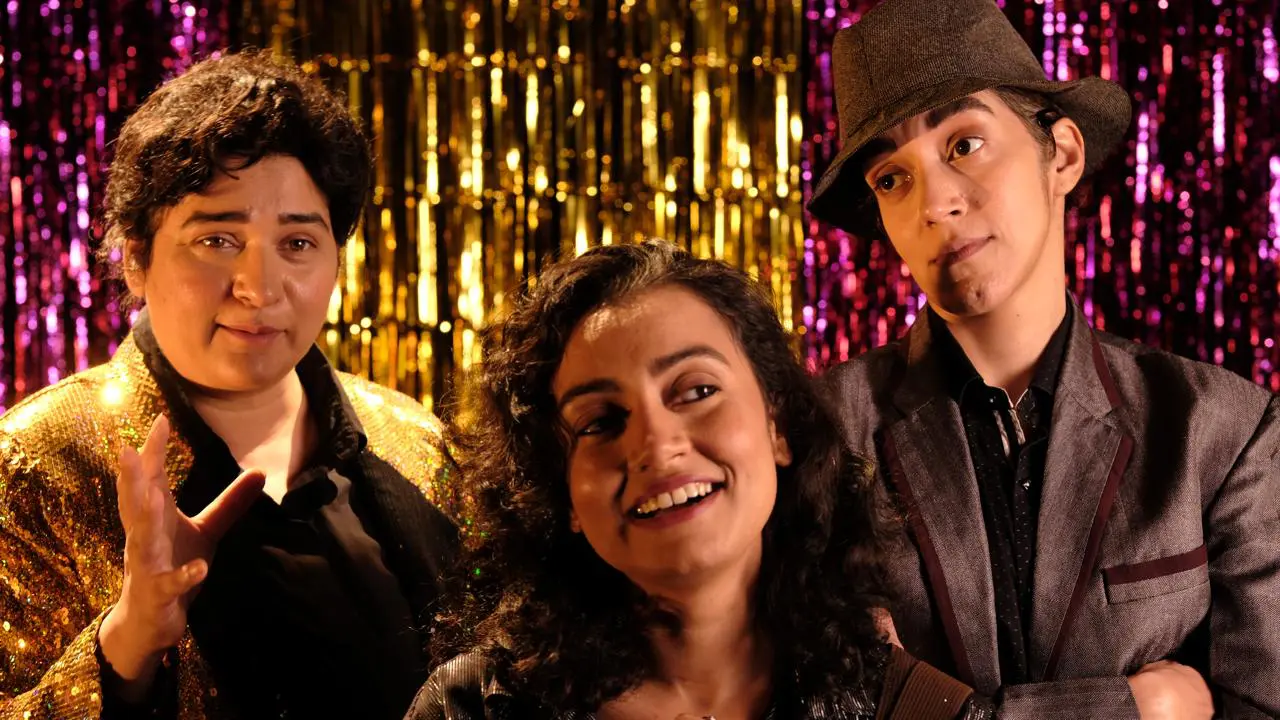
Sheena Khalid, who also co-wrote the play, was my favourite in a dual role swinging from suave androgyny to sultry femininity in a matter of minutes. Her performance as Begum Fida, a formidable Golden Era drag queen, which stole the show, finally allowed me the privilege of a Rekha tribute, with her rendition of Kaisi Paheli Zindagani.
The ensemble celebrated Bollywood’s legacy and explored what it means to perform masculinity in ways that feel distinctively Indian. In this production by Patchwork Ensemble, co-presented by the NCPA and London’s Soho Theatre, drag becomes an exploration of identity, gender, and desire in ways rarely seen on Indian stages.
Beyond bringing the glamour and grit of Indian drag to life, the play marks an important cultural exchange between two cities—Mumbai and London. With its international debut at Soho Theatre following the NCPA run, The Gentlemen’s Club offers a compelling platform for creative South Asian voices. Before the play was performed at Experimental Theatre on September 27 and 28, I spoke to the teams at NCPA, Soho Theatre, Patchwork Ensemble to learn more about this collaborative theatrical exchange and what they hope to achieve with such a show.

Patchworks Ensemble: We’ve performed around 60 shows of The Gentlemen’s Club at various venues across India since its NCPA premiere in 2015. As artists, we’ve changed over the years, and naturally, so has the show, but we’ve worked hard to preserve its original soul. Since 2015, we’ve taken the show to various cities, including Nashik, Guwahati, Lucknow, Delhi, and Bangalore, to name a few. We had to take a break due to the pandemic but now, with the performers finally able to come together again, it felt like the right time to revisit and spend time with this piece.
Patchworks Ensemble: The seed for this show came from various conversations. We at Patchworks, were keen on exploring the creation of drag king characters. Meanwhile, Vikram was in discussions with Gaysi Family, a queer organisation, to write a show about drag queens. When Vikram and Puja met for coffee one day, they decided to merge the two ideas, and that’s how The Gentlemen’s Club was born.
Patchworks Ensemble: While the premise may be similar—a play within a play—that’s where the similarities end. The exotic western club setting of Bollywood numbers of the 60s, where the cabaret numbers of Helen were set, was more of an influence. More than musicals, it’s experimental techniques in theatre, with a team of collaborators devising each moment, that gives shape to the play.

Patchworks Ensemble: The protagonist Rocky, played by Puja Sarup, draws inspiration from Bollywood icon Shammi Kapoor, who was known for his flamboyant style and larger-than-life screen presence in the 50s and 60s. While drag kings weren’t a visible or popular phenomenon in India during that era, Rocky’s Shammi is a playful nod to the cultural moment Kapoor represented—one of charm, rebellion, and fluid masculinity—which makes Rocky’s character both nostalgic and subversive in a drag king context.
Patchworks Ensemble: We hope that the audience sees it as a celebration of gender, of identity and our connection with Indian pop culture. We want them to have a good time hooting and cheering, loud enough for their friends and family in London to hear so that they can make it for the Soho theatre shows!
Patchworks Ensemble: The musical era ranges from old Bollywood films, to contemporary western pop music. We have an act where Amey Mehta, a wonderful Mumbai based dancer and choreographer does a number in heels! Of course we have Shammi songs as well since one of our drag kings is inspired by Shammi Kapoor.
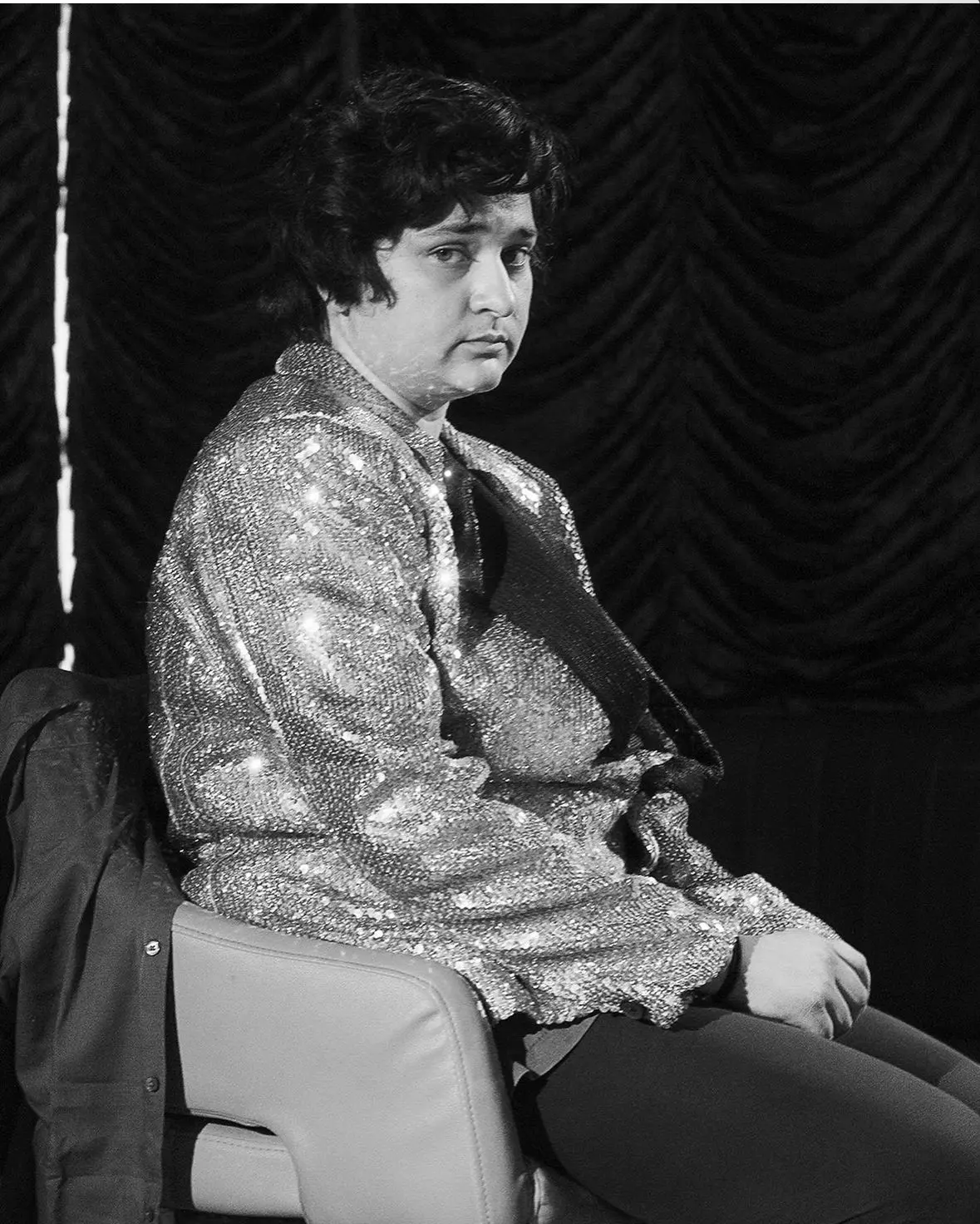
Beyond the play’s content and themes, the collaboration represents something much bigger. There is a kind of cultural exchange set to take place between two cities that share a mutual spirit of thespianism and performance art. How did the idea for this collaboration arise?
Bruce Guthrie, Head, Theatre & Films, NCPA: The idea for this collaboration began with a shared desire to expand the reach of Indian theatre and comedy to a global stage. Soho Theatre has done incredible work in supporting Indian stand-up comedy artists. The Gentlemen’s Club was the perfect show to take to Soho as our first theatre collaboration. It’s bold, fresh, and carries a voice rarely seen internationally, making it an ideal piece to spark conversations and exchanges between the two cities. There’s a wonderful synergy between what we’re trying to achieve at NCPA and what Soho has been doing for years—creating platforms for unique, authentic voices in theatre and comedy.
Pooja Sivaraman, Creative Associate at Soho Theatre: An exchange of international perspectives is incredibly beneficial to artists in the development of their craft. London has such a vibrant landscape of art and performance, which Soho Theatre has been at the centre of for decades. My experience in theatre is spread across the UK and India, and part of my remit as Creative Associate is to further build Soho Theatre’s connection with South Asian theatre-makers. This co-presentation will platform an exciting show from India, and hopefully create a legacy of regular exchanges with South Asian artists. There is already a profound traffic of artistic exchange between India and the UK, and we aim to continue to platform the exciting talent that emerges from this space.
Visit Soho Theatre’s website to know more.