The Commercialisation of Indian Craft in Luxury Décor

By: Meera Pyarelal, Founder & Creative Director– Temple Town
There is a quiet shift happening in the world of luxury interiors, one that doesn’t announce itself loudly but instead unfolds like a well-woven tapestry. It is the emergence of heritage not as nostalgia but as an asset. Of craft not as décor but as identity. And of history not as memory but as modern currency.

In this evolving landscape, Indian craft is being recast subtly, gracefully and deliberately. No longer confined to cultural exhibitions or wrapped in the language of preservation alone, age-old art forms are stepping into homes across the world, speaking fluently the language of contemporary luxury. The evolution is not radical but resolute. With every Pichwai panel framed on a minimalist wall, every console inlaid with the fineness of Bidriware, and every handloom silk stretched across a bespoke armchair, a quiet redefinition is underway.
Design, after all, has always drawn from memory. But today’s most sophisticated interiors seek not replication of the past, but a reinterpretation of it. Craft is no longer a footnote. It is the headline. And nowhere is this transformation more evident than in the work of design-led studios who understand the nuanced relationship between culture and commerce.
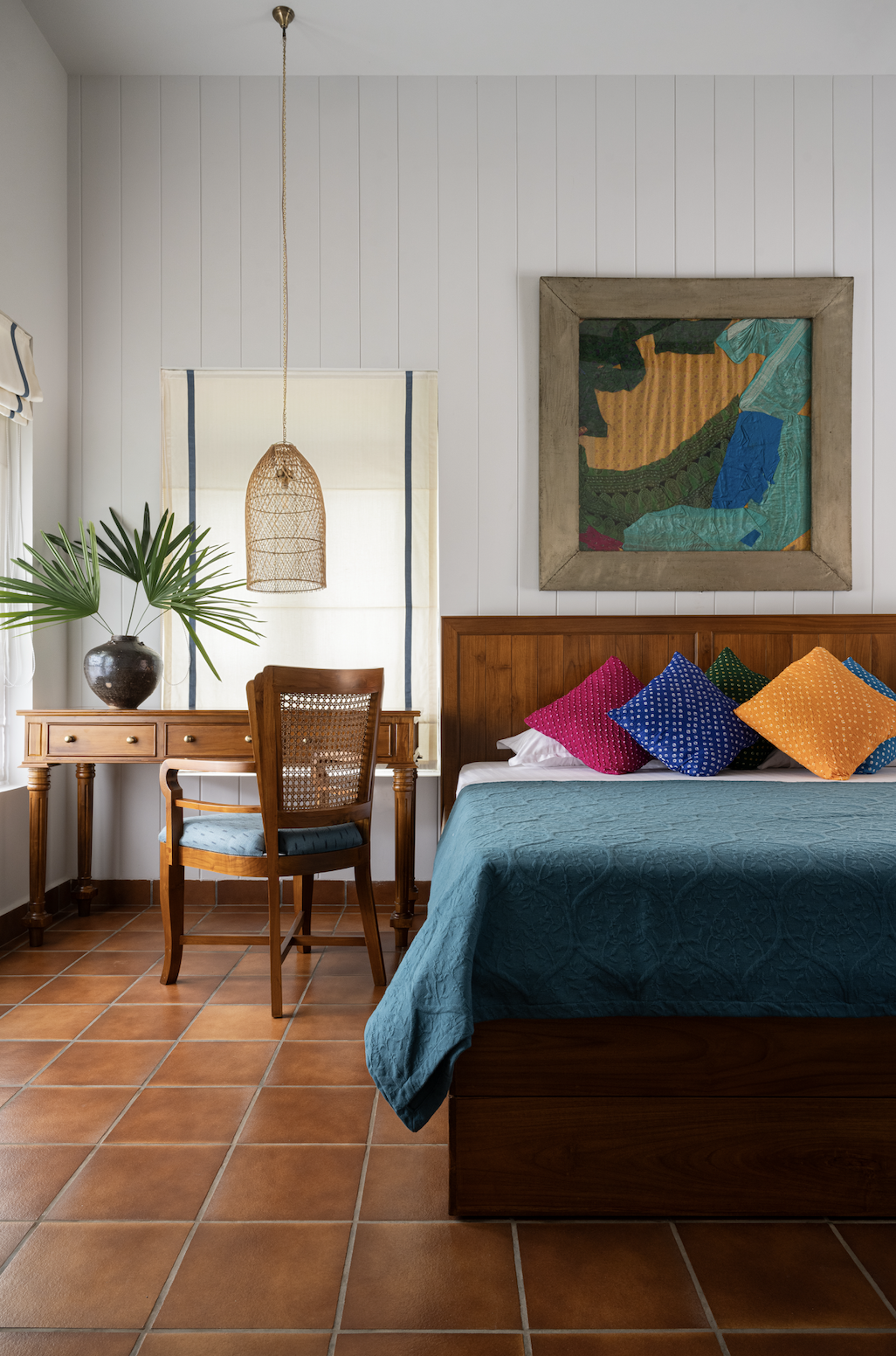
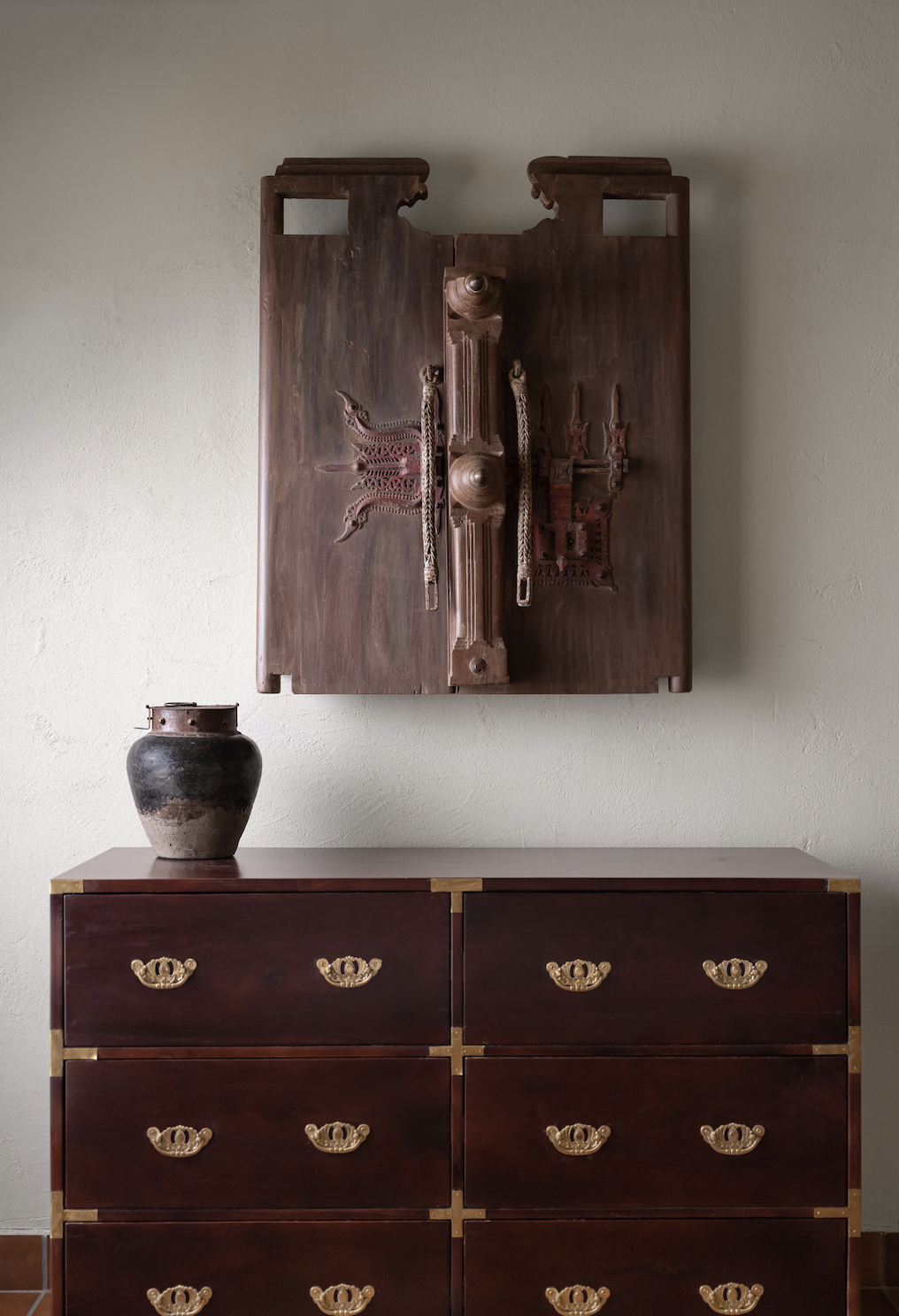
Temple Town, for instance, stands at this very intersection. Founded by Meera Pyarelal, the brand emerged from a deep reverence for Indian craft traditions and a desire to reframe them, offering design that is both soulful and scalable. The pieces are unmistakably rooted in Indian heritage, but they wear their history with quiet confidence, not theatricality. A carved teakwood cabinet doesn’t scream vintage. It simply knows where it comes from.
To treat heritage as an asset is not merely to preserve it but to allow it to evolve. The crafts that once served courts and rituals, be it the luminous drama of Pichwai paintings, the intricate motifs of handwoven brocades, or the storied elegance of metal inlay work, are being adapted for new contexts, new purposes and new markets. This adaptation is not dilution. It is dialogue.
The global appetite for meaning, provenance and authenticity has never been stronger. As the world grows weary of the mass-produced and the impersonal, there is a renewed desire for pieces that carry a trace of the human hand. Objects that are both tactile and timeless. It is in this climate that Indian crafts find their renaissance not just as decorative accents, but as essential components of a new design language. A language in which the past is not erased but eloquently rewritten.
This rewriting, however, calls for a certain kind of stewardship. It demands designers who are not merely aesthetes but also cultural custodians. It calls for business models that go beyond beauty to build sustainability for both artisan and enterprise. The commercialisation of craft, when done without care, can erode its essence. But when done with vision and integrity, it becomes a powerful form of preservation.
“As designers, we are mere conduits for centuries of untold stories. Our job is to let tradition speak, only louder, bolder and with purpose,” says Meera Pyarelal. Her words echo the ethos that guides Temple Town, one that treats craftsmanship not as a trend to be mined but as a legacy to be nurtured.
Indeed, the idea of scalability in craft has long been misunderstood. To scale does not mean to mass-produce. It means to replicate care at scale. It means building systems that allow artisans to thrive, not just survive. It means integrating technology where needed, but never at the expense of the human narrative. And it means reimagining craft not as a cottage industry but as cultural capital.
There is something quietly radical about placing a hand-painted tholu lamp in a sleek urban apartment, or upholstering a mid-century style chaise in Kanjeevaram silk. These juxtapositions are not contradictions. They are harmonies. They speak of a new kind of luxury, one that doesn’t rely on extravagance but on depth. On stories. On slowness.


Design entrepreneurs today are not just crafting furniture or curating aesthetics. They are building ecosystems, collaborating with artisan communities, investing in skill-building and creating fair and enduring value chains. The result is a marketplace that feels less transactional, more intentional. The buyer is not simply acquiring a product. They are participating in a continuum.
Temple Town’s own journey reflects this sensibility. From its early beginnings in Kerala, the brand has quietly carved a niche in the premium decor space, not by following trends but by staying rooted. Each piece is an invitation to pause, to trace the hand that made it, to feel the texture of time. It is this very sense of rootedness that allows Temple Town to travel far, its work finding homes in cities across the world, each time adding a layer of Indian storytelling to contemporary spaces.

This is the new face of heritage, versatile, visionary and valuable. An asset class not in the financial sense alone, but in cultural and emotional terms. When craft becomes commerce with conscience, when history finds a place in the heart of the modern home, and when luxury is defined not by price but by provenance, something profound happens.
It is not just the craft that endures. It is the culture. The memory. The meaning.
And that, perhaps, is the greatest luxury of all.