Ekaya reinvents Banarasi Weaves in A Collection That is Inspired from The Far-East
- Design Featured
 Yashita Damani
- 10 minutes read

Ekaya Banaras looked further east this wedding season in a cross-country collaboration for their latest collection. LuxeBook in an exclusive interview with Palak Shah
By: Payel Majumdar Upreti
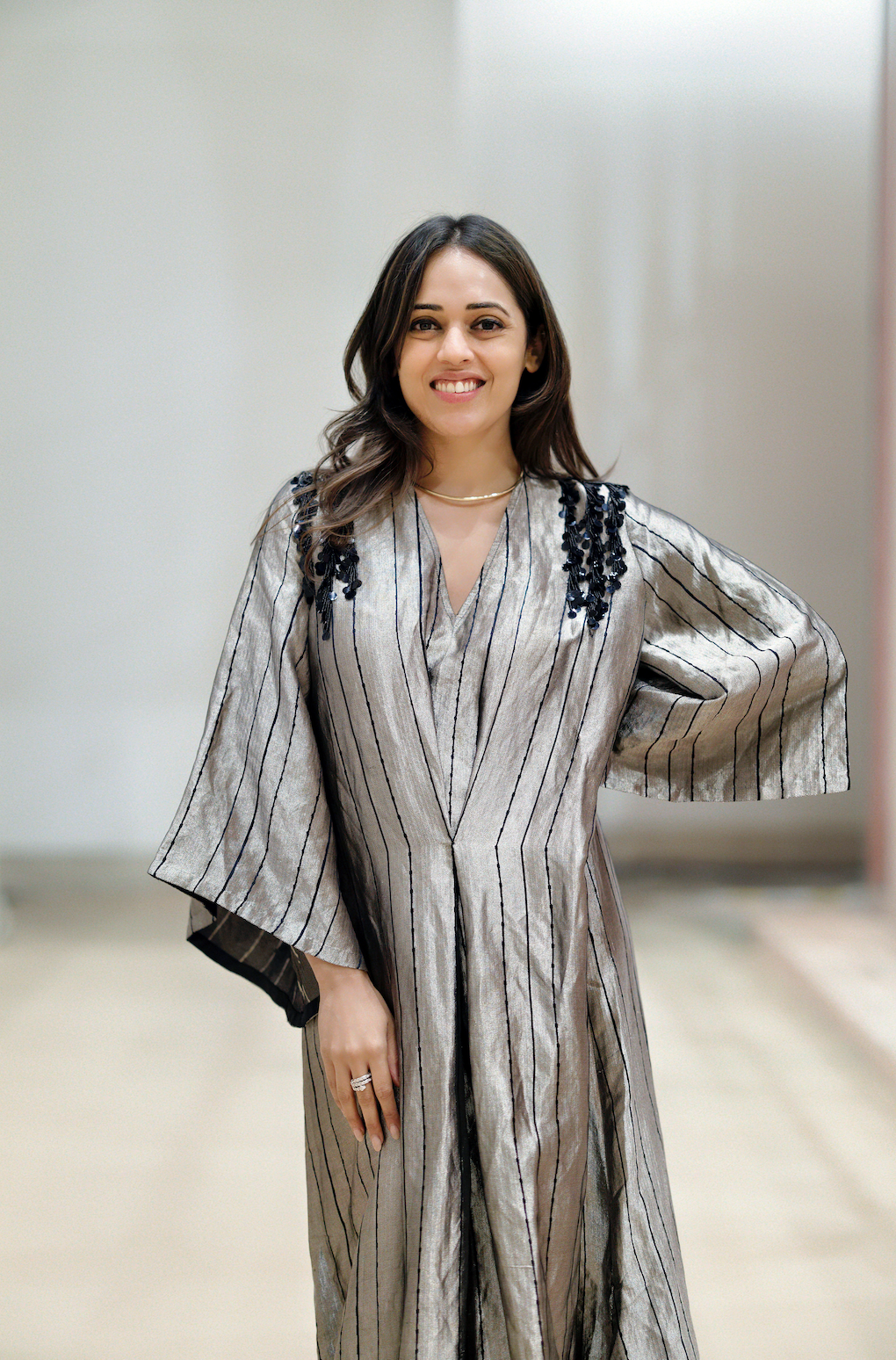
When Palak Shah, Founder and CEO of Ekaya Banaras debuted in the Indian couture scenario, Banarasi weaves always had the ‘old school’ tag attached to them. By championing variations of the weave and designing for a modern audience, Ekaya has established a genre of its own, one that many design houses now emulate. LuxeBook caught up with Palak Shah, the brains behind Ekaya Banaras to understand how her family’s heritage and her personal design language fuelled a brand that stands for carrying forward a true Indian legacy.
Says Shah, “Banaras is the soul of Ekaya. Its history, craft, culture and symbolism continues to nourish our design process.” Their new collection, however, is nowhere close to traditional. The collection, meant for weddings, and other festive occasions reinterprets Banarasi weaves and traditional drapes entirely, taking inspiration along the silk route. Says Shah, “The Ekaya bride values tradition, yet has a modern worldview when it comes to design. She’s someone with a strong sense of identity, a distinctive personal style and values a certain timelessness in her wardrobe choices. She’s someone who believes in cultivating a very personal closet informed by craft, colour and culture as opposed to something trend-led or short lived.”
Shah informs us how she believes that their client’s aesthetic evolves pretty much like the house of Ekaya – “relentless experimentation and innovation with weaves and drapes”. More than anything else, Shah believes Ekaya’s customer as a free-spirited soul, who expresses her femininity through the power of her thoughtful closet – steeped in mindfulness, craft and creativity.
It is a fine balance between traditions and modernity, and Ekaya Banaras enjoys walking on that tightrope, keeping the soul of a living heritage alive, while not taking it in such a sombre fashion that it chokes design.
Says Shah, “At Ekaya, we are all about keeping the soul of Banarasi intact while giving it a fresh spin and our newest wedding collection embodies that ethos.”
Far-East
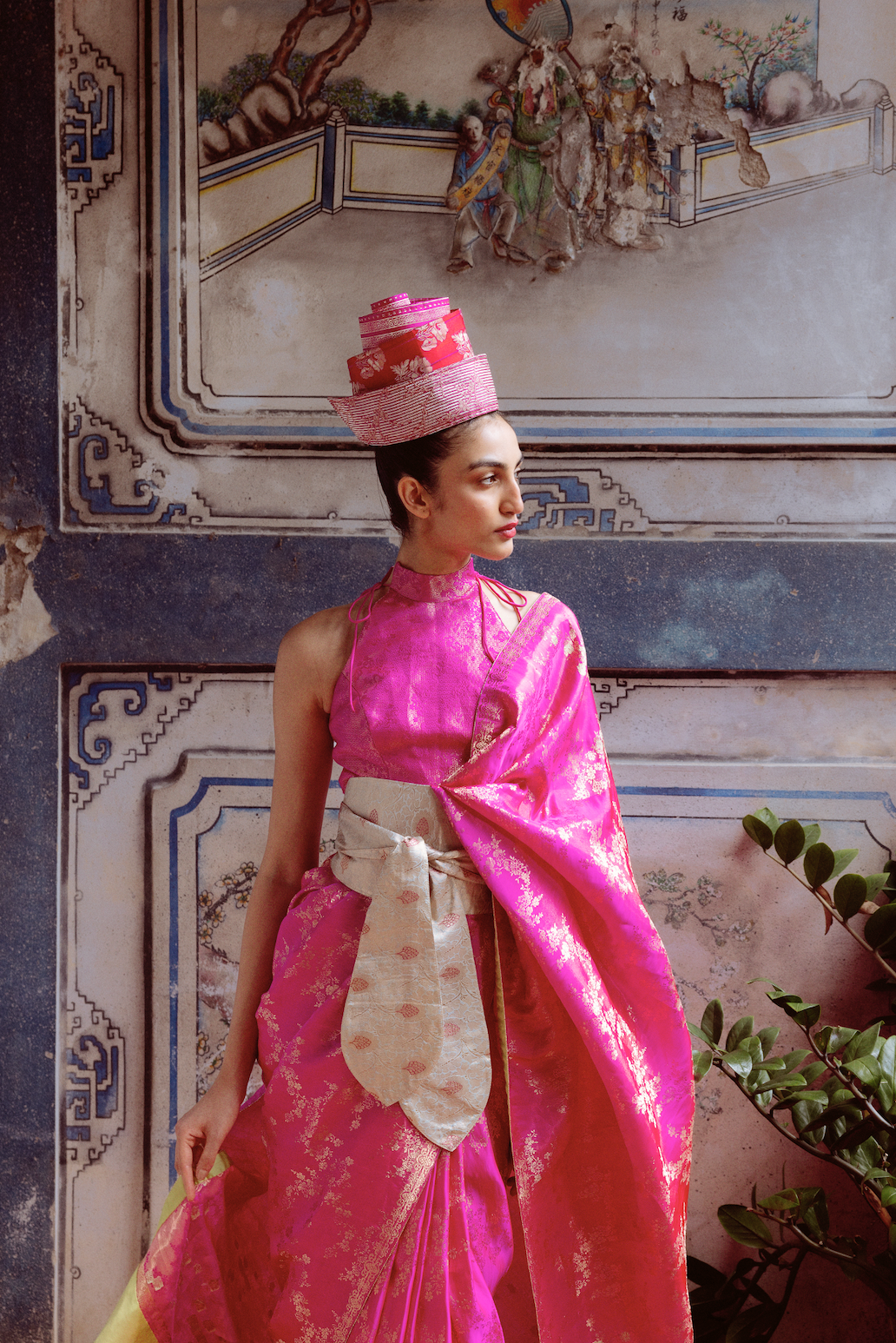
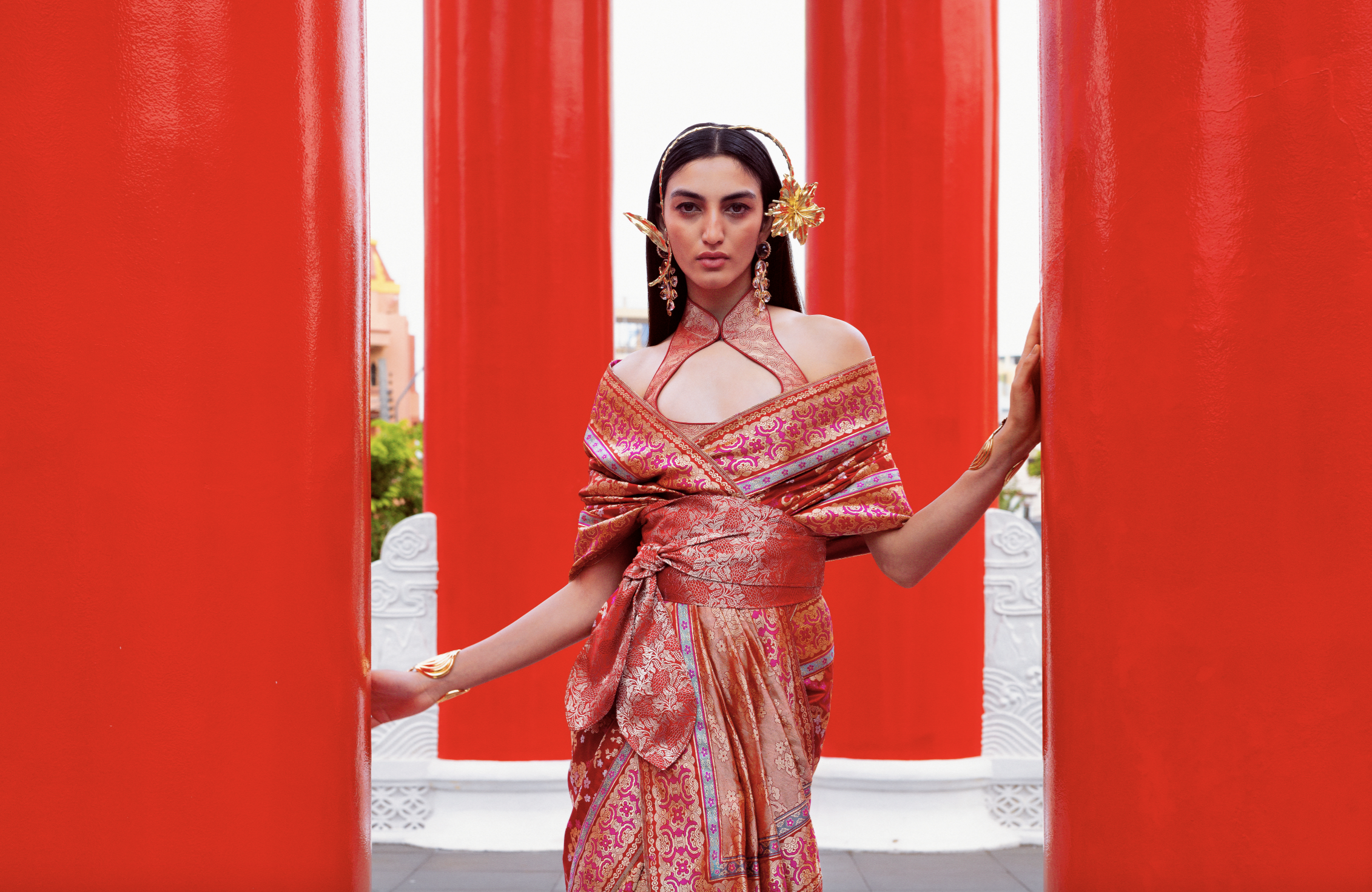
Their latest collection is a good example of the spirit of innovation that the brand wants itself to be associated with. “With our latest collection, we initiate an artistic Silk Dialogue centered around Ekaya in ChinaTown – a cross pollination of motifs, ideas and techniques. It’s an invitation to rediscover the bold brocade viewed through a cross-cultural lens. Each ensemble lends itself beautifully to myriad occasions and can be reworn and restyled in multiple ways depending on one’s mood and outing.”
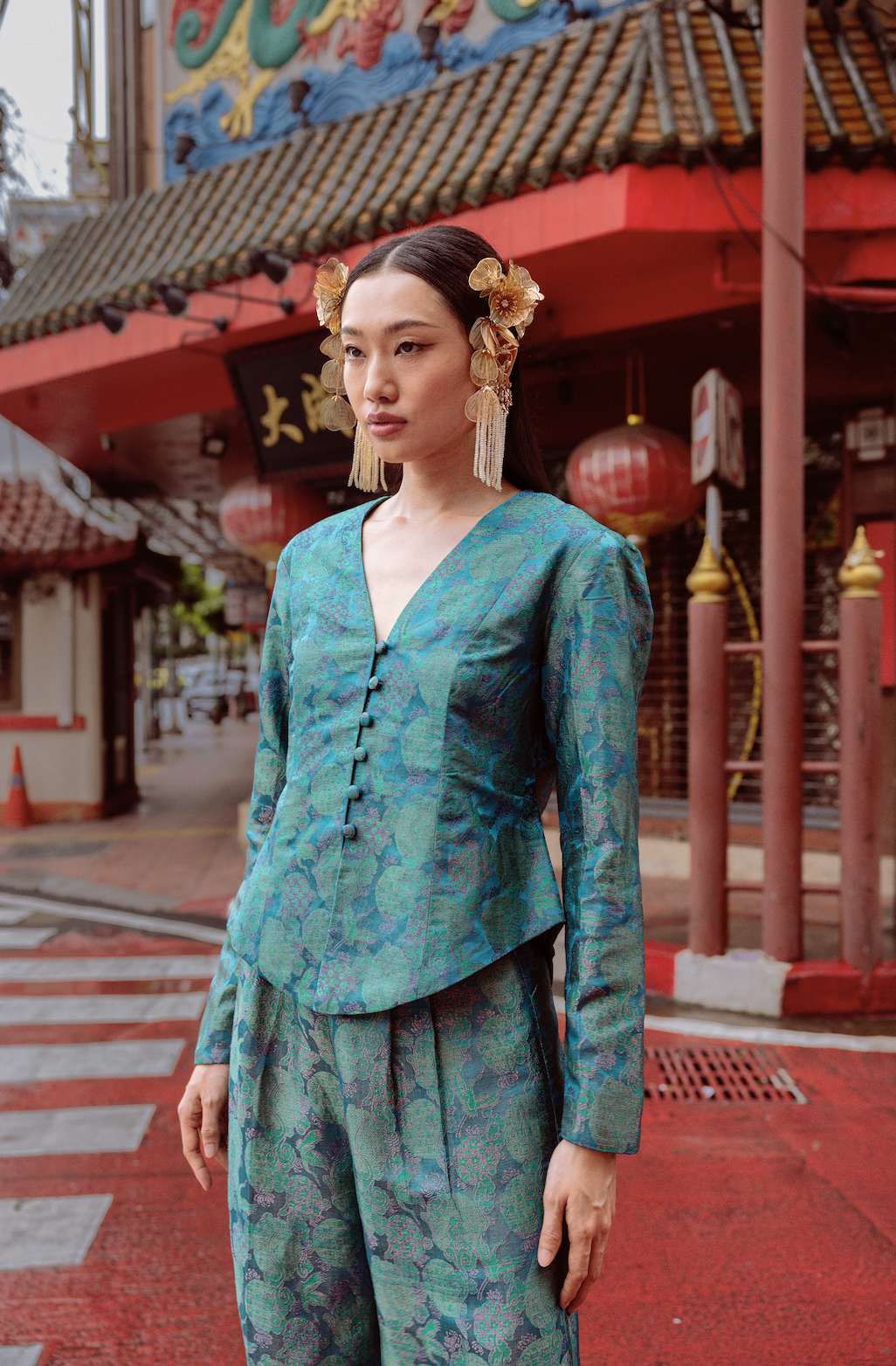
The collection moves across silhouettes: sarees, lehengas, jackets, shawls and an entirely new universe of blouses. Says Shah, “The blouses are a story on their own—innovative cuts, rare details, and unexpected shapes you’ve never seen from us before. We’ve truly had fun with them: mandarin collars, sculptural seams, knot buttons and sharp, playful lines that invite endless styling.” The images from their shoot in Bangkok are self-explanatory, these outfits have been designed to be worn in modern spaces, freed from the weight of customs associated with Banarasi saris, limiting them to formal and traditional occasions.
Says Shah, “Like always, we wanted to prove that the Banarasi saree and everything that it inspires can travel anywhere, adapt to any voice and be recontextualised again and again. With every thread we weave we show that tradition is not fixed, it moves, transforms and speaks in every language imaginable.”
India sits at the heart of this tapestry in their imagination. Its textile traditions are centuries old, shaped not only by its own artisans but by neighbours and travellers who brought ideas, motifs, and techniques across borders. Shah’s collection is a ready witness to this exchange of culture that they have portrayed, “Trade and commerce carried more than goods; they carried culture. Few connections were as powerful as the Silk Route, that two-way highway of silk, spice, art, and philosophy that forever linked India and China.”
For this collection, Ekaya has looked into forgotten motifs and revived weaving patterns that were born of this cultural exchange.
Says Shah, “Each drape becomes a map of shared heritage woven in threads of silk. We looked deep into Oriental art, architecture, and the symbolism of gold in South Asian and East Asian cultures. From rich mashroo silks inspired by the ancient gyasar weave of the Chinese ‘Hanfu’ to the most fluid Banarasi silks we’ve ever created, every piece is designed to drape the Ekaya way. Porcelain whites, Imperial reds and Jade greens blend seamlessly with our rich Banarasi DNA.”
From dragons, peonies, cherry blossom, cranes, tigers, and lotuses, each has been carefully reinterpreted and translated into the fabric with precision, tells Shah. Many of the sarees are handcrafted in Tanchoi, with their smooth lustrous surface capturing these details with remarkable clarity and bringing a new dimension to our Banarasi DNA. These intricate Oriental details then flow through a palette of turquoise, teal, deep purples, and vibrant hot pinks – shades rarely seen in Banarasi textiles.
Cultural Dialogue
Unlike other ateliers, Shah’s weavers are at the centre of each design, and it is a democratic dialogue maintained within Ekaya Banaras for every outfit, a culture that takes its root from tradition.
Shah encourages this cultural dialogue and nurtures it to its full potential, “It’s been a seamless symbiotic journey of brainstorming and learning from each other. Their magical fingers are definitely the protagonist of the design story as they bring our vision to life with care, skill, precision and passion. ‘Silk Dialogue’ is born from that relationship, made possible by the unmatched skill and innovation of our Banarasi weavers.” Shah sums up, “Cross-cultural dialogues, exchanges always result in a new design language with unexpected motifs, colours and references. Silk Dialogue is a stroll through Chinatown, a dance of cultures, and a love letter to the centuries old cultural exchange that inspires us.”
The Wedding Market
Shah feels that the Indian wedding space is at an interesting juncture where the new-age bride wants something which is personal and resonates with her core cultural values. “She may opt for a sari gown for cocktails but for a pre-wedding mehendi or sangeet, she wants to don a craft-led piece crafted with indigenous textiles. She may want to style her brocade lehenga with a bold bralette or a corset but she’s aware of the craft and the number of hours which went into bringing the creation to life.” Hence there’s a new sense of pride among brides and bridesmaids who value Made In India labels for special occasions and wedding ceremonies as these pieces are heirloom worthy and last forever and can be passed on. Also, with consumers getting more eco-conscious they want to invest in timeless pieces essaying a seasonless appeal as opposed to mindless spending.
You may also read: Luxury Advent Calendars I’d Actually Spend My Money On!