Sleek Designs, Hearty Meals: Gaggenau in India’s Kitchens
- Design Featured
 Staff Writer
- 11 minutes read

When thinking of kitchens in India, the mind jumps to heady aromas of slow-cooked spices or the clatter of brass vessels—a scene far removed from the sleek surfaces and minimal designs of the modern, modular kitchen. So what role, exactly, can a luxury brand like Gaggenau play in a country where cooking is deeply rooted in tradition? At first glance, India’s culinary culture—marked by large family meals, high-heat cooking, and time-honoured recipes—may appear worlds apart from the quiet precision of European kitchen aesthetics. Yet, in today’s rapidly changing market, Indians are embracing built-in kitchen appliances, and Gaggenau is finding its place at this intriguing intersection of old habits and new lifestyles.
At Gaggenau’s Pune retailer, I had the opportunity to take a walk around the store, eat food cooked in their stellar kitchens, and most insightfully, have a conversation with Saif Khan, MD & CEO of BSH Home Appliances India, and Sven Baacke, Global Head of Design at Gaggenau. We discussed how this 300 year old German brand is adapting to the modern Indian kitchen and their preferences. From gas burners tailored to local cooking styles to the surprising influence of children on appliance purchases, they shared insights into navigating the complexities of a market as diverse as India.
India is a colourful country. We love loud colours, shine, patterns! My first thought when hearing about Gaggenau’s kitchens was, “how exactly will these sleek designs fit into India’s maximalist tastes?”
Saif Khan: You know people often assume luxury preferences differ between countries, but I don’t see much difference personally. I’ve travelled to almost half of the country in the last year and a half, mainly visiting kitchen dealers and I see, along with the enormous potential for built-in kitchen appliances, that whether in India or abroad, customers gravitate towards sleek finishes—black, inox steel, minimalist designs. It’s not just Gaggenau; we’ve seen this shift with Bosch as well. Gone are the days of flower patterned refrigerators!
No of course! But even with growing premiumisation, India seems to be looking inwards quite a bit. In fashion and decór especially, we are using a lot more heritage pieces. For homes, people are using wood, rich, earthy tones, and other traditional elements that may not match Gaggenau’s aesthetics. How does the brand approach this difference in visual style?
Khan: Of course, that’s true. But interestingly, Indian manufacturers are working on some high-end colourful kitchens that look exclusive, without being garish, so in that sense, we are finding a middle ground. When I first walked into one of our partner stores, I was amazed to see Gaggenau appliances integrated into vibrant Indian kitchens. It’s a blend I hadn’t imagined even in my seven years with BSH. Even kitchens with bright colours—like a cobalt blue and brass hardware—feel creative and beautiful, but not excessive. It’s a lesson for us, too. We’ve realised we need to customise our appliances to fit regional tastes. That’s a key principle at Gaggenau. The kitchen is designed around the appliance, not the other way around. It’s about seamless integration—each part of the kitchen should complement the appliance so that nothing looks out of place.
The blue kitchen was definitely a surprise to me as well. I was expecting more dark greys and blacks but to see gold-ish brass and such bright pops of colour was refreshing!
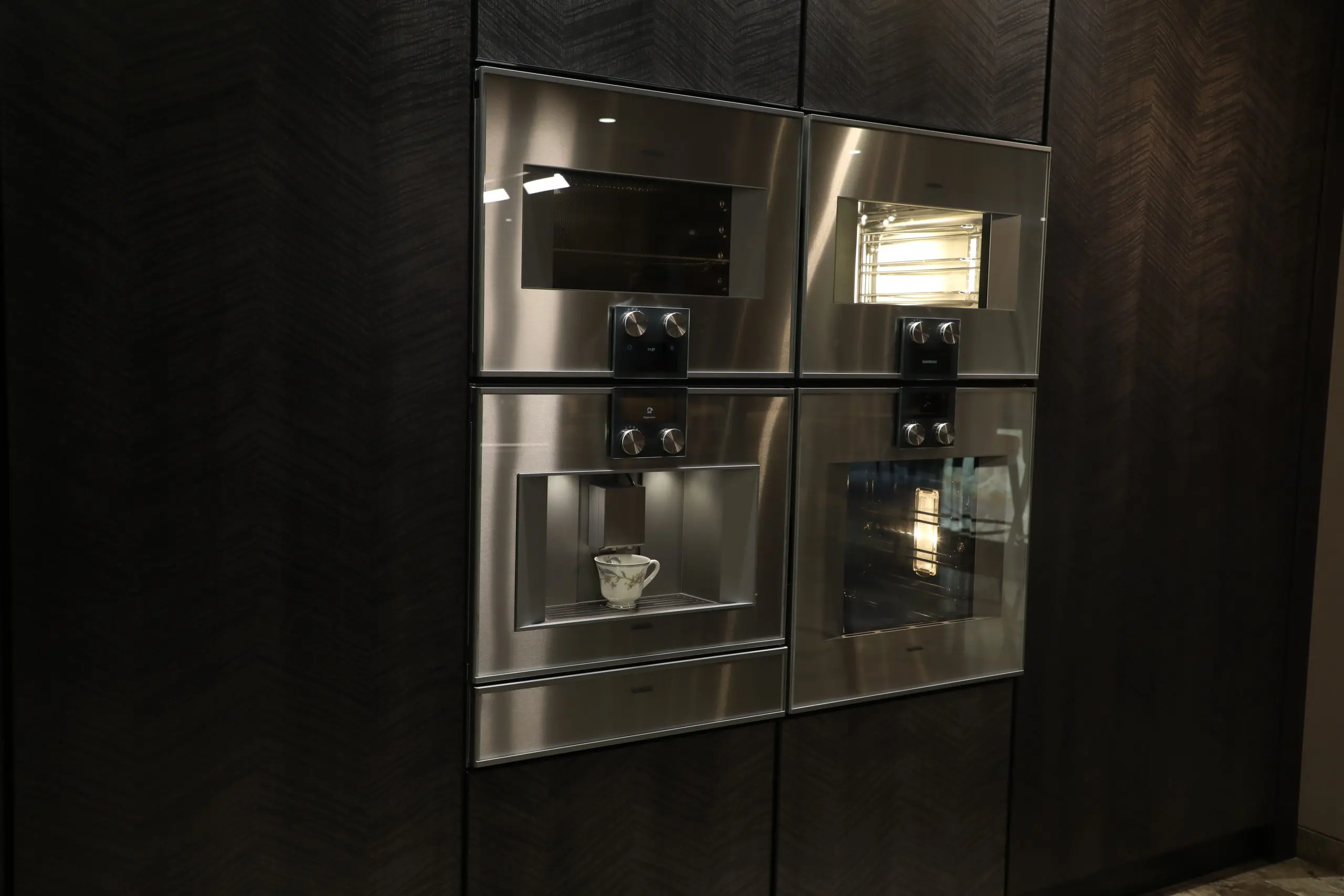
Sven Baacke: Absolutely, and what you can do with Gaggenau appliances is, you can play with how much of the appliances you want to display and how much you want to conceal. You can integrate them seamlessly, you can hide them, you can keep them completely open. They are designed in such a way that they are able to play a key role in complementing the rest of the environment. Because yes, every home, every owner, every architect will have varying tastes in design. Some people like things to be very minimalistic, some people like it to be rich, and you’re right, culturally, India seems to prefer the latter compared to maybe a Scandinavian style home and kitchen.
So, Gaggenau’s approach to design definitely allows for a variety of cultures to flourish visually. What about the cooking? India’s culinary culture is very different from Germany’s be it their preparation styles, their ingredients, their dishes. How can a Gaggenau kitchen be created in a way that allows Indian cooking to flourish?
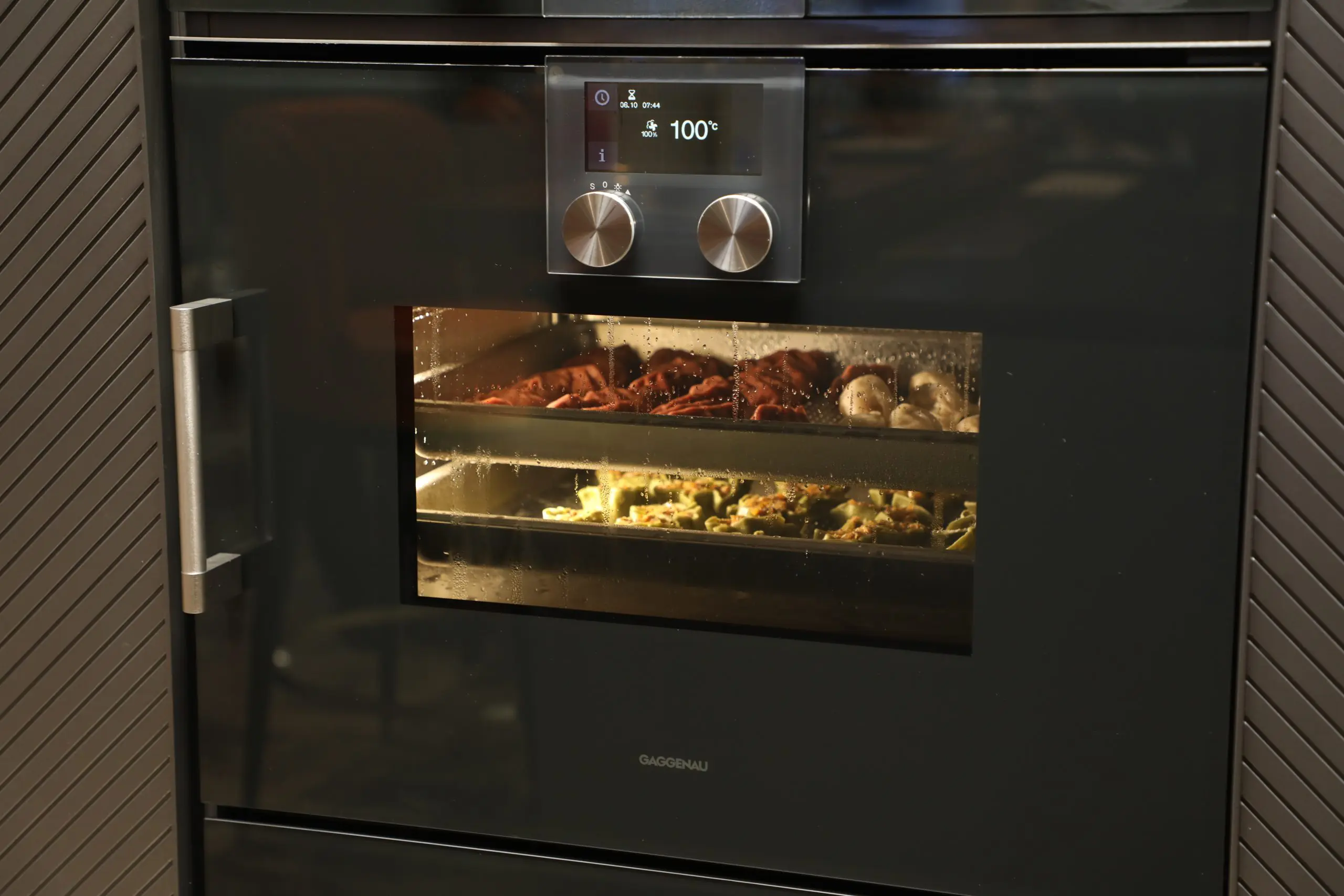
Khan: I always say, there are two areas where manufacturers in India should not experiment too much with tradition. One is jewellery, and the other is cooking. Drifting away from culture or heritage never works for these industries. Both jewellery and cooking are handed down from generation to generation. In our culinary culture, recipes get passed down like an heirloom. Indians are always looking for a resemblance with their traditional roots in a kitchen. So we focus on creating products that align with Indian cooking needs. For example, our brass burners, unique to the Indian market, offer the same familiar feel for those used to cooking on traditional gas stoves. Then, even with our oven, our most iconic product: India is not very well versed with cavity appliances so we have a fire clay accessory that mimics the experience of cooking over wood, adding a nostalgic element that resonates with Indian homes.
The biggest exercise I’d say, is for us is to convince Indian consumers that that same taste can actually come out in an oven or steam oven. Indians love fried foods for instance, and all Gaggenau ovens come with air fryer technology. So we just need to show them how all their staples can be cooked brilliantly in a Gaggenau kitchen.
Has it been tough to convince them of that so far?
Khan: I mean, we usually just let the kitchen speak for itself! As you’ve seen in this store, we allow consumers to get a proper feel of kitchens before they purchase something through our experience stores. The chef cooks for them, lets them taste the food, shows them how they were able to make it and using which appliances. Because if someone is going to buy an oven worth 7-12 lakhs, you have to give them the taste of how it will be.
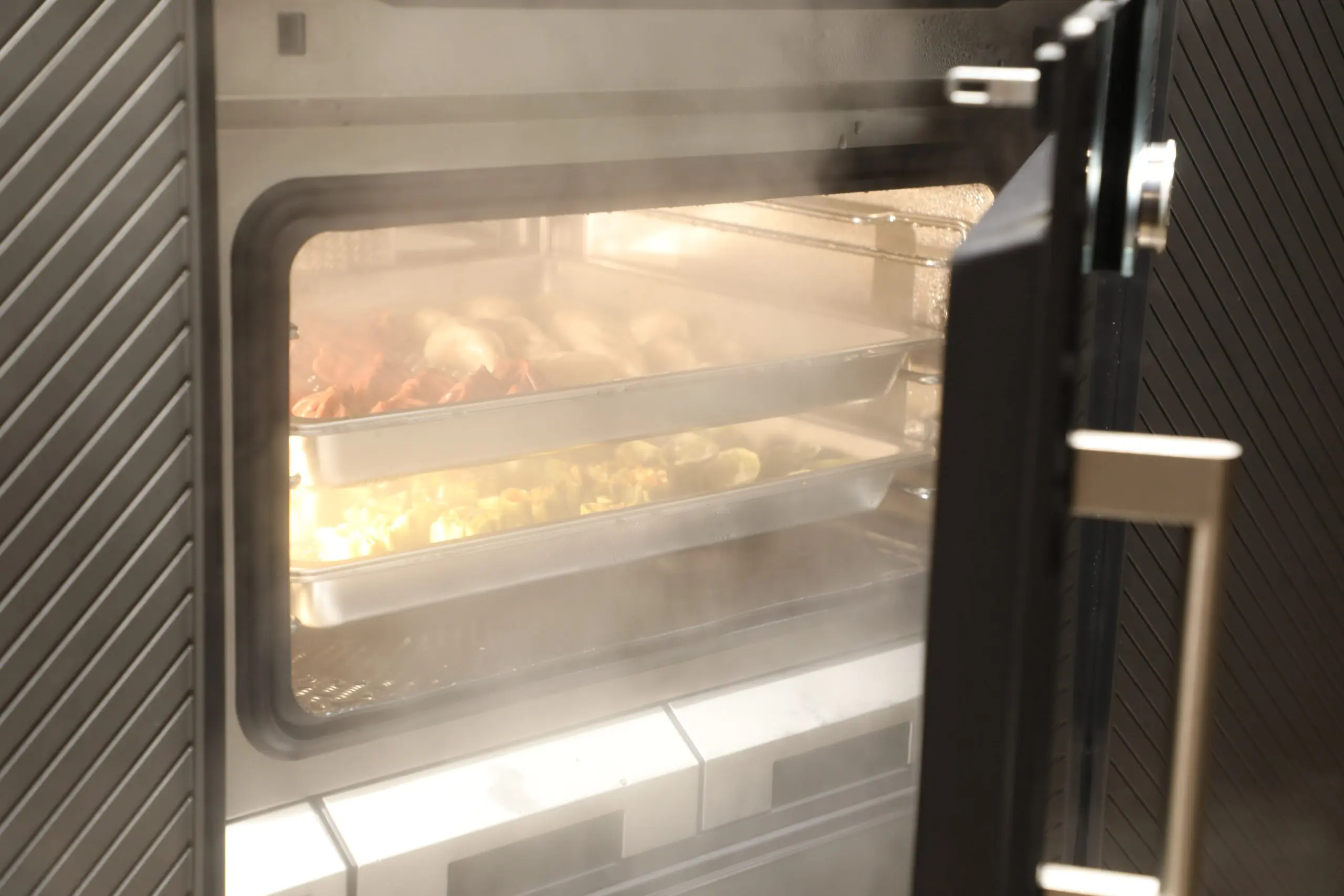
And this is not just limited to Indian food. Because things are slowly changing India’s HNIs. Many consumers are experimenting Western foods—burgers, pizzas, baked desserts. Older generations are willing to try global cuisines because of the influence of the children in the family. We sometimes underestimate the influence of kids on their parents and grandparents. It’s not uncommon to see teenagers educating their parents about ovens or air fryers and having a huge role to play in the purchasing decision.
I think the pandemic had quite a big hand in this as well because the lockdown became a culinary playing field for Indians to try out various new recipes that aren’t based in Indian culture. The banana bread trend was entirely caused from the country’s openness to explore new culinary styles, which works well for us.
Do you think this openness is true with regards to design as well?
Khan: Absolutely! Gaggenau clients tend to be extremely well travelled. Most of our HNI consumers have either gone to Dubai, or New York, London, to see our Gaggenau galleries so they’re well aware of what luxury really looks like abroad, so sometimes that shapes their tastes.
And even when they aren’t, architects play a very critical role in getting them acquainted with this style. I’ve been to homes where homeowners admitted they simply told their architect, “Get me the most expensive German brand,” and that’s how Gaggenau kitchens found their way into their homes. Architects actually play an increasingly critical role in this regard. Often they are the ones introducing homeowners to built-in appliances because they know exactly how to integrate them into a home’s design. In that sense, consumers don’t necessarily need to be familiar with the brand as long as their architects or designers are. That’s why these professionals are an important priority for us.
That’s interesting! What other roles to architects play in Gaggenau’s integration into ones home?
Khan: Recently, they’ve been quite focussed on how to set up Gaggenau kitchens into tinier spaces. In metros like Mumbai for instance, apartments are getting smaller by the second so now the architect starts to play a much bigger role in trying to fit everything they want into these houses without compromising style or functionality. The architecture scene in India really is extremely innovative!
And how does the brand approach India’s growing consideration for the environment?
Baacke: Well, for one, we’re not chasing every market trend; instead, we focus on innovations that will remain relevant even a decade from now. There are a lot of buzz words these days in the sustainability space. But sustainability isn’t just about using eco-friendly materials or production processes; it’s about longevity. The most sustainable product is the one that doesn’t need replacing. This is both in regards to the quality and performance of the product, but also the way it looks.
Creating products that you can look at in 50 years and still enjoy is paramount for us. Many consumers have redone their entire kitchens but they’ve left their 90 cm oven as is because it is able to look good after many years and with many different kinds of aesthetics. If the shelf life of a product is lengthened because they look and feel up to date always, what more can you ask for with regards to sustainability.
So if you’re not interested in following trends, how does the brand push itself to holding relevance in such a fast moving world?
Baacke: I suppose that’s what keeps us different. At Gaggenau, we follow what we call ‘slow innovation‘. Evolution and innovation does not happen just because; only when it truly improves the product. We’ve tried lots of different materials for our oven for instance. Something that can withstand heat, moisture, and smells, efficiently. But we haven’t found any that works better than what we have had for the past 300 years. So we haven’t changed it. We don’t feel the need to change just for the sake of producing something new and shiny.