When Cellars Become Status Symbols
- Featured Spirits
 Yashita Damani
- 12 minutes read

If your idea of a cellar is a dusty corner with a few half-empty bottles of wine, think again. In India today, wine cellars have evolved into fortresses where technology meets taste, and bottles quietly judge you back.
From biometric locks to on-call sommeliers, modern Indian cellars are where aroma, technology, and indulgence converge. These are not just storage rooms; they are carefully curated experiences, where each bottle rests under precision-engineered serenity, far from heat, humidity, and urban noise. (Some collectors even joke that their bottles have better sleep schedules than they do!) At LuxeBook, we spoke to Nikhil Surve, Head Sommelier at Passion F&B India and Dubai, and Nikhil Agarwal, CEO of All Things Nice, to understand how custom-designed wine cellars, from private walk-ins to Michelin-starred restaurant vaults, have become symbols of luxury, innovation, and design.
The Rise of the Luxury Cellar

As India’s wine culture matures, a quiet revolution is underway. Wine cellars are no longer mere functional spaces; they are statements of taste, engineering marvels, and emotional sanctuaries. From custom walk-ins in Bengaluru bungalows to climate-controlled vaults at Michelin-starred restaurants like Avatara, the modern Indian cellar blends precision, aesthetics and technology.
“A truly luxurious cellar is defined not by excess but by precision. Its role is singular: to provide a stable environment in which wine can mature gracefully, developing complexity, balance, and character,” says Nikhil Surve. “The cellar should be simple, functional, and uncompromising in its attention to detail.”
As his mentor once told him: “Imagine you are the wine. If lights flicker, loud music plays, and your bed shakes, you will not rest or evolve properly. Wine needs the same peace: stability, silence, and protection.”
Bottles with Better Sleep Schedules Than You
In the new lexicon of Indian luxury, wine is more than a beverage; it is a story, a statement, and increasingly, a stage for sophistication. According to Nikhil Agarwal, a cellar is more than shelving; it is a climate-controlled cocoon, designed so a Merlot ages gracefully rather than sweating over India’s notorious humidity.
For those starting small, Agarwal suggests a wine fridge tailored to the collector’s needs. If that is not feasible, the next best solution is a dark, cool corner of the home, with bottles resting horizontally. This is adequate only for brief periods. The common mistake among amateurs is simple: ignoring the fundamentals. Bottles often languish upright in sunlit cabinets or amidst daily bustle, their potential wasted.
“Some collectors start with a modest twenty-bottle collection, only to find themselves two years later in the midst of a forty-bottle obsession,” Agarwal notes, smiling. “Wine has a way of gently taking over your life.”
For private collectors, a cellar is intensely personal, reflecting the owner’s taste and sensibilities. Commercial or hotel cellars, by contrast, must cater to a variety of palates while balancing logistics and presentation, ensuring every guest finds something to delight in.
Apps, Anti-Vibration Racks, and Alabaster Dreams
Technology has transformed wine storage. Monitoring apps for temperature and humidity allow private clients to safeguard rare bottles, turning cellars into tech-savvy extensions of the home. Emerging trends in India, with affluent enthusiasts cultivating home collections, some modest, others expansive, are redefining how cellars are conceived and built.
Luxury cellars today are fortresses of innovation: alabaster and smoked glass enclosures, floating anti-vibration racks, magnetic digital labels, and interactive touchscreens cataloging every bottle. “Convertible shelving and aroma-neutral wooden options maintain purity while offering a dramatic visual showcase,” notes Surve. Professional-grade systems such as EuroCave and WhisperKOOLensure precise climate control, while interactive dashboards track provenance, maturity, and suggest pairings, bringing sommelier expertise to the tap of a finger.
Some high-end collectors even schedule ‘cellar check-ins’, where a sommelier visits monthly to assess each bottle, rotate stock, and sometimes, gently reprimand owners for leaving an unfinished bottle unattended. “It’s surprisingly personal work,” says Agarwal, “you get to know the personality of the wine and the quirks of the collector.”
The Aroma Factor
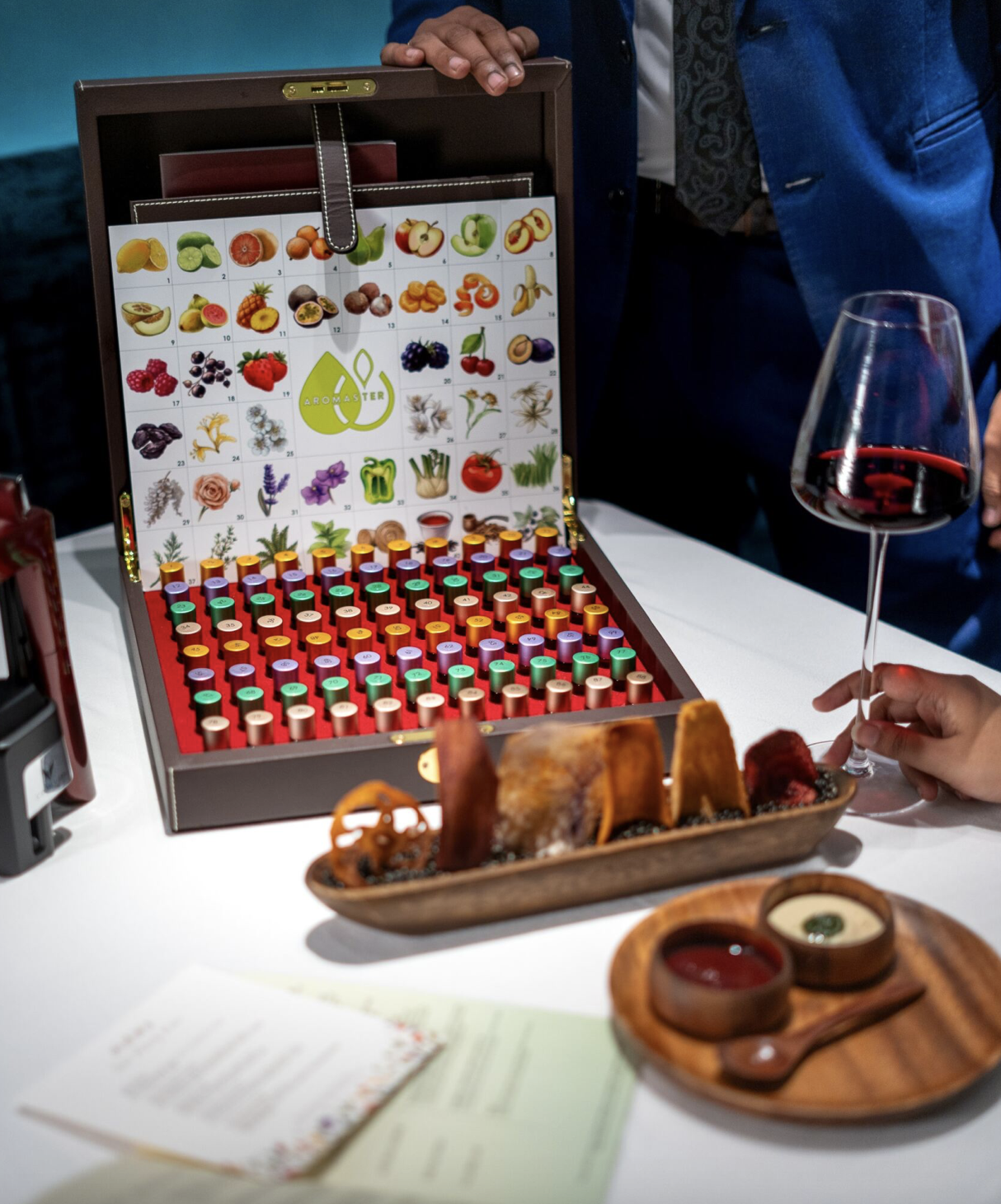
“Aroma is everything,” says Surve. “It is the wine’s voice, mood, and memory. Professionals can often predict taste, vintage, grape, and origin just by scent. A wine’s nose evolves with age, from primary fruit to complex tertiary layers such as forest floor, truffle, or antique leather.”
Agarwal adds a practical tip: “Ensure the wine is at the right temperature, put your nose to the glass, swirl, and repeat. Block out the world if doing it seriously; at a cocktail party, just enough to get a sense of the wine.”
Even glassware matters. ISO tasting glasses or the Riedel Performance Series concentrate aromas, allowing the bouquet to speak before the palate confirms. “Never underestimate the importance of the glass,” Surve jokes. “Sometimes it’s the difference between whispering and shouting.”
Private and Commercial Cellars

Private collections grow organically: a rare Bordeaux from a trip abroad, a limited-edition Riesling from Alsace. “Scalability is essential,” says Surve. “Design for at least double the current capacity. Modular racking, digital management, and off-site storage ensure the collection grows without chaos.”
Commercial cellars, meanwhile, serve diverse palates. Hotels and restaurants balance customer preferences with storage logistics and curated experiences, orchestrated by sommeliers, porters, and general managers behind the scenes. At Michelin-starred establishments, Agarwal explains, the cellar is like a silent orchestra, with every bottle playing its part in harmony.
Building the Perfect Cellar
From temperature control of 12 to 15 degrees Celsius and humidity of around seventy percent, to vibration-free racks and UV-free dimmable lighting, a great cellar is science and soul in harmony. Improper storage is a cardinal sin: heat, light, or dryness can ruin even the rarest vintages.
Subtle aroma nuances such as botrytis, brettanomyces, and volatile acidity tell stories invisible to non-experts but vital to wine’s narrative. Terroir, climate, and soil are embedded in every sip. Limestone and chalk impart wet stone and oyster shell notes. Volcanic soils hint at flint and ash. Slate and schist whisper smoke, graphite, and petrol.
Transformative Experiences

Surve recalls a blind tasting. “Aromas leapt from the glass: citrus, orchard fruits, delicate acacia, underpinned by flint and wet stone. I guessed Chardonnay, but it was a Riesling Grand Cru Eichberg. It was a lesson in humility and the transcendence of Riesling.”

Agarwal remembers his first Bordeaux trip. “At Chateau Pichon Baron, tasting vintages back fifty years, I realized the world of wine was extraordinary. At Seppeltsfield in Australia, a Para tasting had us cocooned in aroma until time felt suspended.”
Where Luxury Lives in a Bottle
From private walk-ins to Michelin-starred restaurants, India’s wine cellars are evolving into fortresses of luxury, design, and expertise. Biometric locks, modular racks, sommelier guidance, and tech-enabled monitoring transform these spaces into stage, sanctuary, and status symbol rolled into one.
“Wine is alive, and how you store it decides how it tastes in the glass,” concludes Surve. “A great cellar is where stories, memories, and mastery converge, bottled and waiting for the perfect moment to reveal themselves.”
So, whether you are swirling a fifty-year-old Bordeaux or nervously uncorking your first Riesling, remember: in a modern Indian cellar, the wine is alive, the aromas are talking, and if you listen closely, even your bottles might roll their eyes.
You May Also Read: Inside the Biggest Showstoppers of Dubai Watch Week 2025