A meal at Mayouchi that makes you want to cancel your plans and sleep
- Featured Food & Beverage
 Yashita Damani
- 15 minutes read

From DIY nigiri and lychee in ceviche to a surprisingly soothing spicy rice preparation, Mayouchi’s refreshed menu at The Westin Mumbai Powai Lake makes a case for taking the longer route for a memorable meal.
Think about a driver who takes the same route to work every single day. He knows every turn, every signal and probably every pothole. There is a certain comfort in repetition, but very little room for discovery. Now imagine he takes a detour. He turns into a different lane, finds another way around the traffic and perhaps discovers a route he never knew existed. That is where experimentation begins. I think cooking works in much the same way.
A chef can follow a recipe, much like a musician can cover a familiar song. The result might be perfectly good, but the real excitement lies in creating an original composition. Taking familiar ingredients, changing the arrangement, introducing an unexpected note and making something that has never quite existed in that form before. I found myself thinking about these analogies half droopy post my lunch at Mayouchi, the contemporary Asian restaurant at The Westin Mumbai Powai Lake, which has introduced a refreshed menu drawing from Japanese, Chinese and Nikkei influences. The tasting moved between interactive preparations, unexpected ingredients and clever little details that made the meal feel like more than a succession of courses. And as someone travelling from South Bombay to Powai for a food review, I was particularly pleased when the food gave me a reason to justify the commute.
A hands on start
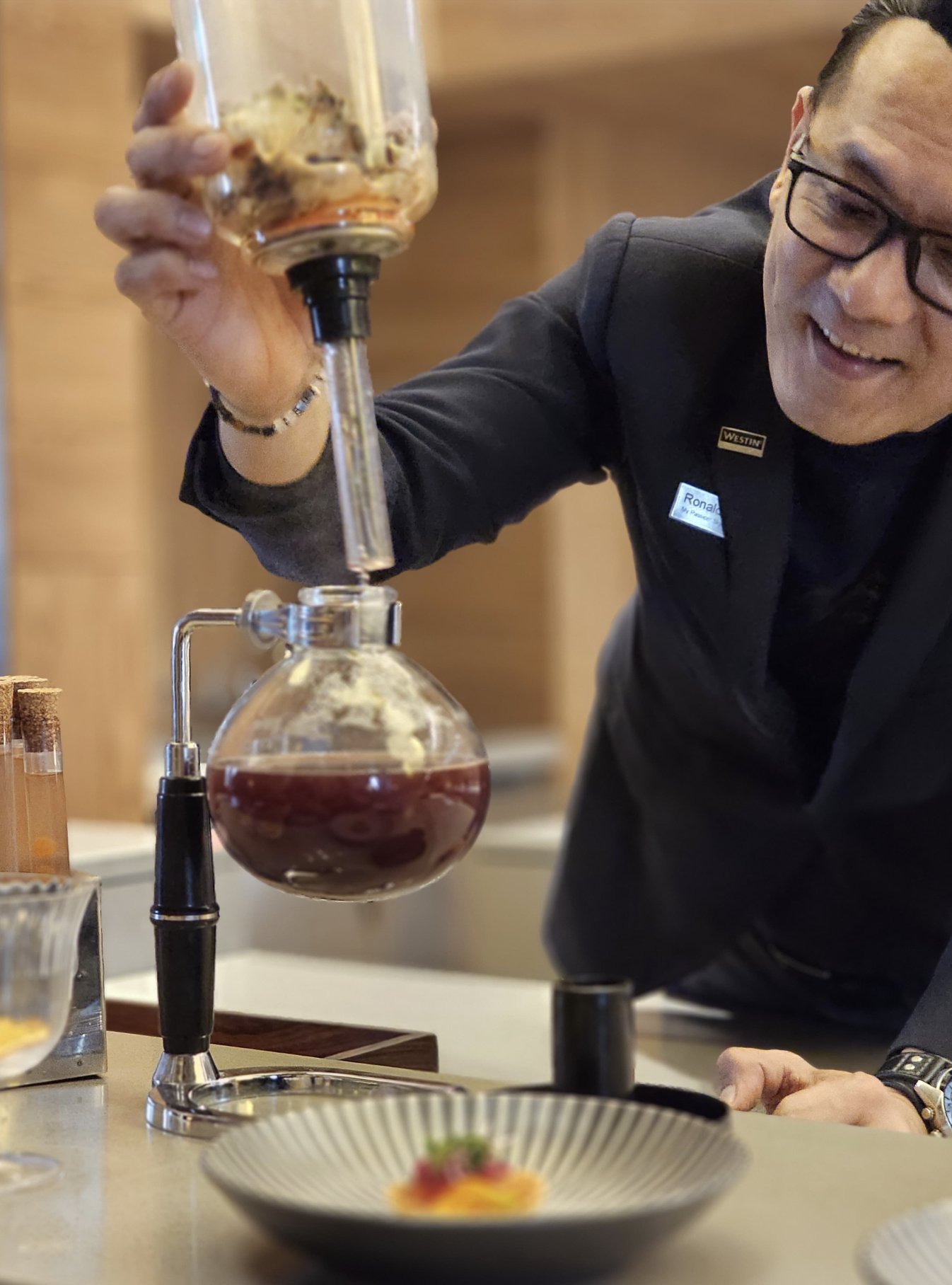
The experience began with a selection of drinks, including a striking Glühwein, alongside the more aromatic notes of apricot, peach and chamomile. It was a colourful introduction to a meal that clearly enjoys playing with expectations.
The first course brought us to the amuse-bouche, with elements including beetroot jelly, orange flavours, sweet potato, avocado, corn and so much love. Rather than beginning with a conventional starter, it offered a series of little introductions to the kitchen’s approach to flavour and presentation much like the sublime cocktail pairings which were a perfect match.
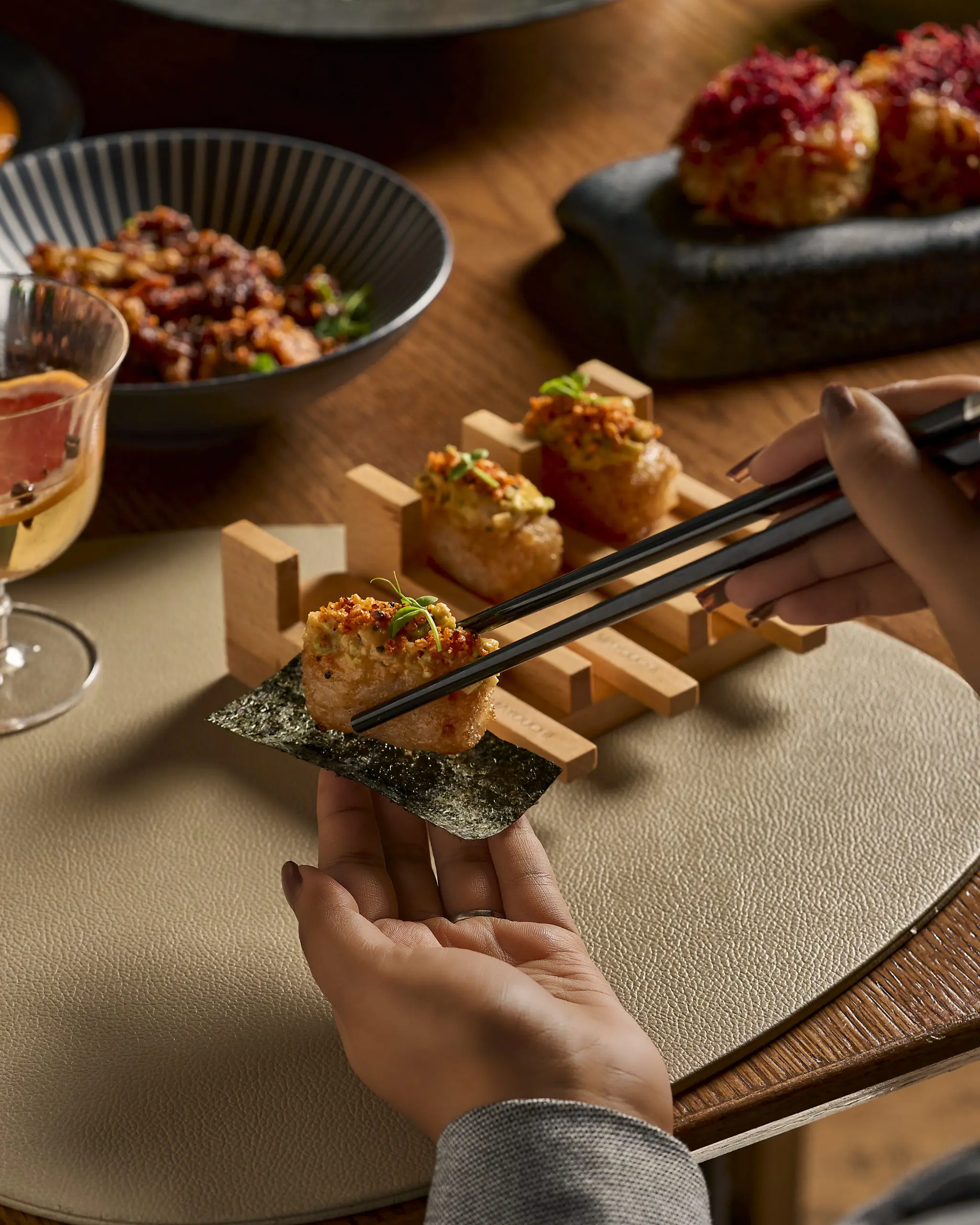
Then came the DIY Temaki Nigiri, a very engaging section of the new menu. The preparation uses sushi rice that is deep-fried to give it a crisp texture, with edamame as the filling. Furikake, chilli seasoning and yuzu ponzu complete the combination (add as you like with a dropper to make it extra juicy).
The appeal here is not just the ingredients. It is the invitation to get involved. There is something satisfying about assembling your own bite rather than having everything arrive ready-made. It turns the course into a small activity, giving diners a role in how the dish comes together.
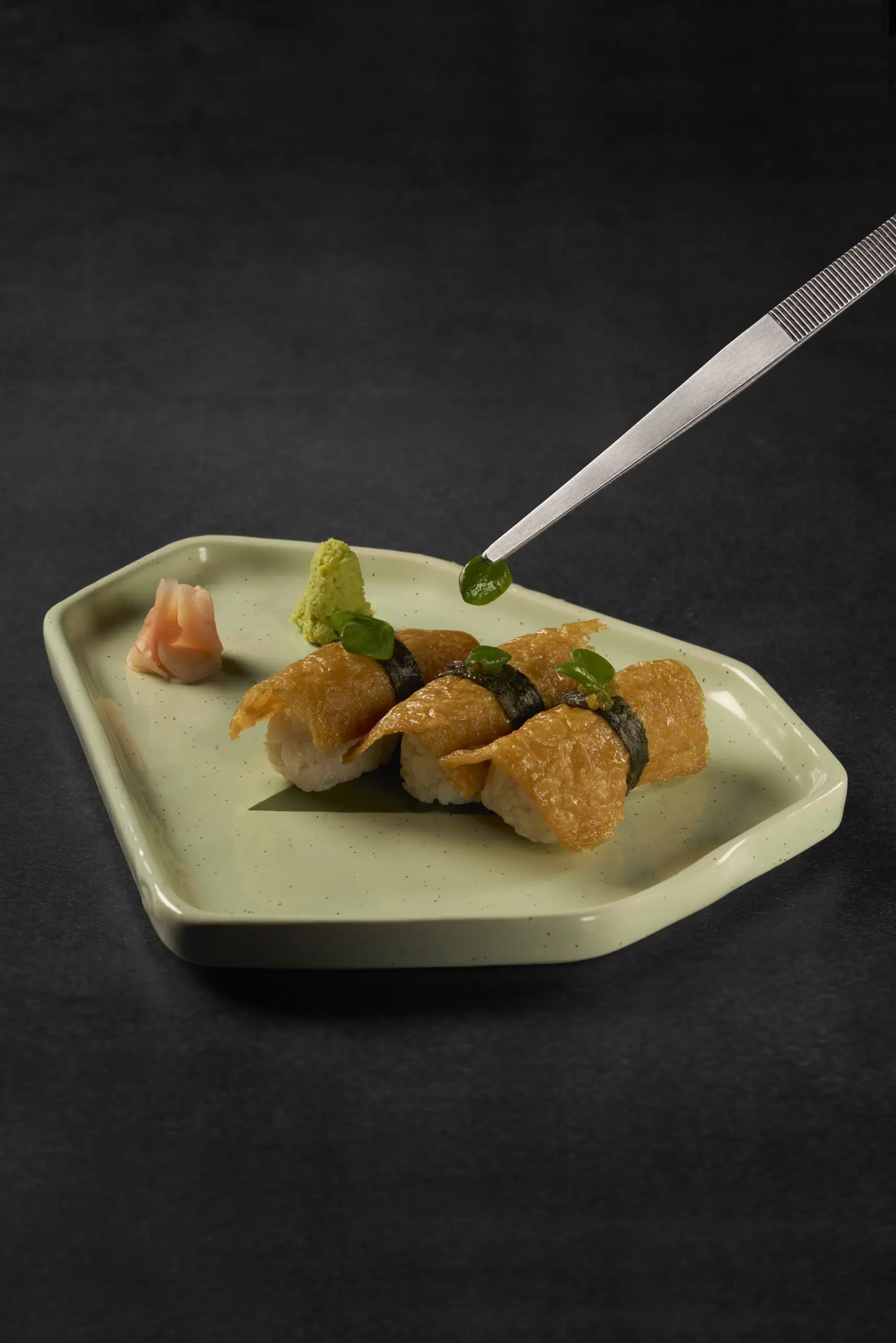
The next preparation, Yasai Green sushi, introduced cucumber pickle and carrot, topped with goma sesame sauce. With its sweet, spicy and creamy notes, including cream cheese, it brought another contrast of textures and flavours to the table.
Lychee meets ceviche
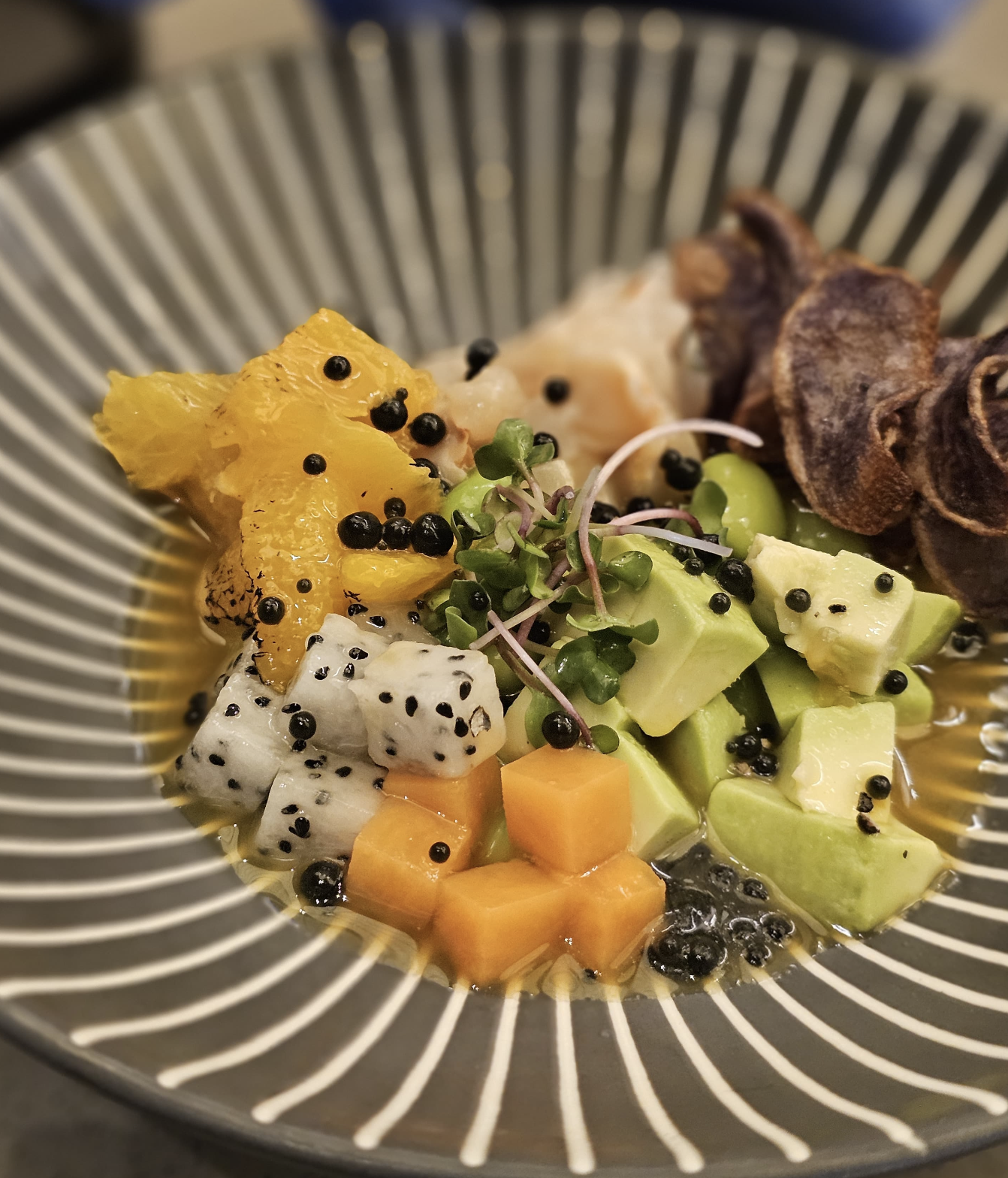
The Edamame Cucumber Ceviche and Hamachi Ceviche brought us to one of the most interesting parts of the meal. The vegetarian ceviche, in particular, was a highlight. It featured imported lychee, passion fruit tiger’s milk and black charcoal caviar. The combination was a lovely play between sweetness and acidity. The lychee brought a delicate fruitiness, while the passion fruit tiger’s milk added the sharp, citrus-led character that gives ceviche its freshness.
I loved the citrus and lychee combination. It was unexpected, but it made immediate sense once tasted. Lychee is not an ingredient one instinctively associates with ceviche, which is precisely why it was so memorable.
Tiger’s milk, or leche de tigre, is a defining element of Peruvian ceviche. Traditionally made with citrus, particularly lime, it is often layered with ingredients such as garlic, celery and coriander. Here, the passion fruit brings its own fruity acidity to the preparation, creating a distinctly refreshing finish. The vegetarian black caviar was another interesting touch. It brings the visual and textural idea of caviar to the plate without relying on traditional fish roe. It is an example of the kitchen rethinking familiar luxury ingredients and their place in a dish. This is where the Nikkei influence becomes particularly interesting. Born from the meeting of Japanese culinary traditions and Peruvian ingredients, Nikkei cuisine is not simply about putting two cuisines together. It is about allowing their techniques and ingredients to influence one another.
Sustainability is another consideration in the kitchen. The move towards lava stone instead of charcoal for Robatayaki preparations reflects Marriott’s sustainability requirements and is a reminder that innovation in a restaurant extends beyond what appears on the plate.
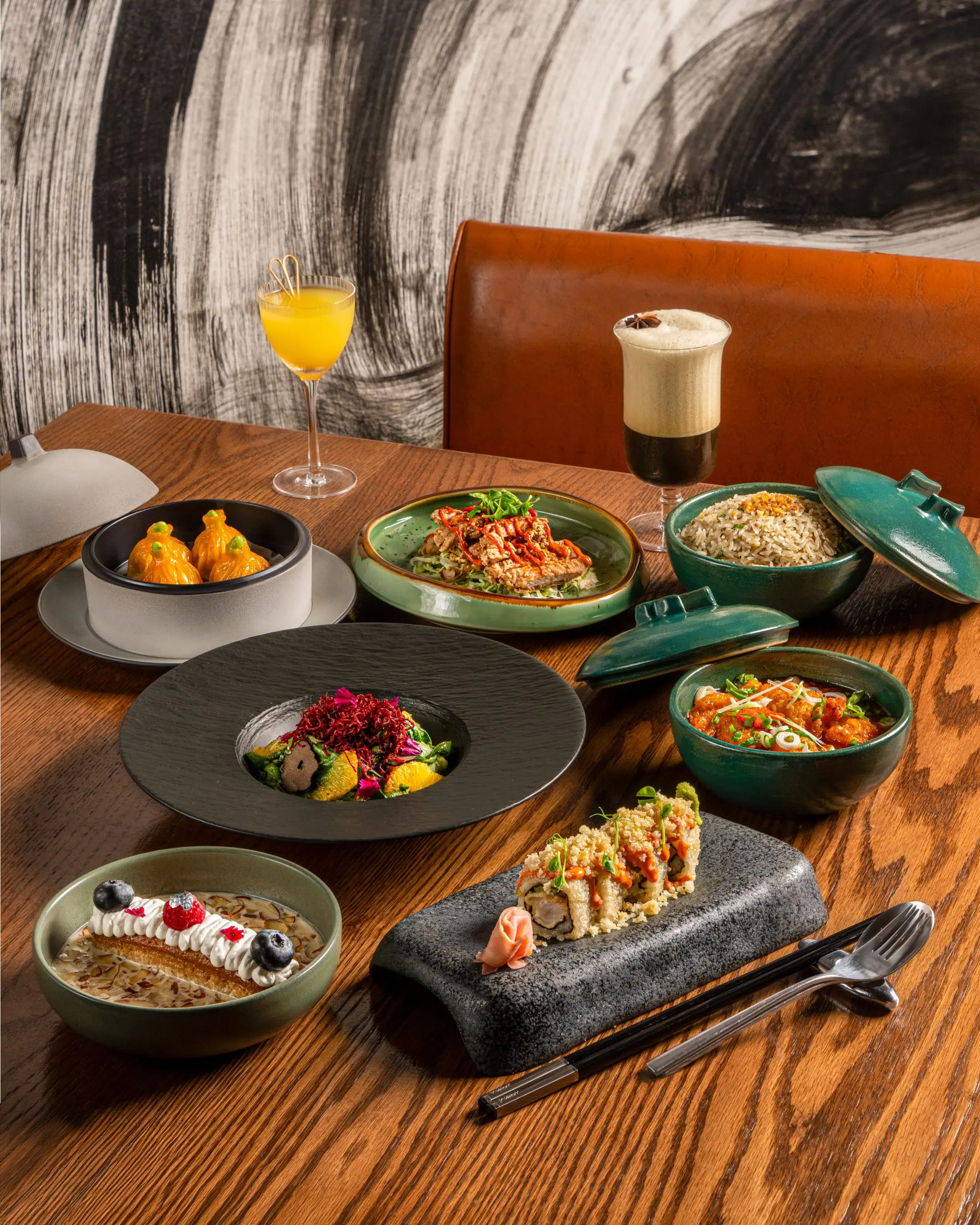
The menu continued with preparations that moved between Japanese and broader Asian influences, including the Sushi Yasai Green Roll, Lamb Yaki, Edamame Truffle Dumplings and Prawn XO Dimsum. Another preparation worth mentioning is the corn cake bao. With ginger, garlic and potato starch in the mix, it is grilled on the robata with a marinated sauce and finished with gochujang. The cooking method brings another dimension to the menu, with the robata adding its own character to the preparation.
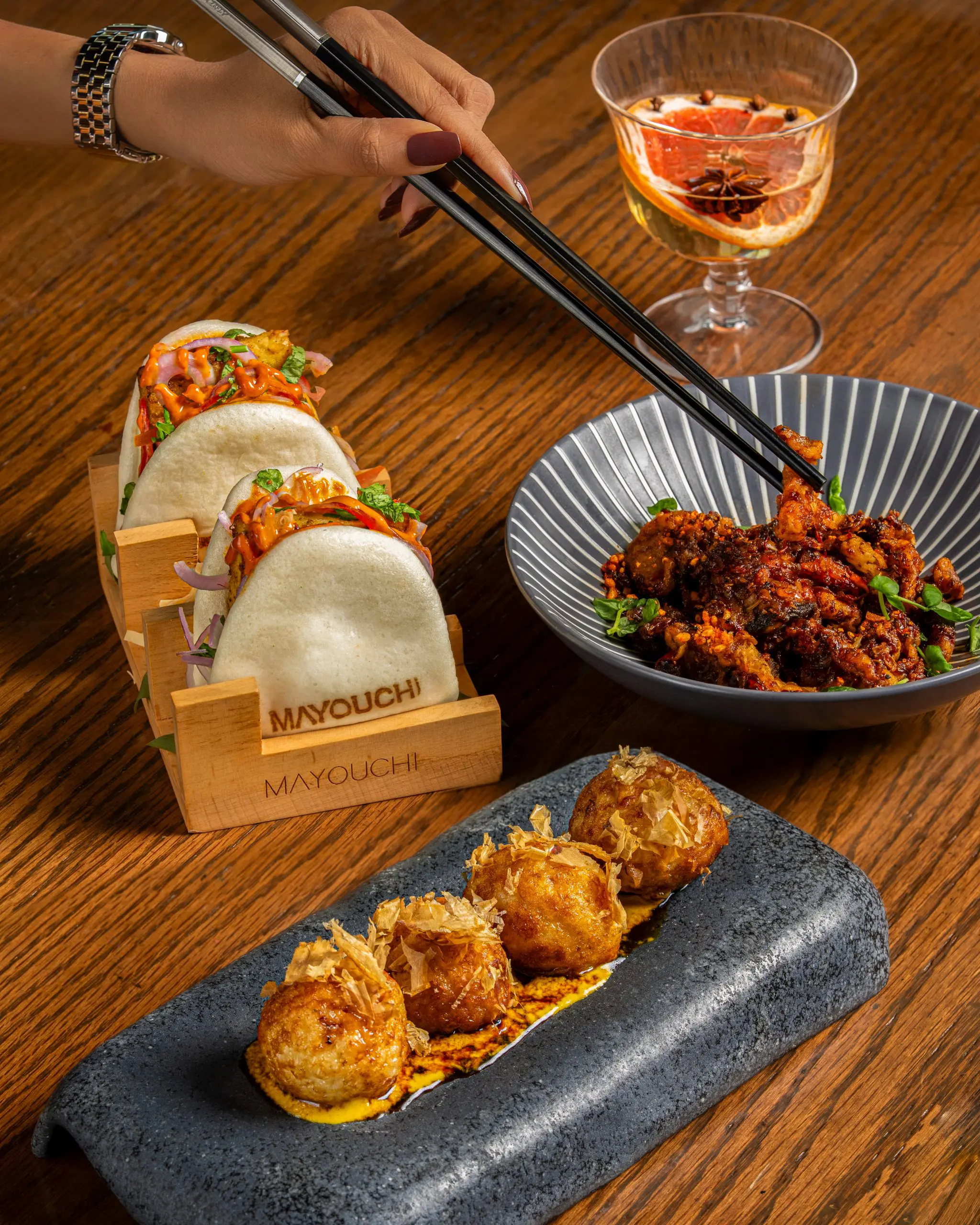
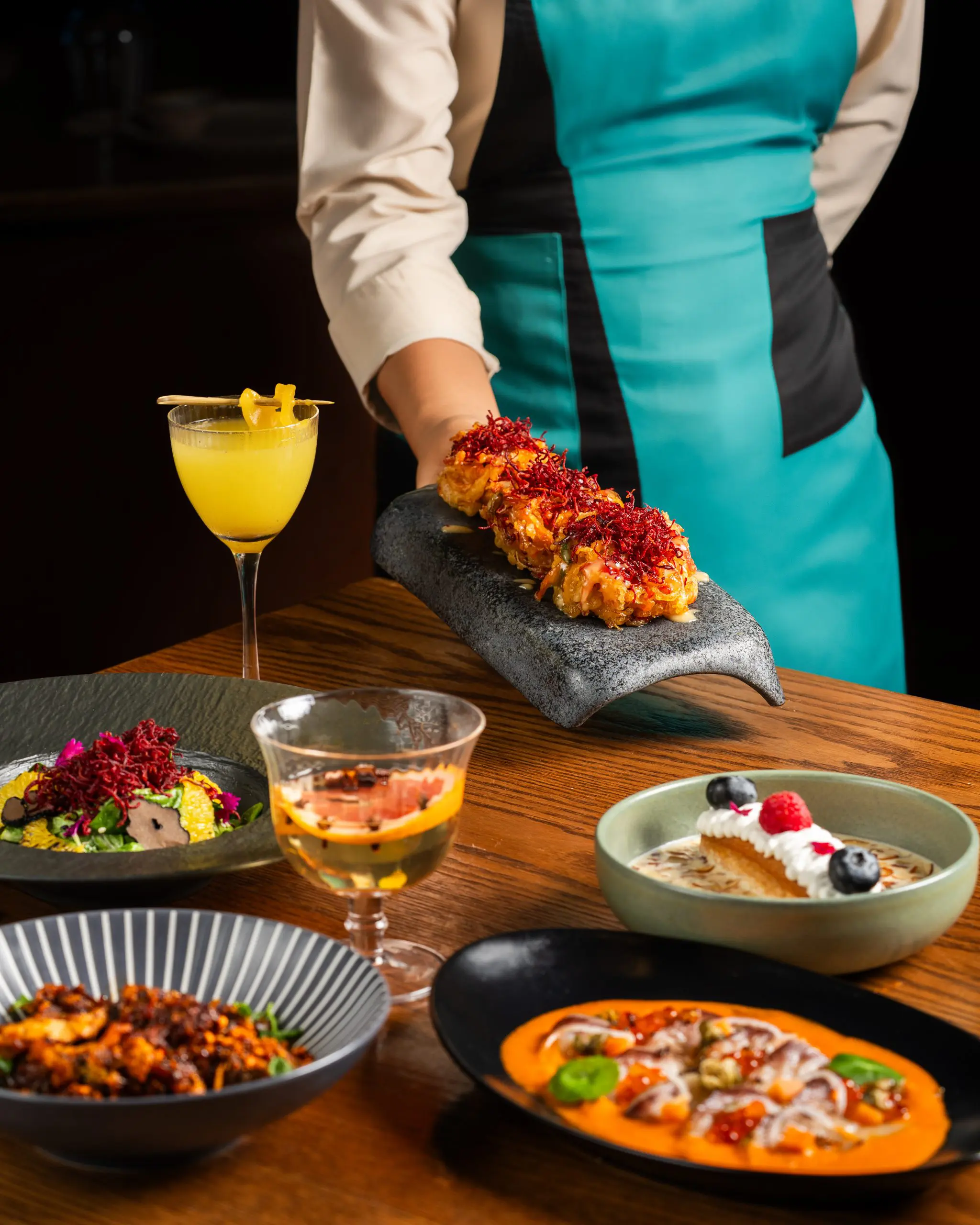
What I found interesting about the tasting was the way it kept changing the experience of familiar formats. Sushi, dumplings, bao and ceviche are not necessarily unfamiliar concepts to a Mumbai diner. But the ingredients, the presentation and the combinations give them a different identity.
The tofu that stole the show
And then came the Nikkei Tofu. If I had to pick one dish from the entire tasting to return for, this would be it. The preparation brings together sushi-inspired risotto rice, silken tofu, mushrooms, asparagus and a charcoal tuile. It is a combination that sounds familiar enough on paper, but the rice is what makes the dish.
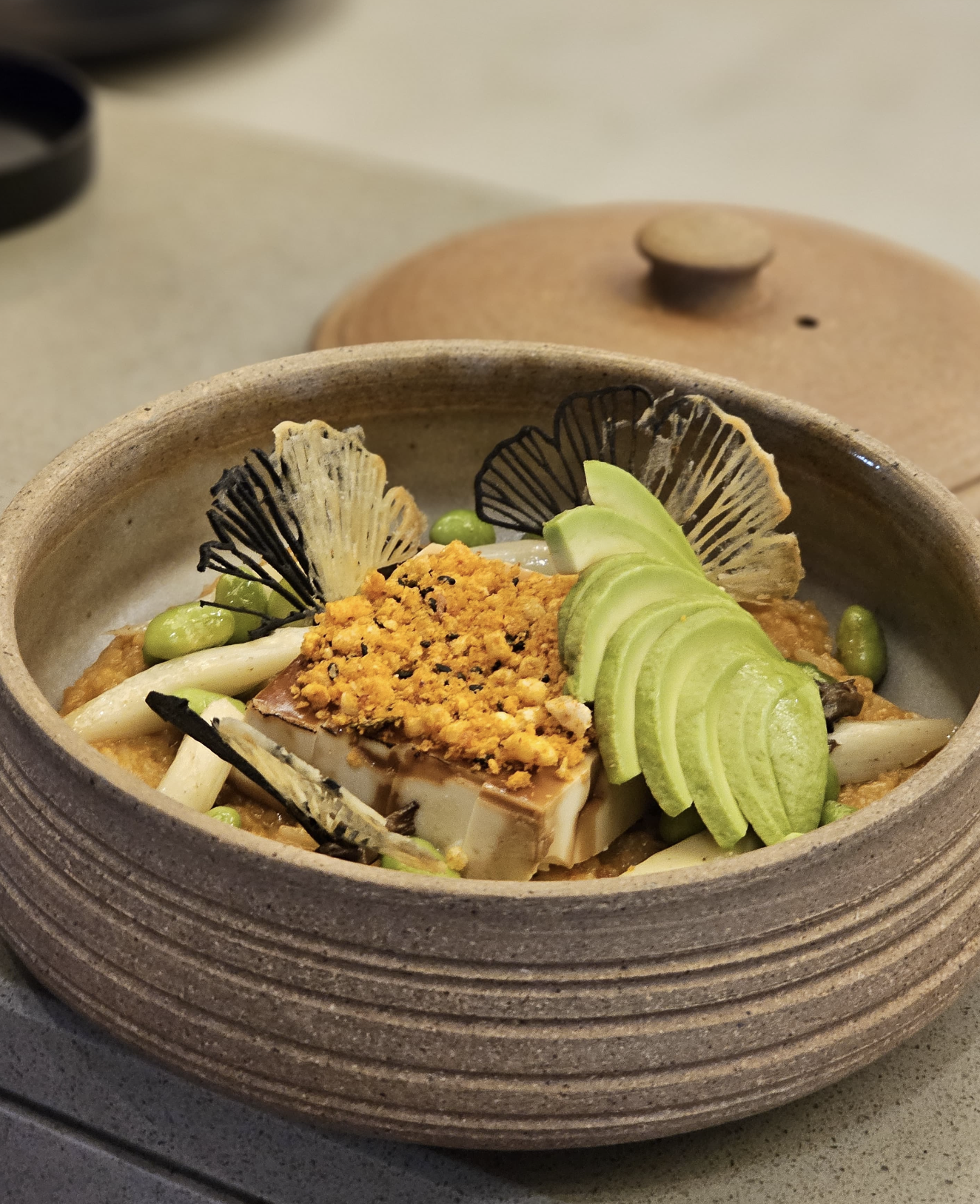
Made with ají amarillo, the Peruvian yellow chilli, it carries a noticeable kick. Yet, what surprised me was how soothing the spice felt. There is heat, certainly, but it does not overpower the dish. Instead, it creates a warmth that makes you want another spoonful. Spicy and soothing are not two words I would ordinarily put together, but this rice made a rather convincing case for both.
The rice was an absolute hit. The silken tofu brought a soft, delicate texture, the mushrooms added depth and the asparagus introduced a freshness I was not expecting. That last detail made a difference, cutting through the richness and keeping the dish from feeling too heavy.
It is easy to underestimate a vegetarian main course when the menu offers seafood and meat preparations alongside it. This one does not need the comparison. The rice alone makes it worth ordering. The refreshed menu also features Atlantic Salmon Tiradito with passion fruit leche de tigre, Nikkei Sake with seared salmon, ají panca rice and smoked chilli oil, and Five-Spice Roasted Chicken with black truffle sauce and fried noodles. Vegetarian diners can also explore the Quinoa and Wild Mushroom Roll.
A sweet Japanese finish
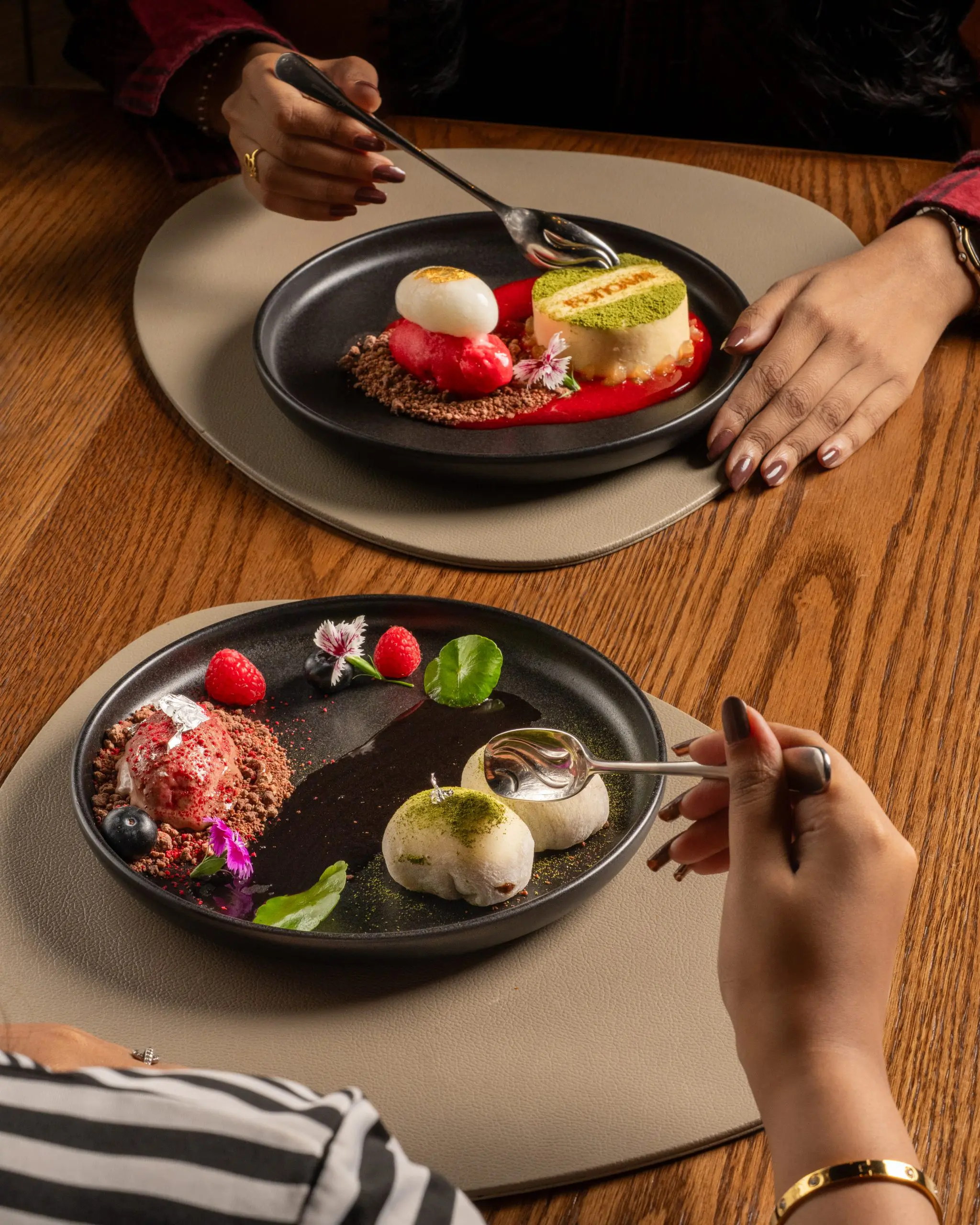
Dessert brought the tasting towards its conclusion with Japanese homemade mochi, alongside a sorbet and chocolate sauce. The sorbet had a particularly transportive quality, taking the experience somewhere that felt a little more European after a meal that had travelled across Japanese, Chinese and Peruvian influences. It was a fitting end to a menu that enjoys moving between culinary references without being restricted by them.
In Conversation With Chef Golpin Sianipar
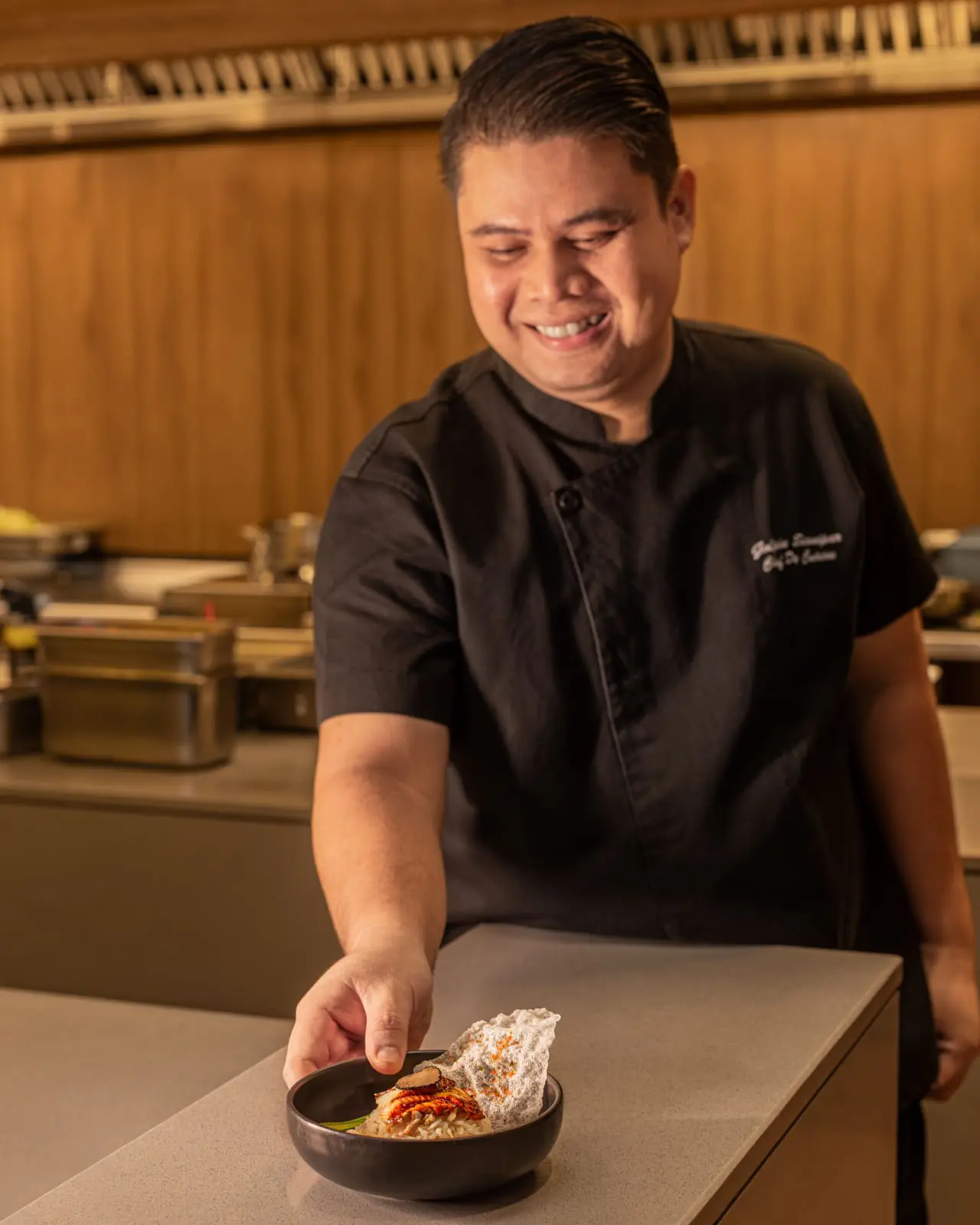
One of the more interesting aspects of my conversation with Chef Golpin Sianipar, Executive Sous Chef at Mayouchi City Diner, was his approach to originality. Having worked across different countries, culinary environments and private dining experiences, he sees his food as an expression of his own journey rather than an attempt to reproduce another chef’s style.
“My food is inspired by my journey, not other chefs, because I don’t want to be a copy-paste of them.”-Chef Golpin Sianipar
That philosophy is reflected in the menu’s combination of Japanese techniques and Peruvian ingredients. The idea is not to let one element dominate the other, but to allow each component to contribute to the final preparation. Sustainability is another consideration in the kitchen. The move towards lava stone instead of charcoal is part of a more considered approach to cooking methods and resource use. It is an interesting reminder that innovation in a restaurant is not limited to what appears on the plate. It also involves the decisions made behind the scenes. For Chef Golpin, the dining experience extends beyond the food itself: “It’s not only about the food. Guests should come for the experience as well.”
His culinary journey began with experiences across cruise lines, where he travelled to different countries, explored local cuisines and worked alongside chefs from different culinary traditions. His professional experience also took him to Singapore, Thailand and Malaysia, where he worked as a private chef, creating personalised menus for small groups of six to eight guests. These experiences gave him the freedom to experiment with ingredients and understand how individual preferences could shape a dining experience. That philosophy now informs the menu at Mayouchi. Rather than categorising the restaurant as another Pan-Asian destination, Chef Golpin is interested in introducing diners to a more cohesive interpretation of Nikkei cuisine. The Japanese influence comes through in its techniques and precision, while Peruvian ingredients such as rocoto, ají amarillo and citrus bring their own character to the preparations.
Adapting this international approach to Mumbai, however, required its own learning curve. Chef Golpin recalls how different the Indian palate was from the dining environments he had previously worked in. He spent three months on research and development, studying the local market, understanding competing restaurants and experimenting with recipes before introducing the menu. The process involved working closely with his team, testing different preparations and documenting their progress before deciding which dishes made the final selection. The emphasis, he says, is on creating everything in-house rather than relying on ready-made preparations. Even the sauces and flavour combinations are developed within the kitchen, allowing the team greater control over the final result.
His approach to ingredients is equally considered. Take yuzu, the Japanese citrus fruit that brings together sweet, sour and bitter notes. Chef Golpin uses it across Japanese-inspired preparations and Robatayaki, explaining that its complexity helps create a more rounded flavour profile. Another interesting combination is hoisin ponzu, which brings together Chinese-inspired bean paste and Japanese citrus influences. The same attention extends to food and beverage pairings. Chef Golpin works closely with the bartending team, introducing ingredients such as kombu, or seaweed, into the conversation around cocktails and mocktails. His reasoning is rooted in balance: the sweetness of sushi, for instance, can benefit from the bitterness of a complementary drink. Smoke, yuzu and Japanese spirits also find their way into these pairings, with the intention of complementing rather than overpowering the food.
For Chef Golpin, the future of luxury dining will ultimately come down to ingredients and the experiences chefs bring to their cooking. He believes that the next five to ten years will place greater emphasis on understanding ingredients and using them to tell individual culinary stories, rather than relying on passing trends or elaborate gimmicks. From interactive preparations to unexpected flavour combinations, his intention is to make diners participants in the experience, not simply spectators.
Is the journey to Powai worth it?
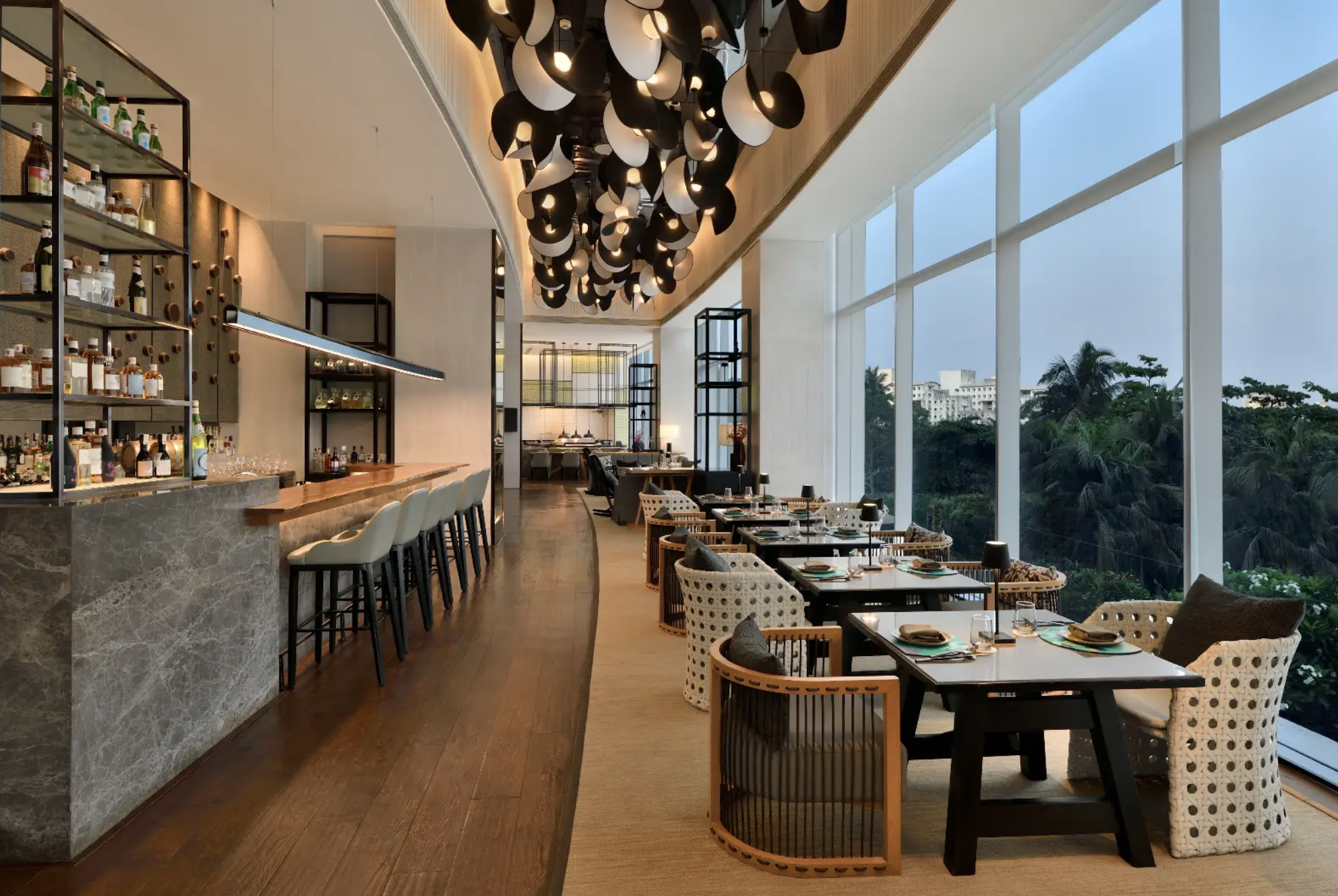
Mayouchi’s refreshed menu is at its most compelling when it allows familiar ingredients and formats to take an unexpected turn. The DIY Temaki Nigiri makes dining more interactive, the dropper adds a playful element to the presentation, and the lychee ceviche is a refreshing surprise. But the Nikkei Tofu is the dish that stayed with me.
I particularly enjoyed the way the menu plays with contrasts: sweet lychee against citrusy tiger’s milk, the crispness of deep-fried sushi rice against its toppings, and the warmth of chilli in a preparation that somehow manages to feel soothing? Would I travel from South Bombay to Powai for it again? Absolutely. The Nikkei Tofu alone makes a convincing argument, and the rest of the tasting gives you plenty more to discover.
And while I could spend another afternoon discussing the individual preparations, the most honest compliment I can give this meal is that it made me want to cancel my remaining plans, go home and sleep. Sometimes, a food pilgrimage is just a very long commute with an excellent meal at the end of it. And if a South Bombay girl is telling you the journey is worth it, you might want to take her word for it.
Where: 2 & 3B, Near Chinmayanand Ashram, Powai, Mumbai 400087, Maharashtra, India
Timings: Monday to Thursday, 5 pm to 1 am; Friday to Sunday, 12 pm to 3.30 pm and 5 pm to 1 am
Reservations: +91 70014 92713