“The minute you decide you’ve arrived, work gets boring”: Sandeep Khosla on four decades of maximalism
- Fashion Featured
 Anushka Manik
- 11 minutes read

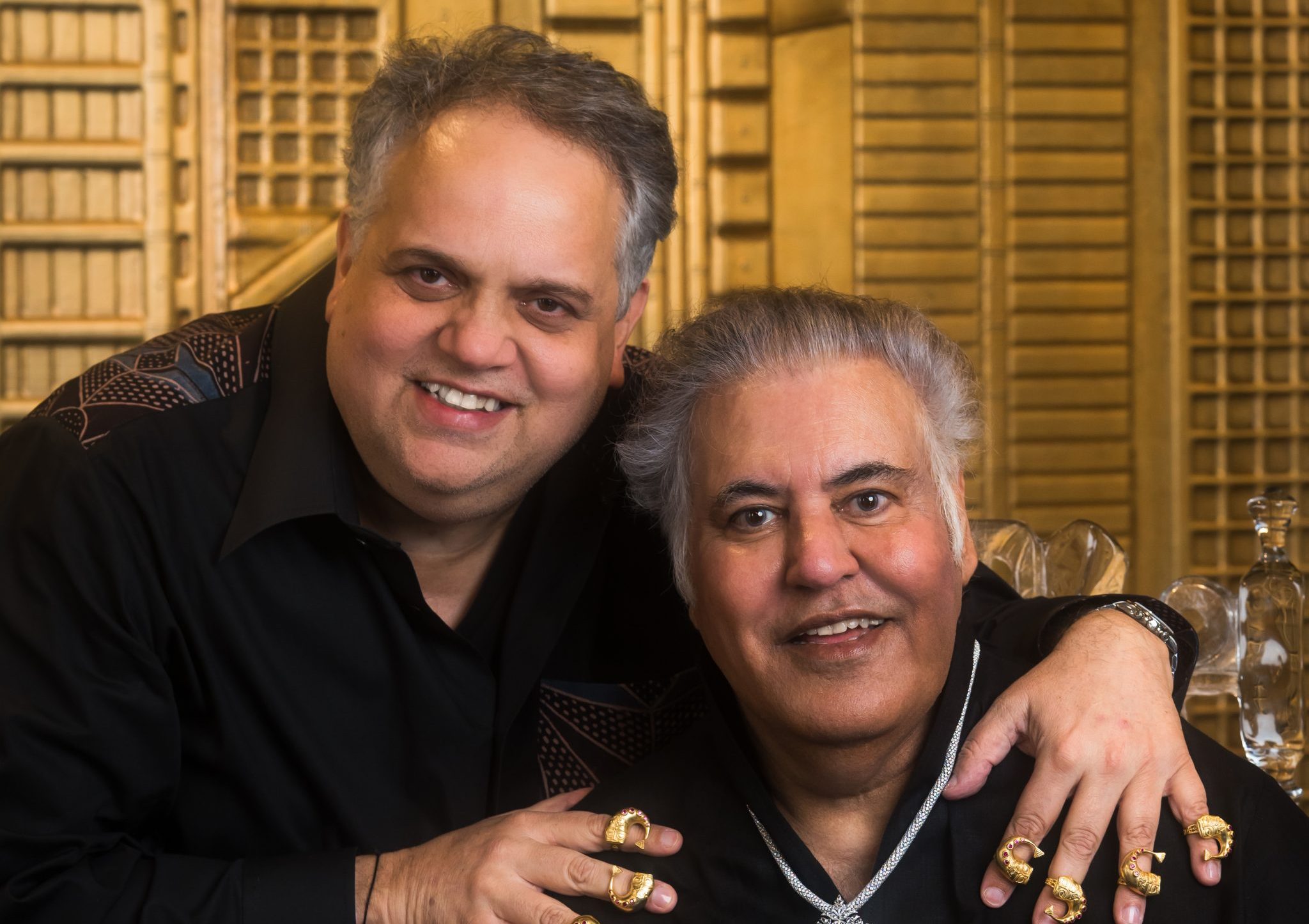
There is a reason Abu Jani and Sandeep Khosla have never been ones to do things by half. When the two met in August 1986 at the studio of Mumbai-based costume designer Xerxes Bhathena, they found a creative kindred spirit in each other and decided to take a leap of faith. Later that year, they opened Mata Hari, their first boutique in Mumbai’s Juhu and began building a fashion vocabulary that would show the world the finesse of Indian craftsmanship. They reimagined chikankari and zardozi, made maximalism a second name to the brand, and spent four decades creating a world where fashion, art and fantasy happily collide. And now, that world is getting a room of its own.
With the launch of A Wonder Room, an art and design gallery headquartered in Goa, Abu Jani and Sandeep Khosla are taking their creative universe beyond couture. It’s conceived as a platform for art, craft, furniture, textiles, lighting and commissioned works; and brings to life their desire to create immersive spaces where every object has a story to tell.
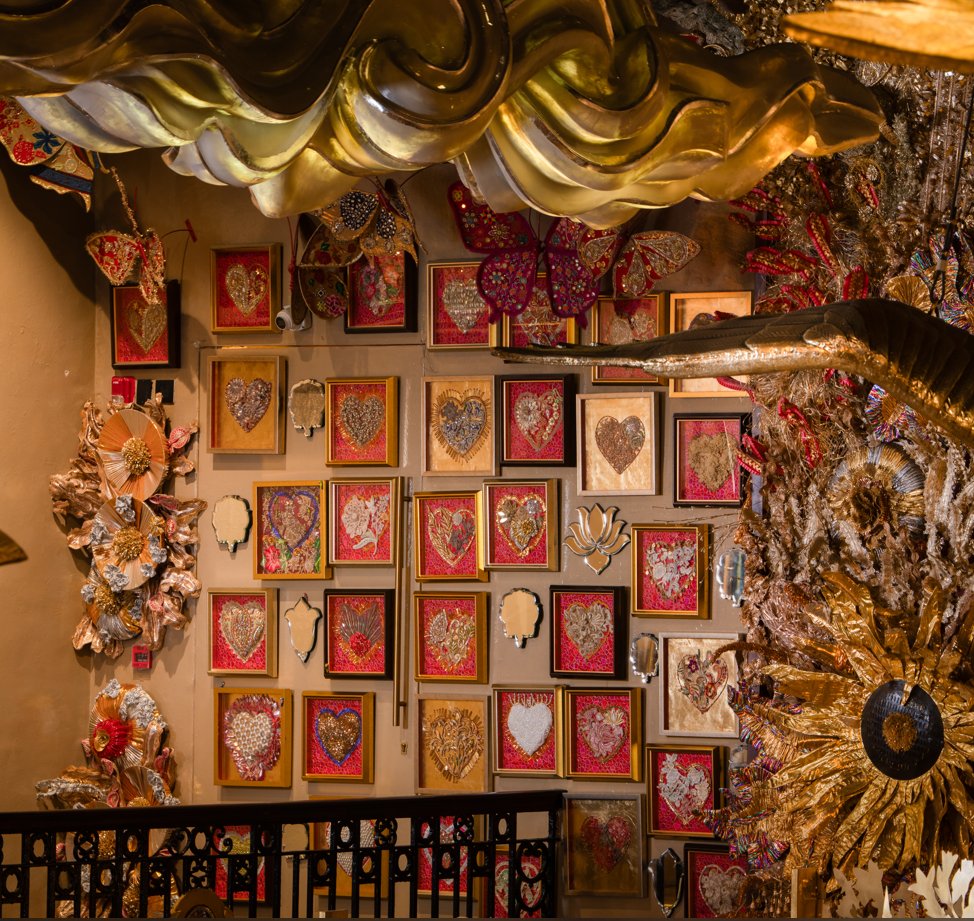
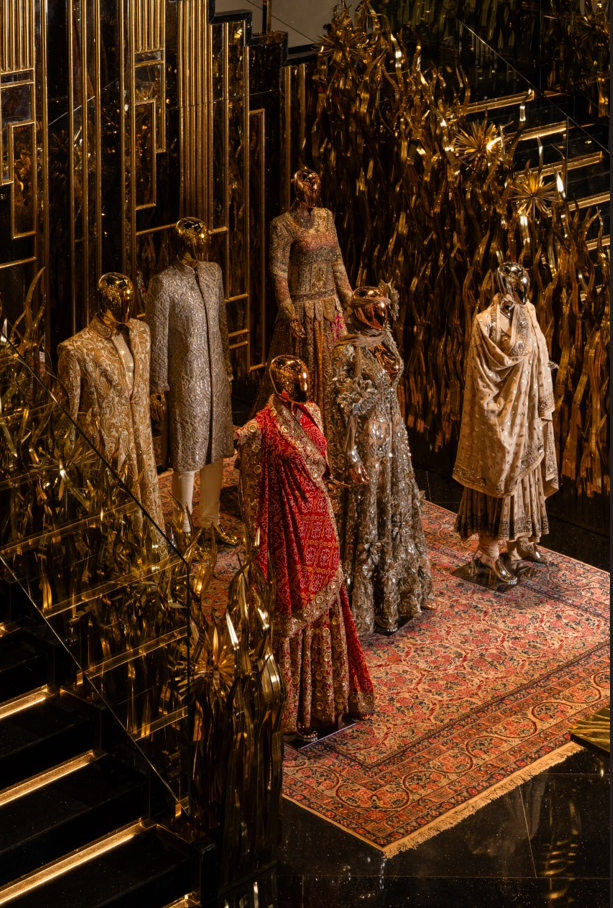
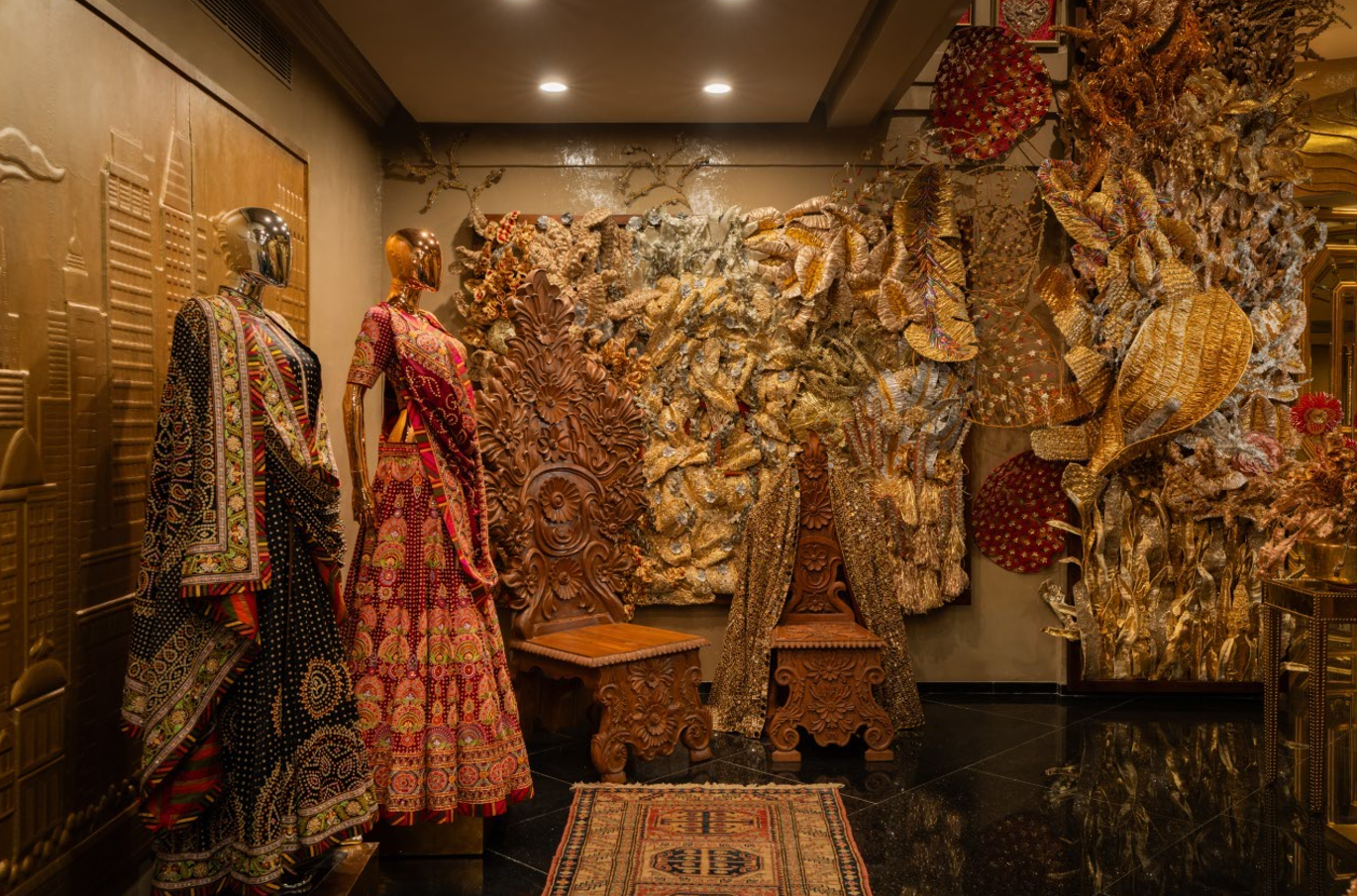
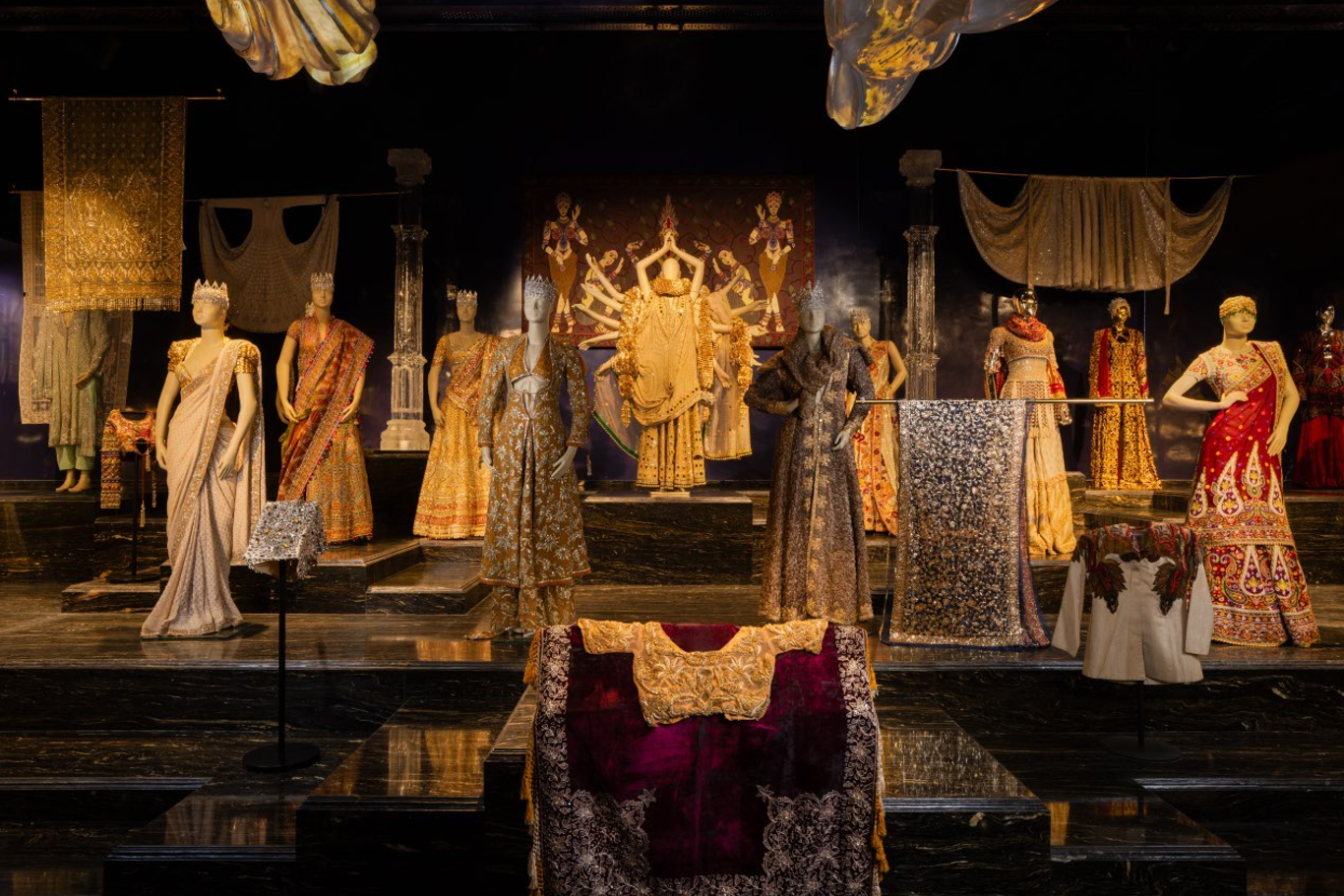
Their recently unveiled 20,000-square-foot Mumbai flagship, Mubarak Baug, offers a glimpse into this expansive design philosophy in a theatrical celebration of India Maximalism. So, is this a new chapter or simply the next expression of a vision they’ve been nurturing all along? We caught up with Sandeep Khosla to talk about four decades of creative curiosity and why the most exciting thing about a 40-year journey is knowing there’s still so much left to imagine.
LuxeBook: Forty years in, what still makes you curious?
SK: Everything, thankfully. Forty years sounds terribly respectable, and we have spent most of them being irreverent.
We are still as curious and hungry as we were at the beginning. India remains our greatest muse because there is simply no exhausting her. The traditions, materials, craftsmanship, architecture, even our ways of life…there is always another story hiding somewhere.
What excites us is taking something familiar and asking an unfamiliar question of it. What happens when a traditional material changes scale? When a craft leaves the garment and becomes a wall, a sculpture, an entire room? When something centuries old is given a completely new role?
That curiosity is really what led us to A Wonder Room. It gives us a much larger canvas to curate, create, and commission, without having to follow – what has come to be – the formulaic rhythm of a fashion collection. After forty years, you either get comfortable walking the same path or you take a right turn. We chose the turn.
LuxeBook: Was there ever a point when you felt the world was finally catching up with your maximalism?
SK: We have never really waited for the world to catch up. We were far too busy getting on with it. Perhaps the world hasn’t caught up with maximalism so much as realised that minimalism was never the only definition of good taste.
For years, modernity was somehow equated with restraint: beige, quiet, stripped back, terribly well-behaved. That was never our language. India is not a minimalist civilisation. We grew up and continue to live surrounded by the most vibrant, delicious, beautiful sensory stimuli. Why would we explain any of it? It’s just another day in our lives!
What is interesting now is that the conversation has shifted. People are far more comfortable with emotion, and theatricality occupying contemporary spaces. For us, maximalism has never meant putting more things into a room simply because you can. At A Wonder Room, ‘more’ has meaning and method. There has to be rigour. Every detail has to earn its place. The real trick is knowing when abundance becomes magic rather than clutter.
LuxeBook: What makes a room ‘A Wonder Room’ to you? And what was the vision behind creating one?
SK: We live in a world where so much of life is experienced through a screen. We see everything, constantly, and perhaps because of that, very little truly stops us anymore. Very little makes us look twice, feel deeply, or commit a moment to memory.
A Wonder Room was conceived as the diametric opposite of that.
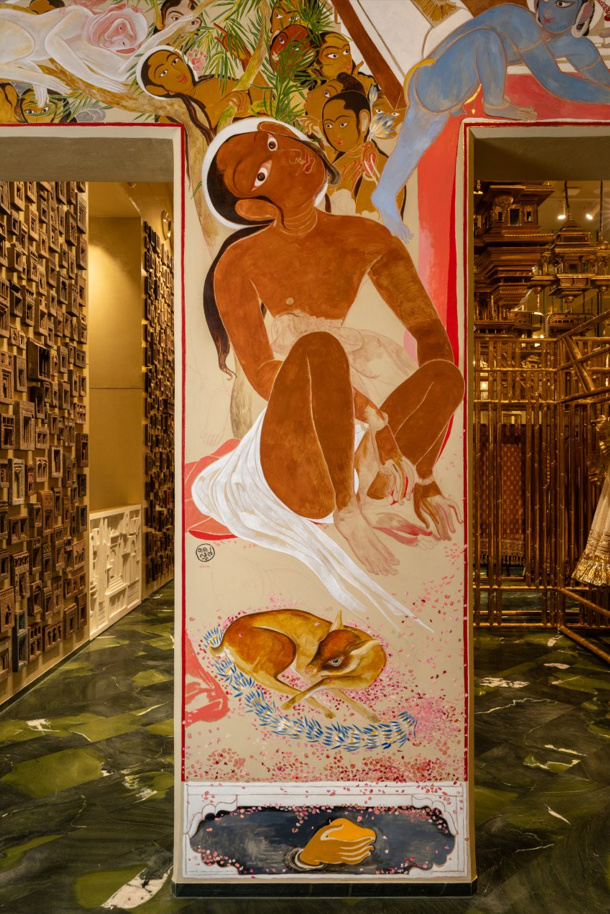
For us, a room becomes A Wonder Room when it awakens that instinct to look, to linger, to discover. The space itself our canvas, and everything within it has a relationship to everything else: the architecture, the objects, the materials, the craft, the hands that made them. At its heart, A Wonder Room is an ode to cultural intelligence. Through what we create, curate and commission, we want to bring those things into contemporary life in ways that feel unexpected and alive.
We have been doing this instinctively for decades. We have always called ourselves “House Doctors”. Even when our first studio was one small room, we filled it with objects and discoveries that stirred something in us. Travel, antique markets, galleries, architecture, artisans and the homes we created for friends gradually expanded that room into a much larger world.
A Wonder Room gives that instinct a formal home. It is an art and design gallery with an India Maximal point of view.
LuxeBook: ‘India Maximalism’ can easily be reduced to colour, ornament, and abundance. What do people misunderstand about the philosophy behind your maximalism?
SK: The biggest misunderstanding is that maximalism simply means more. More colour. More gold. More pattern. More things.
For us, India Maximal holds immense cultural intelligence. It is as much about generosity & largesse of spirit, as it is about objects of beauty. It is a question that we like to answer with ‘why’ and not ‘what’. Colour, ornament, symbolism, craftsmanship and pattern are not decorative extras. They are part of our legacy. But legacy and inter-generational knowledge is only interesting if you do something with it.
We are not interested in reproducing the past or embalming craft in nostalgia. We want to take a technique, material or craft and ask what else it can become. Enlarge it. Make it abstract. Move it somewhere unexpected. Give it another life.
So, at A Wonder Room, India Maximal is about confidence, discernment and the freedom to occupy space fully.
LuxeBook: Why Goa? What does the landscape, pace, and cultural character of Goa give A Wonder Room that another city could not?
SK: Goa has a wonderful vibe. The moment you arrive, there is a different spirit to the place. You are away from the urgency of Bombay and Delhi, and that change in pace is important for what we want A Wonder Room to be. When our brand-home opens doors, it has to be taken in and enjoyed; it cannot be a hurried experience. Moreover, what better way to present a maximal point of view if not in juxtaposition to the languor of Goa!
LuxeBook: If someone walks into A Wonder Room knowing nothing about Abu Jani and Sandeep Khosla, what do you hope they feel before they even understand what they are looking at?
SK: Wonder. Immediately. The kind that allows you to leave the world outside.
They don’t need to recognise a technique or understand the provenance of every object before something moves them. Feeling comes first. The footnotes can follow. That idea of discovery by way of design, is very important to us.
Nothing that A Wonder Room offers will give itself away in the first five seconds. The spaces we work with, the objects and experiences we create reveal themselves gradually.
We love spectacle, obviously. But spectacle needs intimacy. It should be inviting, and you should also be able to stop, look closely and find a tiny detail that feels as though it was your discovery.
LuxeBook: In these 40 years, which project, person, or moment made you feel you had truly ARRIVED?
SK: ‘Arrived’ is a dangerous word. The minute you decide you have arrived, you risk becoming terribly pleased with yourself, and then the work gets boring.
But there have certainly been moments when we have looked at each other and thought, well, this is rather fabulous.
Our recent 40th anniversary celebrations at the new Abu Jani Sandeep Khosla flagship, Mubarak Baug was one of them. It was an evening of song & dance and couture, celebrated with our dearest friends, collaborators and patrons. It was completely mad, completely joyous and very us. Seeing our worlds – of fashion and design – converge, built on our own terms, was quite a moment.
But we have never wanted arrival to become a full stop. Forty years later, there are still things we haven’t made, rooms we haven’t imagined and ideas we haven’t frightened ourselves with yet. That feels much more exciting than arriving.
You may also read: 23-year-old Khushi Kumar on building her fashion label