Sleeping with the Stars: Five-star meets a billion stars
- Featured Travel & Hospitality
 Yashita Damani
- 17 minutes read

“Sleeping with the stars” isn’t exactly what you think it is.
Before we begin, I should apologise for the headline. It’s admittedly clickbait and intentionally misleading. If you’ve picked up this magazine expecting George Clooney, a celebrity hall pass or some wildly entertaining story involving Hollywood and hotel rooms, I’m afraid you’re going to be disappointed. The only stars we’re talking about today have been hanging over our heads for billions of years. Which, much like the sun rising every day, is one relationship you can always count on.
The funny thing is, somewhere between Michelin stars, Forbes stars, five-star hotels and celebrities we insist on calling “stars”, we forgot about the originals. The ones that inspired myths, navigated explorers across oceans and made ancient civilisations look upwards for answers instead of down at their phones. Somewhere between endless notifications, brighter cities and twenty-four-hour lifestyles, looking up became something we had to remember to do.
Tom Hanks has spent years supporting space exploration and NASA missions. Neil Patrick Harris regularly speaks about sharing his love of astronomy with his children. Chris Hadfield somehow convinced an entire generation that science could be poetic. Even celebrities, the very stars we’ve become obsessed with chasing, are looking upwards these days.
The notion I am posing here is that hotels are spending millions creating experiences around the only amenity they don’t actually own. They don’t own the Milky Way. They don’t own Saturn’s rings, meteor showers or lunar eclipses. They simply happen to be built in places where nature still remembers how dark the world is supposed to be.
Once upon a time, looking up wasn’t an activity. It was survival. Before clocks, the sky told time. Before maps, the stars drew directions. Before weather apps, clouds whispered warnings. The moon decided harvests, the sun dictated sleep and constellations carried stories long before paper ever did. Humanity’s first ceiling wasn’t concrete. It was infinite.
We still glance upwards when fireworks explode, when aeroplanes rumble overhead or when someone reminds us there’s a meteor shower tonight. We photograph eclipses, admire sunsets to frame the perfect dinner reservation. We point our phones towards comets. But these are interruptions. Looking up used to be instinctive. Today, it requires a calendar reminder.
Perhaps the greatest irony of human progress is that the more we conquered the earth, the less interested we became in the heavens. We built taller buildings until they blocked the horizon, filled cities with light so bright that the stars quietly resigned and created artificial skies on our phone screens while the real one waited patiently above us, asking for absolutely nothing except the occasional glance. Our ancestors knew the names of constellations because they had to. We know WiFi passwords.
It would be easy to blame technology. Every bowed head seems to accuse the glowing rectangle in our hands, and every airport lounge, café and traffic signal performs the same strange choreography of hundreds of people moving forward while staring down. But perhaps technology is only the symptom. The real culprit is certainty. Ancient civilisations looked upwards because the sky represented mystery.
We, on the other hand, have photographed black holes, landed on the moon, mapped galaxies and explained atmospheric scattering so thoroughly that knowledge has quietly mistaken itself for awe. Yet understanding something has never been the same as being astonished by it.
The original five star experience

“There is a growing desire among travellers to seek experiences that create a sense of wonder and perspective. Stargazing has a beautiful simplicity to it – it encourages us to slow down, look up and reconnect with something much larger than ourselves. At The Leela Coorg Forest Sanctuary, the experience is heightened by our 76-acre natural setting, where the forest, the stillness of the night and the vastness of the sky come together. For our guests, it becomes a memorable way of experiencing Coorg beyond the familiar.” Mr Rajesh Namby, General Manager, The Leela Coorg Forest Sanctuary
Maybe that’s why luxury hospitality has become unexpectedly fascinated with the night sky. Not because hoteliers suddenly decided to become astronomers, but because they recognised something the rest of us had forgotten. An unobstructed view of the universe. Hotels spent decades competing over beaches, skylines and mountain ranges without realising the greatest view had always begun after sunset.
The universe’s turndown service

Darkness, it turns out, has become one of the world’s most exclusive amenities.
It sounds almost absurd until you consider how difficult genuine darkness has become to find. Nearly eighty per cent of the world’s population now lives beneath light-polluted skies, meaning an entire generation has grown up believing the night sky consists of a handful of stars, one particularly enthusiastic aeroplane and the occasional full moon if the weather is feeling generous. The Milky Way hasn’t disappeared. Saturn hasn’t packed up and left. We simply built cities bright enough to erase them from view.
Luxury, of course, has always chased rarity. When everyone could fly first class, private jets became desirable. When every coastline boasted a beach resort, travellers sought private islands. Today, hotels are discovering that rarity isn’t measured only in craftsmanship or square footage. Architects now design resorts that protect the night instead of overpowering it. Landscape lighting designers carefully shield outdoor illumination so it never spills into the horizon. Resident astronomers have quietly joined celebrity chefs as hospitality’s newest experts, while midnight picnics, moonlit spa rituals and astrophotography workshops have become experiences guests willingly cross continents to experience.
The irony is rather beautiful.The stars belong to no brand, no billionaire and certainly no hotel group.
Five stars meet five billion more
There is another reason these experiences resonate so deeply, and it has very little to do with astronomy. Standing beneath a truly dark sky is profoundly inconvenient for the ego. Deadlines shrink. Notifications lose their urgency. That email marked “gentle reminder” suddenly feels wonderfully insignificant when you’re looking at light that began travelling towards Earth millions of years before human beings built the first luxury hotel. Wonder has terrible metrics. No spreadsheet records the return on lying beneath the Milky Way. No algorithm rewards silence. No quarterly report can calculate the value of feeling beautifully, almost comfortingly, small.
Eclipse tourism boom
The eclipse tourism boom was officially proved on August 12, 2026, skywatchers across the world once again proved that people will happily cross borders, book months ahead and pay a premium for the privilege of staring directly at the universe doing its thing. From remote viewing camps to luxury hotels positioning themselves as front row seats to the cosmos, eclipses are fast becoming the newest reason to travel (and our instagram feeds were flooded with the same!). Because apparently, the ultimate holiday flex is no longer a beach villa or a Michelin star, but saying, “Yes, I flew there for four minutes of darkness.”
The following properties have done exactly that, transforming the oldest spectacle on Earth into hospitality’s newest obsession. From private observatories in the Utah desert to astronomy decks overlooking the Namibian wilderness and glass-roofed igloos beneath the Arctic sky, these are the hotels proving that the greatest show in luxury hospitality begins long after the concierge says goodnight.
Checking into the cosmos
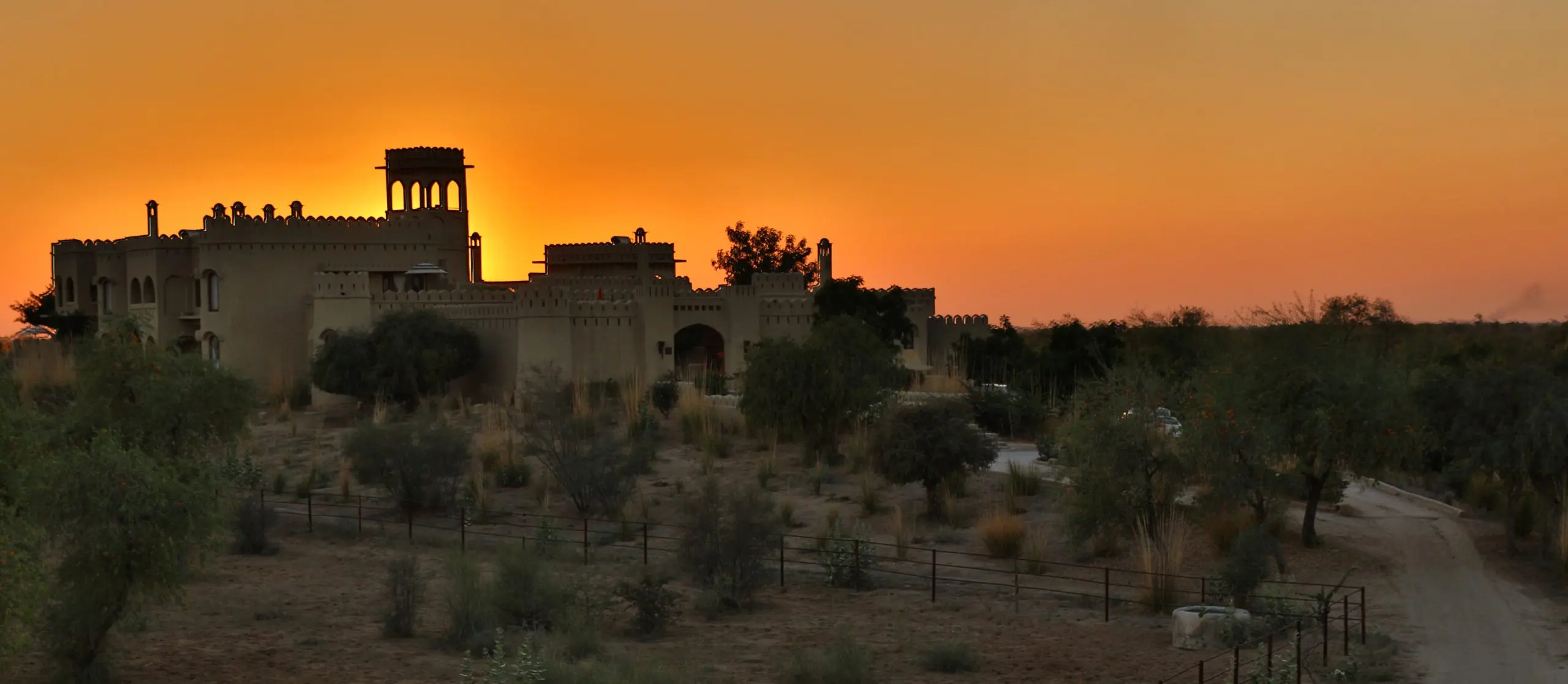
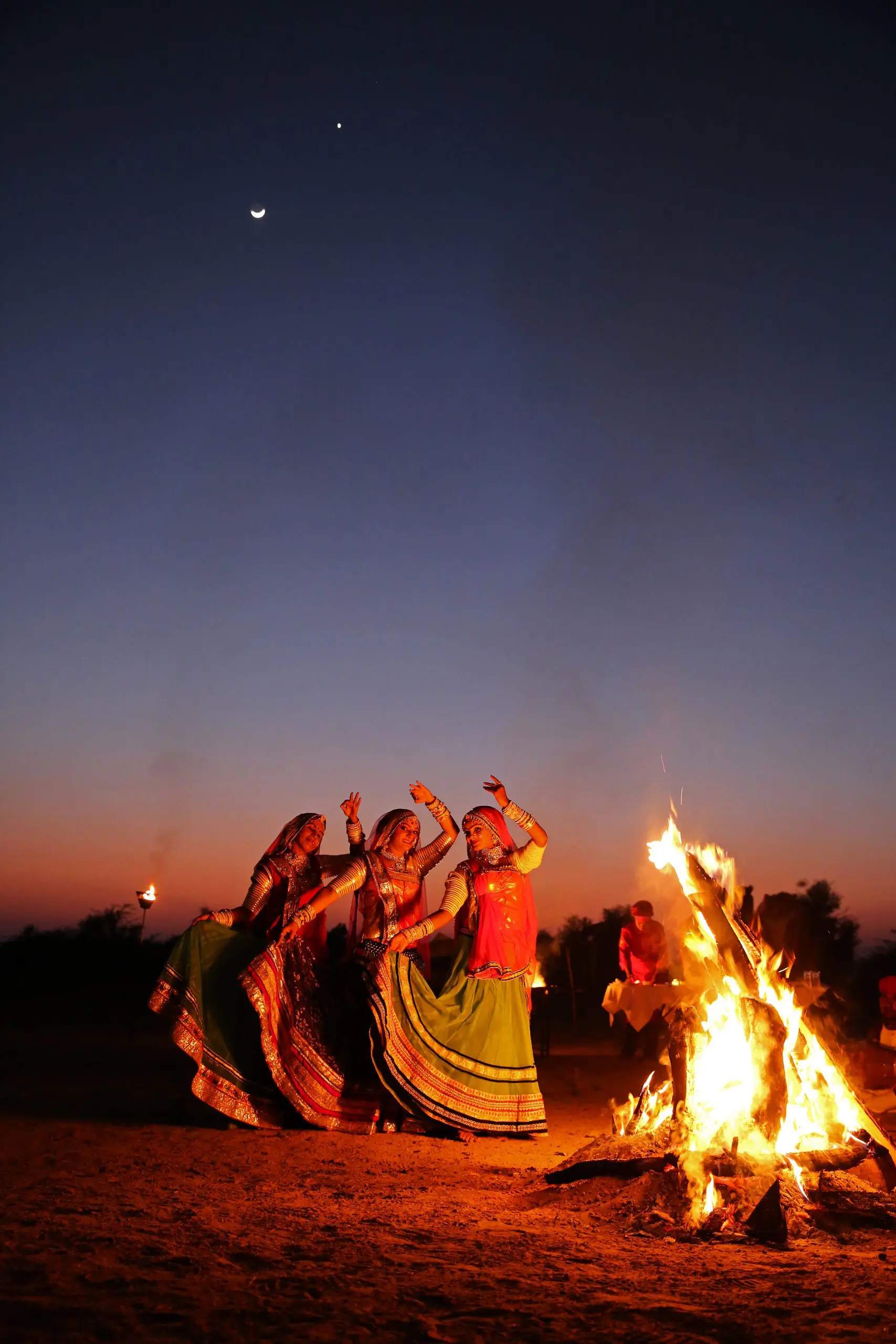
At Relais & Châteaux SUJÁN The Serai, nightfall transforms the Thar into a theatre of its own. Guests can settle in for an outdoor cinema beneath the stars, with classic films, popcorn, drinks and homemade ice cream, or turn their gaze skyward during guided stargazing sessions, where naturalists trace planets, constellations and the myths behind them. For a more indulgent evening, private dining on the dunes pairs lantern-lit tables and specially prepared cuisine with the sounds and stillness of the desert, while traditional Ger dance performances bring movement, music and storytelling to the night. And as the day slips away, the Thar Sundowner offers a quieter ritual: a rural wilderness drive that gives way to a camel ride and a secluded dune, where guests can watch the sun sink over the desert before the stars take over.
Mihir Garh: Dinner Under the Desert Sky
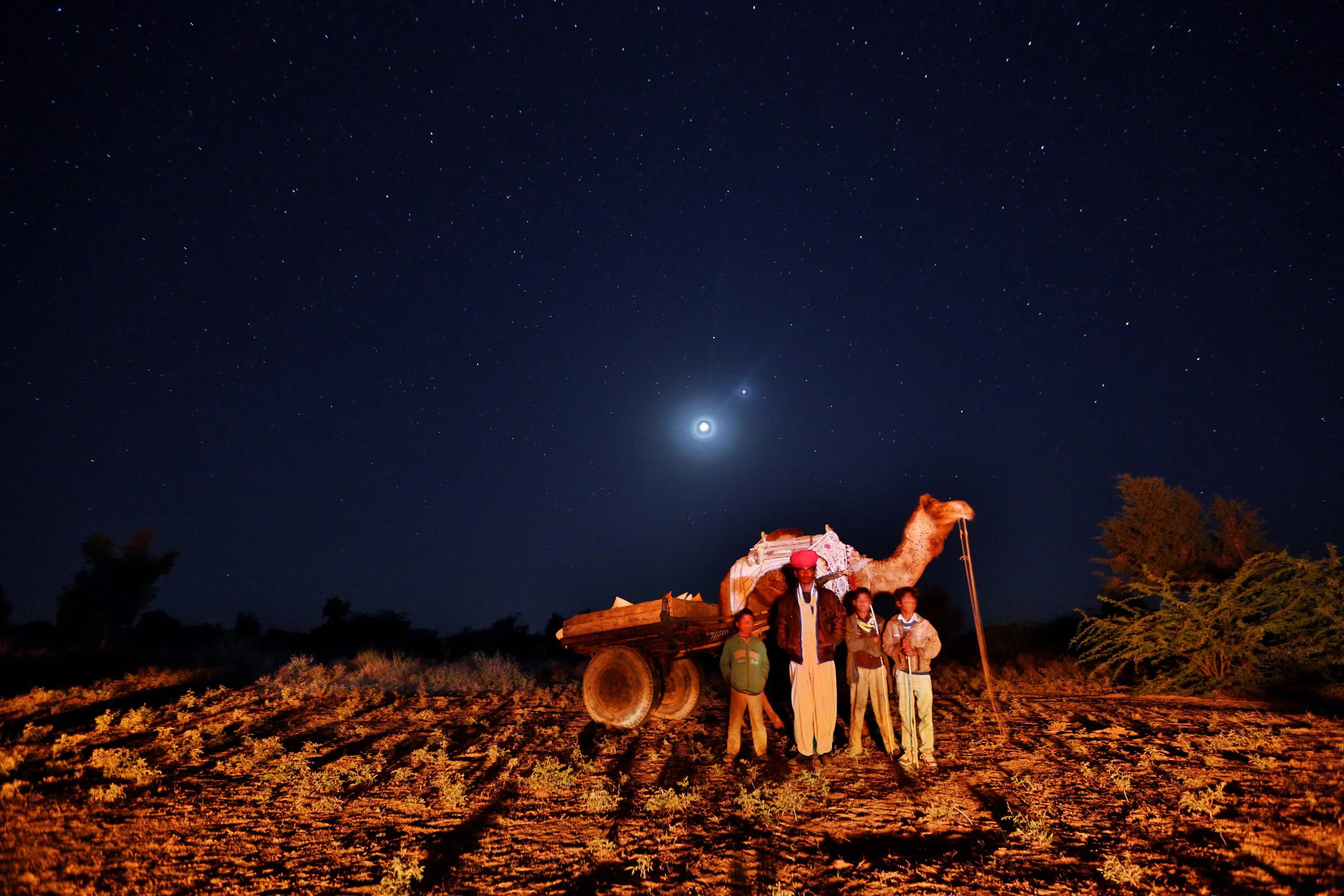
At Mihir Garh in Rajasthan, the night sky isn’t merely something to look at. It becomes part of the evening itself. Guests are taken into the desert wilderness by camel or beautifully adorned camel carts, following the warm glow of mashaal lights towards a traditional Shikar camp gathered around a crackling fire. Here, the Khad Experience recreates the communal spirit of royal-era hunting camps, with locally spiced meat slow-cooked in a clay pot underground, traditional breads, local accompaniments and Kaalbelia musicians providing the soundtrack. Reclining on mattresses and traditional charpai beds beneath an enormous Rajasthani sky, with only the occasional call of a jackal interrupting the silence, dinner becomes less about the table and more about the landscape around it. It is precisely the kind of luxury that doesn’t need to manufacture spectacle; the desert, the darkness and the stars have already done the work.
Mr Rajesh Namby, General Manager, The Leela Coorg Forest Sanctuary comments on existing celestial experiences at their newest property; their curated stargazing experiences within its 76-acre expanse of forest and coffee plantations. Guided by an astronomy expert, guests are invited to journey through the night sky, where a finderscope reveals galaxies, constellations, and celestial formations in exquisite detail.
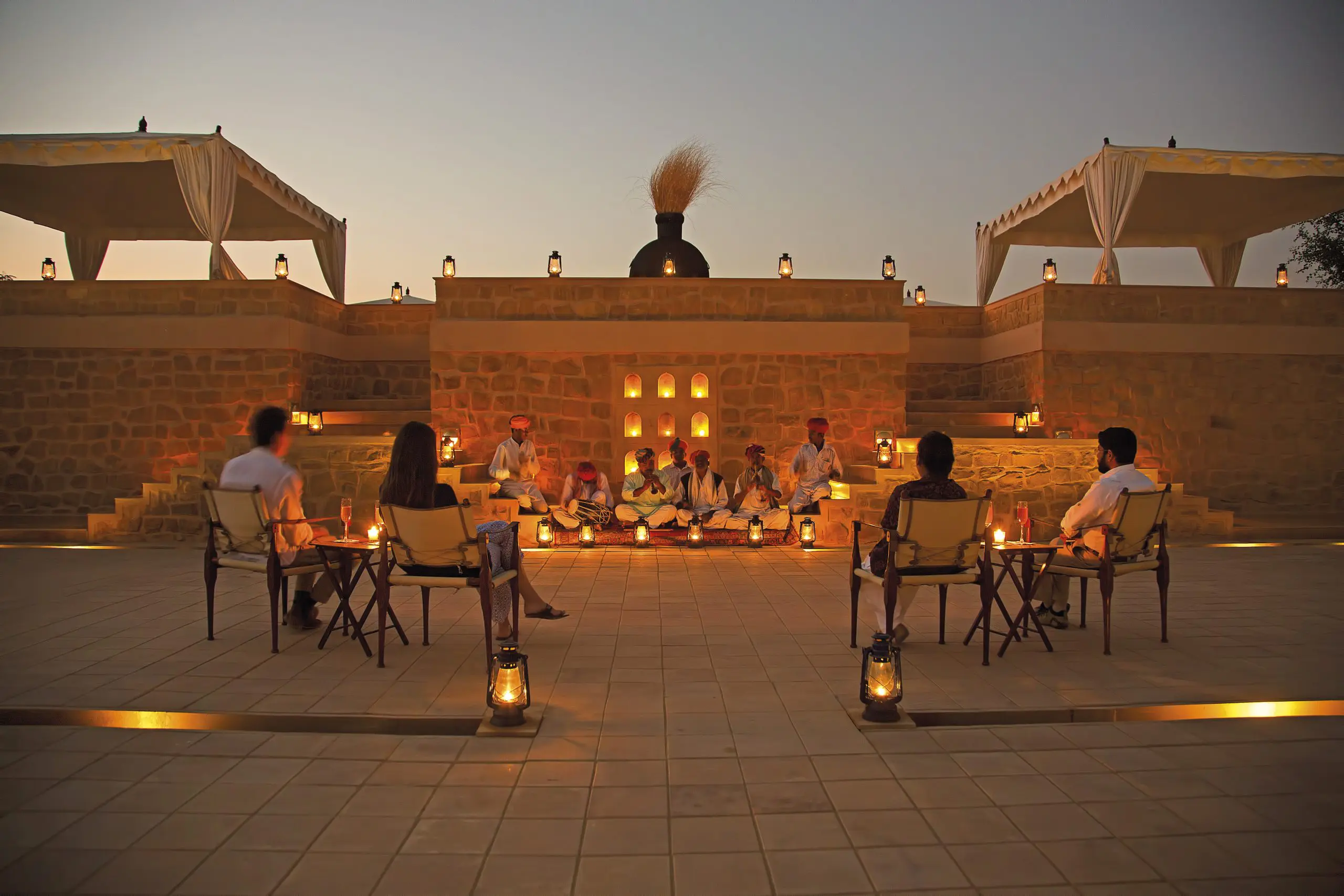
Naturally, we were curious to know how this experience was curated, as stargazing unfolds outdoors within the sanctuary. It would have to be led by an expert who introduces the celestial formations visible on that particular night, to which he notes that “Each session is thoughtfully attuned to sky clarity and prevailing conditions, allowing the experience to feel both personal and unhurried, beneath an uninterrupted canopy of stars.”
“Coorg’s elevated terrain, dense forest cover, and minimal light pollution create naturally favourable conditions for stargazing. The wider region is often noted by astronomy enthusiasts for its dark-sky potential, while Madikeri has also experienced periods of notably clear atmospheric quality, further enhancing visibility.”
As day gives way to night, the sanctuary transforms into a space of profound stillness, where the sounds of the forest soften and the sky takes centre stage.
On upcoming celestial experiences, he confirms that the property continues to evolve its stargazing programme as part of its nature-led experiences, offering guests an ever-deepening connection to the rhythms of Coorg and the quiet majesty of the night sky.
Darkness is the new beachfront.
It sounds absurd until you think about it; for decades, hotels competed over ocean views. The best oceanfront villa or the tallest tower, an exclusive mountain retreat, jungle lodge or an overwater stay. Today, some of the world’s most coveted luxury resorts are selling something even more intangible.
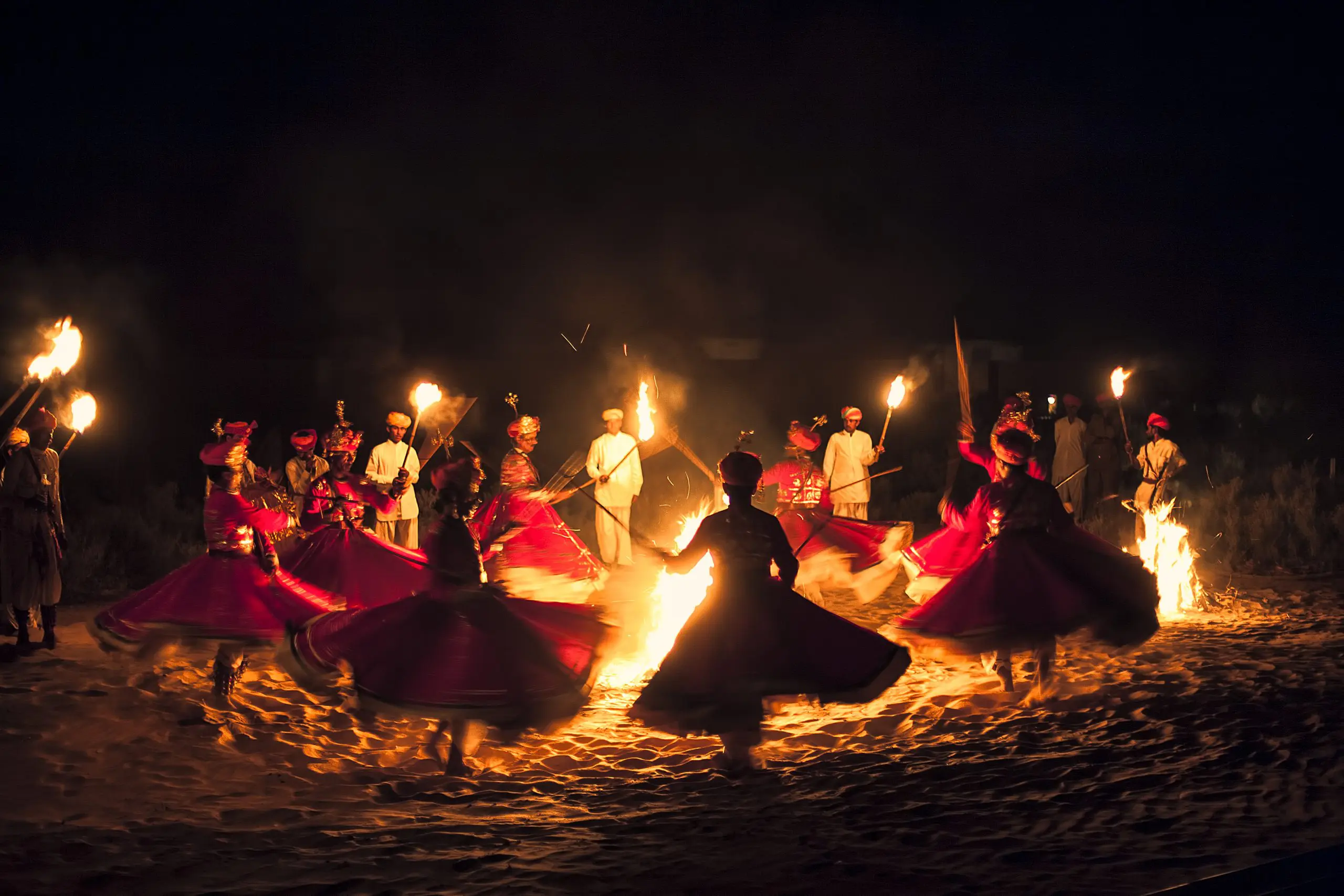
Digital detoxes have become actual holidays and silence is no longer awkward, it’s aspirational (bet you can’t find that in your lives in the city). People (not just astronomers) now fly halfway across the world to experience this deliberately.
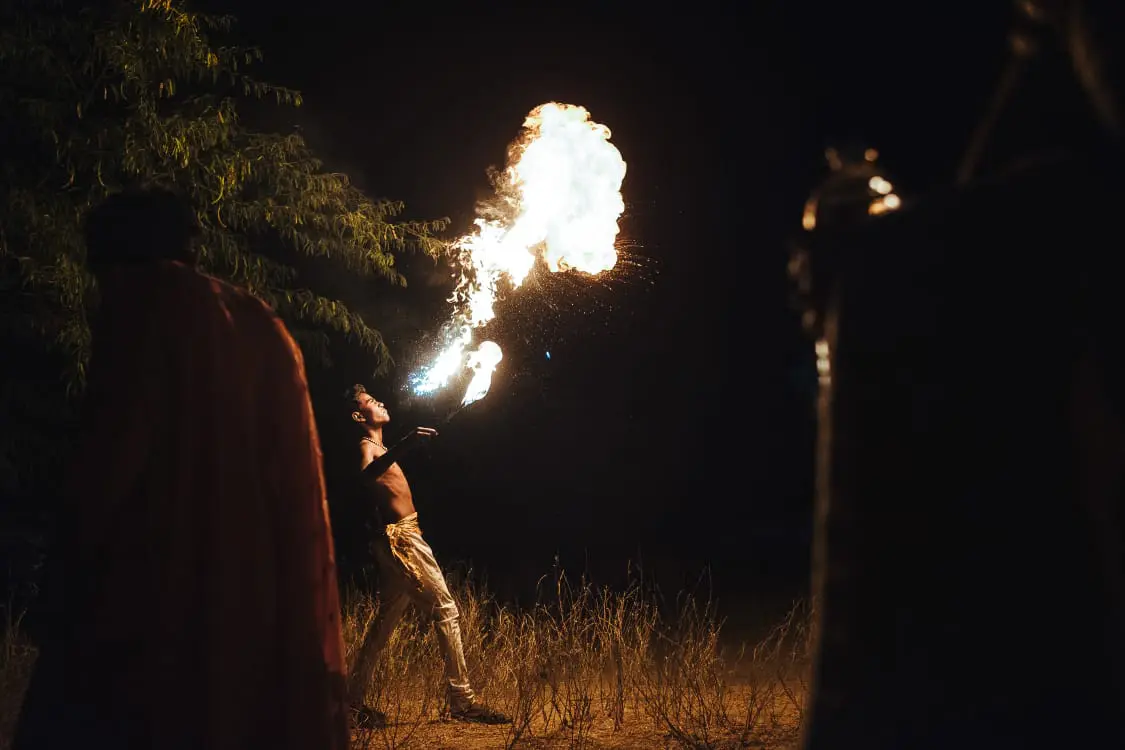
Unlike celebrities, the night sky doesn’t care who you are. It doesn’t distinguish between billionaires, honeymooners, backpackers or royalty. Everyone sees the same Orion. The same Milky Way. The same moon that has watched every civilisation, every empire and every love story unfold beneath it.