In conversation with Vedika, recipient of Jaguar Awards talks on why the future of creativity belongs to those prepared to be original
- Art Featured
 Yashita Damani
- 16 minutes read

Tyger Tyger burning bright,
In the forests of the night:
What immortal hand or eye,
Dare frame thy fearful symmetry?
Have you ever read William Blake’s The Tyger and wondered about the creature at the heart of the poem? Not the fear it inspires, nor the mystery of its creation, but the tiger itself. In Tyger Tyger Burning Bright, artist Vedika Rampal revisits Blake’s iconic verses through a striking contemporary lens, shifting the narrative from hunter to hunted and exploring history, memory and perception through the animal’s eyes.
As luxury brands increasingly invest in culture and creativity, initiatives such as the Jaguar Awards are shining a spotlight on emerging artists whose work challenges convention and invite new ways of seeing. Among the recipients of the 2026 Jaguar Awards, presented in partnership with the Royal College of Art London was India-born, Australia-based contemporary artist Vedika Rampal, who received a Special Commendation for Tyger Tyger Burning Bright. Drawing from archives, memory and histories of collection, Rampal’s multi-disciplinary practice explores perception, inheritance and the stories that often remain untold.
Why Jaguar is investing in the future of contemporary art through the Jaguar awards
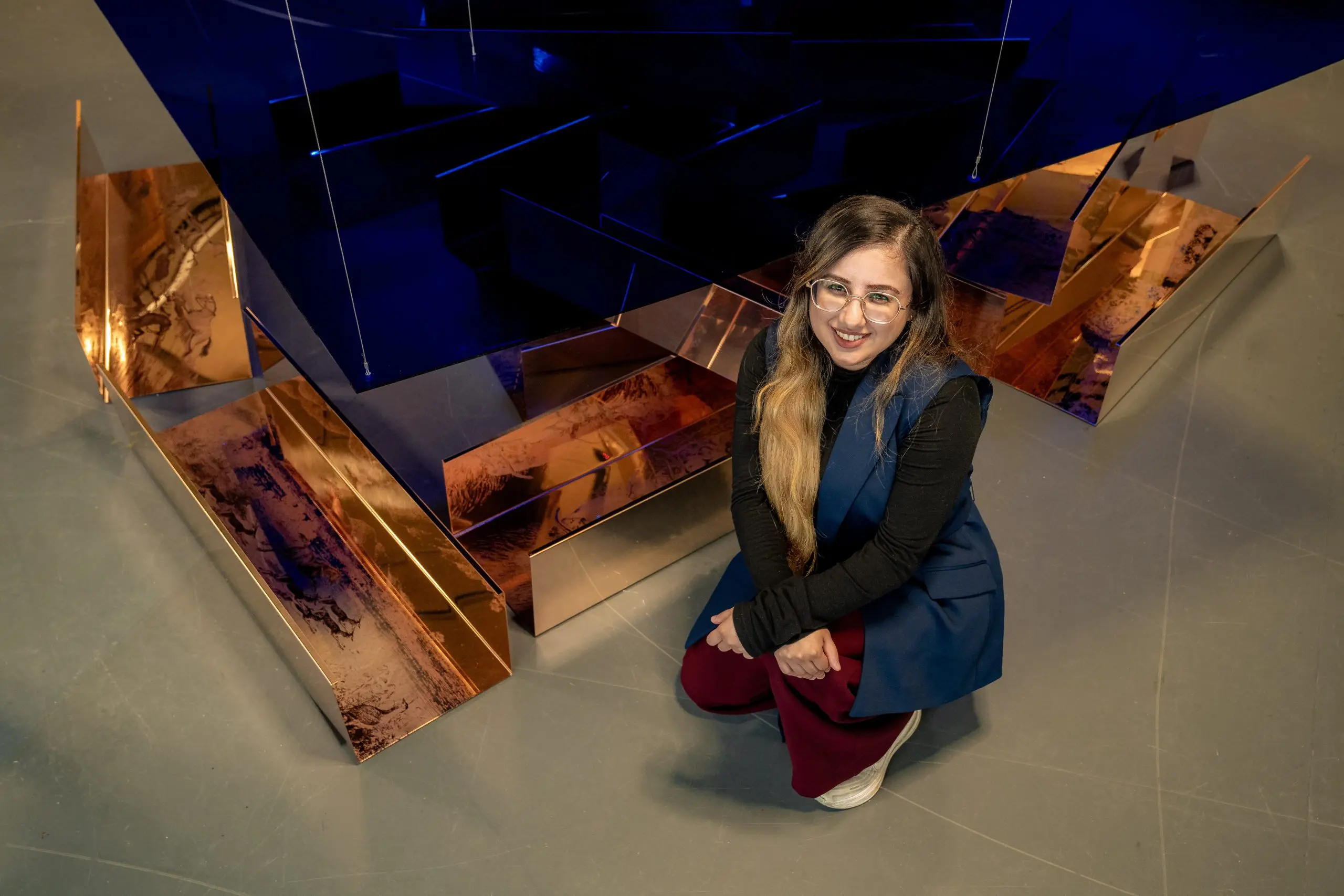
In conversation with LuxeBook, she reflects on originality in the age of AI, the inspiration behind her award-winning installation and why hope remains central to the way she sees the world.
LuxeBook: Jaguar’s ‘Copy Nothing’ philosophy champions originality. How does that philosophy resonate with your own artistic practice?
Vedika Rampal: I think artists, and perhaps creative practitioners more broadly, are always thinking about originality, both as a responsibility and as a driving force. My work grapples with histories, objects and archives, so I am constantly returning to the past, asking how it might shape the present and, in turn, the future.
I often wonder what stories have not been told, or what stories have the potential to be retold through a different light. I find myself continually asking: what is the power of the imagination, and how does it have the capacity to reframe and reshape the world we inherit?
If a work can encourage us to see something familiar differently, then perhaps it has created something genuinely original.
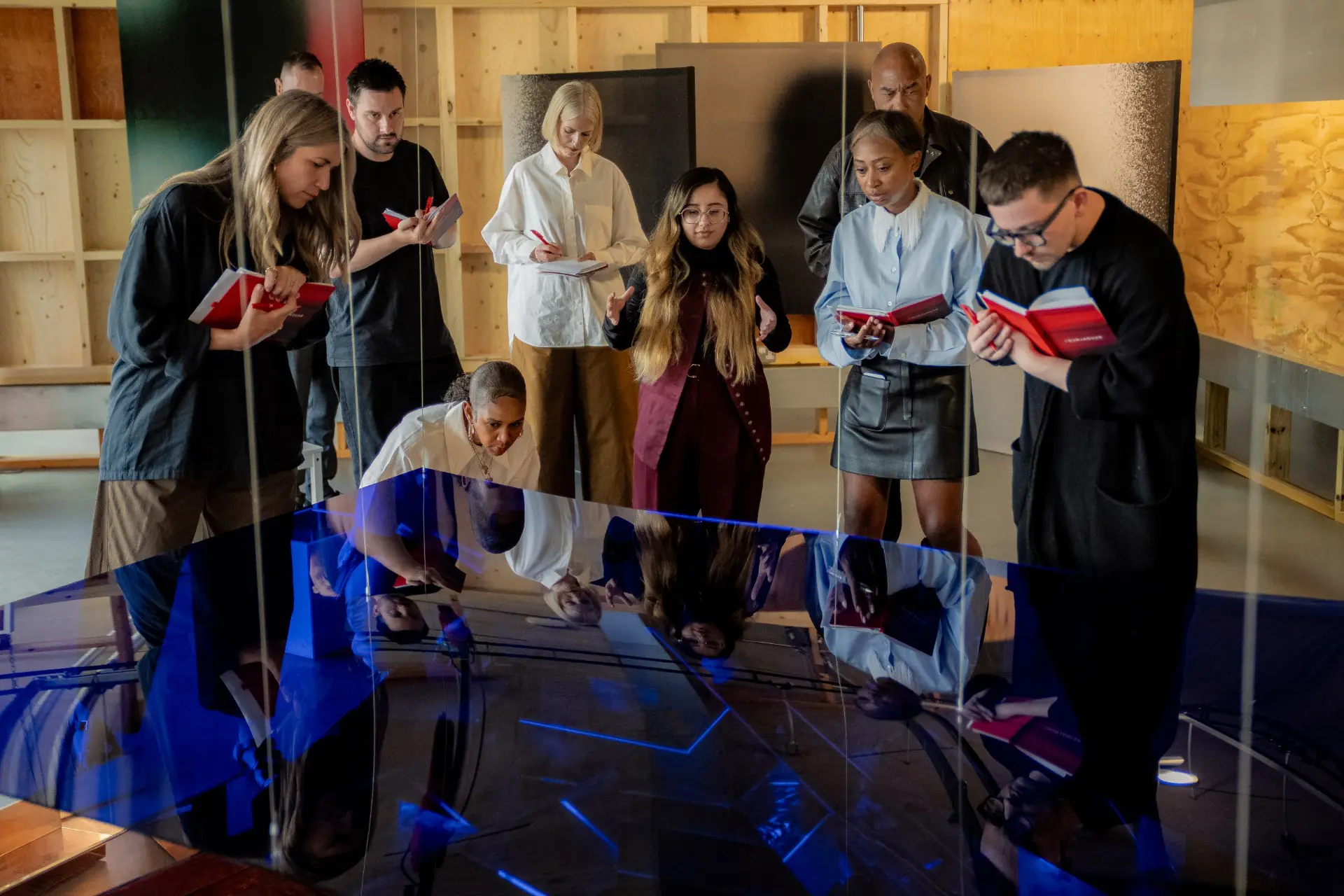
LuxeBook: What was the first spark that led to Tyger Tyger Burning Bright, and why did you choose to tell the story through the tiger’s perspective?
Vedika Rampal: My practice almost always begins with an encounter. More often than not, it is an encounter with a site inherited in memory.
For this body of work, that encounter was with the skin of a Bengal tigress displayed at Powis Castle in Wales, home to one of the largest collections of South Asian artefacts in the UK. I had travelled there thinking about the jewels, the swords, the textiles and the material riches within the collection more broadly.
Instead, it was the animals that stayed with me. When I visited the site last October, I was not expecting to see so many animals, tigers, bears, leopards, deer and birds, some spread across floors as carpets and others displayed within densely packed vitrines.
I remember standing in one of the main rooms for almost an hour looking at the skin of a tigress on the floor. The image of her, not alive yet unable to truly die, time-capsuled, remained with me throughout my studies this year. My work can be considered an elegy for her.
One of the questions I ask of the installation is whether it is a shrine or a shroud.
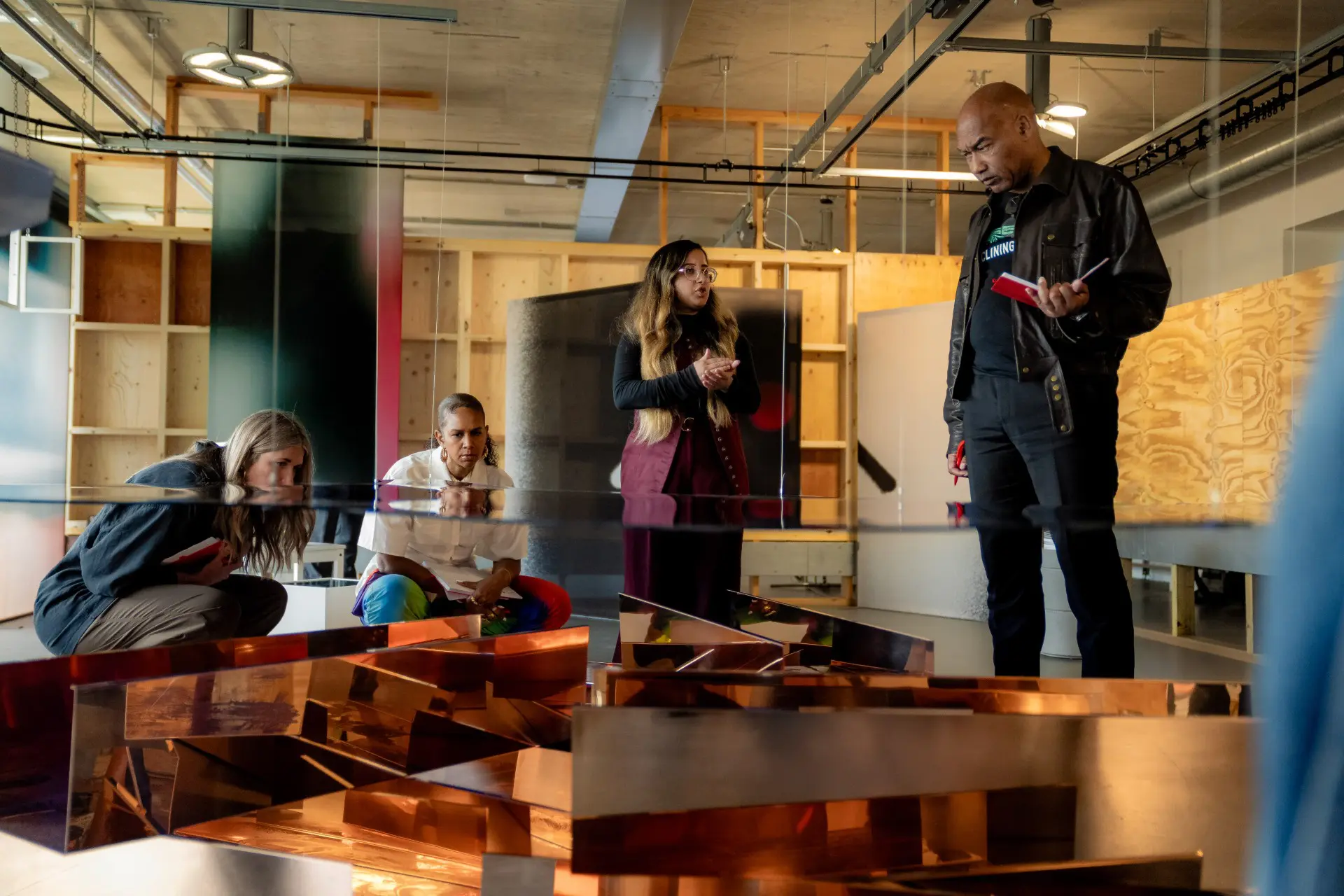
LuxeBook: The title references William Blake’s iconic poem. What drew you to it, and how did it shape your interpretation of the tiger?
Vedika Rampal: My background is in English literature, so Blake’s The Tyger is a poem I learnt by heart long before I became an artist. Those opening lines have always stayed with me.
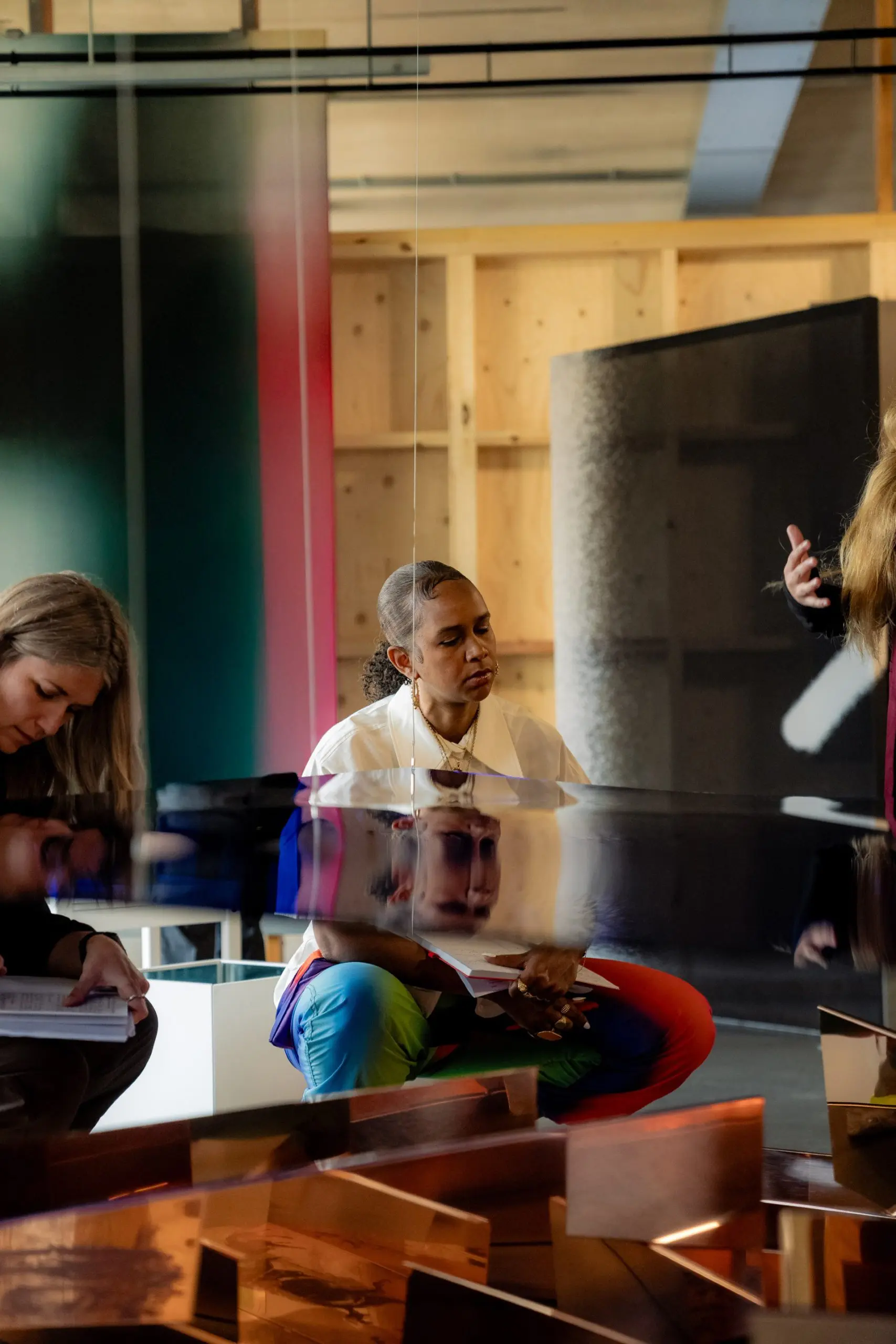
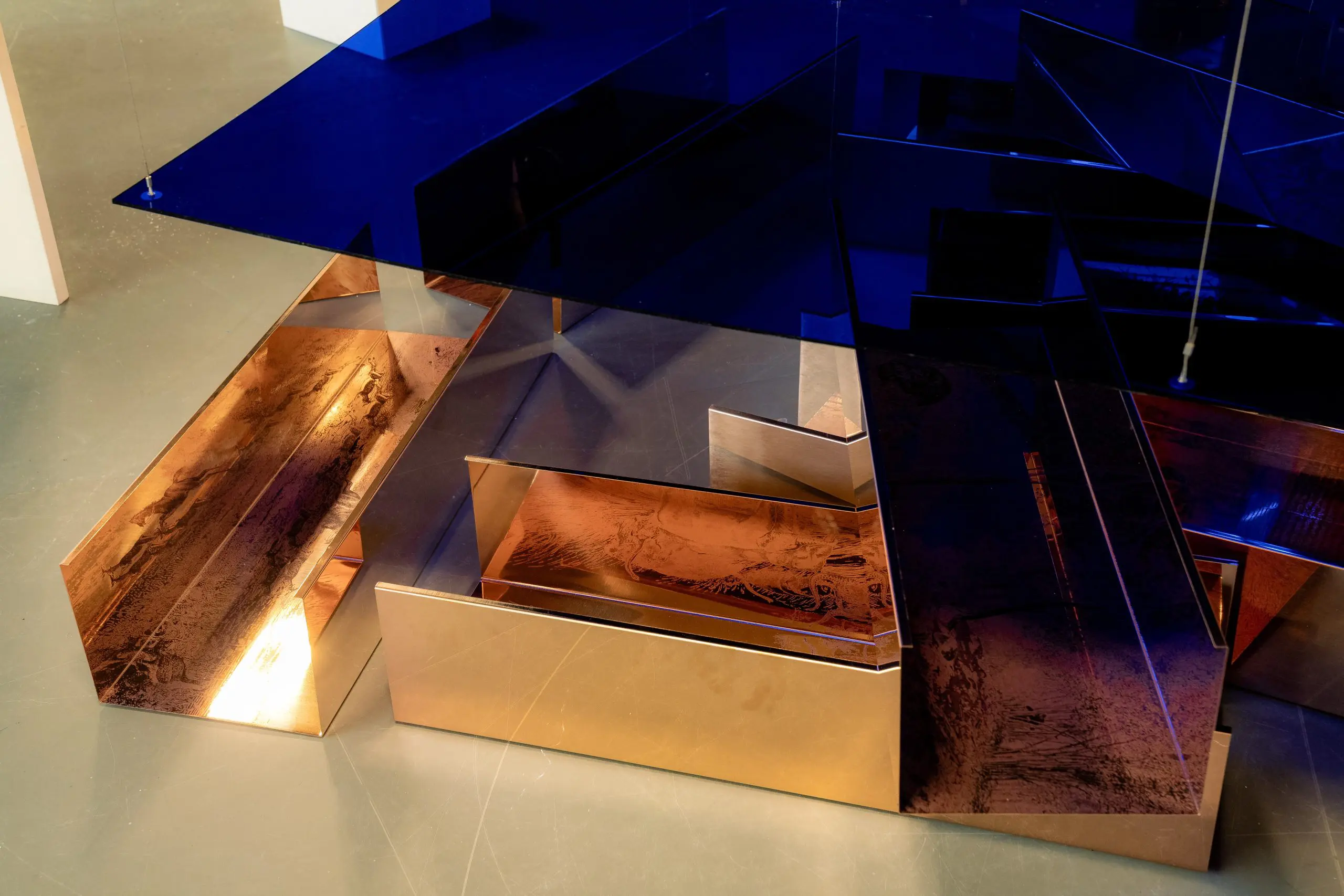
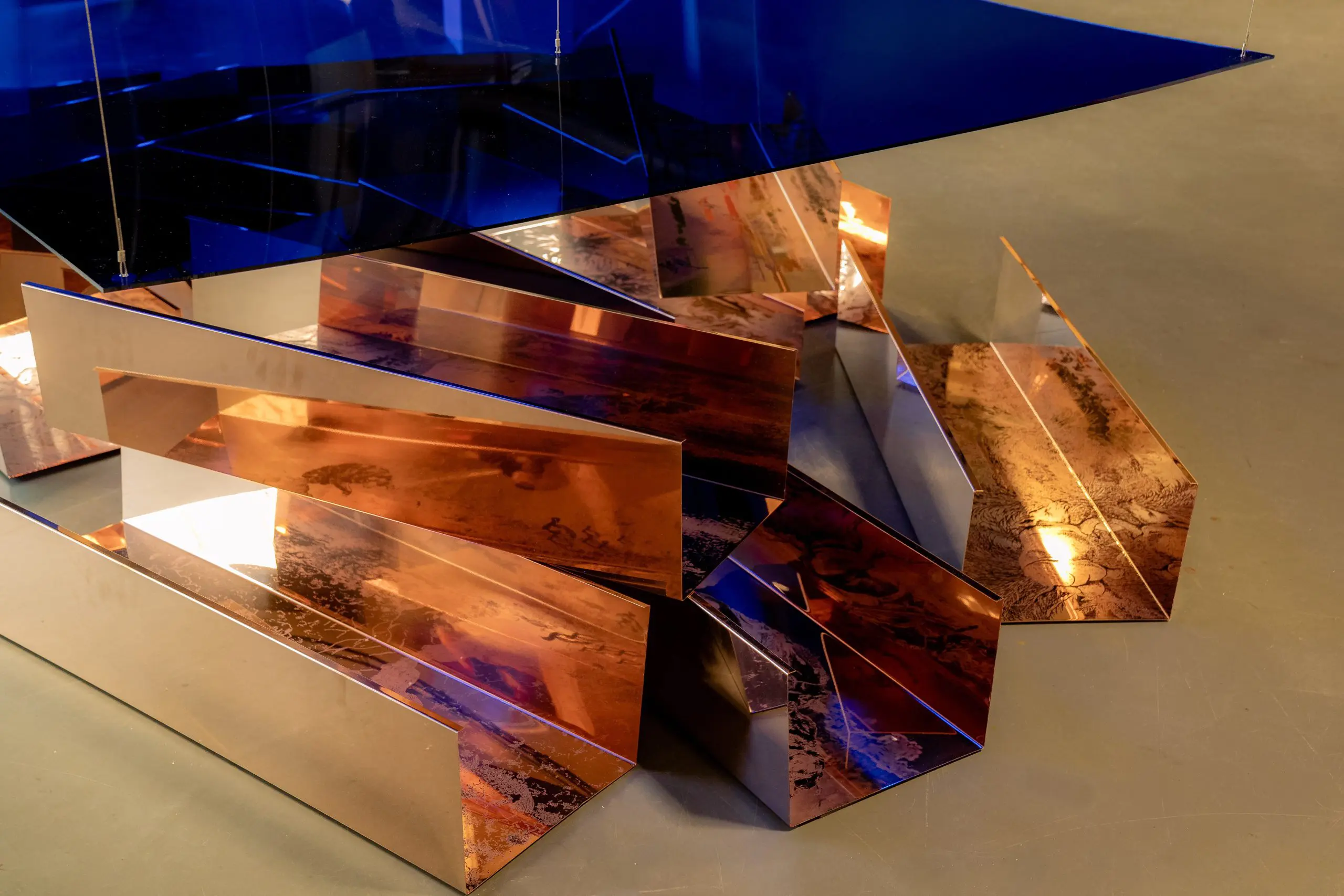
During my research, I discovered something that completely reshaped how I thought about the poem. To most human eyes, the tiger appears orange. That is why Blake’s tiger burns bright. Yet deer, horses and wild boar are dichromats and perceive the tiger as green, dissolving into the surrounding foliage.
As my work thinks about animals and the possibility of becoming animal, that discovery became incredibly important. The suspended ultramarine acrylic partially negates the shimmering orange of the gilded forms beneath it, inviting another way of seeing.
Blake’s poem became an entry point into questions of perception, particularly the perception of more-than-human life forms.
LuxeBook: Your work blends history, memory and archival research. What continues to draw you to revisiting the past through a contemporary lens?
Vedika Rampal: The present has never really existed in isolation. It is perpetually in dialogue with the past.
Growing up as part of the South Asian diaspora in Australia gave me both an insider and outsider perspective towards histories, memories and archives, and that continues to shape my practice today.
I think a lot about inheritance and circulation, and how meaning is constantly renegotiated through individual and collective subjectivities, both of people and cultures.
The contemporary lens ultimately enables me to transform these material and metaphysical encounters with the past into art.
LuxeBook: In a world shaped by trends and AI, what does originality mean to you today?
Vedika Rampal: I don’t think AI or trends present an entirely new existential challenge to art. Every technological shift has prompted anxieties, whether similar or different.
Originality could be considered both a form of hope and an antidote for the artist. Sustained encounters, lived experiences, sensory immersion, storytelling and emotional connection all seek to go beyond the surface.
These transmissions of ideas from artist to audience, person to person, will always belong to us, even if the definition of human is perpetually under negotiation.
LuxeBook: As an India-born artist based in Australia, how have distance and memory influenced your creative voice?
Vedika Rampal: A key component of my practice is what I term a pilgrimage, a return to one’s roots while simultaneously remaining unrooted and in circulation. That is why my practice is inherently iterative.
Distance and memory shape the first encounter that begins all of my bodies of work, whether it is Ajanta, Hampi, Angkor or most recently Powis. They also shape the subsequent unfolding of the work through materiality and new configurations.
LuxeBook: Luxury brands are increasingly championing the arts. What role do initiatives like the Jaguar Awards play in nurturing emerging talent?
Vedika Rampal: These initiatives are incredibly important.
They provide support financially, of course, but they also provide confidence. As an emerging artist, there are long periods where you simply trust the process and continue making the work. Recognition reminds you that someone has been paying attention.
I also think Jaguar’s emphasis on originality feels particularly meaningful today. We live in a culture that often privileges speed, efficiency and constant production. Art asks something different of us. It asks for slowness, research, craftsmanship and sustained consideration. Creating space for that is incredibly valuable.
LuxeBook: What do collaborations between artists and luxury brands unlock that traditional patronage cannot?
Vedika Rampal: There is often an interesting disciplinary relationship between artists and luxury brands. The languages may be different, but there is a shared commitment to craftsmanship, materiality and innovation.
What I particularly admire about the Jaguar Awards is their investment in emerging artists. A practice is still forming during those early years. Ideas are still being tested, questioned and reshaped. Supporting artists at that moment can fundamentally alter the trajectory of a career.
LuxeBook: What emotion or conversation do you hope Tyger Tyger Burning Bright leaves viewers with?
Vedika Rampal: I disagree with Kafka’s famous aphorism that there is hope, just not for us. Looking similarly at the idea of metamorphosis, or perhaps partial metamorphosis, within my own work, I would argue the opposite. There is hope. There is always hope. We simply have to look for it.
Within Tyger Tyger Burning Bright, I construct speculative futures through the subtractive digital process of collage. Colonial hunting journals, once predicated upon violence and conquest, are reframed as landscapes where humans are absent. They are not necessarily utopian, but they create space for animals, nature and ecologies to exist on their own terms.
Creating work is deeply intertwined with questions of empathy. The installation asks what might happen if we momentarily step outside an entirely human way of seeing. I hope people leave carrying those questions with them, and perhaps looking at the world a little differently.
LuxeBook: What’s next for you? Are there any themes, stories or mediums you’re excited to explore next?
Vedika Rampal: A word I keep returning to is circulation. The circulation of ideas, images, symbols and concerns.
My practice is iterative, so I constantly return to my own archive and images. There is a folder from the temple complexes at Angkor in Cambodia that I visited during my studies this year. I have returned to it countless times, yet I still feel as though I have only begun looking.
I find myself continually drawn to the mural inscriptions and to the way image, architecture, ecology and ritual seem to co-originate. There is no clear distinction between artwork, dwelling space and site of worship.
As my work continues to think through museums and colonial modalities of display, I keep wondering whether the temple, in its ancient syncretic form, offers another way of thinking altogether. Perhaps the temple, as both metaphor and site, is fundamentally diametrical to the imperial vitrine.
At the moment, this thought remains a proposition.
You may also read: The best new restaurants, menus & pop-ups in Delhi NCR