Inside BMW’s Art Car Universe with Prof. Dr. Thomas Girst
- Automobile Featured
 Anushka Manik
- 14 minutes read

Fifty years ago, BMW Art Car began with an unusual meeting point between motorsport, engineering, design, and contemporary art. What started as a one-off idea at the legendary 24 Hours of Le Mans in 1975 (when French racing driver and art enthusiast Hervé Poulain invited artist Alexander Calder to transform a BMW 3.0 CSL) went on to become one of the most iconic intersections of art and automotive culture.
From Roy Lichtenstein’s graphic reinterpretation and Andy Warhol’s legendary M1, painted in just 28 minutes to capture the sensation of speed, to contemporary visions by artists like Jeff Koons, David Hockney, Cao Fei, Julie Mehretu, and Esther Mahlangu, the BMW Art Car series has turned vehicles into cultural artefacts over the years.
Speaking to LuxeBook, Prof. Dr. Thomas Girst, Global Head of BMW Group Cultural Engagement, explores the legacy of the BMW Art Car series, its evolution across generations, and why the intersection of art, technology, and mobility continues to inspire.
LuxeBook: The BMW Art Car project began 50 years ago with a very unconventional idea. What was the original intent behind this collaboration, and did it evolve over the years?
Dr. Thomas Girst: The great thing about the origin about the source of the trajectory for the amazing BMW Art Car series now spanning five decades, wasn’t an idea that BMW marketing and communications people put together thinking how can we introduce the brand BMW to the arts, but, it was born out of the passion and love for racing, motorsports, technology, engineering, design and obviously, for art. This idea was not born at the BMW headquarters. It was born at the track of the 24-hour race of Le Mans, the greatest endurance race on the planet. Since the inception of the automobile, artists have been fascinated by individual mobility, to which the BMW Art Cars, since 1975, beginning with the BMW 3.0 CSL and Alexander Calder’s car, have been able to add. So, it was BMW motorsports founder and original director Jochen Neerpasch who had a chat with Hervé Poulain, who was as passionate about the arts as he was about racing. He asked Jochen Neerpasch whether he could drive as a race driver as part of the BMW fleet and if he were to convince Alexander Calder, a very famous American artist, to paint the car that he would be racing in.
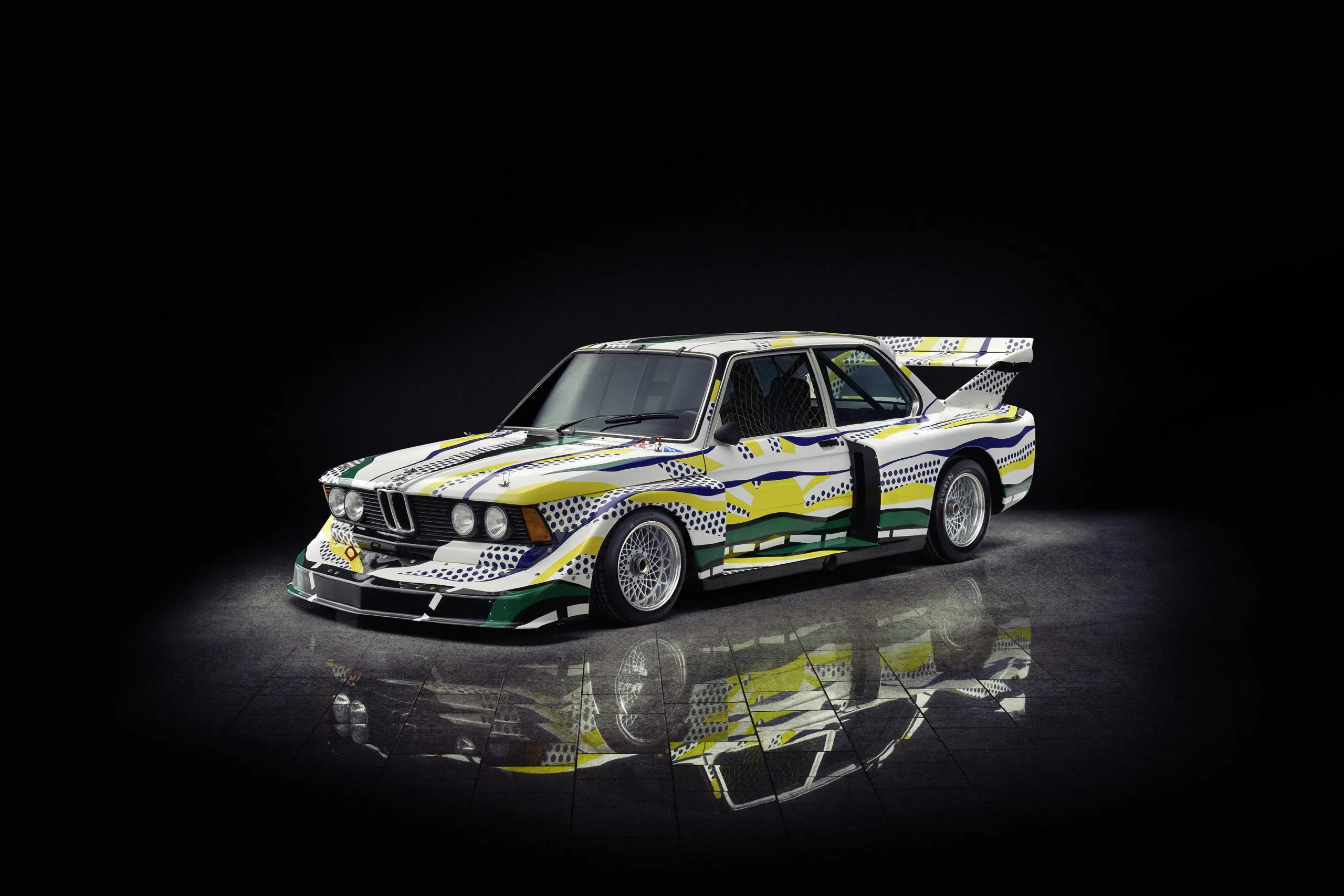
Luckily, Jochen Neerpasch said yes, and the rest is history; a history that BMW is very proud of. We have been active in the arts for over 50 years with hundreds of initiatives worldwide, of which BMW Art Cars is the most obvious when it comes to a great blend and match made in heaven between cars and art, between BMW being used as a canvas, the car, and the artist’s vision that we want to honour and make possible. When the Calder car left the pit stop for the 24-hour race of Le Mans in June 1975, nobody thought there was ever going to be a BMW Art Car series. It was thought of as a one-off. But, when the car hit the racetrack and the children began to cheer in regard to that very colourful car made up of the primary colours yellow, red, and blue, we thought that we had something. And then, the series continued with amazing artists, with Roy Lichtenstein also working on the 3.0 CSL for the following year. In 1977, Frank Stella, who would actually be the first one to admit that working on the BMW Art Car got him interested to become a race driver, as well as working in three dimensions, which he had never done before, took on the 1977 BMW that was racing at Le Mans as well. Then followed Andy Warhol in 1979, with the M1. There were so many amazing artists within the first five years of the BMW Art Car series, all of which were creating BMW Art Cars that would also race at Le Mans.

LuxeBook: Cars are usually designed for performance and function. What changes when artists like Andy Warhol or David Hockney reinterpret them purely as creative objects?
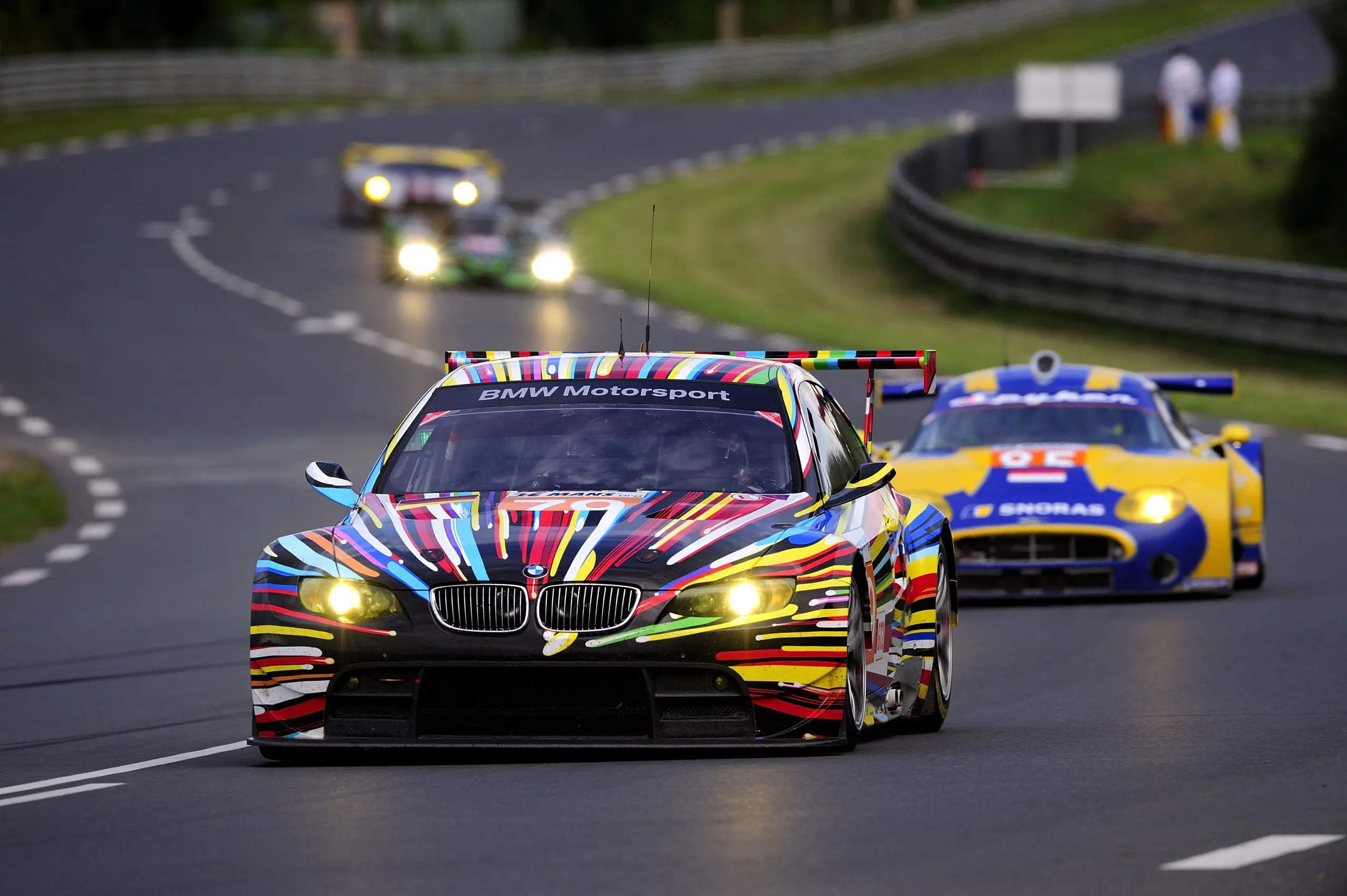
Dr. Thomas Girst: Those race cars are meant to perform, function and most importantly, win. And when Alexander Calder was a bit worried about his car having been painted, he told Hervé Poulain that all that he wanted him to do with that car was win. When in 2010 Jeff Koons BMW Art Car, his M3 GT2, also raced in Le Mans, he was concerned that the race drivers would think this would be an invaluable artwork and they would drive more carefully, which of course wasn’t the case. And the drivers reassured Jeff Koons at the racetrack that they wouldn’t care about this being a car designed by Jeff Koons, but they would give their everything to win with this car. So, the most important thing is, while we honour creative freedom for every artist that we work with, with our hundreds of initiatives worldwide, we want to make the artist’s vision come true when it comes to their design for the Art Car. Working with our designers and engineers, it is all the all the more important, obviously, that no weight can be added to the cars and that nothing can be added that would interfere with the aerodynamics of the car. That is something the artists all appreciate, as they want the car to race and remain competitive. Andy Warhol painted his car within 28 minutes, trying to make speed visible, even when the car is standing still, thinking of the car basically blurring while it would drive by and race by on the racetrack for every visitor to see.
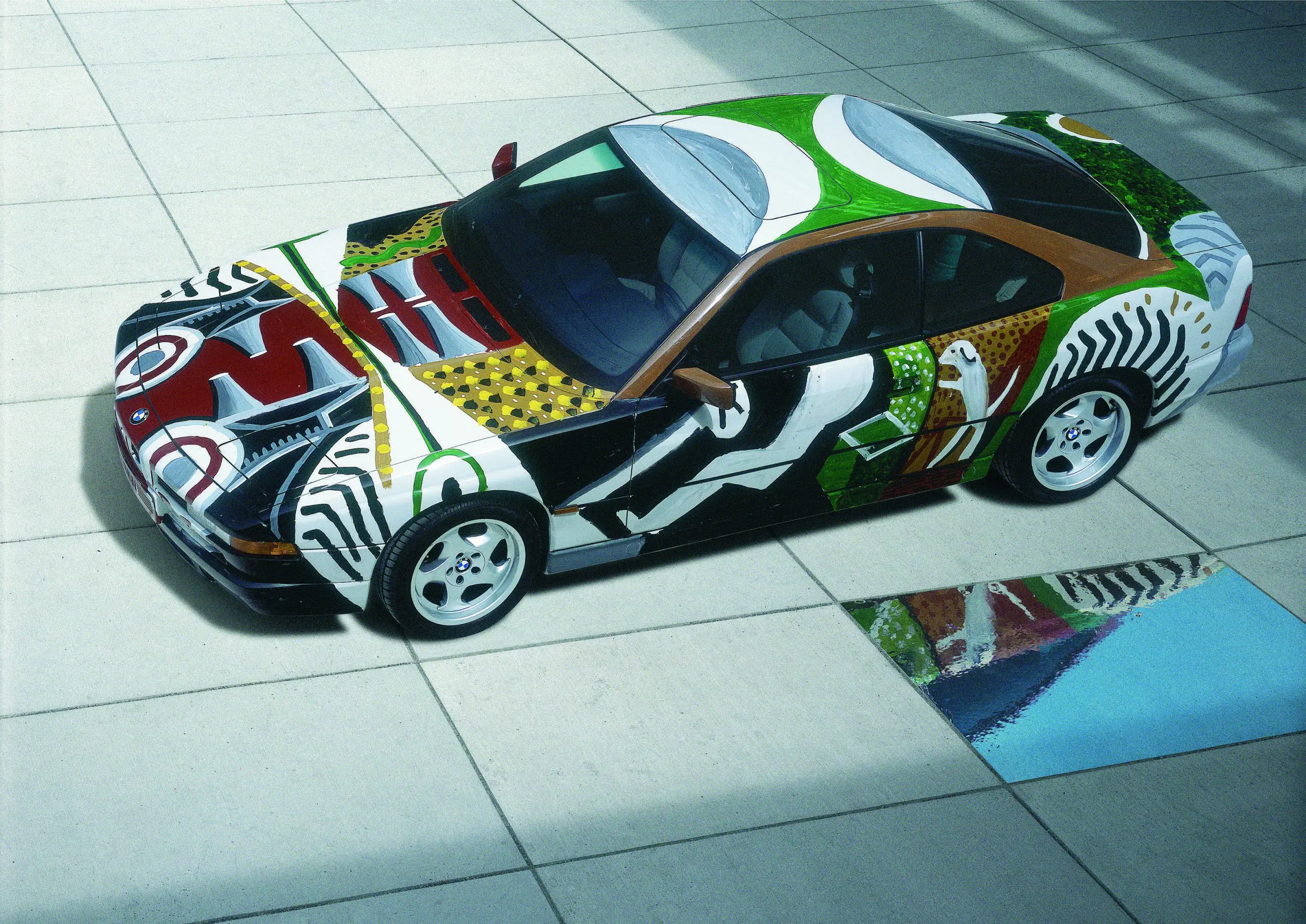
It’s different with cars in the BMW Art Car series that came later, some of them in the 80s or 90s, which were not race cars or which had raced before. So there, artists had much more freedom to design their cars. When it comes to David Hockney, who sadly passed away this year, he was in LA loving the idea of creating a BMW Art Car, basically showing everything that is inside of the car, even the passenger, his Dachshunds, his famous dogs that he would take along on his travels, painted onto the outside of the car, and also showing an abstract version of the engine underneath the hood. This car was not a racing car, so he could take his time; there was no deadline. Also, when it comes to the layers of paint, which would usually add to the weight of the car, he was not concerned about those as the car itself wasn’t racing.
LuxeBook: The collection includes some of the most influential artists of the last century. How does BMW choose an artist?
Dr. Thomas Girst: I believe that when it comes to these 20 BMW Art Car artists, including Jenny Holzer, Esther Malangu, Julie Mehretu, Jeff Koons, David Hockney, John Baldessari, Cao Fei – a great Chinese contemporary artist, it is amazing to see who participated in that series. Jeff Koons wanted to be part of that pantheon, because he admires Roy Lichtenstein and Andy Warhol so much, which is why he was interested in the subject matter. Usually, those Art Car artists are chosen by an independent jury of museum directors and chief curators from around the world, having some of the best talent in terms of institutions, art institutions, contemporary art institutions, sitting around a table and deciding on a BMW Art Car artist, once we have provided them with the model that we would love for the artist to make their vision come true on. This is why this decision is a transparent and open decision as we believe in the verdict, in the decision made by those very much in the know when it comes to contemporary art, which is why we are not part of the jury. We believe in that independent process of picking the best artists, which is why I think those artists creating BMW Art Cars over the course of 50 years are such a great array of internationally important and significant artists.
LuxeBook: The Art Car project has now spanned five decades. How has its meaning shifted across generations of artists and audiences?
Dr. Thomas Girst: The arts are evolving for sure. When the project started in 1975, it was much about painting, about wielding brushes. And so, we have Alexander Calder starting the series. Obviously, artists are interested, just as our engineers, designers and BMW as a company into the latest developments when it comes to high-tech and engineering. So, this is another great link between artists and their creative process, as well as how cars are being created by a company such as BMW, which is why we honour the whole development of the arts. In 2016, Cao Fei created a car that could only be seen together via an app that she created. It included virtual reality and a film that comes alongside the presentation of the BMW Art Car. So, all of this makes room for the latest developments in technology.
There are also artists that are more interested in social work and in really having an influence upon society. For example, Julie Mehretu, one of the greatest contemporary artists, created not only a BMW Art Car, the BMW M V8 that raced in Le Mans, but she also founded, as part of the BMW Art Car project, the African Film and Media Arts Collective (AFMAC), which was travelling across many cities throughout Africa to promote and work on documentary filmmaking, which is all coming together in a big show that will present her BMW Art Car and the results of those amazing workshops with great filmmakers at the Zeitz MOCAA Museum of Contemporary Art in Cape Town, South Africa in mid-December 2026. The show will be up for almost a year, celebrating the 20th BMW Art Car, as well as the results from these AFMAC workshops across the African continent, which were tied to the Art Car project. So, we try to honour the vision of the artists, we try to embrace the latest technologies that go into creating art, something that artists as well as engineers have always been interested in.
LuxeBook: As we enter an era of electric and autonomous mobility, how might the Art Car evolve in form, medium or meaning?
Dr. Thomas Girst: In 2016, in a film that Cao Fei employed as an integral part of her BMW Art Car number 18, she was already hinting and actually showing flying BMW cars. So, the idea of autonomous mobility, the idea of where individual mobility is headed towards, is already reflected within the BMW Art Car series. I think what makes the series so important is that when we look at artists’ work since the Renaissance, since painting on canvas actually took place in the 15th Century, or painting on wood took place in the 15th and 16th century, it was all about creating the illusion of an extra room, of a three-dimensional space that was painted onto a picture plane, be it wood or canvas. Now, when it comes to the BMW Art Car series, the canvas is the car, which is why I think our perception of the BMW Art Car series, of those 20 examples of BMW Art Cars, will change in time. We still look at the 1975 race cars and see them as a car. Each has four wheels, there’s an engine under the hood, there’s a muffler in the back, and so forth. But, we might look at those BMW Art Cars in the way that we look at horse carriages now. We know about horse carriages, we’ve probably been in one, you know, circling Central Park in New York or elsewhere, but we have lost our connection with this form of individual mobility.
That is what makes the BMW Art Car series so amazing beyond itself, that our perception will change the way that we view cars, and that we will look at them in 100 or 200 years not only as works of art, which they remain to be, but also as past ways of individual mobility, which makes the series all the more potent.
LuxeBook: What narrative emerges when all 20 Art Cars are seen together for the first time?
Dr. Thomas Girst: We were celebrating the BMW Art Cars’ 50th anniversary with an amazing Art Car world tour, which travelled about 60 countries, seen by millions of people, and generated a lot of attraction and interest, not only in the BMW Art Cars but also in the artists involved in that series as well as to BMW. It was a great event, tying customers and clients to our brand, but also making people enjoy and delve into the history of not only arts and design, but also racing, motorsports, technology and engineering. Now, that BMW Art Car world tour, after about two years (2025-26), has come to a close, with all of the BMW Art Cars being presented at the BMW Welt in Munich for the first time all 20 art cars together; even Olafur Eliasson’s BMW art car called ‘Your Mobile Expectations’, which is a car based on a hydrogen model that broke all records in terms of endurance and speed on the side of BMW, which he got to recreate in a walk-in freezer, and it can only be seen and presented in that way, with thousands of icicles – a comment on global warming, among many other things within that freezer. That car will also be shown for the first time. The narrative that emerges from there is one of artistic excellence, engineering excellence, cultural engagement as leadership, when it comes to truthfully working with artists making their vision come true, putting our heads together for a dialogue that far expands our core business and lures in many people that are not interested only in luxury and premium, but also in what it is that humans can do on the planet if we don’t bash our heads in. If we put our heads together, come up with something that will really bring joy to visitors and onlookers for many decades and centuries to come.
You may also read: 30 years of Maheka Mirpuri, & she’s just getting started