Sabyasachi returns to NYFW with denim, drama and Byzantine Jewels

After an 18-years long hiatus, on the final day of NYFW, Sabyasachi Mukherjee returned to Spring Studios with a collection that beautifully pictured India and New York through the same lens.
Called “Bengal Byzantine Broadway,” the collection brought together three seemingly disparate worlds – the designer’s Bengali roots, the grandeur of Byzantine art and the theatrical energy of New York. The clothes, though, were surprisingly grounded. Christy Turlington opened the show in head-to-toe denim, setting the tone for a wardrobe built around crisp shirts, indigo jeans, relaxed tailoring, boleros, vests and Western-inspired separates. Cowboy hats by Maison Michel, pointed boots and plaid shirting pushed the collection towards Americana, while elaborate embroidery, brocade, hand-painted silk and jewel embellishment pulled it back into the familiar Sabyasachi territory.
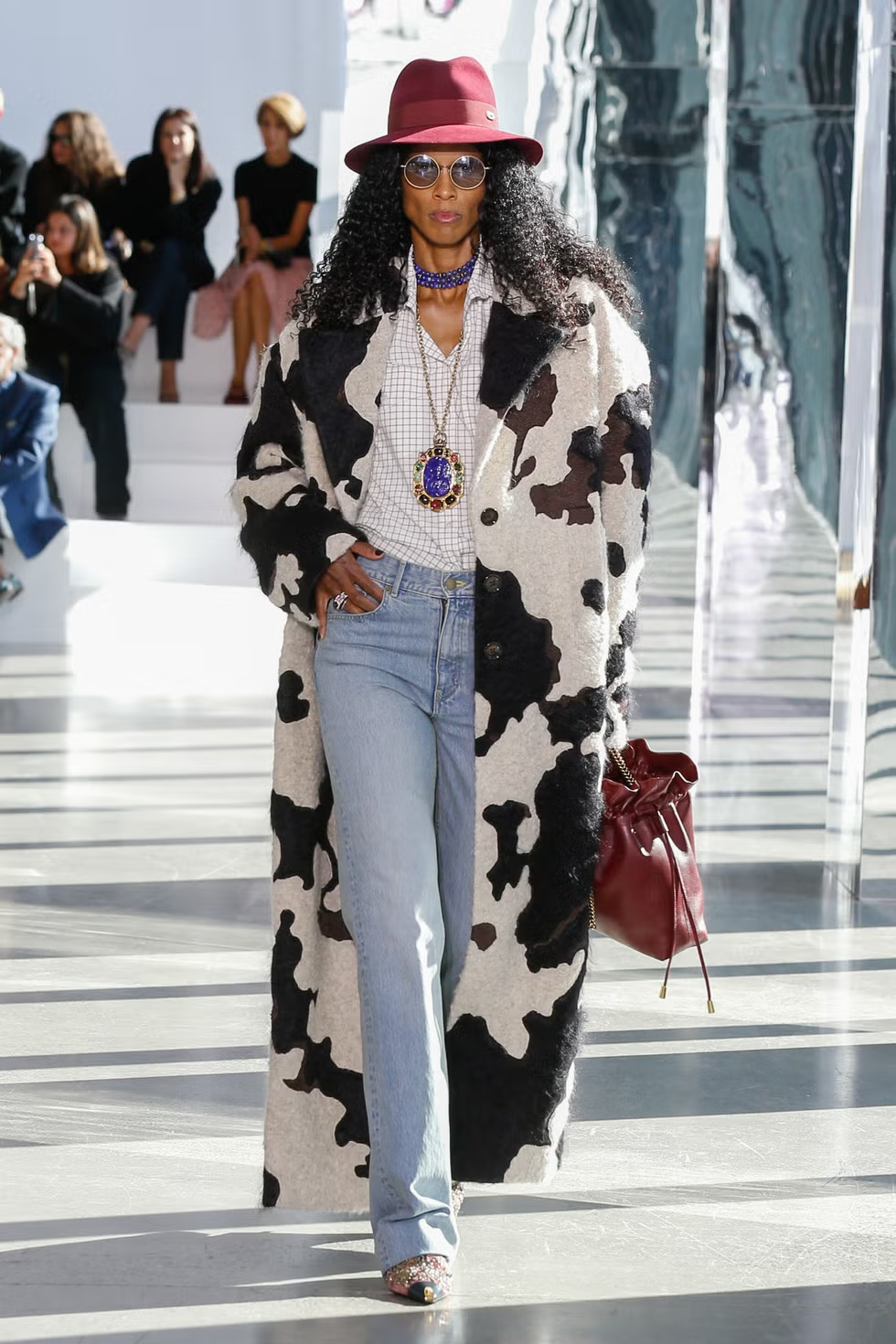
Texas became an unlikely point of reference. Mukherjee has never visited the state, but imagined its landscape and wardrobe through a cinematic Bollywood filter. The result was not literal Western dressing but an Indian designer’s fantasy of it. There were sharp denim paired with richly worked jackets, cow-print motifs translated into embroidered patchwork and familiar American staples made considerably more ornate.
There was also a softer, more fluid side to the collection; draped trousers, wrapped tulip skirts, flowing blouses and obi-style belts appeared in deep burgundy, mocha and other muted shades, creating a counterpoint to the more flamboyant Western looks.
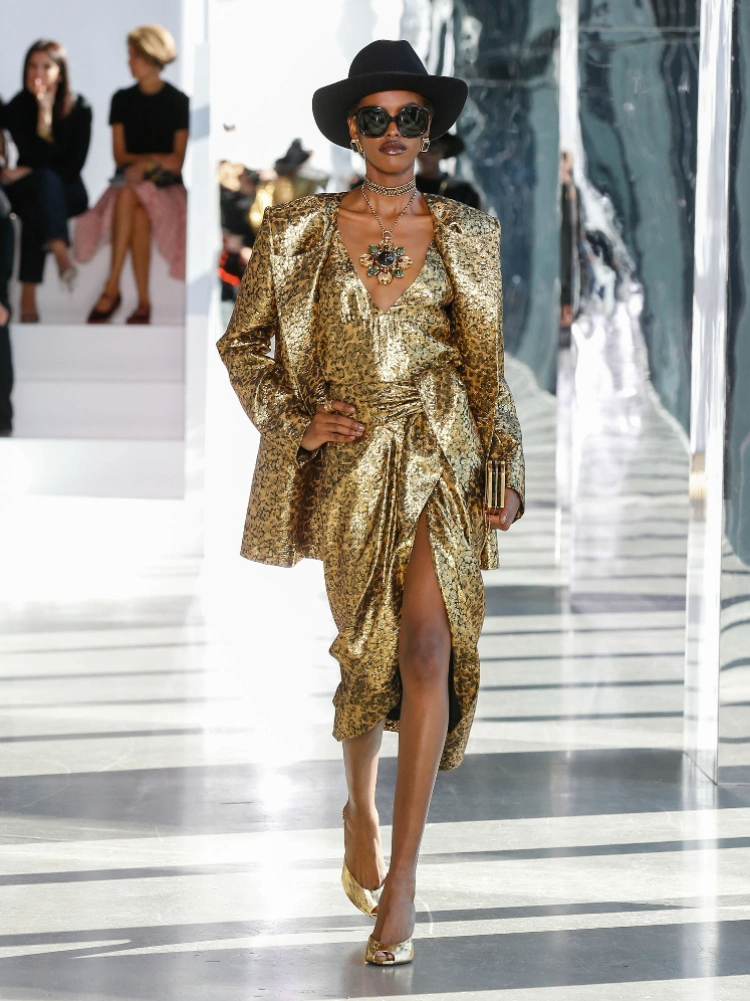
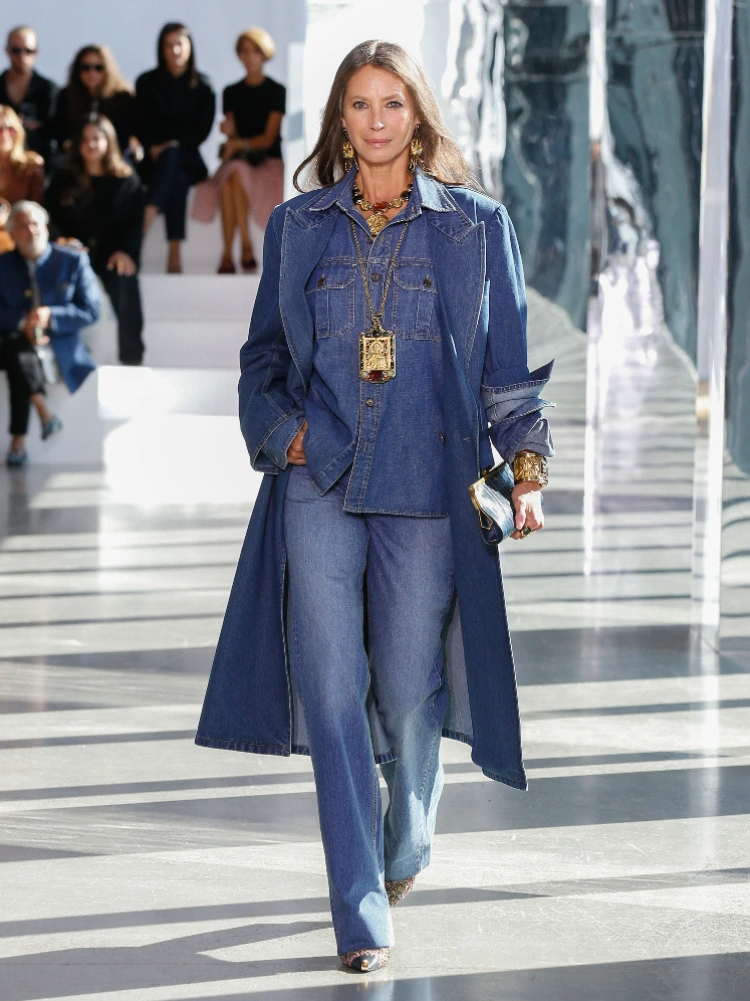
The idea of personal accumulation ran through the collection. Rather than dressing in one prescribed aesthetic, the Sabyasachi woman was imagined as someone who collects – mixing casualwear, evening pieces, streetwear and couture with the freedom of someone building a home over decades. That philosophy explains the deliberate clash of denim with heirloom-worthy embellishment, and why an ordinary pair of jeans could sit comfortably beside extraordinary jewellery.
The New York show also unveiled the first chapter of Sabyasachi’s multi-year collaboration with The MET, translating works from the museum’s collection into contemporary high jewellery through Indian goldsmithing and gem-setting techniques. The pieces were deliberately monumental. The Pantokrator Pendant, inspired by an 11th–12th-century Byzantine ivory carving of Christ Pantokrator, was recreated in 18- and 22-karat gold and framed with a 55.4-carat combination of tourmaline, sapphire, spinel, garnet, iolite, onyx, jade, jasper and turquoise. The Dionysos Cuff, meanwhile, draws from a third-century Roman sculpture and combines sculptural gold with garnet and tourmaline. Another standout was the Zodiac Rivière, which takes inspiration from Mughal emperor Jahangir’s zodiac coinage and culminates in a 49.87-carat faceted tourmaline.

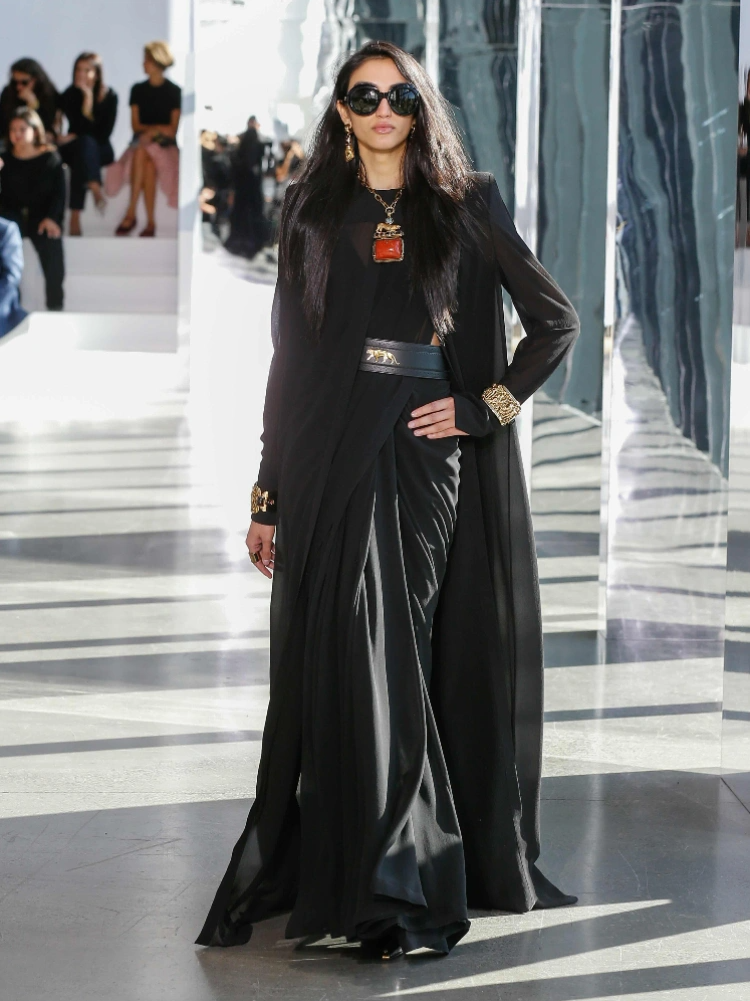
The show’s casting was the cherry on top. Turlington, who had previously walked for Sabyasachi’s 25th-anniversary retrospective in Mumbai, opened the show, while Rani Mukerji was there to cheer from the front row. The final look brought the story back home as Avanti Nagrath closed the presentation in a classic black sari, cinched with Sabyasachi’s signature tiger belt and statement cuffs.
Nearly two decades away, but Sabyasachi’s return to New York was not a nostalgic replay of the designer the city saw in 2009. It was a recalibration. The bridal grandeur and Indian maximalism sit alongside denim, linen, Western tailoring and globally legible wardrobe staples.