This Indian gin spent 7,000 hours trying to bottle a forest
- Featured Spirits
 Yashita Damani
- 16 minutes read

From Himalayan juniper to cold vacuum distillation, a new generation of brands are redefining the true nature of Indian gin.
Distillers are increasingly turning to indigenous botanicals, regional ecosystems and experimental distillation to create spirits rooted in terroir. Rather than replicating established global styles, the gin makers from this category are turning to indigenous roots, while still remaining competitive on the international stage. Among the producers shaping this shift is Vaniitha Jaiin, creator of Vanaha Gin and Founder and Chief Evangelist of Revelry Distillery, Rahul Kamath, Bar Operations Head for Idoru, Nidhi Kedia and Kripal Singh, Senior Mixologist, Hospitality Professional at The Leela Palace Bengaluru.
Conceived in the forests of Sattari, North Goa, Vanaha is built around the idea of translating the sensory depth of a forest into a spirit. Distilled from 24 botanicals sourced across India and refined through a proprietary multi-stage process that includes cold vacuum distillation, the gin reflects a growing focus on provenance, experimentation and craft within India’s evolving spirits industry.
Speaking with Jaiin about Vanaha Gin, what stayed with us was not just the technical precision or the impressive list of botanicals, but the quiet patience behind the process.
Ecosystem in a Bottle

“Bottling a forest is not about putting everything in,” Jaiin says. “It is about understanding what truly defines it.”
The concept behind Vanaha began with a simple but ambitious idea to create a gin that captured the layered complexity of a forest ecosystem rather than highlighting individual botanicals.
“Vanaha did not begin with a single moment of inspiration,” she explains. “It grew from a deeper curiosity. As I immersed myself in the world of spirits, I realised that India’s biodiversity was not being meaningfully expressed in how we were creating or positioning our products.”
The idea of distilling a forest emerged from that observation. A forest, Jaiin notes, is complex yet balanced, a space where depth and clarity coexist.
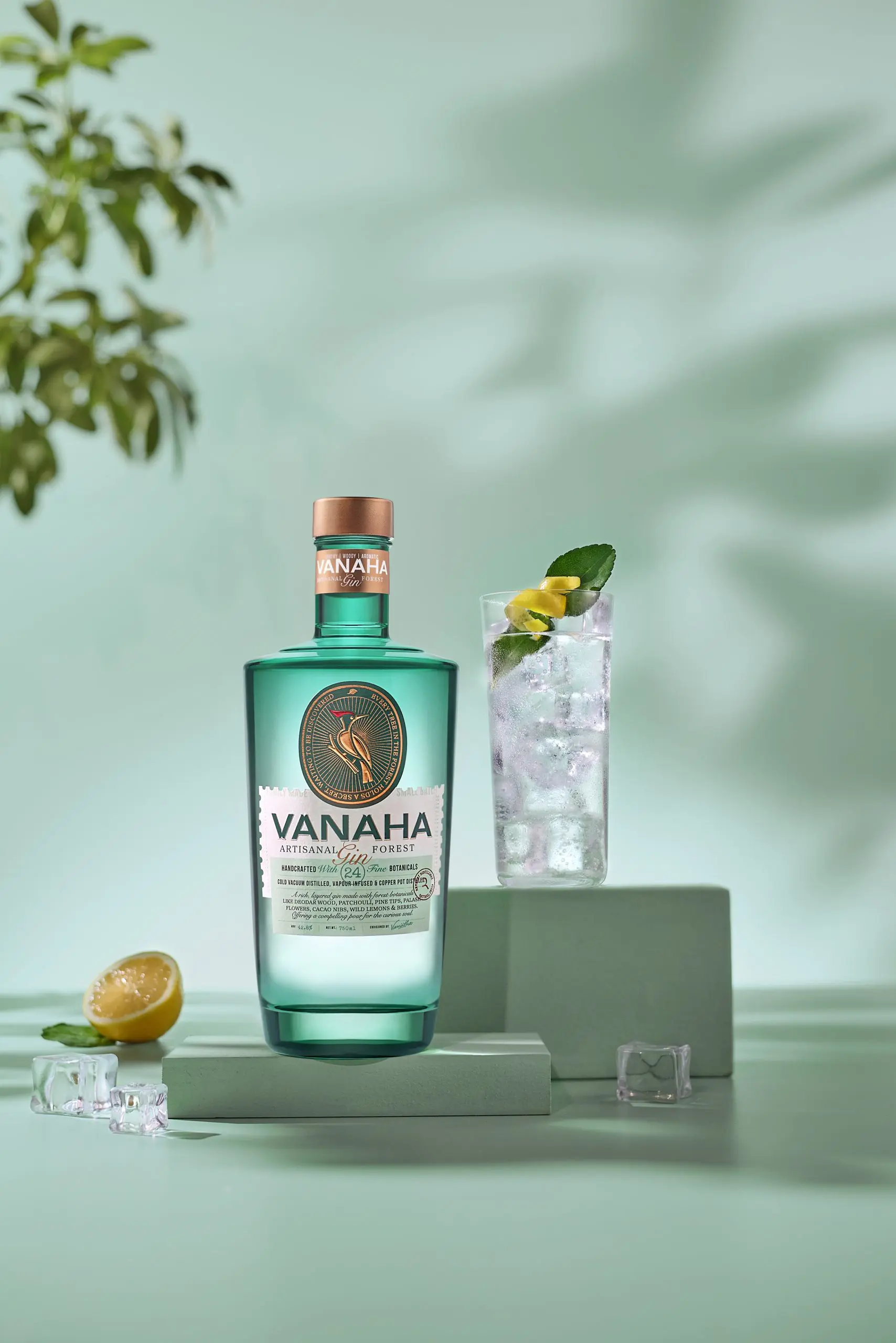
“That duality felt powerful. Vanaha was built around translating that into a spirit, not just as a concept but as a sensory experience where each layer unfolds gradually with every sip.”
At Idoru in Bombay, gin is increasingly being approached through more layered and unconventional flavour profiles.
According to Rahul Kamath, Bar Operations Head at the Japanese-inspired cocktail bar, the most ordered gin cocktail currently is Enmi, a salty highball crafted with re-distilled lemon gin, shio koji, cinnamon and bubbles, reflecting a preference for refreshing yet nuanced serves.
Kamath also believes Gondhoraj lime deserves wider exploration within gin, pointing to its highly fragrant citrus profile and greater aromatic depth compared to conventional lemons or limes.
Unexpected pairings, too, are reshaping contemporary gin cocktails. Among the combinations Kamath finds particularly effective is gin with yuzu kosho, whose balance of spice, citrus and salinity lends itself naturally to Picante-style serves.
India’s botanical diversity offered enormous creative possibilities. Translating that range into a balanced gin, however, required extensive research and experimentation before the final blend was established.
“We spent over 7,000 man hours on development, working with more than 200 botanicals that were individually distilled and studied,” Vaniitha says.
This process allowed the team to understand each botanical in isolation before integrating it into the final expression. “Bottling a forest is not about putting everything in. A forest as a biome is vast, layered and constantly evolving. The challenge was how to translate something that expansive into a spirit without losing its essence.”
The final 24 botanicals were selected not to represent geography but to recreate the experience of being in a forest. Freshness, depth, earthiness and lift were all part of the balance. “Each ingredient had to justify its place,” Jaiin explains. “Not on its own, but in how it contributed to the overall balance and progression.”The goal was precision rather than abundance.
“In the end, bottling a forest came down to choosing what matters so that what you experience in the glass feels layered and immersive without ever becoming overwhelming.”
Capturing the Aromatics

Technique plays a crucial role in preserving the character of botanicals. At Revelry Distillery, the production process incorporates cold vacuum distillation to retain fragile aromatic compounds that might otherwise be lost at higher temperatures.
“Cold vacuum distillation was a deliberate choice,” Jaiin says. “When you are trying to bottle a forest, not every note should arrive with the same weight.”
In natural landscapes, she explains, depth is balanced by lighter aromatic elements that bring freshness and lift. “These are often the first to get lost at higher temperatures. By distilling under vacuum at lower temperatures, we are able to capture and preserve more delicate volatile compounds with far greater precision.”
The result is a flavour profile that moves gradually from brighter, fresher notes to deeper, more grounded ones. “For Vanaha, this technique allows certain botanicals to appear exactly as they should, with delicacy and clarity rather than being flattened or overshadowed.”
Changing the Narrative
Global recognition has helped position Indian craft gin within a broader international conversation around premium spirits.
Vanaha has received several accolades, including a Master Medal at the The Spirits Business Global Gin Masters, the competition’s highest honour, along with a Gold at the Global Spirits Design Masters.
The brand was also shortlisted as a global finalist for Innovation in Production at the The Spirits Business Awards, becoming the only gin brand globally recognised in that category that year.
For Jaiin, the significance of such recognition goes beyond individual awards. “Recognition is meaningful, but more importantly it signals a shift in perception,” she says. “For a long time, Indian spirits were not always viewed alongside global premium products. That narrative is beginning to change.” When a spirit from India is evaluated alongside international benchmarks, she believes, it helps challenge long held assumptions about the category.
“It becomes less about validation and more about contribution, being part of a larger movement that is redefining India’s place in the global spirits landscape.”
Women in Gin

As one of the few women to independently build and lead a distillery in India, Jaiin represents a new generation of leadership within the country’s spirits industry.
“It has been a journey shaped by preparation and persistence,” she says. “There are environments where you are not the expected profile, particularly in manufacturing and distribution.” Rather than confronting those expectations directly, Jaiin chose to focus on building credibility through expertise and involvement.
“The most effective way to navigate that is through depth, understanding the process, being present in the details and building credibility consistently.”
Over time, she says, the conversation shifts. “When your intent is clear and your involvement is real, perceptions begin to change. It becomes less about who you are and more about what you are building.”
Beyond the G&T
For Kripal Singh, Senior Mixologist and hospitality professional at The Leela Palace Bengaluru, gin continues to be one of the most versatile spirits behind the bar, but consumer preferences are becoming increasingly adventurous.
“The most ordered gin cocktail on the menu right now is Fire & Water,” Singh says. A Martini-style serve, the cocktail incorporates local bajji chilli pickle, introducing a savoury heat that adds unexpected depth and complexity to the drink.
Singh also believes Indian botanicals remain an underexplored opportunity within the category. “Gondhoraj is one botanical I would love to see used more in gin,” he says, pointing to its distinctly fragrant citrus profile and the unique aromatic identity it can bring to a spirit.
Unexpected ingredient pairings, too, are redefining the gin experience. Bhajji chilli, whether used as a pickle, syrup or paired with fresh herbs, works especially well with gin, offering savoury, spicy and herbaceous notes that move beyond conventional citrus-forward serves.
As consumers grow more curious about provenance, flavour and experimentation, India’s gin movement appears to be evolving beyond the classic G&T into something more local, layered and distinctly its own.
Jaiin believes drinkers are becoming increasingly interested not only in flavour but also in the story behind the spirit. “Gin in India is still in a phase of discovery, but it is evolving with intent,” she says. “There is also a gradual move toward sipping. Not replacing cocktails butcomplementing them.” While complex cocktail programmes have helped elevate the category, Jaiin personally prefers a simpler serve.
“A well-made G&T with Vanaha, a clean tonic and a fresh citrus peel is hard to beat. It allows the spirit to speak for itself, especially the layers and freshness.”
Sometimes, she says, even less is more.
“A few cubes of ice and nothing else is the simplest way to experience the structure and balance of the gin.”
As India’s craft spirits sector matures, brands like Vanaha reflect a broader shift toward originality and terroir driven identity. With distillers exploring local botanicals, advanced distillation techniques and regional ecosystems, Indian gin is gradually carving out a distinctive voice within the global spirits landscape.
You may also read: The rise of the skinny cocktail