From heirloom to aisle: The bridal collections of 2026
- Fashion Featured
 Yashita Damani
- 13 minutes read

Some clothes arrive with a history already stitched into them. Take your mother’s carefully folded chanderi silk saree, for instance. It’s a craft passed down through generations. A wedding outfit must somehow survive hugs, photographs, family politics, impromptu champagne drops and dinner.
In Indian fashion, the past rarely stays in the past. It stays stitched in the weave, the silhouette, the details in the fabric (just like the Jason Myraz song), waiting to be understood, reinterpreted and worn again. Today, that inheritance is being used as inspiration. Designers are looking at familiar textiles, forgotten techniques and deeply personal memories, and giving them room to move. Couture is becoming lighter, more intimate, less concerned with ceremony for ‘ceremony’s sake’ and more interested in the woman inside it.

The Indian bride has like 47 outfits now (we counted). Okay, we didn’t, but there are enough of them to qualify as a capsule collection. There’s the lehenga, the sangeet look, the cocktail dress, the reception gown, the after party outfit, the brunch look, fancy night suits to greet guests and, basically something for every five-minute interval in between. At this point, the wedding has become less of an event and more of a fashion week with pheras (which is also just another walk). And designers are feeding into this obsession of multiple changes! Love stories are getting the couture treatment, family heirlooms are becoming primary clothes, paintings are leaving gallery walls for wedding wardrobes and the most radical idea of all shudders through them all “what if you wore the outfit again?” And then there are the detachable elements and adaptable layers, because the best wedding outfit may now be the one that can survive several costume changes without actually requiring a new costume.
On that note, we’ve rounded up some of the best bridal collections of the season. Read on.
Tarun Tahiliani × Anjolie Ela Menon
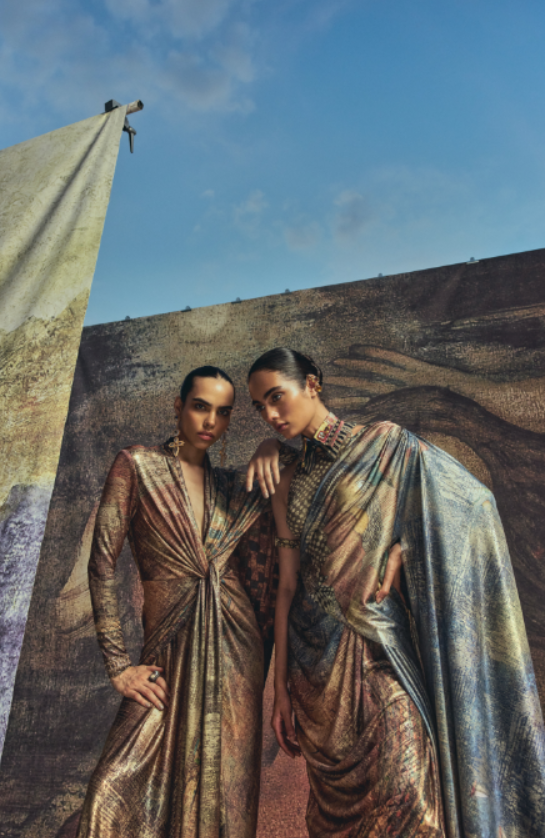
OTT by Tarun Tahiliani’s latest capsule with artist Anjolie Ela Menon is essentially the answer to what happens when a painting decides it wants to leave the gallery and get married.This collaboration brings Menon’s contemplative figures, iconic heads and expressive use of colour into OTT’s contemporary prêt vocabulary, with her artwork reimagined across concept saris, draped skirts, fluid tunics, separates and coordinated sets.
Rather than simply printing paintings onto fabric, each garment has been composed around the artwork, with motifs and colour responding to the body and the movement of the silhouette. There is something particularly personal about the collaboration. Tarun and Anjolie’s relationship goes back decades, with their fathers having served together in the Indian Navy.
Menon has been part of Tahiliani’s creative universe since his earliest years, making this feel less like a designer and artist collaboration manufactured for a season and more like two long standing creative languages finally having a conversation. Her deep lapis blues, rich vermilions, luminous greens and softened earth tones move across draped skirts and concept saris, with gradients following the torso and archival motifs framing shoulders, waists and drapes.
ROSEROOM by Isha Jajodia

If your grandmother’s pearl box, your mother’s wedding dupatta and every romantic family story were put into one room, ROSEROOM’s La Perlaire might be what that room looked like. Both evoking the highly feminine, this couture collection takes pearls and lace and turns them into something more than decoration. The idea is rooted in the private spaces women carry with them, their grandmother’s jewellery, the lace edged dupatta, the smell of marigolds from an old celebration. Basically, everything your mother tells you to keep safely because “one day you’ll understand.”
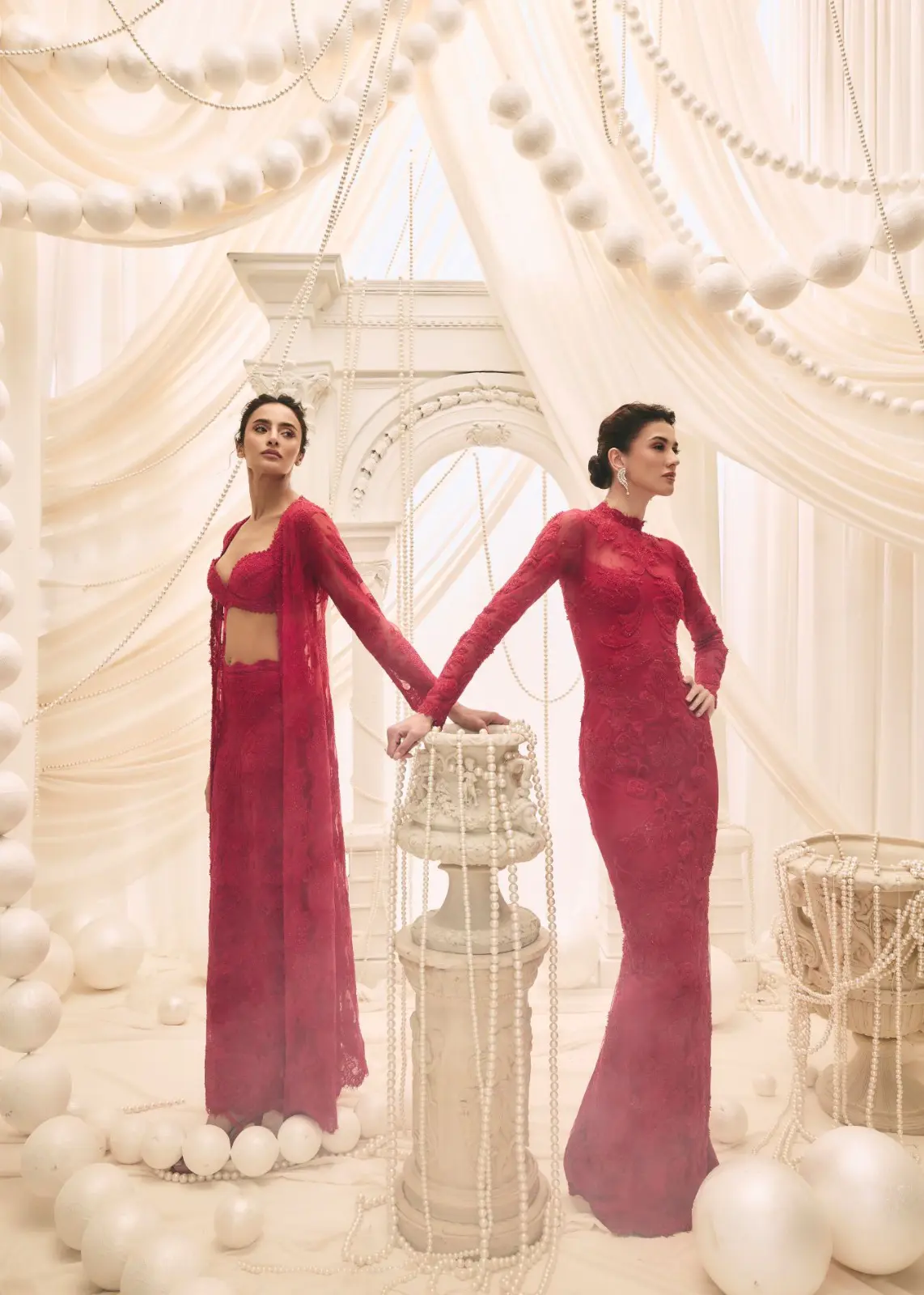
That nostalgia finds its way into sculpted saris, flowing fabrics, tailored jackets and timeless gowns. Hand embroidered pearls, lace appliqué, threadwork, delicate bead detailing and subtle metallic threads give the collection its texture, while emerald, crimson and champagne blush create different emotional registers, from courage and passion to tenderness. It is both romantic and nostalgic without looking like a family trunk from the 80s has been emptied directly onto the runway. The collection really is, about inheritance, but not just the jewellery kind. Stories, gestures and memories too!!
Mrunalini Rao
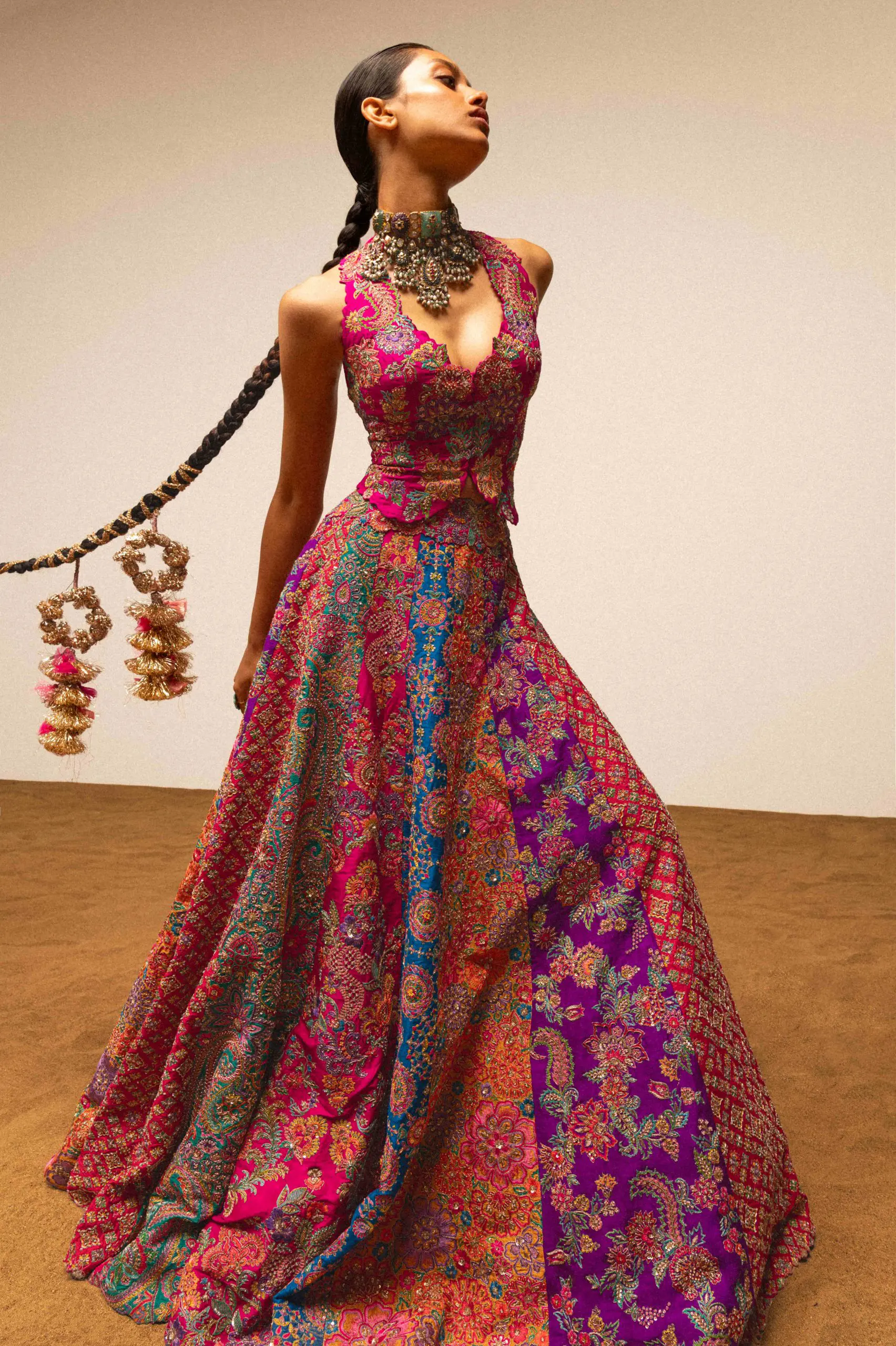
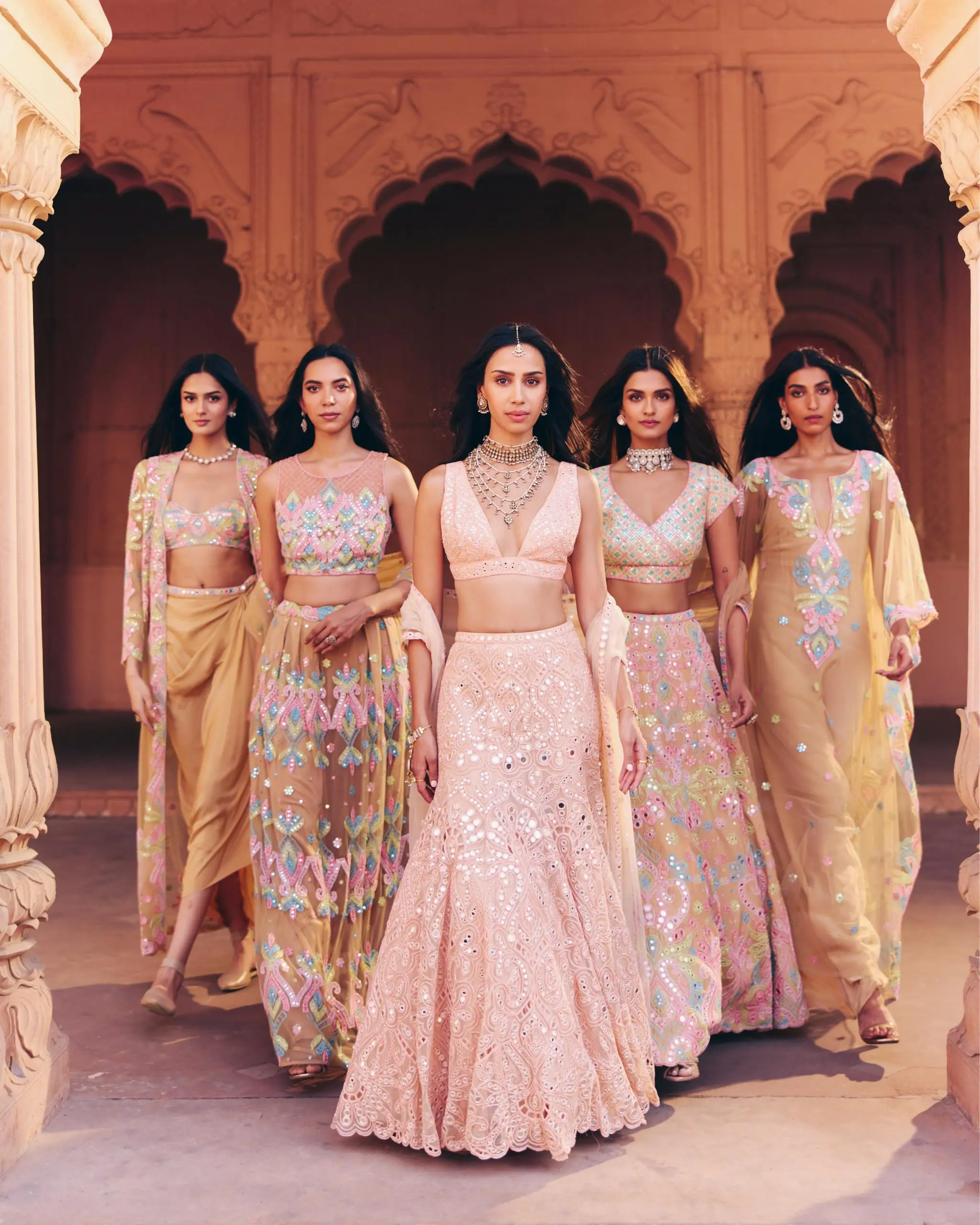
Mrunalini Rao’s Hastakala 2026 looks at something that has always been central to Indian couture: the textile. The annual couture collection celebrates India’s textile heritage while translating its richness into contemporary silhouettes, bringing traditional craft into a wardrobe that feels relevant to the modern bride rather than locked inside a museum.
The idea feels particularly apt at a time when bridalwear is becoming increasingly interested in where a garment comes from, not just how dramatic it looks in photographs. It is less about recreating the past and more about asking what happens when generations of textile knowledge are allowed to move forward.
KALKI
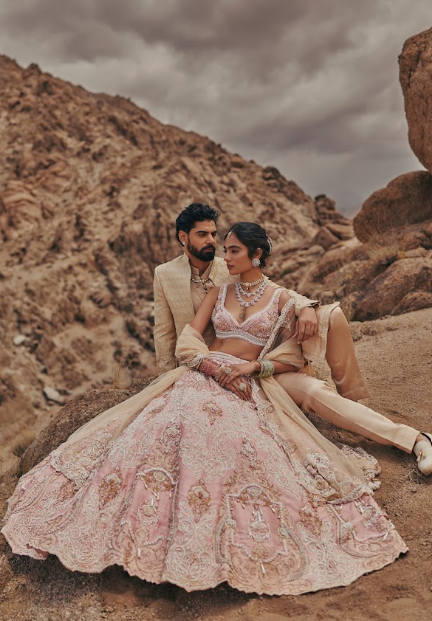
KALKI’s Bride & Groom ’26, Beyond the Vows, is for the part of the wedding nobody seems to have invented a proper name for yet: everything after the ceremony. The second drop moves through intimate dinners, cocktails, receptions and those endless post wedding moments when the couple is technically still celebrating but has already been photographed in every possible angle.
For brides, that means fluid drapes, contemporary lehengas, sculpted blouses, statement gowns and modern ceremonial separates. Grooms get sharply tailored bandhgalas, structured jackets, elegant achkans and layered occasionwear. The palette stays within ivory, pearl, champagne and dusk lit metallics, with tone on tone embroidery and lighter linear detailing. The interesting bit is the approach to couple dressing. Matching is no longer the objective. Instead, the clothes share tones, textures and structural details while allowing both people to actually look like themselves.
Ridhi Mehra

The Bridal & Menswear Couture 2026 collection is built around two lovers finding their way back to each other after years apart. There are cities, time zones, airport terminals, voice notes, playlists, missed anniversaries and those increasingly dramatic “your internet is unstable” moments that somehow become part of modern romance (as someone in a LDR, I’d know).
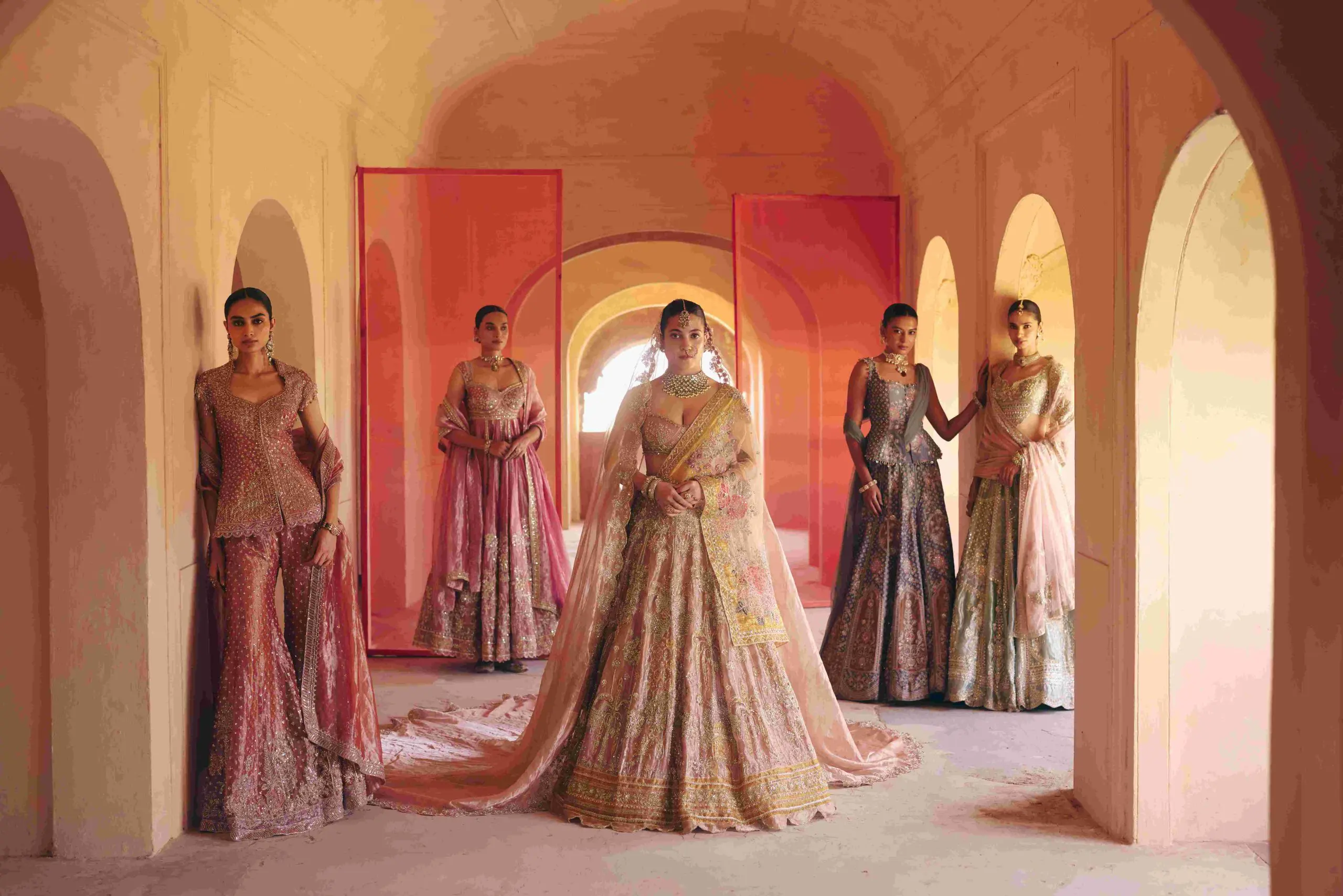
The collection moves through longing, separation and reunion, using corseted lehengas, fluid drapes, tissue, organza and chiffon alongside marodi work, celestial Chand embroidery and painterly florals. The menswear follows with sherwani sets, bandi sets, kurta sets and layered occasionwear, featuring dori embroidery, marodi, Kashida inspired paisleys, florals and geometric patterns.
Then comes the after dark wardrobe, where jewelled corsets, cascading crystal details, three dimensional embellishments and luminous handwork take over.The entire collection is accompanied by an original soundtrack by Vylom, featuring the Nizami Brothers and Vylom, moving from Chaap Tilak to Ranjheya. It is essentially a love story with a playlist, a wardrobe and a very expensive ending. Actress Madhyama Segal becomes the face of that transition from longing to joy, making RANJHEYA less about the wedding as a single event and more about everything it takes to finally arrive at one.
Aisha Rao

Aisha Rao’s Priyasi might be the most literal interpretation of the idea that every bride needs a story. Presented at Hyundai India Couture Week 2026, the collection looks at love through history, literature, mythology and cinema, moving from Shah Jahan and Mumtaz to Salim and Anarkali, Pride and Prejudice, Anna Karenina and even Adam and Eve.
The collection is divided into the emotional syllabus of every relationship, depending on the day. Intricate embroidery and polychromatic appliqué appear across layered, sculptural silhouettes, with botanical motifs and textured surfaces creating garments that feel almost like fragments of larger stories (and is her signature). Bio based materials including bio resham and bio badla bring another layer to the collection, while the craftsmanship remains firmly rooted in couture.
But the runway itself was arguably as theatrical as the clothes. Monumental tulips became the visual anchor, surrounded by cinematic lighting, a score and live performance. Every model carried a tulip at the end, turning the flower into a gesture of hope, solidarity and the idea that humanity, much like love, keeps blooming in strange places.
Masaba Gupta

Masaba Gupta’s first bridal couture collection, Chardi Kala, came with a fairly simple proposition: the bride does not need to choose between heritage and being herself. She can be fearless, joyful and most importantly, unapologetically individual. Her bride gets the gold, the craftsmanship and the history, but she gets to wear all of it on her own terms. The show also brought back Madhu Sapre to the India Couture Week runway after nearly a decade, alongside Carol Gracias, Sheetal Mallar and Sakshi Sindwani, giving the collection another dose of personality.
Read our Indo-French issue here.