Kering’s Generation Award is looking to the future of fashion
- Fashion Featured
 Yashita Damani
- 7 minutes read

Luxury has always been an exercise in looking forward while knowing exactly what is worth preserving, and Kering is now bringing that idea into sharper focus in India with the launch of its Kering Generation Award, an initiative that will look beyond the finished garment to the materials, technologies and circular systems that could shape how fashion is created, used and eventually returned to the cycle. The award ceremony will take place at the Embassy of France during Delhi Fashion Week on October 13, 2026, as part of the Franco Indian Year of Innovation.
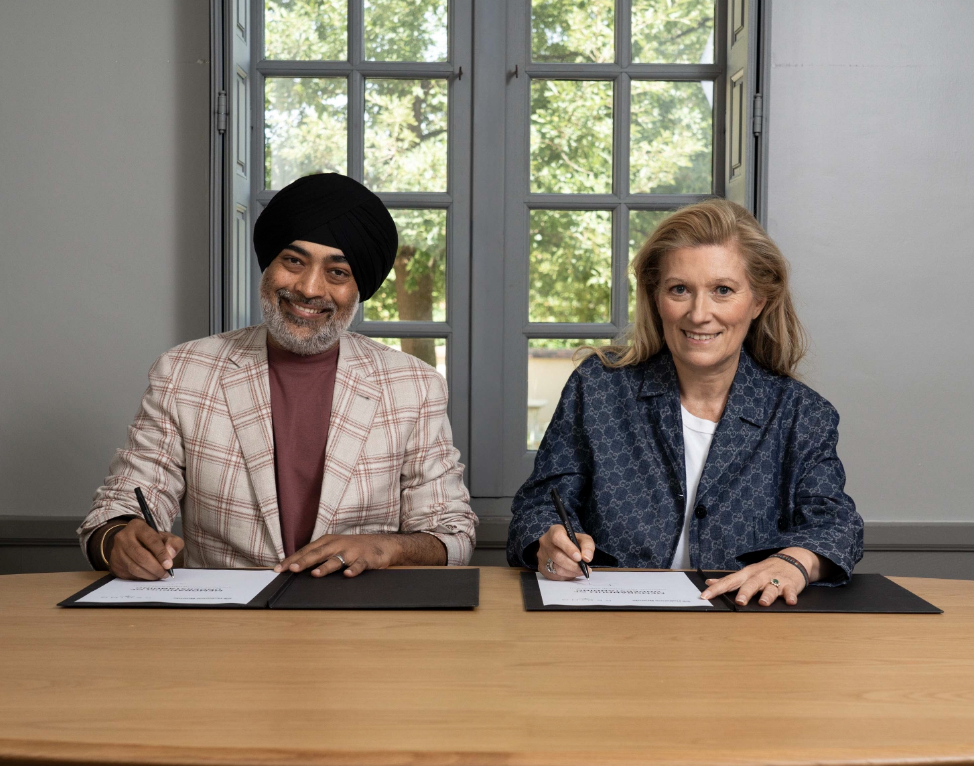
For the first time in the region, Kering is introducing the Generation Award in India in partnership with Reliance Brands Limited, with the Indian edition specifically seeking startups developing circular initiatives that have a direct impact on resource protection, bringing together Kering’s sustainability platform and Reliance Brands’ fashion ecosystem to identify ideas that can push the industry towards more responsible ways of working. The partnership was formalised at Kering’s headquarters in Paris, where Marie Claire Daveu, Kering’s Chief Sustainability and Institutional Affairs Officer, and Jaspreet Chandok, Group Vice President, Reliance Brands Limited, signed a Memorandum of Understanding for the launch, placing circular innovation at the centre of the Indian edition and establishing a framework for supporting fashion initiatives that address sustainability through innovation.
The timing also gives the announcement a certain significance. Since 2018, Kering has run the Generation Award across markets including China, Japan and MENA, inspired by its sustainability signature, “Crafting Tomorrow’s Luxury”, using the programme to identify promising change making startups and technologies working across fashion and to support solutions intended to reduce the environmental and social impact of fashion throughout its processes, from raw materials to the end of a product’s life. India’s edition, however, comes with a particularly defined brief: circularity and resource protection. Rather than opening the award to every possible interpretation of sustainability, Kering and Reliance Brands are looking specifically towards startups whose circular initiatives can have a direct impact on how resources are protected, with R|Elan Circular Design Challenge, in partnership with the United Nations in India, joining the programme as its exclusive nominating partner.

That makes the initiative less about sustainability as a broad industry aspiration and more about the people and technologies attempting to translate that aspiration into something tangible, scalable and relevant to fashion itself, whether through new approaches to materials, technology or circular business models.
“Expanding the Kering Generation Award to India is a natural and strategic next step in our mission to support visionary impact startups that are shaping the future of luxury,” said Marie Claire Daveu, Chief Sustainability and Institutional Affairs Officer at Kering, pointing to India’s rapidly growing luxury market as well as its innovation and entrepreneurship ecosystem, and highlighting the potential of bringing together fashion, beauty and innovation to accelerate the circular solutions needed to transform the industry.
Jaspreet Chandok similarly positioned the partnership around the relationship between creativity and responsible innovation, noting that India is home to talent working across materials, technology and circular business models, while describing the collaboration as a way to bring Reliance Brands’ experience in building fashion ecosystems together with Kering’s sustainability expertise and give these innovators a global platform.
The programme will culminate in an award ceremony at the Embassy of France during Fashion Week in Delhi on October 13, 2026, an occasion that will also bring attention to the Franco Indian Year of Innovation.
The Indian launch builds on a programme whose roots go back further. In 2017, Kering joined the Plug and Play Fashion for Good accelerator as part of its sustainability strategy, with the aim of identifying more sustainable and innovative materials and processes in Europe, before launching the first Kering Generation Award in 2018 in partnership with Plug and Play China to support Chinese startups with positive environmental and social impact. The programme subsequently expanded to Japan and Saudi Arabia with the support of the Fashion Commission.
For Reliance Brands Limited, the partnership adds another dimension to a business that was established in 2007 with a mandate to launch, scale and nurture global fashion and lifestyle brands in India across the luxury to premium spectrum, while also investing in leading Indian designer labels and building a wide network of international brand partnerships. RBL currently operates more than 1,855 doors across India, including standalone stores and shop in shops. Kering itself describes the award as part of its wider commitment to fostering visionary talent and advancing sustainable solutions across fashion’s processes, while its portfolio spans couture and ready to wear, leather goods, jewellery, eyewear and beauty, with Houses including Gucci, Saint Laurent, Bottega Veneta, Balenciaga, McQueen, Brioni, Boucheron, Pomellato, Dodo, Qeelin and Ginori 1735, alongside Kering Eyewear. In 2025, the Group employed 44,000 people and generated revenue of €14.7 billion.
The Indian edition therefore sits at an interesting intersection: a global luxury group extending an established sustainability initiative into one of its newest markets for the award, a major Indian fashion business bringing its ecosystem into the partnership, and a new generation of startups being asked to rethink one of fashion’s most fundamental questions, not simply what luxury should look like, but how it should exist.
And with the first Indian Kering Generation Award ceremony now set for Delhi, the next chapter of that conversation will not be presented as an abstract idea about the future. It will be represented by the startups attempting to build it.
You may also read: From heirloom to aisle: The bridal collections of 2026