“She does not wait for the knight. She becomes one”: Khushi Kumar on building her fashion label
- Fashion Featured
 Anushka Manik
- 11 minutes read

There’s a specific kind of thrill in walking away from a dream job to chase one of your own. Especially when that dream job happens to be at Dior, and what lies ahead is less a carefully mapped-out career move and more a leap into the unknown. For Khushi Kumar, 23-year-old designer and founder at Khushi Kumar Label, leaving the fashion house in London to build her eponymous label between New Delhi and London meant trading the security of an established name for the uncertainty of starting from scratch. But in a fashion landscape that’s brimming with familiar ideas, is there still room for a new label to carve out its own identity? Kumar believes there is.
From navigating the realities of being a founder to building a business without losing its creative soul, she talks to LuxeBook about taking that leap of faith, finding her design language and creating a fashion house on her own terms. And, she’s just getting started!
LuxeBook: Take us back to the moment Khushi Kumar went from being an idea in your head to a label you were ready to put your name on. What was the biggest leap of faith involved?
Khushi Kumar: I think I always knew I wanted to build something of my own. Even as a child, I was constantly sketching and imagining clothes, so in many ways, the instinct was always there. What evolved over time was the understanding of what I wanted that to become.
One of the biggest leaps of faith was leaving Dior in London. I was working in an environment I had once dreamed of being part of, and leaving that behind meant stepping away from a certain sense of security to build something entirely my own. But I think there comes a point when the idea of building your own vision becomes more compelling than continuing to contribute to someone else’s. I wanted to create a house with its own identity, one that could bring together Indian craftsmanship, contemporary design and a global perspective. Putting my own name to it was both deeply personal and a responsibility. It meant being willing to stand behind every decision, every success and every mistake.
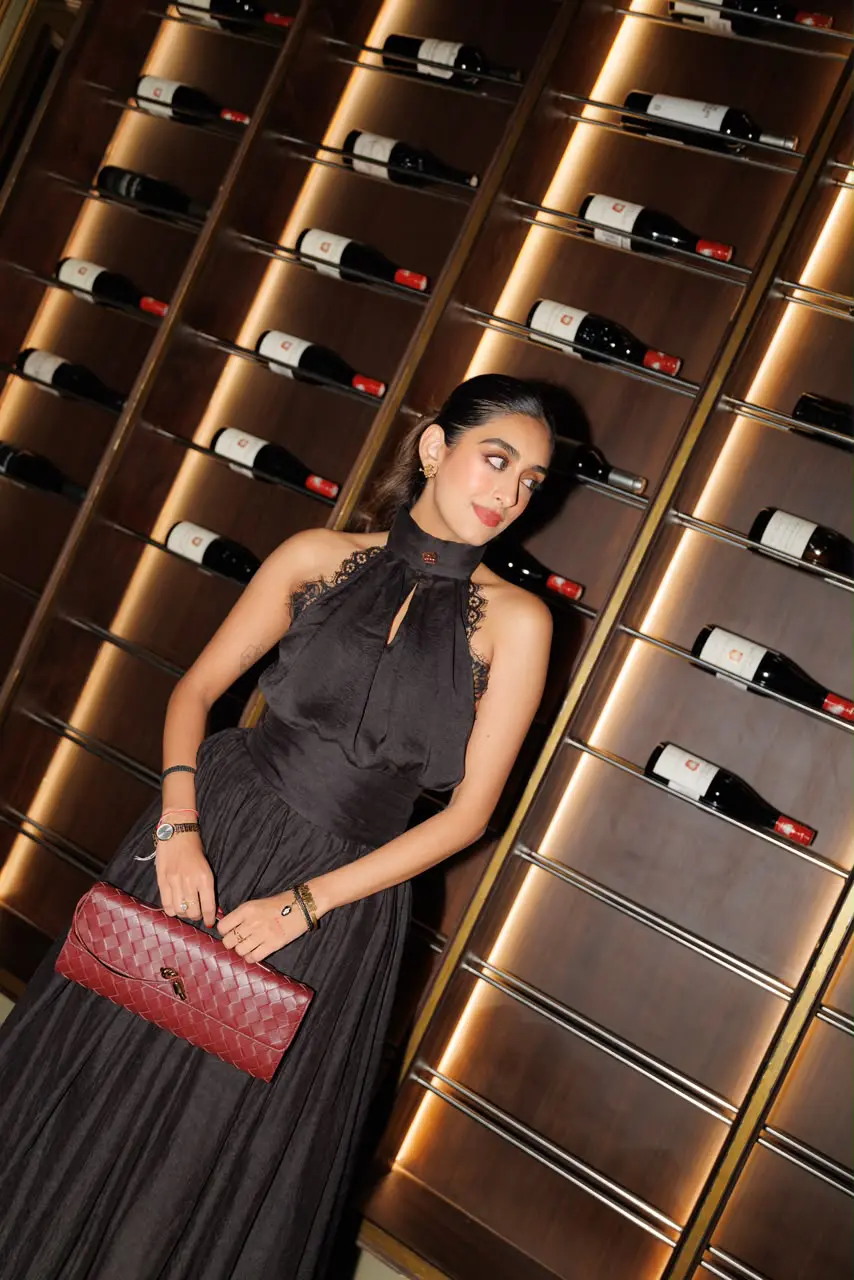
LuxeBook: You’re building the label between New Delhi and London. How have these two cities shaped your design language?
Khushi Kumar: I think the brand sits at the intersection of two very different sensibilities. India is central to my relationship with textiles, craftsmanship and the richness of our design heritage. There is an incredible depth to the techniques and materials we have access to here, and I want to explore them in ways that feel relevant to the woman dressing today.
London, on the other hand, has influenced my approach to silhouette, styling and the way I think about fashion as a form of self-expression. My time studying at Manchester School of Art and subsequently working in London exposed me to a more contemporary, internationally minded approach to design. It taught me to look beyond the obvious and to think about how a garment makes someone feel, not just how it looks.
I don’t see the two influences as separate. I want to create clothing that is rooted in Indian craftsmanship but speaks a global design language. For me, that is where the most interesting possibilities lie.
LuxeBook: Fashion is often romanticised as a creative pursuit, but building a label is also a business. What has been the most challenging part of being a founder, rather than a designer?
Khushi Kumar: The biggest learning curve has been understanding that having a strong creative vision is only one part of building a successful business. As a designer, you can become deeply invested in the product, but as a founder, you have to step back and consider the entire ecosystem that allows that product to exist.
You are thinking about production, pricing, cash flow, inventory, people, timelines and customer experience, often all at once. You also have to make decisions without always having complete information. I have always been instinctive creatively, but business requires a different kind of decisiveness and discipline, and that is something I have consciously worked on.
I am learning that being a founder is not about doing everything yourself. It is about building the right systems and team around your vision, while remaining clear about what the brand stands for. The challenge is to grow the business without losing the sensitivity and intention that made you want to build it in the first place.
LuxeBook: What does luxury mean to you today?
Khushi Kumar: I think luxury, to me, is increasingly about time and intention. In a world where everything is becoming faster and more accessible, there is something incredibly valuable about an object that has taken time to conceive, develop and create.
It is the time invested in a textile, the precision of a hand-finished detail, the thought behind a silhouette, or the experience of having something made specifically for you. Personalisation and craftsmanship make a garment feel connected to the person who wears it, rather than simply being another product.
I also think luxury should be felt rather than announced. It is in the quality of the experience, the way a garment makes you feel, and the relationship you build with it over time. For me, it is less about excess and more about intention.
LuxeBook: Tell us something about your A/W ’26 collection.
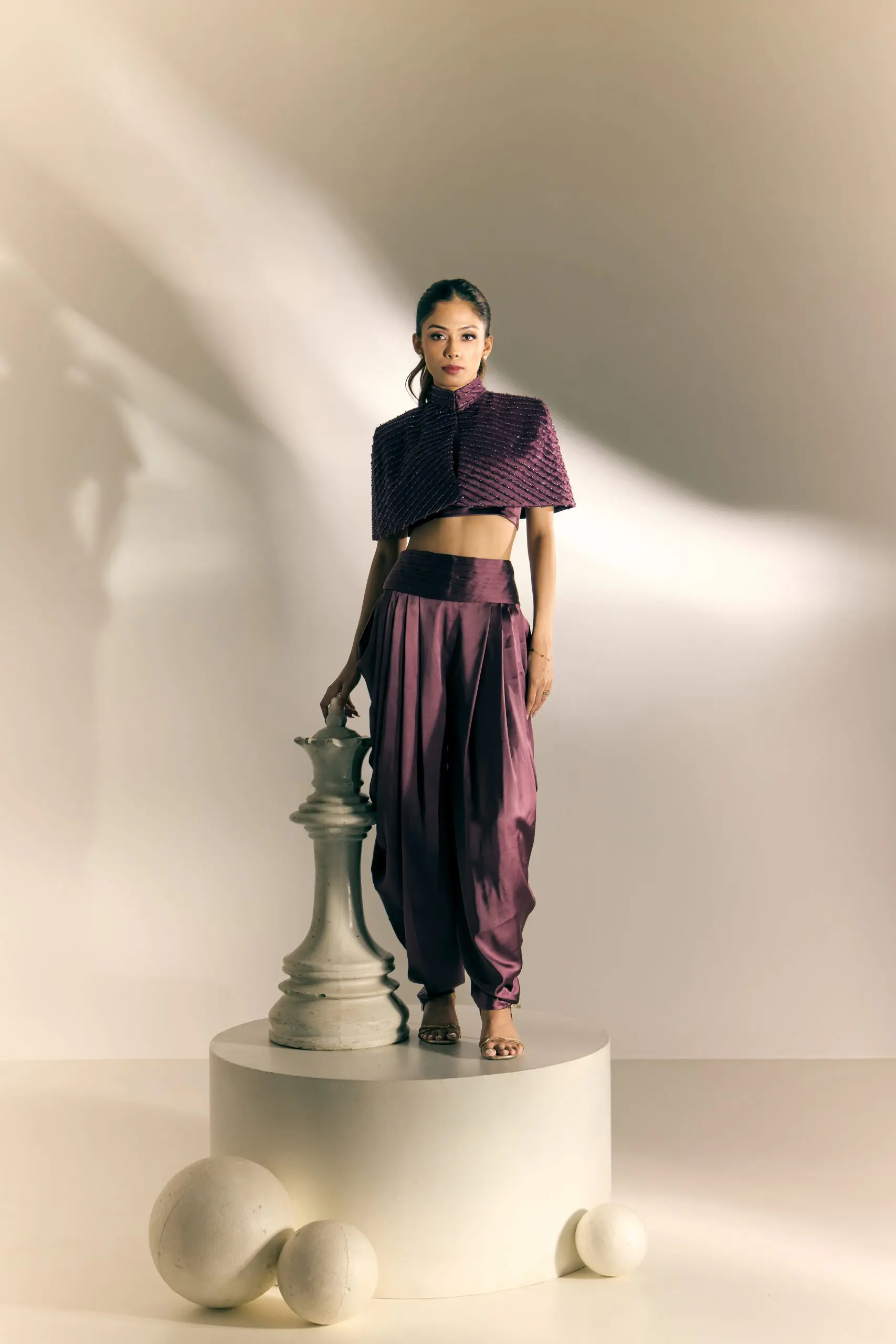
Khushi Kumar: My A/W ’26 collection, K-NIGHT, explores femininity after dark. I was interested in the idea of a woman who can be sensual, instinctive, playful and powerful, without feeling the need to choose just one version of herself.
The collection moves across a range of moods, from black satin, lace and body-conscious silhouettes to leopard-inspired elements and more expressive, festive pieces. I wanted it to feel like a progression through different sides of the same woman, rather than a collection confined to one aesthetic.
The chessboard became an important visual reference for the collection. I was drawn to the idea of strategy, power and knowing when to make your move. It also speaks to the way women navigate different spaces and expectations while remaining in control of their own choices.
At its heart, K-NIGHT is about agency. There is a line that captures the spirit of the collection: She does not wait for the knight. She becomes one. I wanted the clothes to reflect that sense of self-possession, while still allowing room for glamour, mystery and play.

LuxeBook: As a Gen Z founder, which traits have helped you the most, and which one have you had to work against?
Khushi Kumar: I think one of the biggest advantages of being a Gen Z founder is that we have grown up in a world where fashion, culture and digital communities are constantly interacting. We are naturally attuned to how trends evolve, how people communicate and how quickly conversations move. That helps me understand not only what people are responding to, but also how a brand can build a meaningful relationship with its audience beyond the product itself.
At the same time, I think growing up in such a fast-moving environment can make you impatient. You are constantly exposed to what everyone else is doing, and it can be tempting to expect ideas, results and growth to happen at the same pace. Building a fashion house has taught me the importance of patience and consistency. Some things, particularly craftsmanship, product development and building trust, simply cannot be rushed.
I am learning to balance the instinct to move quickly with the discipline to build something that lasts. Relevance might get people to notice you, but I believe a clear identity is what gives them a reason to stay.
LuxeBook: Indian craftsmanship is often celebrated, but sustaining artisan communities requires more than showcasing their work. What does a meaningful, long-term relationship with craftspeople look like to you?
Khushi Kumar: I think it begins with recognising craftsmanship as expertise, not just inspiration. India’s artisans carry generations of knowledge, and their work deserves to be valued as an integral part of the design process, rather than treated as a decorative element added to a finished product.
For me, a meaningful relationship means building continuity. It means working with craftspeople beyond a single collection or a moment of visibility, creating repeat opportunities, planning production responsibly and ensuring that the skill, time and labour involved are reflected in the value of the finished garment. It also means approaching collaboration with respect, listening to the people who understand these techniques best, and allowing their knowledge to inform how a design develops.
I am particularly interested in how we can take Indian textiles and traditional techniques into silhouettes that feel contemporary and relevant to a global audience, without losing the integrity of the craft itself.
Ultimately, the goal should be to create a future for craftsmanship, not simply celebrate its past. If we want these skills to survive and evolve, they need to remain commercially viable, desirable and connected to the way people dress today.

LuxeBook: How do you define success at this stage?
Khushi Kumar: At this stage, success is about building a strong foundation for the house while expanding its visibility and commercial reach. I want Khushi Kumar to become a name that people recognise for a distinct design language, not simply for individual collections or moments in the spotlight.
Commercially, I am focused on building a business that is sustainable, understanding what resonates with our customers, growing repeat purchases and creating a stronger connection between the creative vision and the way people actually wear our clothes. Every collection, client interaction and retail experience teaches me something about how the brand needs to evolve.
But I also think about success in terms of the identity we are creating. I want to build a house that can move across fashion, textiles and experiences, while remaining rooted in its own point of view. I am ambitious about the scale it can reach, but I don’t want growth to come at the cost of that identity.
I am still at the beginning of what I envision for the brand. For me, success right now is creating something with enough clarity, integrity and commercial strength to grow into that larger vision.
You may also read: Pranav Kirti on making destruction beautiful