The art of travelling solo, with strangers
- Featured Travel & Hospitality
 Anushka Manik
- 18 minutes read

As kids, travelling with strangers induced horror in most Indian households. Cut to 2026, and the idea of boarding a flight with a bunch of people you’ve never met has gone from mildly alarming to actually cool. I’ve found myself travelling to new places with new bunch of people more often than I can count for work trips, which sounded slightly uncomfortable at first, but somewhere between the first awkward introduction and the inevitable inside jokes, I realised people and their lores can actually be fun! There are also organised communities now, built around exactly this premise – sign up, show up, meet strangers and travel together.
And somewhere between the Instagram travel dump and the WhatsApp group created two weeks before departure, “I have no one to travel with” is no longer a problem, but a travel format.
And the numbers back the shift. Hostelworld’s 2025 State of Solo Travel report found that 58% of solo travellers wanted to meet new people, up from 43% in 2024. In India, Airbnb’s 2026 research found that three in four Gen Z travellers say who they travel with matters more than where they go, while group trips booked by Indian Gen Z grew nearly 55% year-on-year domestically. The reasons are partly practical – getting five friends, their calendars and their budgets to align is basically a diplomatic exercise. But increasingly, it’s about connection too. WeRoad found that 66% of Europeans feel it has become harder to meet new people, while 45% see travel as an ideal way to do it.
So, why strangers?
Part of it is practicality. Friends have jobs, partners, family commitments and calendars that seem to require the coordination skills of a UN summit.
But there’s also something more emotional at play. After years of increasingly digital social lives, the appetite for actual, in-person connection appears to be growing. And perhaps that’s the real appeal of travelling with strangers. The real luxury is connection, after all.
Aakarsh Mehra, Co-Founder, Boketto Travels believes it has a lot to do with how individual our lives have become. “We are more connected than ever, but at the same time, I think people are meeting fewer people in a real way. You can have hundreds of people on your Instagram and still have nobody to call on a random Tuesday night.” Traveling with strangers gives you something very different. “You end up having conversations you probably wouldn’t have had back home. I don’t think people are necessarily travelling with strangers because they don’t have friends. I think they are doing it because they want to meet people outside the small circles they already live in. And honestly, I think that is becoming a form of luxury in itself”, he adds.
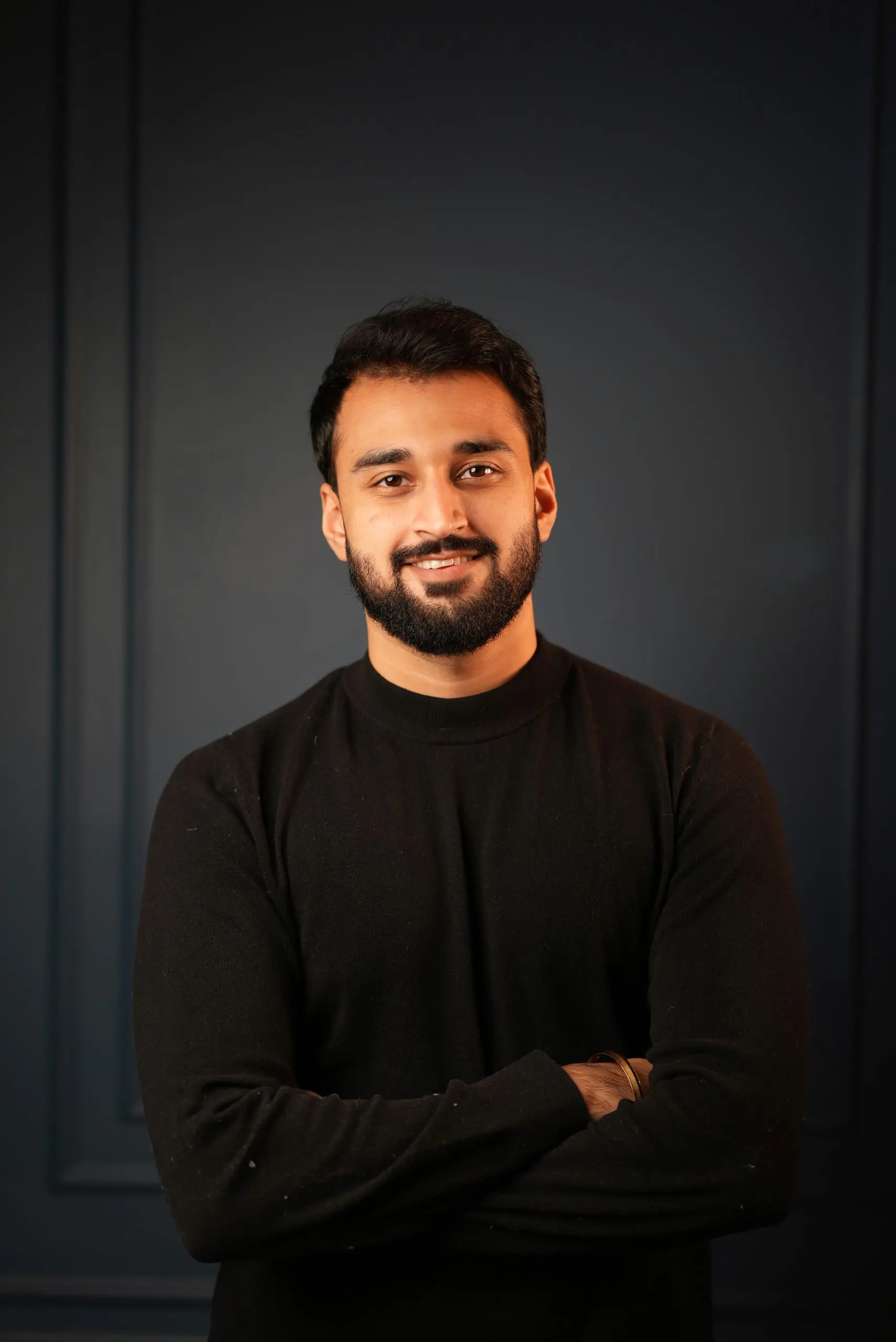
There is a strange freedom in meeting people who know absolutely nothing about you. They don’t know your work history, your ex, your family drama or that you once had a deeply embarrassing school nickname. You get to arrive as a blank slate. Somewhere between sharing a delayed flight, getting lost on a trek and arguing over where to eat, strangers can become friends at a speed that everyday life doesn’t really allow.
The pandemic may have accelerated that desire for connection, but it didn’t invent it. Travel has always been a social experiment of sorts; what has changed is the infrastructure around it.
“None of this is new. It is just something India forgot it invented”, shares Krishan Anand, Founder, Secret. “My family has been hosting in Kashmir for six generations. They hosted a shoot, a morning on the river, a round at the Pahalgam golf course, and then a table afterwards that ran long. The pursuit was always the reason to arrive. The table was always the point.”
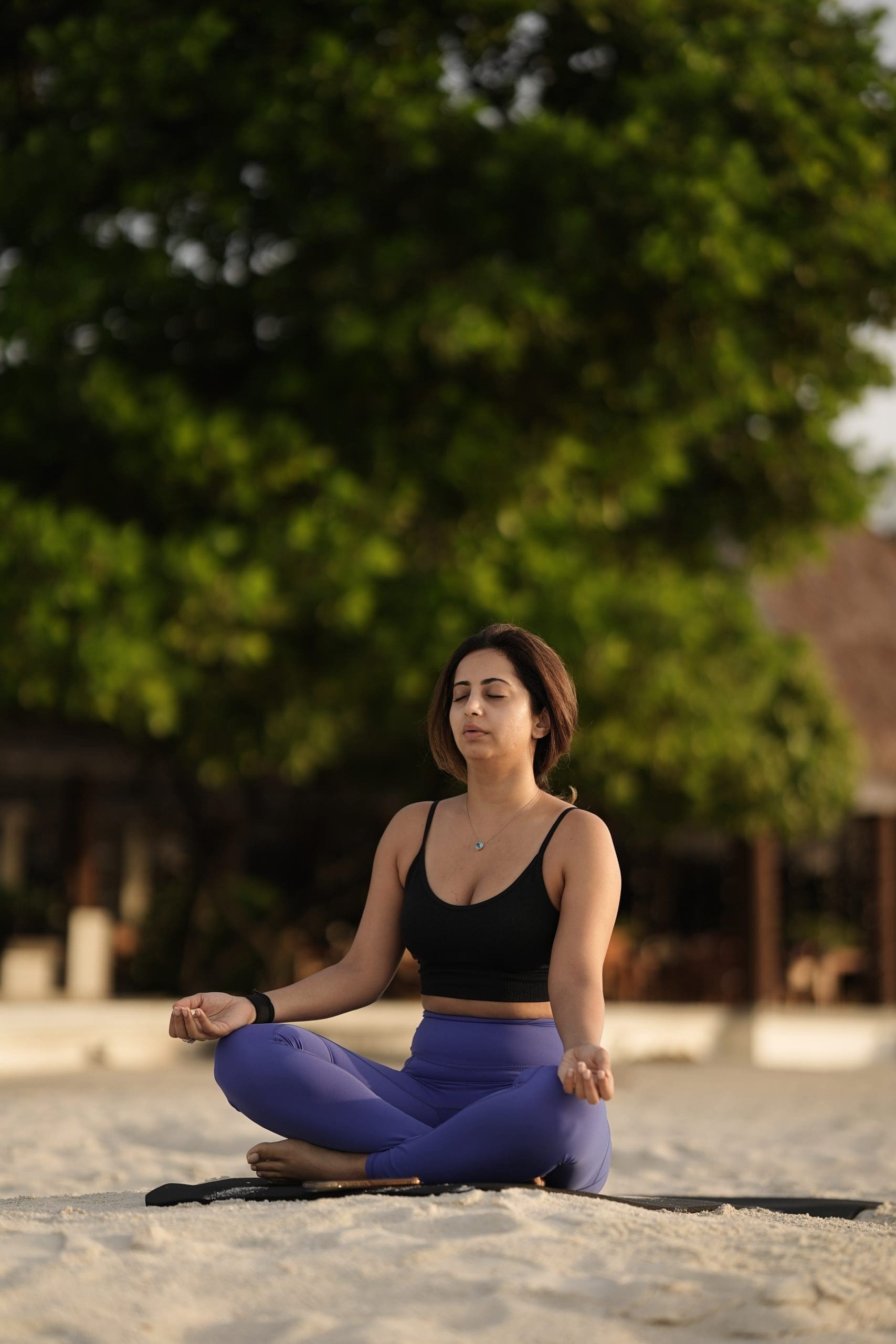
Plugging in a wellness lens, Alekha Advani Jain, founder of Way Well, puts it rather beautifully, “When you meet strangers, there’s an opportunity to step outside those already-built identities and show up as a different version of yourself. From a wellness perspective, that’s incredibly powerful.” She believes that wellness is no longer just about what we do to our bodies or how we optimize our health, but how connected, seen and alive we feel. There’s something very healing about entering a space where everyone is there with the same intention: to pause, experience something new and connect.
The New Ice Breaker? A Padel Court
There’s a reason sport makes for the coolest ice breaker; you have something to do together before you even have something to say. I once walked into a badminton court knowing absolutely no one and walked out having found a great girl to play with.
For Anand, whose Secret Serve Party took 30 guests to Club Med Saint Anne Island in the Seychelles for four days of padel, island adventures and hosted experiences, sport is the social glue. “Padel is the only sport I have found where a complete stranger becomes someone you trust in ninety minutes. Most sports separate people. Padel puts them in a room”, he shares.
“The design of the game does the work. The court is small and enclosed, so four people stay permanently within speaking distance. The walls keep the ball alive, which means a beginner and a strong player can hold a rally and neither one is embarrassed. It is played in pairs, so you are always responsible for someone other than yourself. And partners rotate, so across four days everyone has been on everyone’s side. Compare that with golf: four hours, mostly walking apart, hitting alone. Or tennis, where a skill gap ends the point in three shots and the better player quietly resents the worse one. Padel has almost no ego cost. You can be useless on a Thursday and genuinely useful by Saturday, and everyone watched it happen. That is a rare social gift.”

Adding to this, Advani Jain, who recently took her Way Well community to the Maldives for Harmony by the Sea, a five-day luxury wellness festival at Heritance Aarah, says, “Some of the strongest bonds actually happen through play. Activities like movement, dance, pickleball or a shared creative experience remove the awkwardness of “meeting someone” because you’re doing something together rather than simply making conversation.”
The Art of the Match
So, what does it take to turn a group of strangers into the right travel party?
“We’re not trying to find 20 people with the same personality. In fact, that would probably make for a pretty boring group”, says Mehra. “We want a mix of personalities, but there has to be a certain level of openness. Someone who can hold a conversation, who is curious about people; there is also a lot of instinct involved. And then, even after all that, people still surprise you. That’s probably the best part”, he adds.
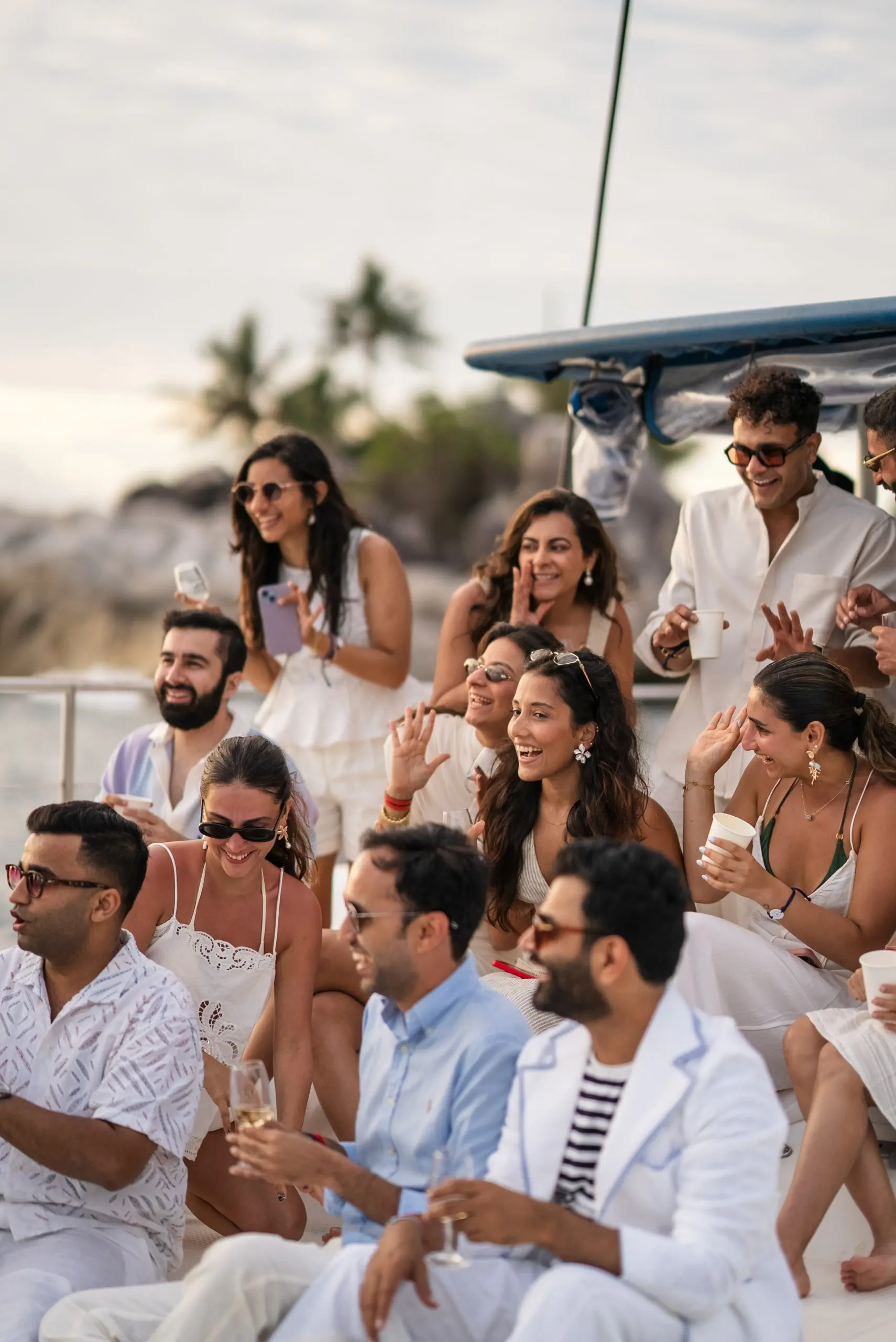
For Anand, the guest list isn’t a CV parade. It’s about who makes the room more interesting! “What I am actually looking for is three things. Does this person add something the room does not already have? A room needs range, not a category. Thirty founders in the same sector is not a guest list, it is a conference. Are they good at being new: curiosity, generosity, self-awareness, someone who asks better questions than they give answers? And does the room hold with them in it? This is instinct, and it is the part I cannot systematise. One wrong fit changes four nights in a remote place for everyone else.”
He told us how they’ve declined concierge networks that serve some of the wealthiest people in the country and private members’ clubs asking for block allocations. “We have said no to people with very large audiences and serious titles, purely because something about the room felt wrong with them in it. That instinct costs you money in the short term. It is the only thing that compounds in the long term.”
‘Cuz the best travel groups aren’t built on who’s who, but on who you’d actually want to be stuck in a villa with for four days!
Stranger Things Have Happened
Now don’t get your hopes up, but we got to know that somewhere between the itinerary and the inside jokes, things got romantic.
“This year alone, five couples have gotten married who first met on a Boketto trip. That’s probably the most unexpected outcome of what we do”, tells Mehra. It’s not like when someone books a trip with them, they’re coming with the intention of finding a partner. They’re coming to travel, meet people and have a good time. But when you spend a week with someone, away from your usual life, you see a very different side of them. You share experiences, get into random situations together, have long conversations and, sometimes, something just clicks.
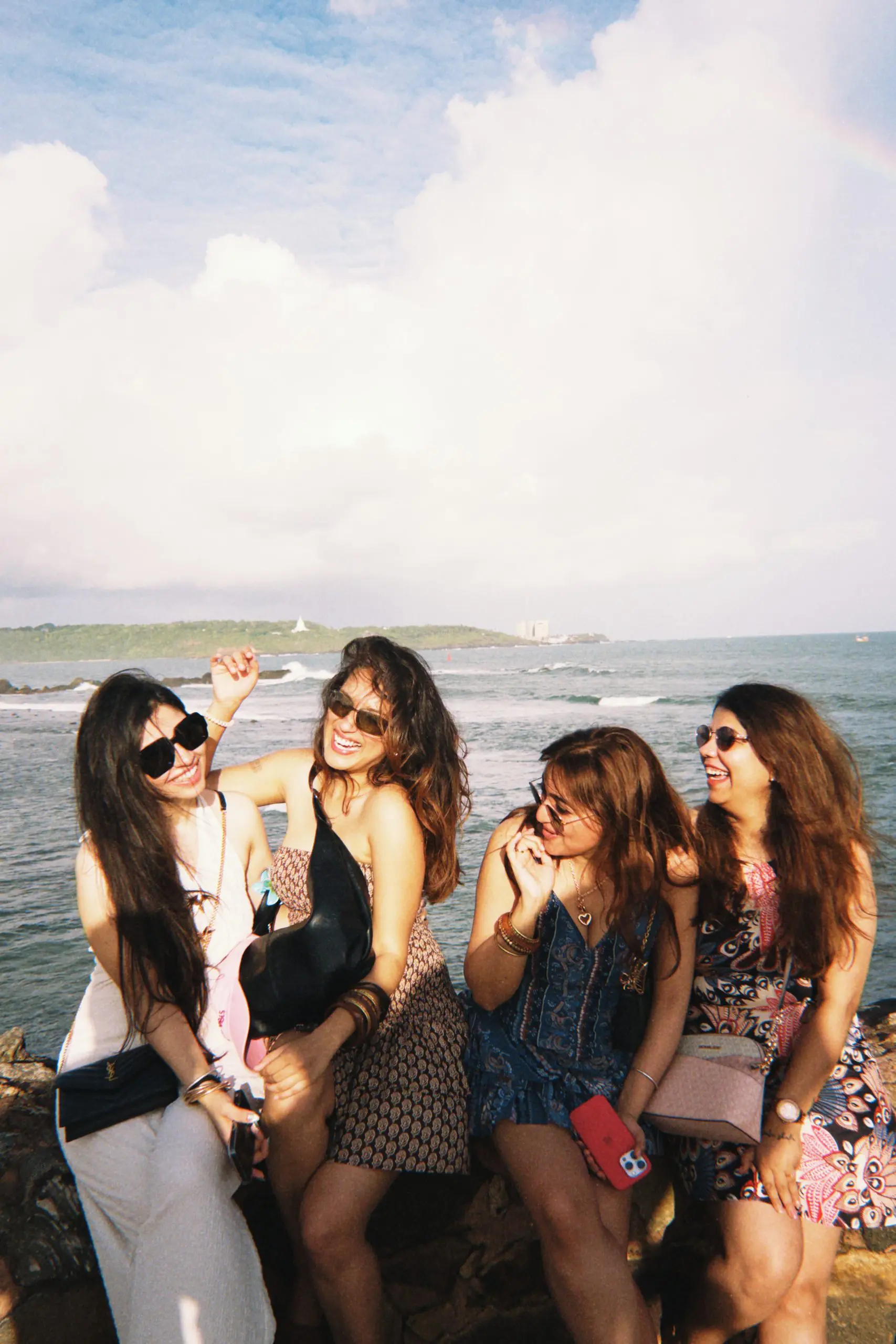
“We’ve also seen people become very close friends, start businesses together and continue travelling together long after their Boketto trip is over. What I find most interesting is that a lot of these connections happen between people who probably would never have met otherwise”, he adds.
Anand shares how one ski trip turned into an unexpected global collaboration. “A man who runs operations across emerging markets for Club Med, one of the largest ski resort operators in the world, came to Gulmarg. He did not come as a partner or on a site visit. He came because he had heard a group of Indians had built something on a mountain in Kashmir and he wanted to see Indian ski culture for himself. Some months later, Secret Serve Party took place at Club Med Saint Anne Island in the Seychelles. Our second world exists because someone came to the first one as a guest not through a business development process, but through a chairlift and a long dinner.”
As per him, it is always day three. Never the first night, when everyone is still performing, and never the last, when everyone is already leaving. “Day three is when somebody says something they have never said in a professional context, and the room changes shape around it.”
The New Luxury is Feeling Seen
The luxury traveller of today isn’t necessarily chasing the biggest suite or the flashiest address; they’re paying for personalisation, privacy, meaningful experiences and access that feels genuinely hard to replicate.
Three things, I would say, this traveller actually wants, shares Anand. “Relief from performing. Much of premium hospitality in India is socially exhausting: you are on, you are being seen, you are the version of yourself that arrived. The ocean does something to ambitious people. It slows them down, and when they stop performing, they become interesting. Participation over ownership. They would rather be inside the thing than own it. They do not want to look at the mountain from a suite; they want to be bad at skiing on it in front of people. And discretion. The most sophisticated guests we have are the ones you will never see tagged in anything. Part of what they are paying for is the absence of an audience.”
He also shares, “One more, which India in particular is only now waking up to: they want it to be Indian. Not Indian-themed. Indian. The most sophisticated hospitality tradition in the world came out of this subcontinent and was never given a Michelin star. A Wazwan cooked in hand-beaten copper by three generations of the same family, where an assistant moves through the room to wash your hands where you sit, is not a cultural flourish attached to an expensive weekend. It is the thing itself. Before that dinner, I ask everyone to leave their shoes and their egos outside, and it works every single time.”
“We spent thirty years importing a European template and calling it aspiration. The next thirty will be about exporting ours.”- Krishan Anand
For Advani Jain, the new luxury may be having access to a space where you can be completely yourself, meet fun people without the pressure of networking or social performance. “That’s what makes community-led wellness so interesting. It combines the best of both worlds: beautiful, elevated experiences with something that cannot be bought in the traditional sense.”
Maybe the real luxury now is having no idea who you’ll meet along the way. Because sometimes, the best souvenirs aren’t things you bring home, but the people, stories and the version of yourself you didn’t know were waiting for you.