The Franco-Indian love language is art

By: Arushi Kapoor
India’s artistic relationship with Paris shaped the trajectory of modern Indian art in ways distinct from its colonial past. It helped shape an important chapter in the evolution of modern Indian art. On my latest summer trip to Paris, I was walking through Le Bon Marché when I fell in love with a jacket by the French designer Caroline de Benoist, made in India, rooted in Indian craftsmanship yet cut with the restraint and precision of French aesthetics. Later, I had dinner with Sakti Burman’s grandson, Gana (Ganapathy), and it felt like a living extension of Sakti Burman and Maïté Delteil’s artistic world – France giving their work its dreamlike composition, intimacy, and European pictorial language while India supplying its mythology, memory, color and imagination.
That exchange – one culture learning from another without erasing – has defined the Franco-Indian relationship for generations.
When Artists Travel East, Vision Returns West
French modernism shaped generations of Indian artists. From Amrita Sher-Gil and Raza to Padamsee, Ram Kumar, Sabavala, Zarina, Viswanadhan, Sakti Burman, and Tyeb Mehta – these painters didn’t travel to Paris to become French. Still, they engaged with European modernism whilst establishing independent artistic practices grounded in their own cultural contexts. And today, understanding their journey – how they absorbed European modernism whilst reshaping it through an Indian eye, memory, mythology, material and identity – is central to advising serious collectors. What distinguished the Paris experience for Indian artists was engagement with European modernist movements and institutional frameworks.
For collectors, these artists represent something profound: not borrowed European tradition, but Indian modernism fully realized. When I advise clients on acquiring work by Raza, Ram Kumar, or Padamsee, we’re not simply acquiring paintings—we’re collecting works that capture a defining moment in the evolution of Indian modernism. Today, that relationship has evolved considerably. Indian artists are increasingly present in major international exhibitions, collections, and market conversations. They are no longer positioned as emerging voices, but as established participants in global discourse.
This became vividly apparent during my visit to the Fondation Louis Vuitton, which is currently presenting the legendary Alexander Calder – a figure with a remarkable, little-known connection to India. In 1955, Calder travelled to Ahmedabad and created nine major sculptures and a series of jewelry pieces, collaborating with local artisans and workshops. His work from this period reflects an exchange between modernist aesthetics and established Indian craft practices – a dialogue that informs how we understand artistic collaboration today.

Standing before Calder’s work, I was struck by how he captured movement and imagination in its simplest form – lines, balance, lightness. This is precisely what drew him to Ahmedabad. For collectors, this period of artistic exchange is significant for understanding how modernism developed across different geographic and cultural contexts, and how it informs contemporary practice today.
Art as Living Experience
Alexander Calder’s Wearable Sculptures and Contemporary Installation, Fondation Louis Vuitton
Calder’s approach to wearable sculpture – his jewelry and clothing designs created to be worn, to move with the body, to become inseparable from daily life – reflects how art is not confined to galleries but integrated into lived experience.
These pieces – jewelry and textile work designed as sculptures to adorn the body – exemplify Calder’s belief that art belongs in lived spaces. This philosophy deeply resonates with my approach to the curation of collections: not works in isolation, but art integrated into homes and daily moments.
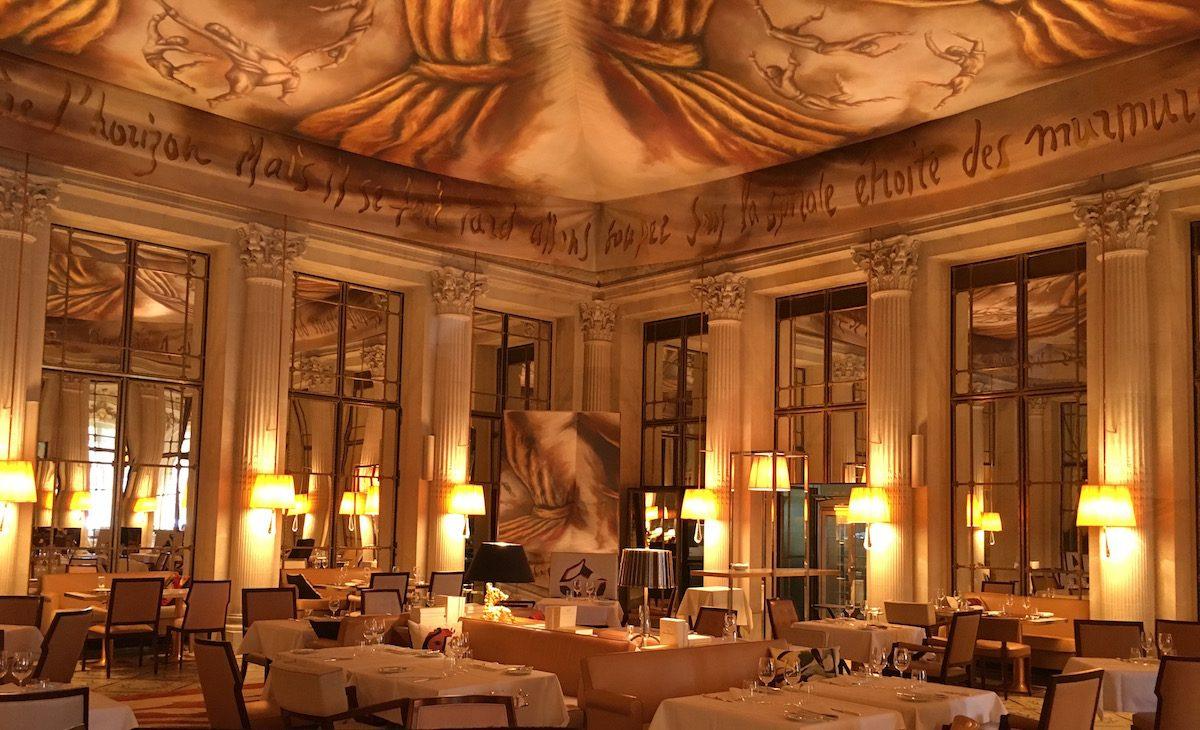
This principle extends to how spaces themselves become art. At Le Meurice, Philippe Starck’s redesign of the public spaces includes an interactive installation concept inspired by Salvador Dalí, one of the hotel’s most eccentric and loyal guests for over three decades. As an art advisor, this is what I advocate for: that luxury is the marriage of artistic vision and lived experience. Hotels, homes, collections – these are stages upon which art performs its true purpose.
A New Phase in the Franco-Indian Dialogue
Today, the Franco-Indian exchange has evolved significantly. Indian designers, artists, and creators are increasingly engaging with global audiences as equal participants rather than seeking validation from traditional cultural centres. This shift is not symbolic; it is structural.
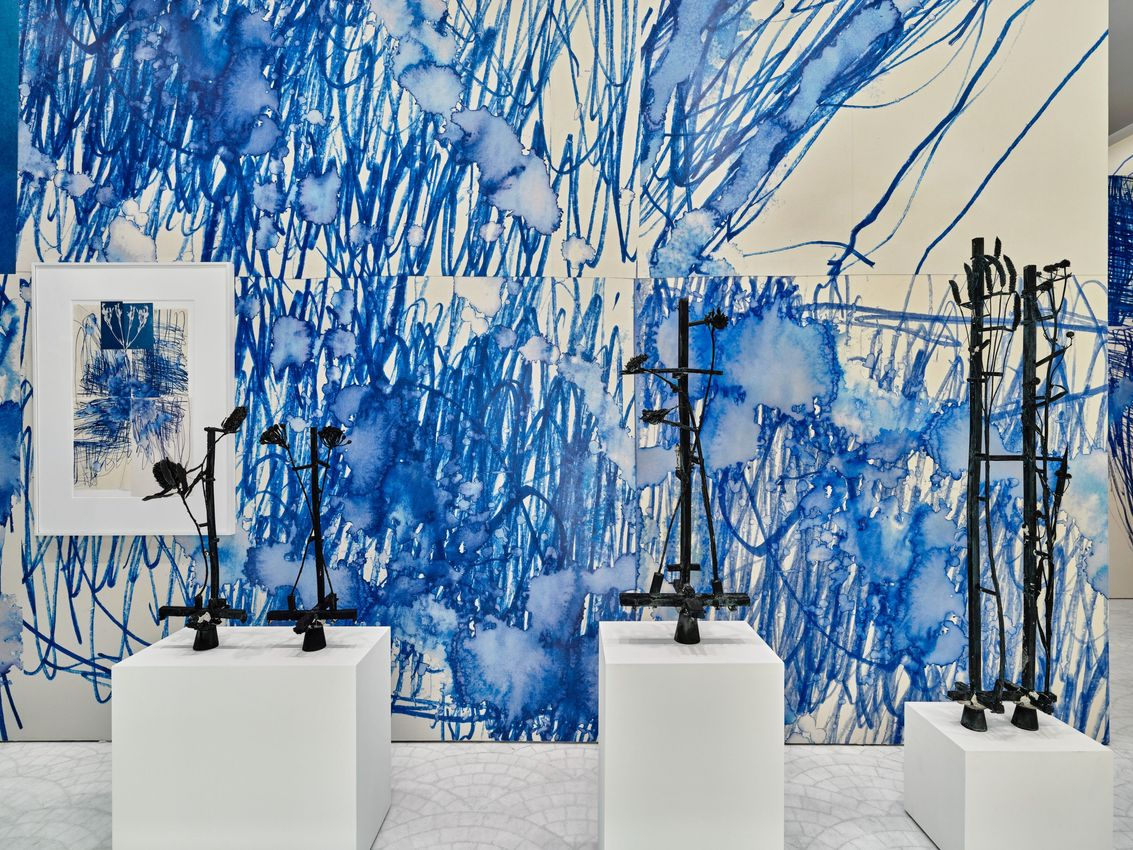
This immersive work – bold abstraction, gestural intensity, architectural scale – speaks to how contemporary art now exists in genuine dialogue rather than hierarchy. For collectors building serious contemporary collections, understanding artists like Sterling Ruby is essential: work that doesn’t reference the past, but shapes the present conversation globally.
The Franco-Indian artistic relationship now operates with greater mutual participation. Indian artists bring established practices, technical expertise, and distinct cultural perspectives to international art discourse. This represents a shift from earlier periods when Western artistic frameworks were predominantly positioned as the primary reference point.
This exchange manifests in the most unexpected places. At Pan Deï Palais in Saint-Tropez, built by General Jean-François Allard for his Indian wife, Princess Bannu Pan Deï, after he served in Maharaja Ranjit Singh’s army in Punjab. A little piece of India has been sitting quietly in the heart of Saint-Tropez all along – a warm hug from home. Today, that story continues at Les Délices du Pan Deï, where Mediterranean cuisine is subtly infused with Indian spices. That’s the aesthetic I’m drawn to when curating spaces for clients: where French restraint meets Indian richness, where craftsmanship from both cultures elevates a space into something genuinely transcendent. It isn’t fusion for the sake of novelty; it’s two cultures that have spent years, decades, and generations learning from and supporting one another.
Where Conversation Becomes Collection
The South of France isn’t where I find Indian art. It’s where I find the making of it. Standing before paintings by artists like Raza and Ram Kumar, whose work carries the very essence of this Franco-Indian dialogue, where European pictorial language meets Indian mythology, I think about the generation of painters who came to France not to become French, but to discover themselves.
What captivated me about this piece is how Calder transformed found materials – glass shards that could have been discarded – into something luminous. For collectors, this philosophy is a reminder that the most meaningful collections are often built around artists whose cultural significance extends beyond immediate market recognition.
There’s an effortlessness to this exchange when experienced in the South – in Eze, suspended between mountains and Mediterranean. It’s there in the iconic Hermès scarves filled with elephants, Mughal florals, paisleys, and princely pageantry. This reflects how Indian artistic and craft traditions have influenced contemporary luxury markets and commercial aesthetics.
For many affluent Indian collectors, building a collection around Franco-Indian aesthetics – whether acquiring works by the modernist painters who defined this movement, or curating spaces that reflect this sensibility – has become a way of honoring their own heritage whilst claiming a place within global contemporary discourse. The real story runs much deeper than objects or transactions. It runs through centuries of mutual respect, artistic exchange, and the recognition that true luxury has always been rooted in the reverence for the human hand.
France has become a love story I suspect will last a lifetime – one that mirrors the larger Franco-Indian narrative itself. A story of two cultures, neither subordinate to the other, both made richer by the conversation. And it is a story I’m privileged to help my collectors understand, acquire, and live alongside. That’s the real luxury the Indo-French collection offers participation in an exchange that has shaped modernism, defined contemporary art, and continues to shape conversations around global luxury.
Read our Indo-French issue here.