Think vegetarian food can’t surprise you? Try these 15 courses at Avatara 4.0
- Featured Food & Beverage
 Yashita Damani
- 12 minutes read

For someone who’s already dined at Avatara, going back isn’t about wondering whether it’ll be good. It surrounds and surmounts to one question: can they possibly top themselves? Second visits are risky. The novelty has worn off, expectations are higher, and comparisons are inevitable. I wondered whether lightning could strike twice. By the third course, I had my answer.
A little like reopening your favourite book. You know you’ll recognise the characters, but you’re hoping the next chapter surprises you anyway. Sutra (named after the Sanskrit word for an invisible thread) does exactly that, taking India’s most familiar flavours and telling a sumptuously tangy story.
Liquid acupressure
My first Avatara memory has nothing to do with the food (except the pain puri being delivered in a lotus or the paan shot in peacock feathers). It was standing in their wine cellar, sniffing tiny vials of aromas and discovering, to my utter disbelief, that “horse sweat” is considered a legitimate wine tasting note. Strange? Most definitely. Informative? Completely. I left with a newfound appreciation for wine, and a memorable story I’ve retold far more often than I expected. This time on, it was deeply sentimental for me personally.
Liquid Fortune, inspired by the Kubera Mudra, a gesture symbolising prosperity and abundance, blending Riesling, coffee chocolate cordial, espresso and salted caramel into an elegant, wine based interpretation of an espresso martini. The reasoning for the same traces back to the the Mesolithic period where chocolate (cacao) was used as a form of currency by the Maya civilization and later the Aztec Empire.
Image Courtesy: AvataraHaving learnt Bharatanatyam growing up, Mudra has always meant more to me than a hand gesture. It’s a language of emotion, one where every dancer tells a story via movement. So when Avatara named its beverage pairing ‘Mudra’, inspired by our beloved Indian classical dance form, I knew this wasn’t going to be ‘just another wine pairing’; the storytelling was so evident when it came to our table with an emblem of the hand, reminding me of all the various benefits of acupressure.

If coconut in food makes it heavy, the First Light Breeze is light, subtle, creamy and citrusy mocktail with tender coconut water lending a light, cooling freshness that brightens and lightens the palate between courses without weighing it down. Proof that great drinks hit the right pressure points.
The Food! (where do I begin?)

The experience begins exactly where so many Indian mornings and milestones do: with Shahtoot Malai, inspired by the comforting ritual of dahi chini reimagined with mulberries, rabdi and saffron.

Next comes the Paratha Tartlet, where Kashmir’s flaky paratha is reinvented as a delicate canapé layered with apple chutney infused with ginger and cinnamon, crisp celery salsa and a molten cheddar sphere. It’s familiar, playful and gone far too quickly. Then came the course that made me stop taking notes.
The Black Rice Idli.

Made using Assamese black rice and paired with an addictive yellow pepper ghee roast, it was impossibly soft, feather-light and packed with flavour. It was the only dish during the tasting menu that I immediately asked to have again. That almost never happens. The momentum doesn’t drop.

The Butternut Dhokla gives Gujarati chaat a couture makeover, layering airy chickpea dhokla, silky butternut purée, crisp fafda and black lime pickle into one perfectly balanced bite. Then comes the Ker Sangri Kachori, a dish that tastes unmistakably Rajasthani while looking nothing like one. Sweet fig and date chutney, curd espuma, juicy pomegranate, kiwi and savoury granola create the kind of sweet salty tangy crunch along with Bhujia that keeps you going back for another spoonful. Goa arrives twice, and both deserve applause.
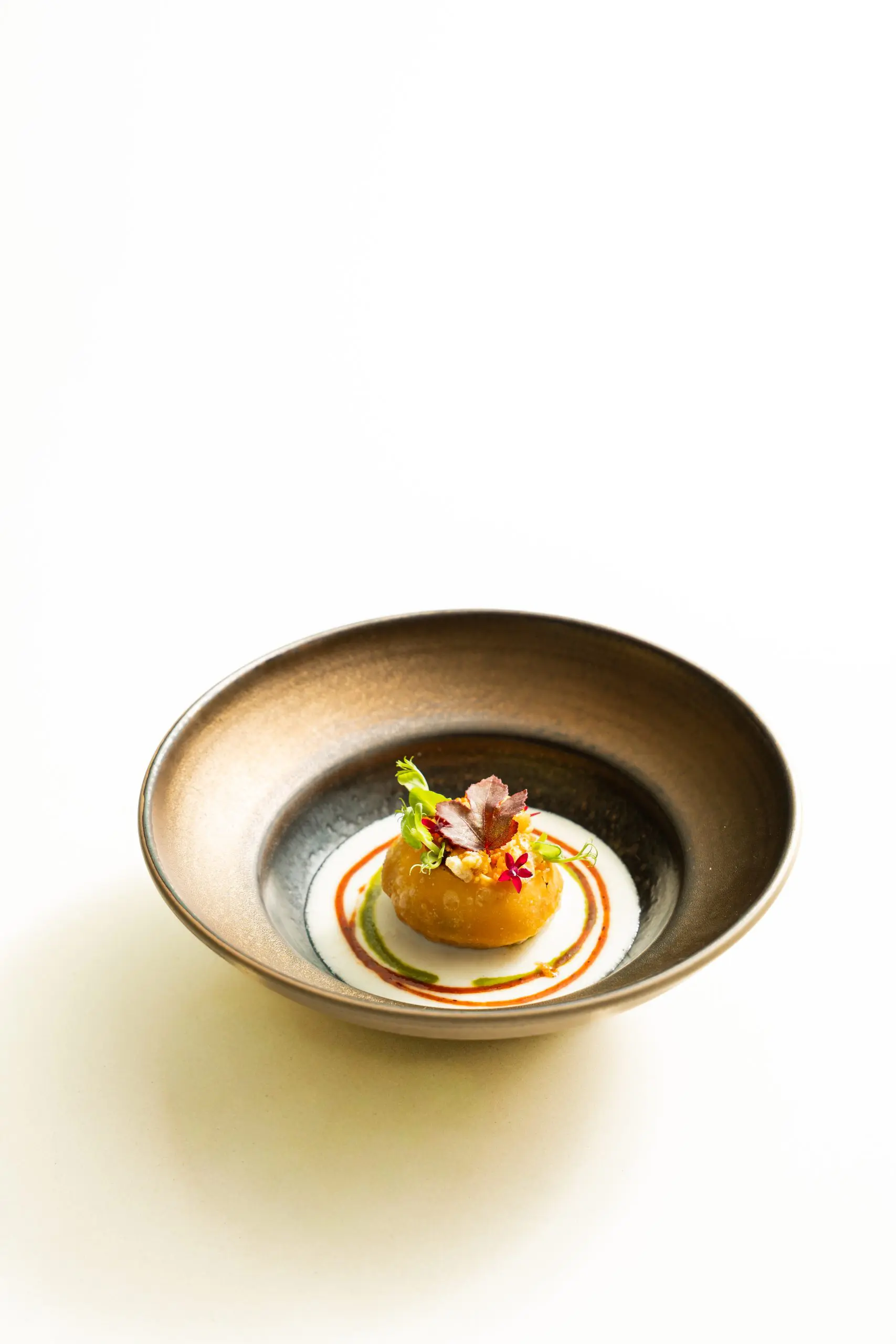
The Rawa Fried Yam brilliantly recreates the textural magic of rawa fried fish using purple yam, kokum glaze and coastal triphala chutney. It’s crisp outside, soft inside and deeply inspired from the coast. But the Balchao Taco completely steals the spotlight. Baby corn and cauliflower balchao layered over avocado hummus inside a garlic cilantro taco, served with an intensely comforting corn tortilla soup finished with chilli oil. If Avatara ever put this on an à la carte menu, I’d order two.
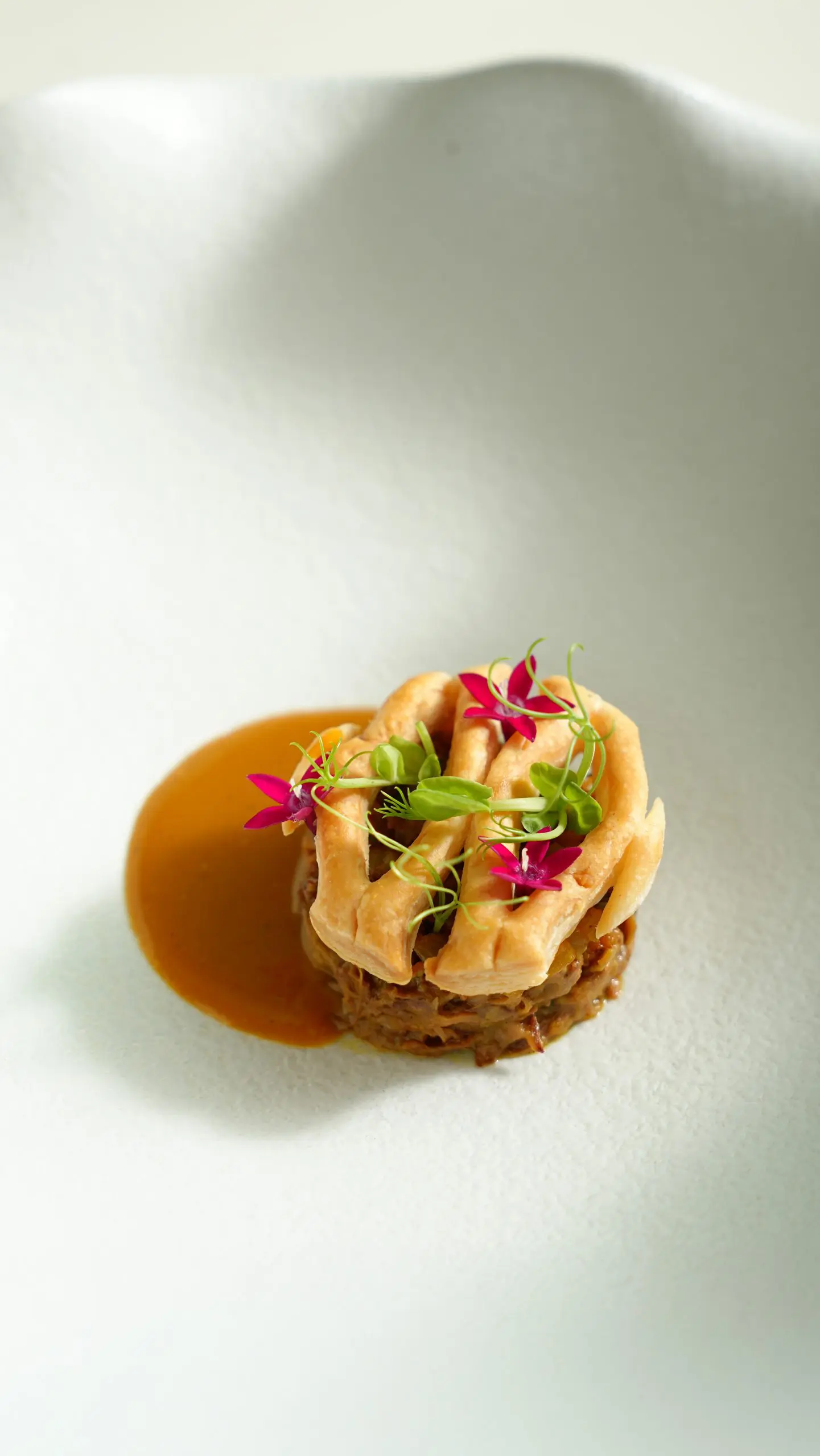
Lucknow’s soul food returns through Artichoke Kulcha, where shredded jackfruit steps into the role of nihari, paired with flaky kulcha and a deeply comforting gravy that proves indulgence has little to do with meat. The Mushroom Sukka follows with earthy oyster mushrooms and fiery Kolhapuri tambada rassa, delivering bold flavours that refuse to be forgotten. Just when you think you’ve had enough, a tropical Pani Puri appears, bursting with passionfruit sorbet, guava water and raspberry, resetting the palate before the final stretch.

The Railway Curry is pure comfort. Smoky aubergine bharta slow-cooked on an iron cask for hours, paired with tangy pickled turnips that one would mistake for pineapples and a beautifully soft banana elaichi bun that deserves its own fan club. A stellar main course that fills you delightfully.
The Khasi Curry Rice being the final main is perfectly placed towards the end of the set, ventures into Meghalaya with roasted black sesame, fermented akhuni and Japanese rice, introducing bold northeastern flavours while remaining wonderfully balanced. Desserts are every bit as memorable from your last visit.

But the Sheer Khurma is here to surprise you, it becomes a silky panna cotta layered with rose, cardamom espuma and date ice cream. The staples: Bal Mithai paired with sparkling buransh rosé and finally, Chocolate Paan delivers the perfect one-bite finale, impossible to resist or not to smile at. What makes Sutra remarkable isn’t that every dish is reinvented. It’s that every reinvention still remembers what you’d need, where it came from and which sensed to invigorate and tackle before the other.
We often applaud the final plate, but rarely the discipline, patience and quiet obsession it takes to create it. Sutra is a reminder that great restaurants aren’t built in the dining room. They’re built long before service begins, by chefs who choose excellence every single day.

The people behind the service and mastery we get to experience: the countless standing hours spent testing temperatures that change by a degree, perfecting recipes over months (sometimes years), refining a menu that tells a story in 15 acts, only to return the next day and do it all over again with the same precision and passion. Every garnish is placed with intent, every sauce poured with care, every course served as though it’s the first table of the evening.
Perhaps that’s what luxury really tastes like. Not truffle or caviar, but thousands of unseen hours, countless iterations, burnt fingertips, relentless precision and the unwavering passion to plate the same dish with as much care for the hundredth guest as the very first.

As I walked out, I kept thinking about something Chef Sanket Joshi had shared earlier in the evening: many of the memories that shaped Sutra began in his grandfather’s kitchen. By the end of the meal, I wasn’t even thinking about molecular gastronomy, expensive ingredients or clever techniques. I was thinking about childhood rituals, train journeys, festive desserts and recipes passed down through generations.That’s the magic of Avatara 4.0. It doesn’t just serve India’s greatest hits, rather reminds you why they became classics in the first place. I’ll say one last thing, restaurants usually have one chance to impress you. The second visit is where they earn your loyalty.
And I am pretty sure that days and months later, I will still find myself thinking about that cloud-like black rice idli, recommending the crackle of the ker sangri kachori to my father, asking my friends to go for the the smoky warmth of the railway curry, and the spice of tambada rassa, memorise the the buttery flake of the kulcha and that final burst of chocolate paan until the new menu 5.0 comes to life. Every texture almost as vivid as every flavour.
Maybe that’s the invisible thread Sutra is really talking about. Not just the one connecting India’s regions, but the one connecting memory and emotion to and through your taste buds. Truly a must try for every non vegetarian to know just how amazing veg food can be, and even more so for every vegetarian to relish!