A 64-hour escape to Gateway Bekal, Kerala
- Featured Travel & Hospitality
 Yashita Damani
- 15 minutes read

The two work trips before Kerala, Udaipur and Jaipur, had left me with a very particular kind of travel fatigue. Both were beautiful, super packed, informative and neither itinerary seemed to believe in the concept of leaving even a minute to breathe. So when Kerala presented me with another 7:30 am activity, I had already decided I was not going. I was going to trade the nature walk for sleep and, for once, let the itinerary happen without me.
I woke to rain tapping against the windows and immediately began negotiating with the morning. The bed was warm, the sky was grey, the coconut fronds outside were bending under the monsoon, and sleep was making a very persuasive argument. I texted the guide, hoping for an easy escape: “will we cancel if it rains?”
His reply arrived with none of the hesitation I was secretly hoping for: “The rain is the most beautiful thing here. There is no continuous rain.”
It was the sort of sentence that really takes you aback. Philosophical almost, an ode of sorts to life’s tumultuous and gnawing pains. Outside, the forest beyond the property had dissolved into a green haze, the rain silvering the glass, dew on the grass and turning everything around it deeper, more saturated. I had been looking at the weather as an inconvenience; he was looking at it as the landscape itself, hinting that nothing is forever, not even my perils back home or stressors I was carrying with.
Mr. Ratnakar Naidu his name was, and he reminded of something I had almost forgotten after two back to back work trips: there is no seeing a property without seeing the nature that surrounds it and the beauty God’s own country is known for. So, reluctantly at first, but I immediately got dressed and went to find out what he meant.
Saying ‘yes’ to the thing you almost talked yourself out of: A magical morning
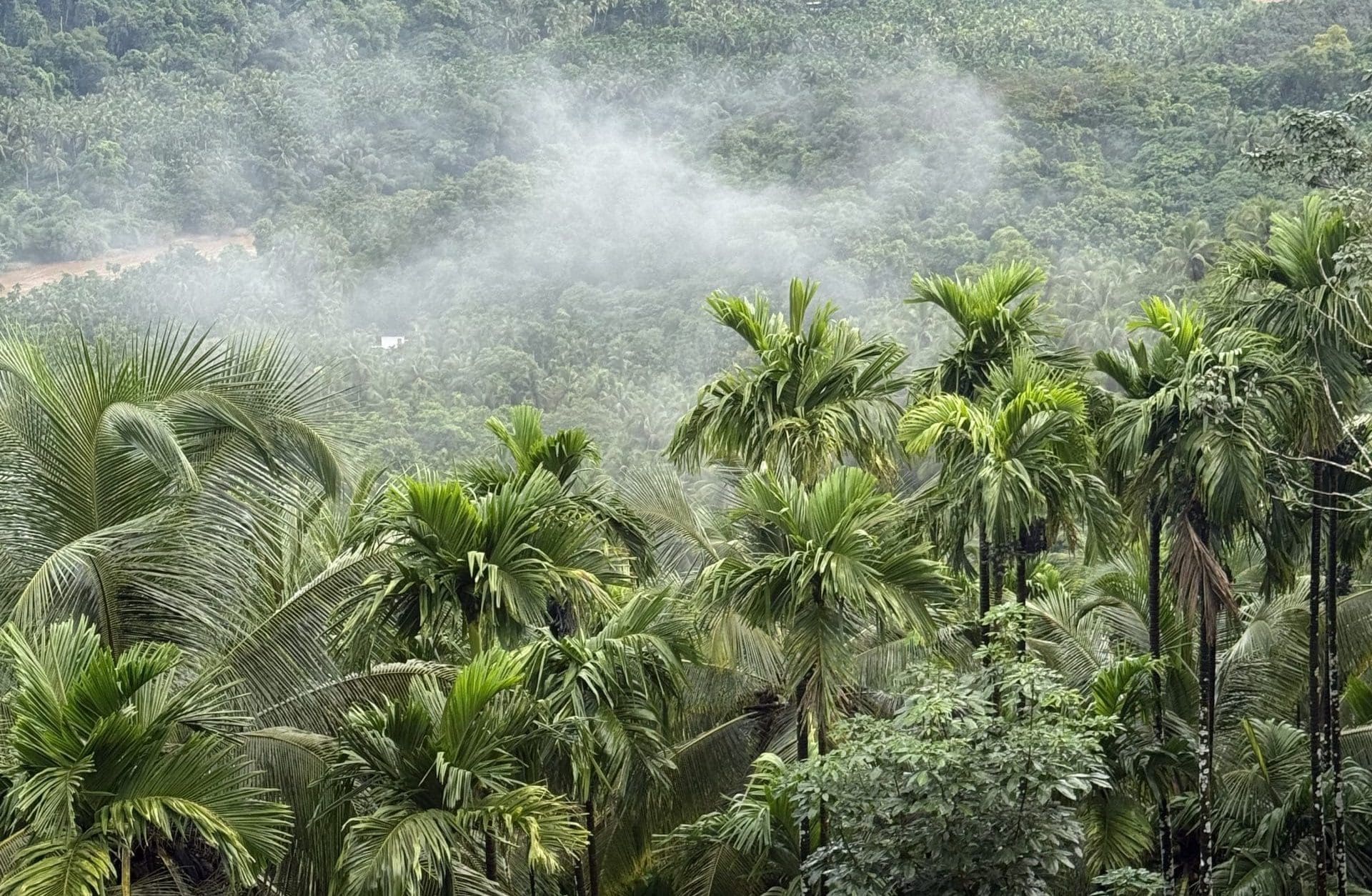
The Thonikadavu trail was approximately 1.5 hours from our property, and the morning looked completely different from the one I had imagined from my bed. The monsoon had turned the forest almost impossibly green. We began with umbrellas, but I quickly realised I was no octopus who could not vlog with one hand, write notes with another and carry a stick for support too. So I gave in to the rain, with water gathering on leaves and moss covering the darker edges of the trail. Whenever the clouds shifted, shafts of sunlight slipped through the canopy and caught the mist, turning patches of the forest floor gold.
We followed the trail through dense foliage, hiked, crossed waterfalls and eventually crawled into a man-made cave, getting progressively muddier and more drenched as we went. Along the way, the guide pointed out a remarkable water repellent leaf, where droplets sat perfectly on its surface instead of being absorbed. Talking about personification the other way around, I was porous. At the private waterfall, I gathered the guts to stand the almost deafening force of the falling water.
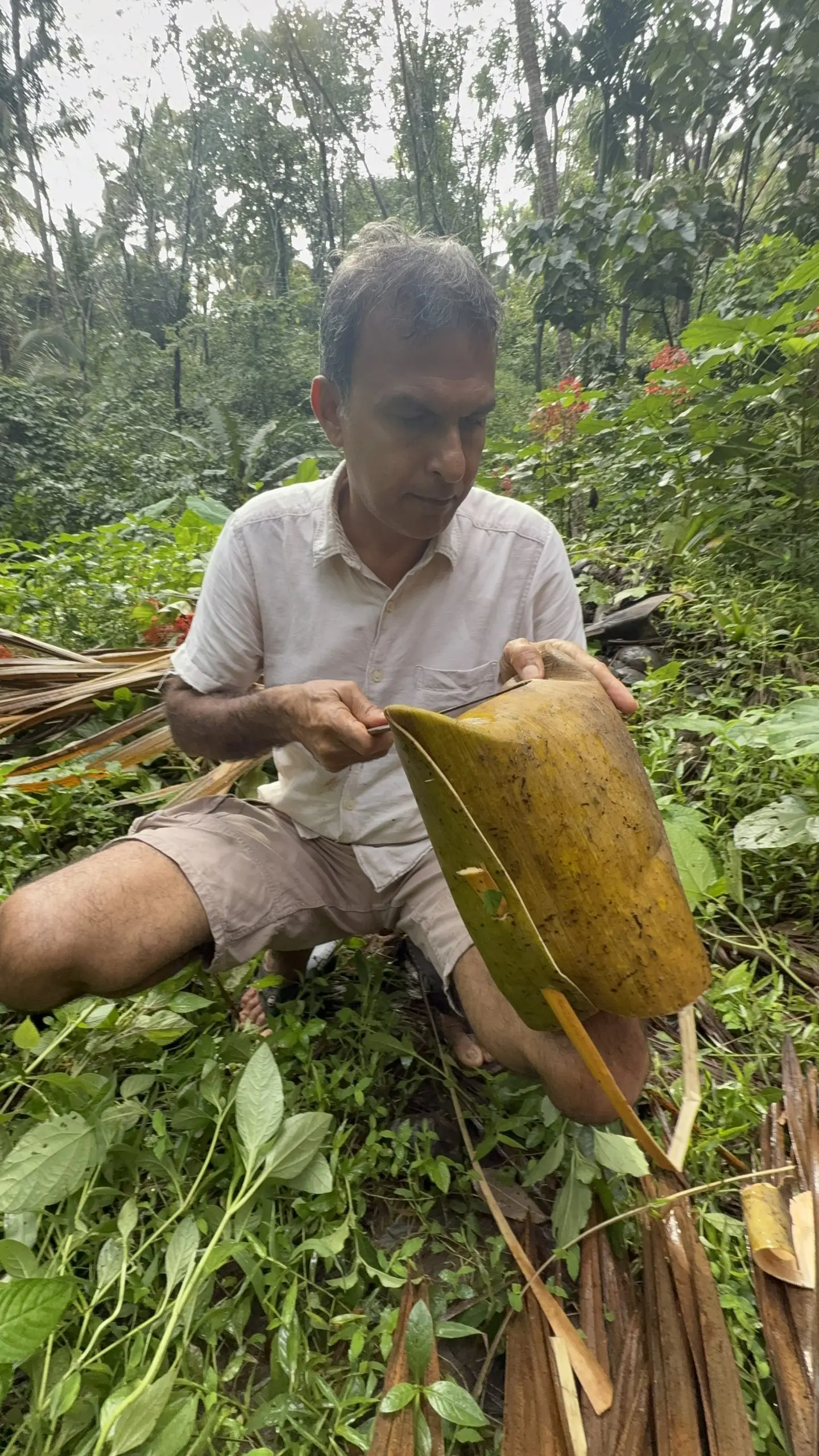
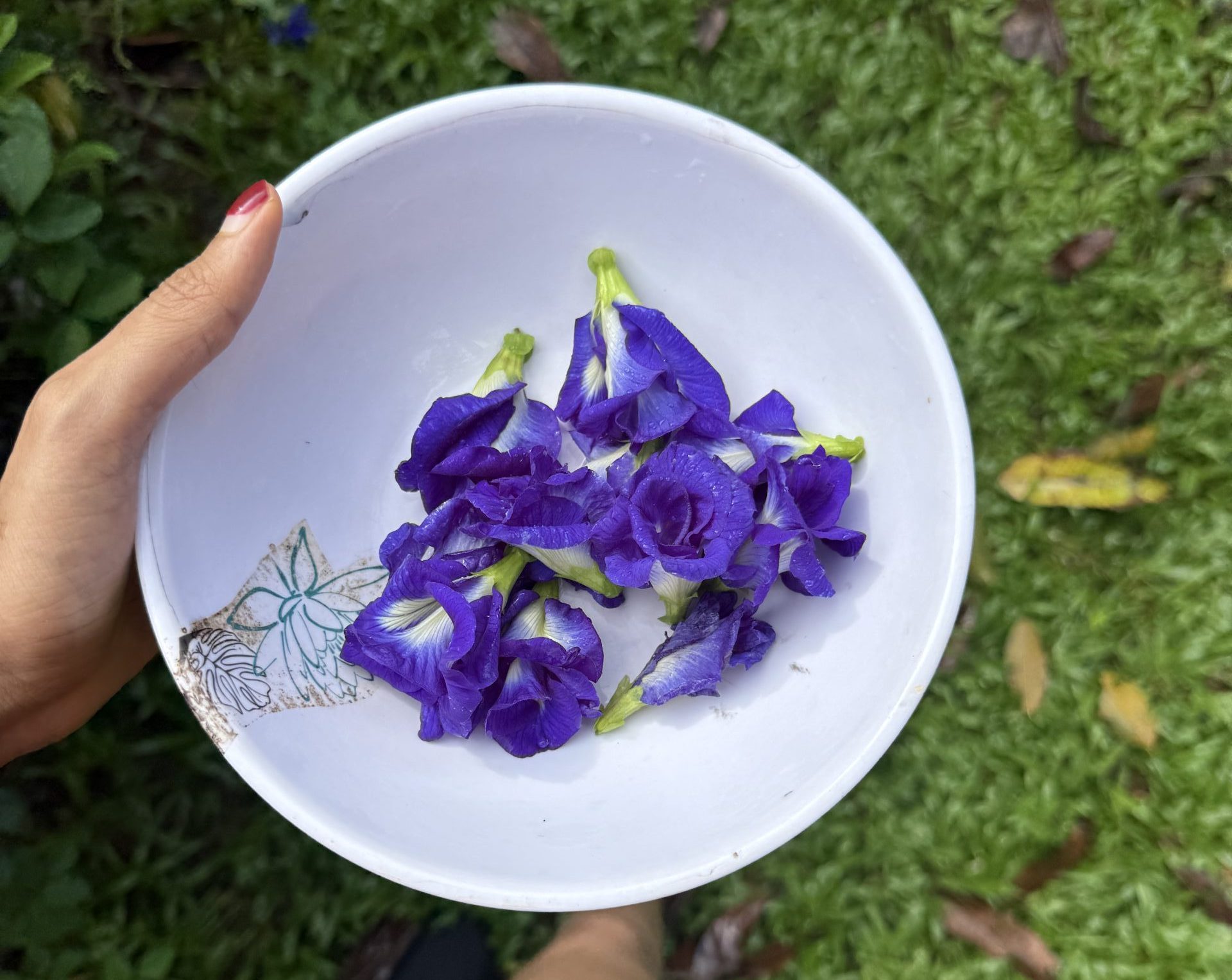
Our guide taught us about different herbs and natural shampoo plants, made us taste betel leaf, smell mint and cinnamon, and somehow turned few leaves into bags and hats with a a sharp knife he carried in his back pocket out of thin air! At the end came butterfly pea tea, intensely blue against the green around us, before a squeeze of lemon transformed it into purple. Later, an enormous butterfly appeared through the greenery and disappeared almost as quickly, although I managed to capture it in slow motion with Mr. Naidu’s help.
The experience was made up of these tiny observations rather than one grand spectacle. The forest did not need to perform for us. You simply had to pay attention to your trek leader. After a morning spent inside the monsoon, it felt like a particularly appropriate little piece of magic.
The beauty of Bekal
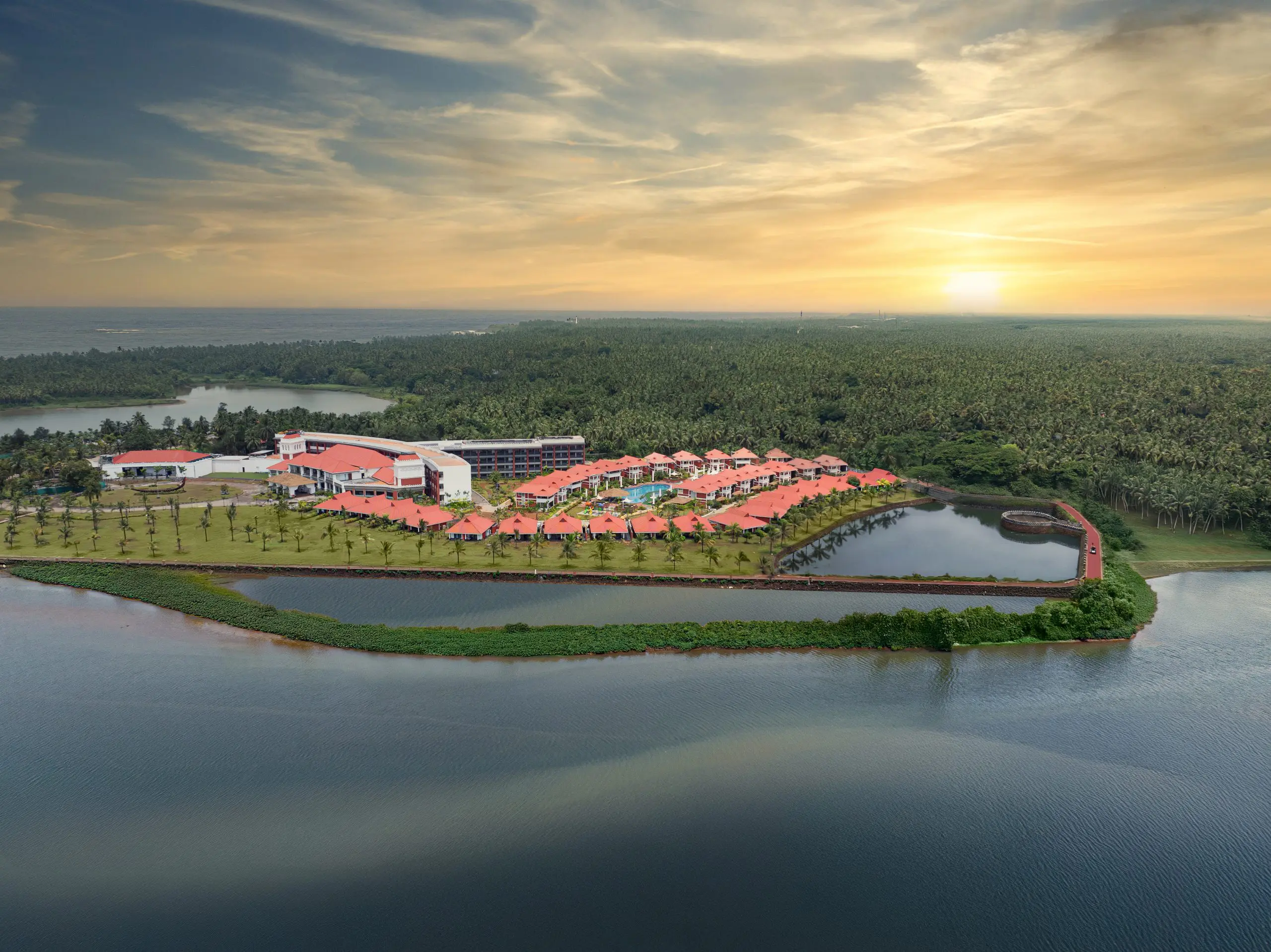
Everyone has a Kerala itinerary. Munnar for the mountains, Wayanad for the wilderness, Kochi for the culture. But then there’s Bekal, where Kerala feels a little more elemental, a little less touristy. We were hosted at the Gateway Bekal, surrounded by coconut groves, backwaters and a private beach, and what I loved most was how effortlessly the property brings the destination to you, tucked away in Kasaragod in the north.
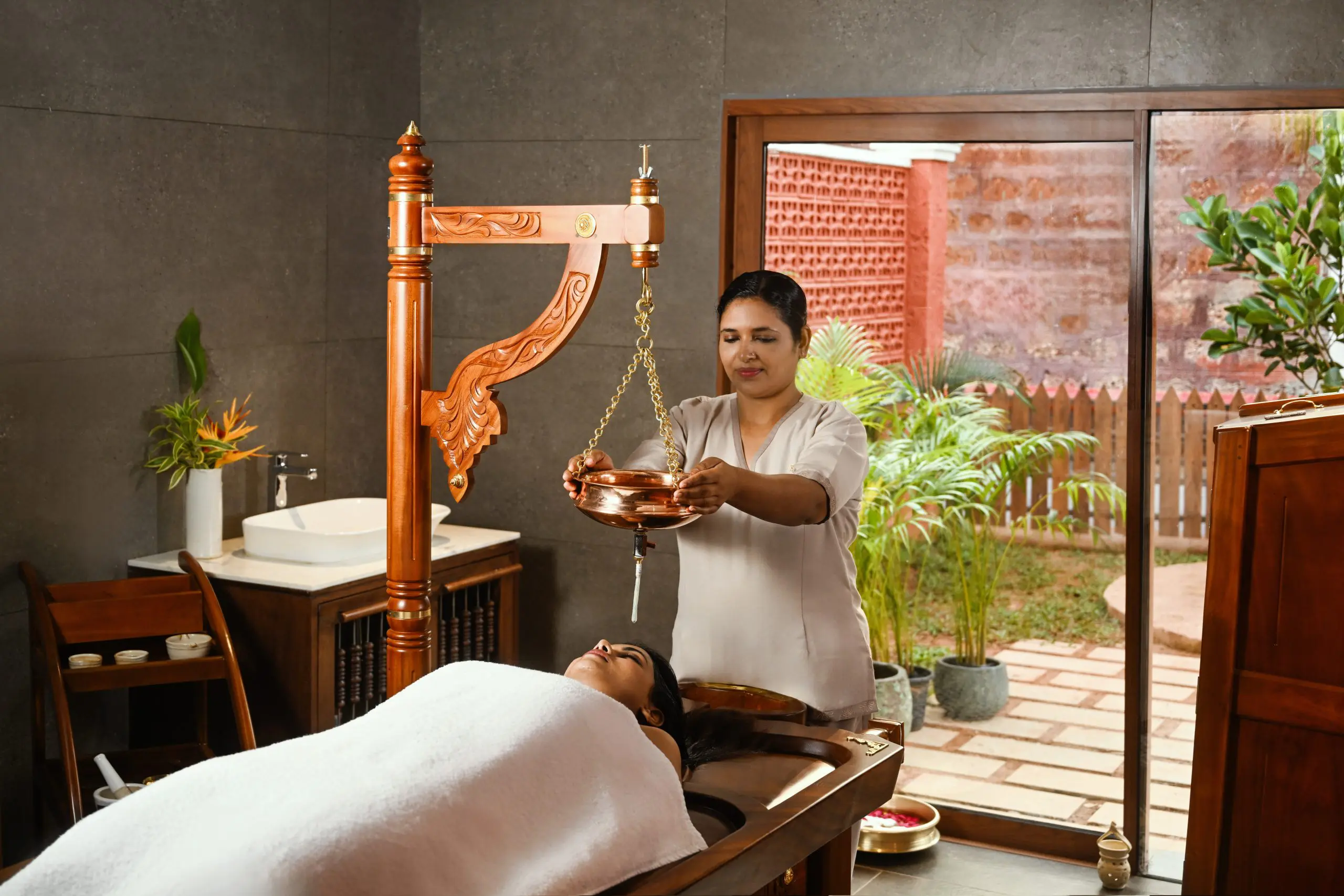
The difference from the southern side is felt almost immediately. There are coconut trees until the eye loses count, less commercial, more local and Gateway Bekal sits comfortably within that setting, spread across 30 acres with the backwaters on one side and a private beach on the other. What appealed to me was not simply the scale of the property, but the ease with which it introduces you to the destination. The stay is built around the idea that you should not have to work too hard to experience where you are. There is a boat when you want the backwaters, a guide when you want the forest, artisans when you want craft, Ayurveda when you want restoration and enough food in between to make the concept of restraint fairly theoretical.
Hospitality begins with noticing
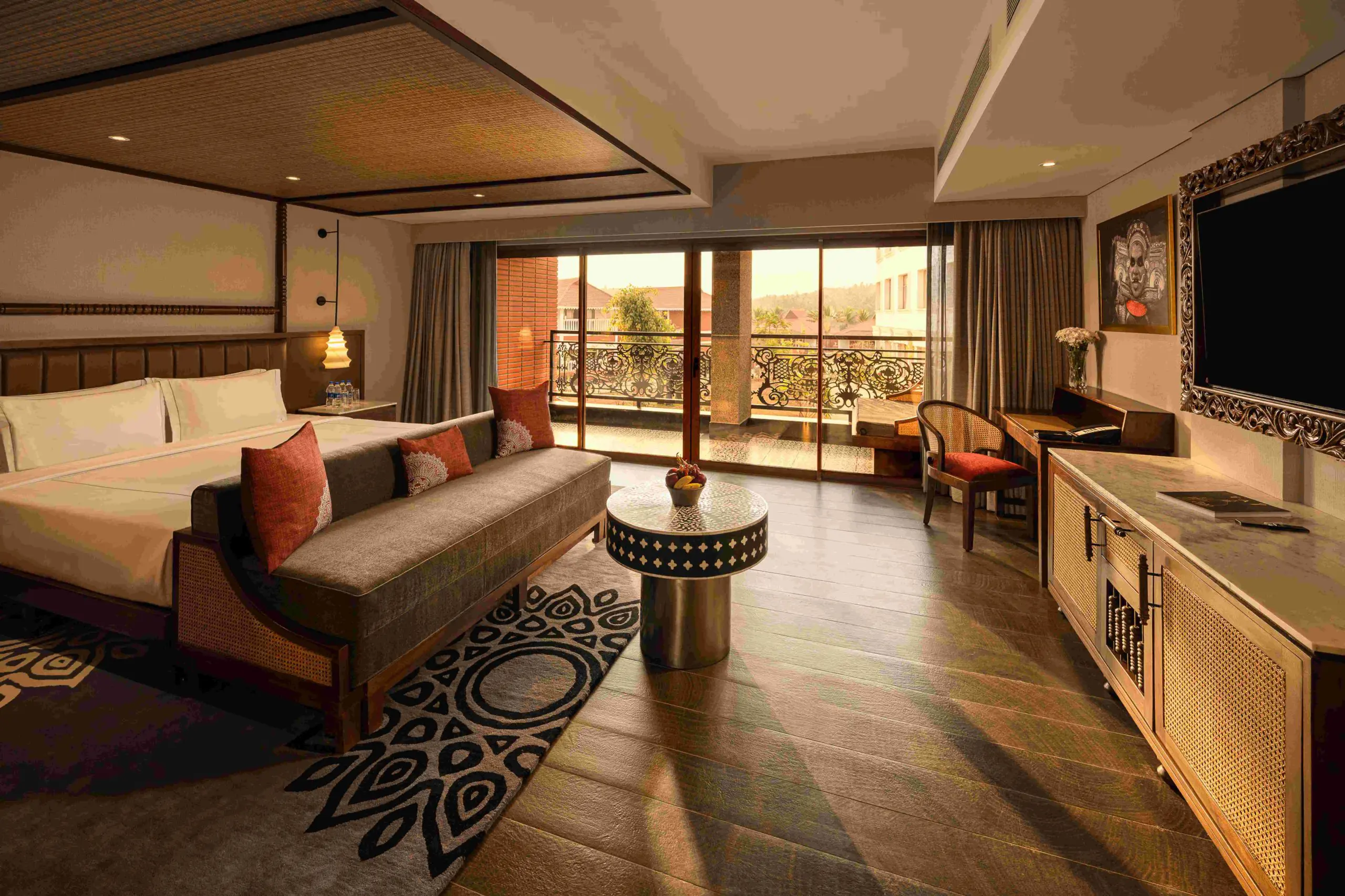
I had barely arrived at the front desk when one of the first small details of the stay made more of an impression on me than any grand welcome could have. The woman checking me in noticed that I was dealing with cramps, told me to go up to my room and complete the formalities later, and then sent a hot water bag upstairs.
It was such a simple gesture, but perhaps that is why it stayed with me. Luxury hospitality is often discussed through anticipation, personalisation and elaborate service, but sometimes it is simply about noticing that someone is uncomfortable and doing something about it before they ask.
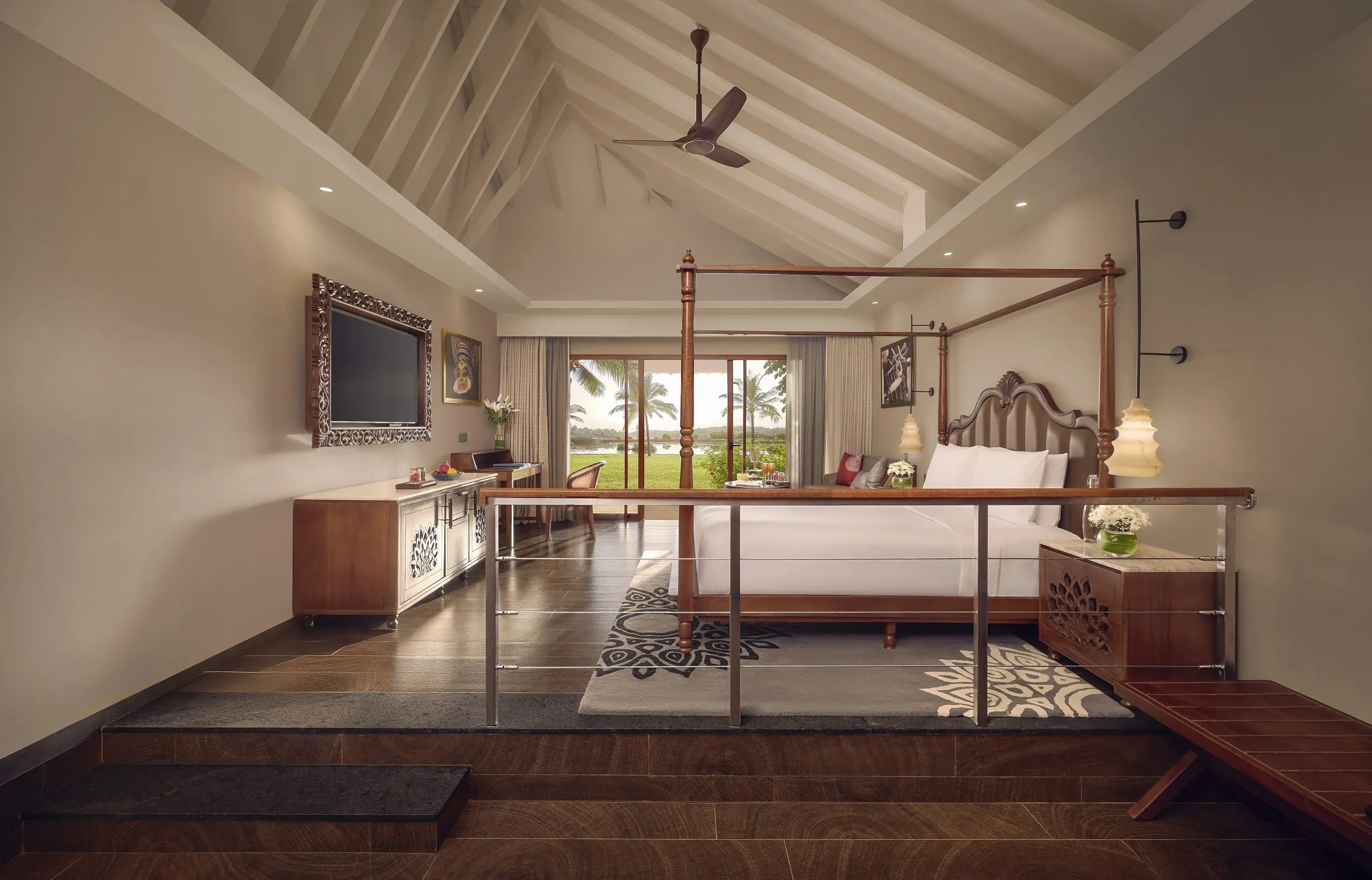
The property itself carries that same attention to detail. Teak, woven textiles, murals, carved wood and references to Theyyam and Yakshagana bring North Kerala into the interiors without making the experience feel overly staged. I found myself noticing things I had not expected to notice at all, particularly the fabric of the towels and table napkins, which felt unusually good against the skin. A very niche hotel obsession, but a real one.
The Onam feast
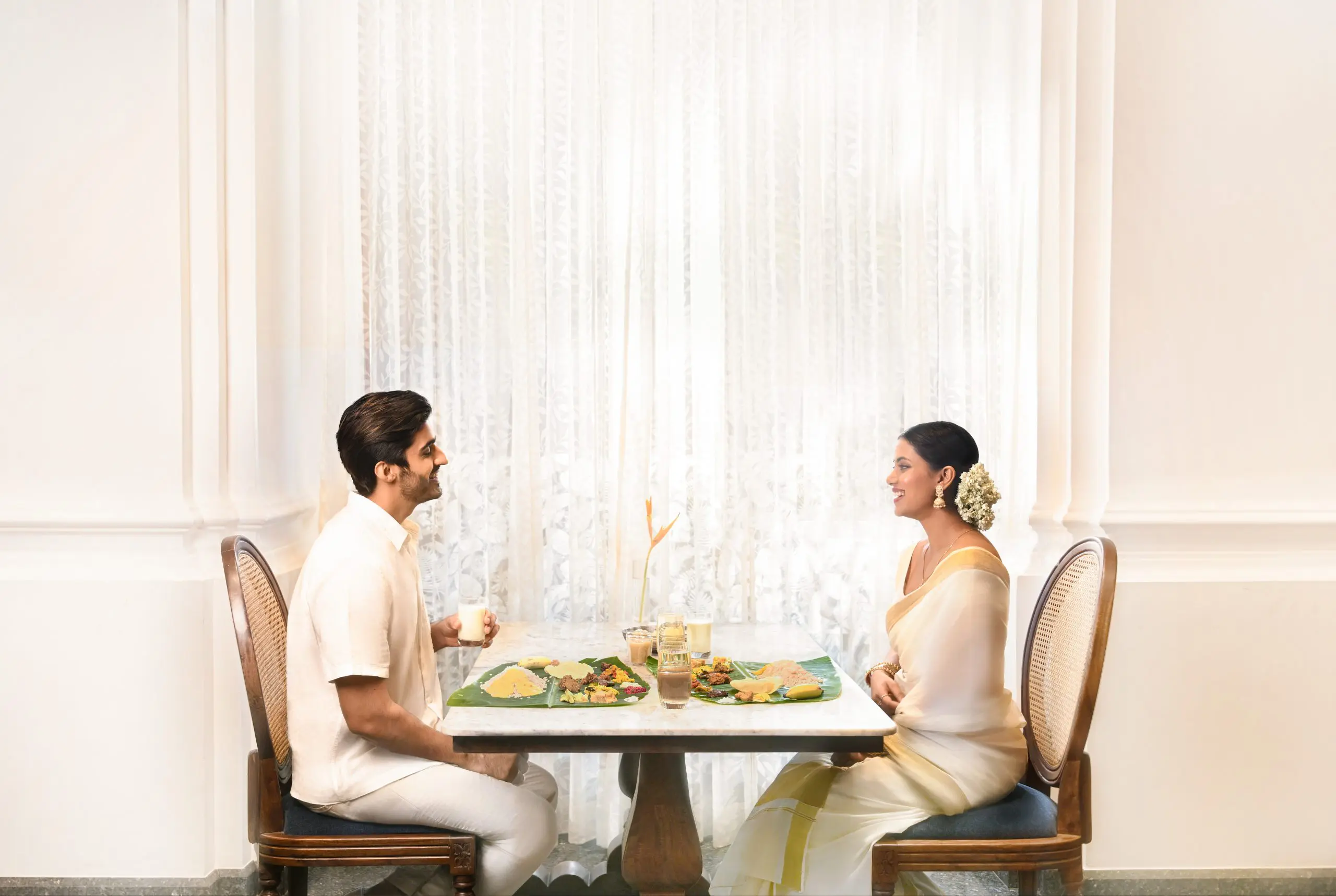
The first proper introduction to the region came at lunch, in the form of an Onam Sadhya. Served on a banana leaf, the traditional vegetarian feast arrived as a procession of thoran, avial, olan, erissery, kootu curry, parippu, sambar, rasam, pickles, pappadam and payasam.
What makes a Sadhya fascinating is not simply the number of dishes but the order and balance of them. Every preparation occupies its own place on the leaf, bringing together sour, sweet, salty, spicy, crisp and soft before the meal eventually arrives at rice, curries and dessert. It is abundance with a certain discipline to it, and an expression of Kerala’s hospitality that feels inseparable from the occasion it traditionally accompanies. It also made a rather convincing case for the depth of Kerala’s vegetarian cuisine.
Outside the state, Kerala is often spoken about through seafood, but a Sadhya is an entirely different universe of coconut, vegetables, lentils, spices and seasonal produce. By the end, I had eaten enough to make the prospect of a property tour feel mildly offensive.
Your evening commute is a houseboat
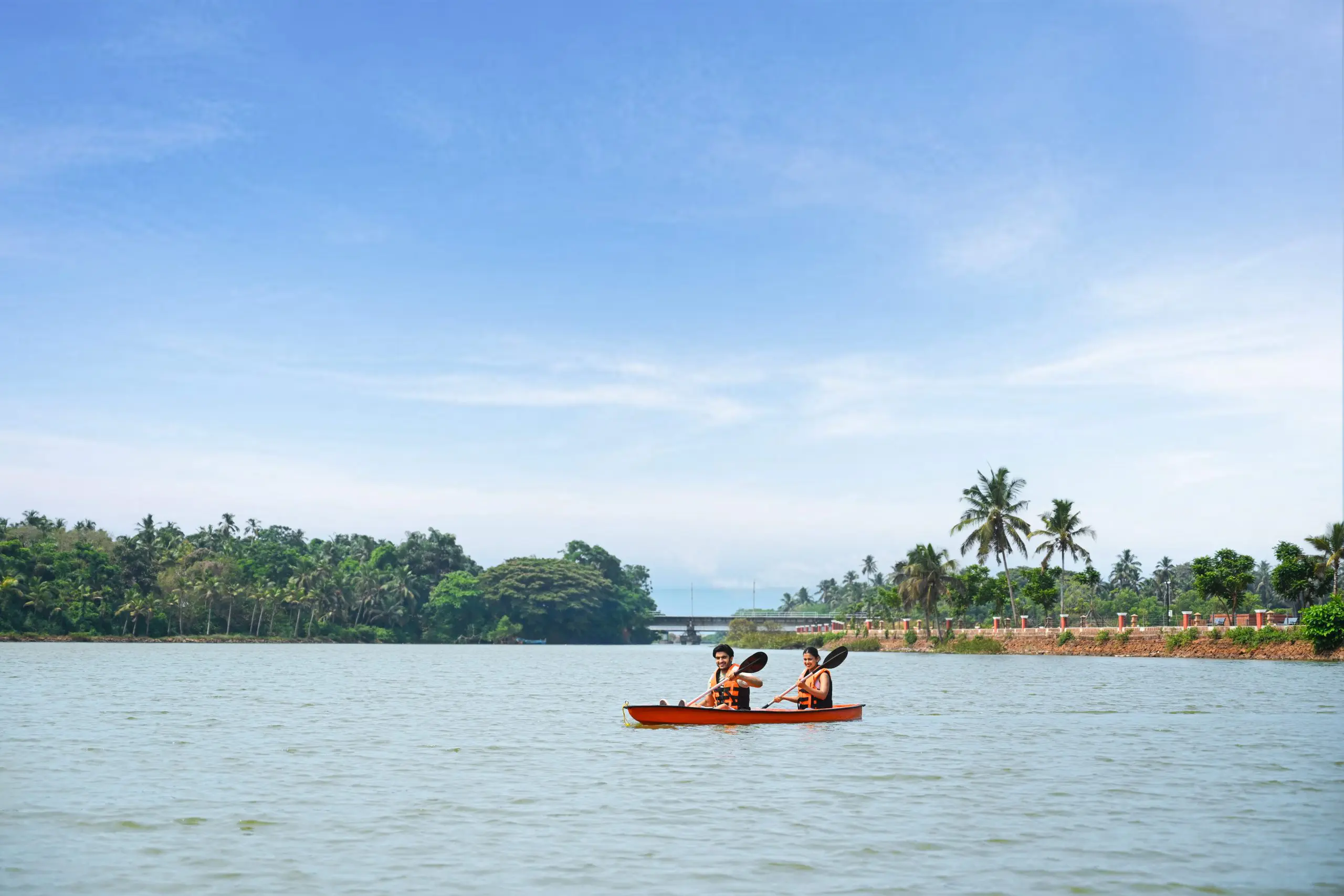
By late afternoon, the backwaters became the next part of the itinerary (again around 2 hours from the property) The boat moved slowly through the water as coconut trees dissolved into silhouettes and the last light stretched across the surface. Kerala’s backwaters are made up of an intricate network of lakes, lagoons, canals and rivers that have historically been part of everyday life and transport, and from the boat the relationship between the water and the surrounding communities becomes much easier to understand.
There was nowhere to rush towards and nothing particularly urgent to photograph since we had plenty time but somehow that much stillness made me restless. Certainly not used to that much peace living in Bombay (for once, the landscape was doing all the work).
Chef’s special
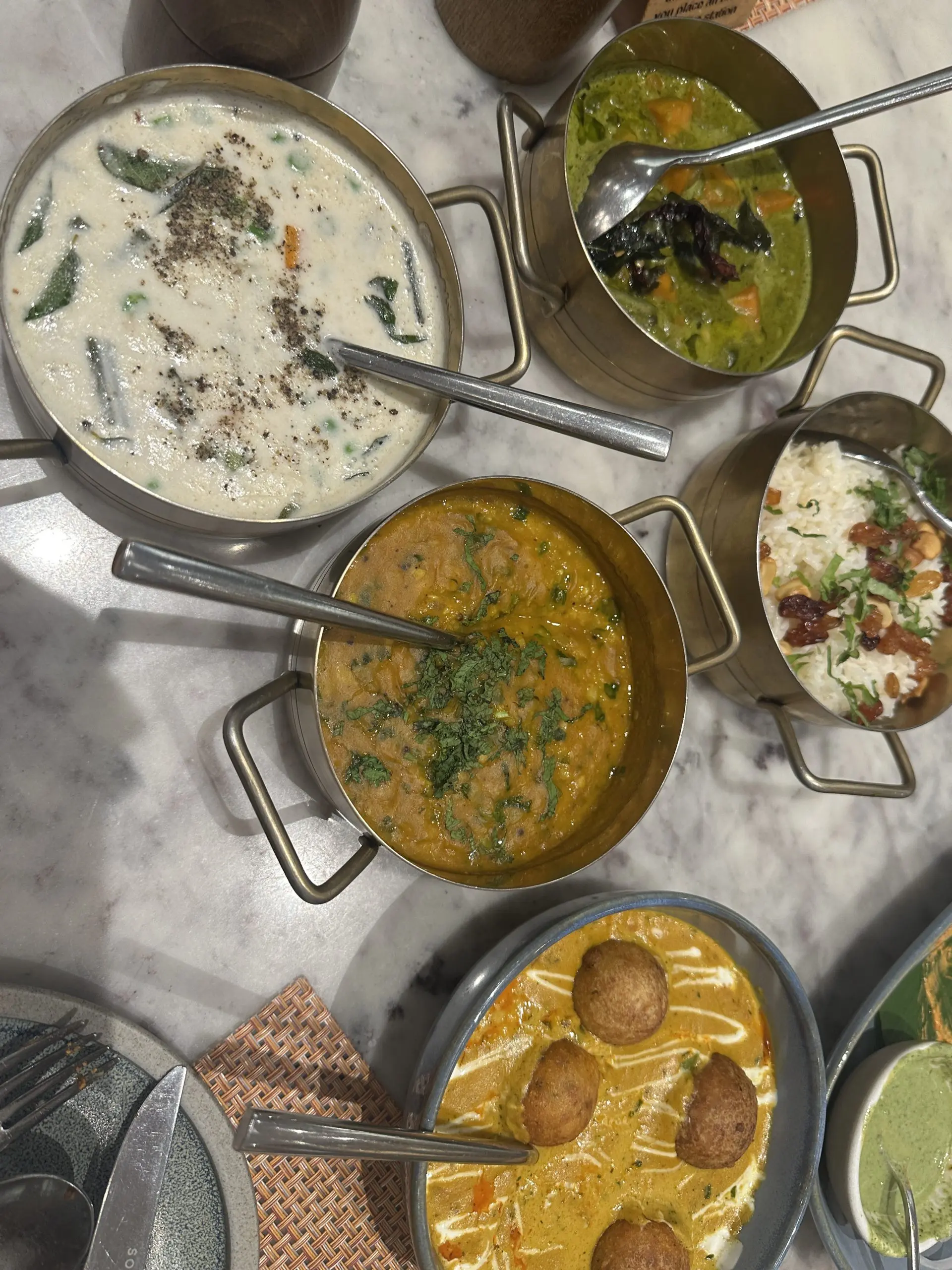
Dinner took a different route, moving through Indian flavours in a multi course menu that was ambitious enough to make me forget I had eaten a Sadhya only hours earlier. The opening course began with an amla and carrot mix pickle drawing on Marwadi, Delhiwala, Punjabi and Banarasi influences, followed by a fried papad bowl, green peas tikki and a paneer canapé. The mushroom pepper fry bao was an unexpected meeting of soft steamed bao and a South Indian inspired mushroom and pepper filling, earthy and warm against the lighter opening bites.
A quinoa, chickpea and cumin salad followed, freshened by roasted cumin, before rasam brought the meal back towards the South with its tamarind, spice and aromatic herbs. Then came the mains: vegetable stew with appam, paneer kofta, Nilgiri vegetable qorma, cheera masala, dal fry and ghee rice. The appam was the standout for me, delicate and lacy at the edges, soft in the centre and perfect with the coconut based vegetable stew. It was the kind of Kerala classic that needs no reinvention because it already knows exactly what it is doing.
The final course was a smooth chef’s pudding, faintly reminding me of a jiggly panacotta.
At 4:30 pm, hi tea arrived alongside Mohiniyattam. The classical dance tradition, whose name translates roughly to the dance of the enchantress, is characterised by graceful, flowing movements, and after a morning of trekking and an afternoon of heritage, it felt like the perfect shift in rhythm. Tea, conversation and dance replaced the day’s earlier movement through forests and fort walls. The performance was not simply an evening show. It became another way of understanding Kerala through its gestures, music and visual language.
The Spa
Kerala’s relationship with Ayurveda is deeply rooted, and the monsoon has traditionally been regarded as an important season for restorative therapies. At Gateway Bekal, that philosophy comes through seasonal wellness experiences including Karkidakam Charya, connecting the rituals of Ayurveda with the rhythm of the season. I tried the potli treatment expecting something soothing and languid. (It was not).
Two therapists worked together, making the treatment considerably more rigorous than many massages I have experienced. The warmth and pressure were rhythmic and restorative, but there was very little of the “float away into another dimension” quality I had expected from a spa treatment. Outside, the monsoon continued doing its own work. The landscape was greener, the air heavier with moisture and the trees seemed completely renewed. Inside, I was attempting the same.!
Two nights, one houseboat, a fort, a beach, waterfalls, a cave, a giant butterfly, blue tea., a Sadhya, appam and vegetable stew, Mohiniyattam, Ayurveda (and enough coconut to make it the state’s unofficial spice). But what stayed with me was not really the list. It was the little things: the front desk woman who noticed I was uncomfortable and sent a hot water bag. The guide who convinced me that rain was not a reason to cancel.
The first golden beam slipping through the forest canopy, water gathering perfectly on a leaf. A butterfly appearing between the trees, blue tea turning purple. The backwaters, a banana leaf slowly disappearing beneath a Sadhya. There is a version of luxury travel that is increasingly obsessed with exclusivity, excess and the idea of having access to something nobody else can have. Bekal reminded me of another kind of luxury. The luxury of attention. Of being cared for. Maybe that is what North Kerala does differently. It does not ask you to see more, it asks you to look closer and try to seek outside your comfort zone for experiences you can attain once if you push yourself.
You may also read: In conversation with Mr. Pranav Trehan, Founder & CEO, Aufside Hospitality LLP