“The future of luxury is relevance”: Abhishek Gandhi on building AYC
- Featured Lifestyle
 Yashita Damani
- 9 minutes read

“Community does what advertising cannot. It creates identity.” At 19, Abhishek Gandhi was not looking to create another event. He was looking to create a world. Five years later, All You Can, or AYC, has emerged as one of India’s most compelling culture-led platforms, bringing fashion, food, music, fitness, beauty and community into a singular, highly considered universe.
For Gandhi, the opportunity was never simply about scale. It was about connection. In an era where consumers are becoming digitally saturated and deeply attuned to authenticity, AYC has become a space where discovery feels personal, homegrown brands feel aspirational, and experiences carry the emotional resonance that conventional marketing often cannot.
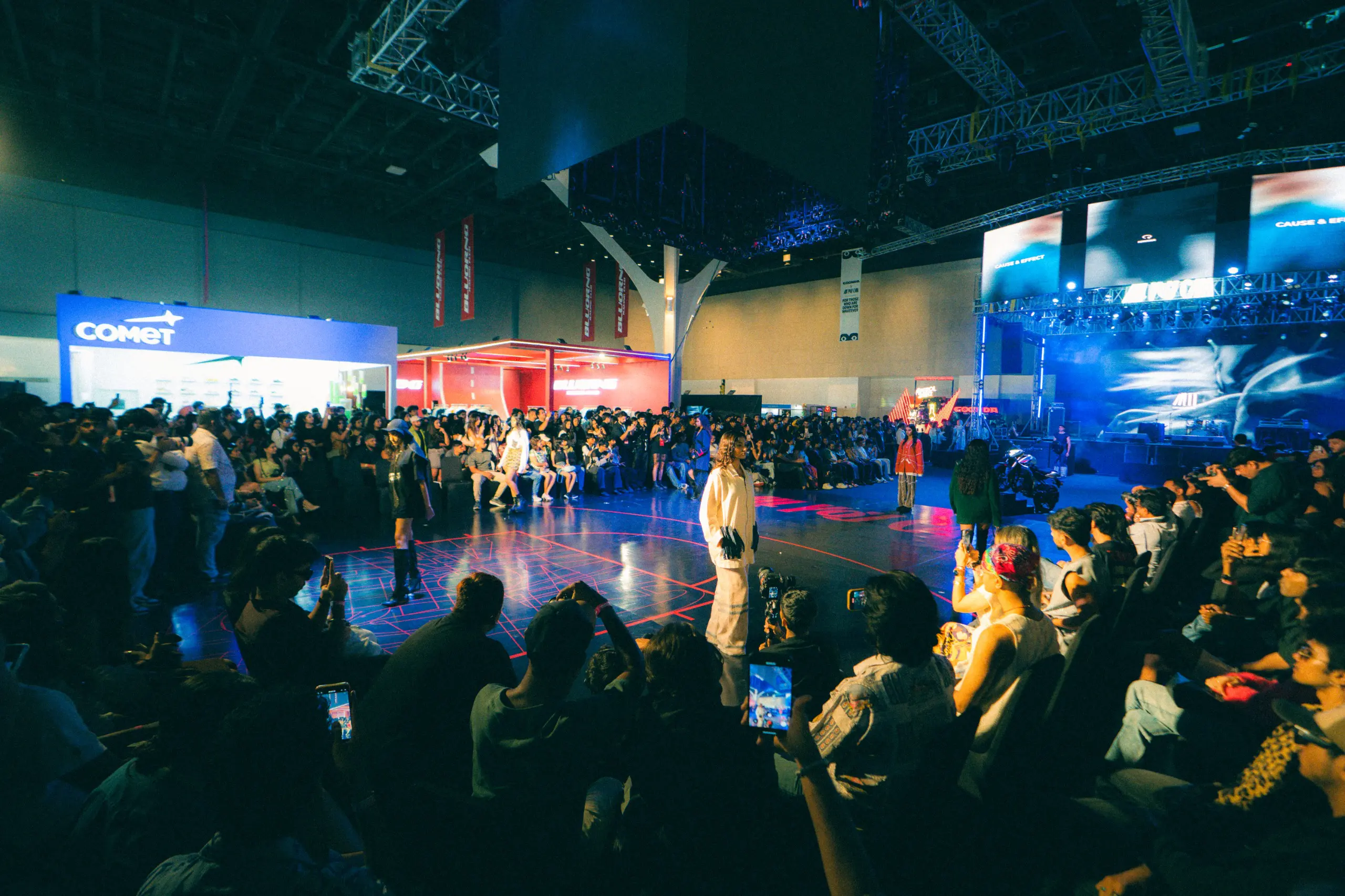
As AYC prepares for its expansive 65,000 sq. ft. edition at Jio World Convention Centre, LuxeBook speaks to Gandhi about the evolution of India’s young consumer, the power of community, and why the future of luxury lies in relevance, detail and cultural instinct.
LuxeBook: You launched AYC at 19. What gap did you see in India’s cultural landscape that others were not paying attention to?
Abhishek Gandhi: India had incredible creative energy. There were designers, musicians, chefs and communities doing exceptional work, but there was no single space where all of it could exist together. Everything was siloed. Fashion had its own circuit, music had its own, food was somewhere else, and fitness existed in a completely separate world.
Young people were building culture in parallel tracks that rarely crossed. I wanted to create an intersection rather than just another event. AYC was always imagined as a place where different interests, aesthetics and communities could meet naturally.

LuxeBook: AYC has evolved from an event into a community-driven platform. Why has community become such a powerful growth engine for brands today?
Abhishek Gandhi: People have stopped trusting the broadcast. A brand can spend crores on a campaign and still not make someone feel as though they belong somewhere. Community does what advertising cannot. It creates identity.
When someone says, “I go to AYC,” they are not simply describing an outing. They are describing a part of who they are. That kind of loyalty compounds in ways that impressions never will.

LuxeBook: What does five years of AYC reveal about how India’s young consumers are spending, socialising and discovering brands?
Abhishek Gandhi: People discover through people, not platforms. They spend on things they can feel good about. They socialise in ways that feel worth showing up for, not merely worth posting.
The shift I have watched over the last five years is from aspiration to authenticity. The question used to be, “Is this brand desirable?” Now it is, “Is this brand real?” Young India has a very sharp filter for what is genuine and what has been manufactured to look like it.
LuxeBook: Experiential retail is often described as the future of commerce. How are consumers interacting differently with brands in physical spaces today?
Abhishek Gandhi: If there is something to the product beyond just a logo or branding, if there is utility beyond what the product offers at face value, that is experiential retail.
People care about details much more now, from the tags on clothes to the way a room smells. Every touchpoint matters. The physical environment has become an extension of the brand’s point of view.

LuxeBook: Many of the brands showcased at AYC are homegrown. What distinguishes the most successful emerging brands from the rest?
Abhishek Gandhi: Consistency and clarity. You can see it in a brand’s output. The most successful brands know exactly who they are and communicate that consistently across everything they do.
LuxeBook: Fashion, fitness, beauty, food and entertainment increasingly overlap. Why are traditional category boundaries disappearing?
Abhishek Gandhi: Life does not have category boundaries, so why should brands? As the number of marketplaces increases every day and everything becomes accessible online at the tip of your fingers, those boundaries do not need to be so specific or rigid.
You can wear athleisure to a dinner date and nobody thinks twice about it. Categories are blending because people’s lifestyles are blending.
LuxeBook: What trends are you seeing among Gen Z and millennial consumers that luxury and lifestyle brands should be paying attention to?
Abhishek Gandhi: Gen Z cares about details. They care about intent. At the same time, they care deeply about the value a product brings. They prioritise ease and simplicity, and trends today are often driven more by preferences than status.
One thing luxury brands should focus on is collaborations. Look at what Audemars Piguet and Swatch did. It was a huge accessibility play. Collaborations create excitement, relevance and reach. That is something luxury brands should be paying much closer attention to.
LuxeBook: This year’s edition spans 65,000 sq. ft. at Jio World Convention Centre. What does that growth say about the appetite for culture-led experiences in India?
Abhishek Gandhi: It says the appetite was always there. India has always had hunger, but it does not have the hunger for the same thing over and over again.
It is the same concept as dal chawal. Who wants to eat the same thing all the time? People want more, but they also want different. They do not want more of the same thing. They want a little bit of everything.
A lot of today’s appetite is driven by curiosity and FOMO. People want to discover, explore and experience things they have not seen before.
LuxeBook: What are the biggest misconceptions brands still have about building communities?
Abhishek Gandhi: That it happens quickly. Building a community takes time and consistency. Everything around the community has to be likeable, from the experience to the communication to the people involved.
You cannot manufacture belonging overnight.
LuxeBook: Looking ahead, what does the next chapter of AYC look like, and where do you see India’s culture economy heading?
Abhishek Gandhi: AYC is going to go where people go and where people’s interests lie. More than being a trend follower, we are going to set the standard for what people consider a trend.
Homegrown brands were never considered cool in the way they are today, and I think five years of AYC has helped shift that perception. Going forward, AYC will continue expanding into wellness and other areas that focus more deeply on people.
All You Can is going to focus even more on the “you” side of things, the things people relate to, whether they are the people who work with us or the people who attend our events and experiences. In a way, All You Can is selfish for our audience. We create the things we genuinely want to see in the world, with the belief that if they are meaningful to us, they will eventually resonate with others too.
You may also read: The Youngest Grand Prix Winners in Formula 1 History