What’s next for South Asian art? Christie’s Damian Vesey on the market’s evolution

By: Indu Joshi
South Asian art is entering a new chapter, with increasingly discerning international collectors looking beyond the established modernist canon. Provenance, rarity, scholarship and art-historical significance are becoming as important as auction records, while artists once considered overlooked are attracting renewed attention.
Christie’s upcoming South Asian Modern + Contemporary Art sale in New York on 16 September 2026 reflects this changing landscape, bringing together works by established masters including M.F. Husain, F.N. Souza and Ganesh Pyne. We speak to Damian Vessey, International Specialist, South Asian Modern & Contemporary Art at Christie’s , about the evolution of the market, the artists attracting fresh attention, and what today’s collectors are looking for.
LuxeBook: The preview brings together exceptional works that will soon go under the hammer in Christie’s South Asian Modern + Contemporary Art sale. Beyond their individual significance, what does this selection reveal about the maturity of the South Asian art market today?
Damian Vessey: This preview showed only a small selection of highlights for our New York auction on the 16th of September. We see established masters whose markets continue to demonstrate remarkable depth, alongside works that speak to a growing appetite for the category.
The maturity of the market today is evident in the increasingly discerning nature of collectors. Buyers are engaging more deeply with provenance, exhibition history, individual quality and significance. There is also a greater appreciation for museum-quality works and for artists whose contributions are being re-evaluated within both regional and global contexts. That combination of scarcity, scholarship and global visibility is what is driving this sustained momentum. This creates a virtuous cycle: stronger prices attract better works, better works attract more global buyers, and that in turn strengthens London’s position as a key market centre.
This year alone, the market continued to perform extremely well, with record-breaking sales in March 2026, when Christie’s New York auction of South Asian Modern + Contemporary Art set the world record for any international auction in the category, with a total of $27,097,450, and in June 2026 with a single-owner auction in London, Sublime Shadows: South Asian Art from a Distinguished Collection, that was 100% sold, totalling £18,909,996, more than five times the estimate.
LuxeBook: Over the past decade, what do you think has been the single biggest shift in the way international collectors engage with South Asian art?
Damian Vessey: We are certainly seeing growing participation from institutional and museum-level buyers, as well as non-diaspora collectors, particularly for works of strong historical significance. There has always been a natural bias towards buyers from the region or its diaspora, which is consistent across many collecting categories.
However, with the expansion of international exhibitions and the increasing presence of Indian galleries at global art fairs, a much wider audience is now being exposed to South Asian art. That is translating into a broader and more diverse collector base.
We are no longer seeing interest driven by a narrow group of collectors – instead, there is a widening base of engaged buyers who are deeply informed about the historical and cultural importance of these works. The collector base today is markedly more informed and historically engaged than it was during the mid-2000s boom. We are seeing a growing number of collectors who have taken the time to study the field in depth, reading the available literature and revisiting historic auction catalogues that go back decades.
Much of this shift started and was accelerated during Covid, when many collectors devoted time to research and developed a deeper understanding of the subject. At the same time, access to digital tools such as price databases and online archives has made information far more transparent and readily available.
As a result, today’s collectors are more deliberate and long-term in their approach. They are highly selective, but when they encounter works of genuine quality, particularly those with strong provenance and art-historical significance, they are prepared to compete very strongly on price.
This is a very positive development for the market. It reflects a move away from short-term speculation towards more considered and sustainable collecting, grounded in knowledge and connoisseurship.
LuxeBook: Ganesh Pyne, M.F. Husain and F.N. Souza are among the artists highlighted in this presentation. What makes their work continue to command international attention, and are we seeing a reassessment of their place within the broader history of modernism?
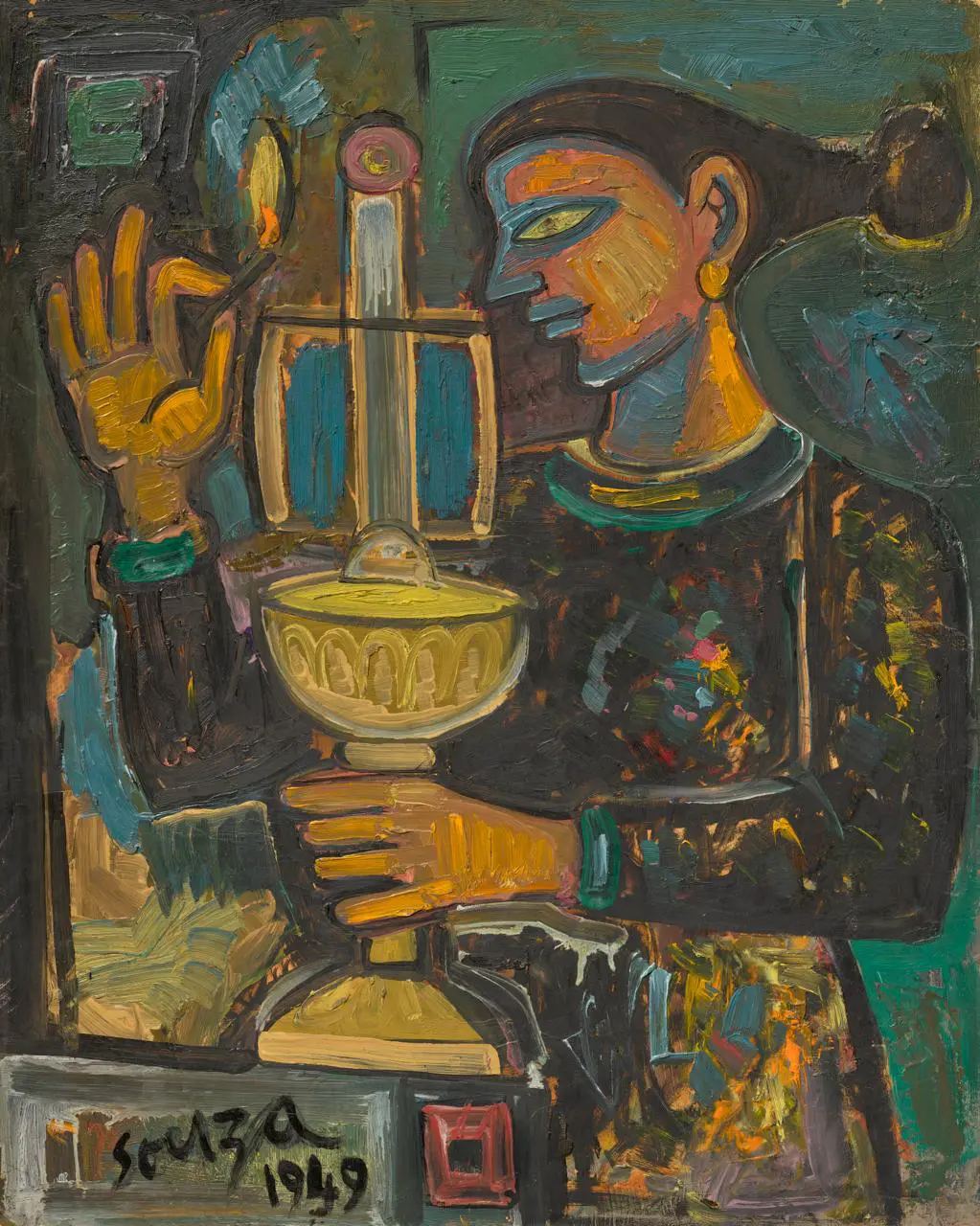
Damian Vessey: What continues to distinguish artists such as Ganesh Pyne, M.F. Husain and F.N. Souza is that their work transcends regional narratives and speaks directly to some of the defining artistic questions of the twentieth century: identity, modernity, myth, spirituality, social change and the human condition.
I would point out an important distinction between Husain and Souza on the one hand and Pyne on the other. Husain and Souza were founding members of the Progressive Artists’ Group, the revolutionary artist group that formed on the eve of Indian independence, united by a common goal of creating avant-garde art that was both outward-looking towards international modernism and inward-looking towards the rich visual culture of Indian art. They have long been recognised as two of the most prominent modern masters of Indian art and, between them, have been included in major international exhibitions at Tate Britain, the Barbican, Asia Society and the Venice Biennale. Both feature in Christie’s summer exhibition in London, The Meeting Ground: Scenes from the KNMA Collection. Their international market has long been established, regularly crossing $1 million USD. In fact, last year Christie’s broke the record for Husain and indeed the entirety of South Asian modern art with Husain’s Gram Yatra (The Volodarsky Husain), which sold for $13.75 million USD.
Ganesh Pyne is a wonderful example of a master who has, until very recently, been undervalued in the market. Rather paradoxically, Pyne has long been highly regarded as one of the greatest Bengali modernists of the twentieth century by connoisseurs and discerning collectors. However, unlike Husain and Souza, Pyne was far less prolific, especially when it comes to his coveted canvases, and this rarity creates a structural scarcity. Believe it or not, until this year, a Ganesh Pyne had never come close to $1 million USD at auction anywhere. The spectacular quality of the works Christie’s offered in March in New York and in June in London as part of Sublime Shadows: South Asian Art from a Distinguished Collection saw Pyne’s record price smashed three times, with his highest price now at $5.1 million USD (£3.8 million). This is further evidence that collectors are patient and, when a rare work of superlative quality and provenance comes up for sale, they will bid aggressively. Collectors are showing a willingness to move beyond the Progressives and the ‘usual suspects’, recognising quality. We have two exceptional works from the same collection by Pyne in our September 16th New York sale of South Asian Modern + Contemporary Art that are two of the finest works by the artist from the 1980s ever to come to the market.
Our London auction of Sublime Shadows: South Asian Art from a Distinguished Collection set 19 new records for South Asian artists, showing that buyers are expanding their focus to modernists who have been somewhat overlooked and present more attractive price points. This is very healthy for the long-term future of the category.
LuxeBook: Every curator has a favourite. If there is one work in this preview that you would encourage visitors to spend a little more time with, which would it be—and what might they discover if they look beyond the obvious?
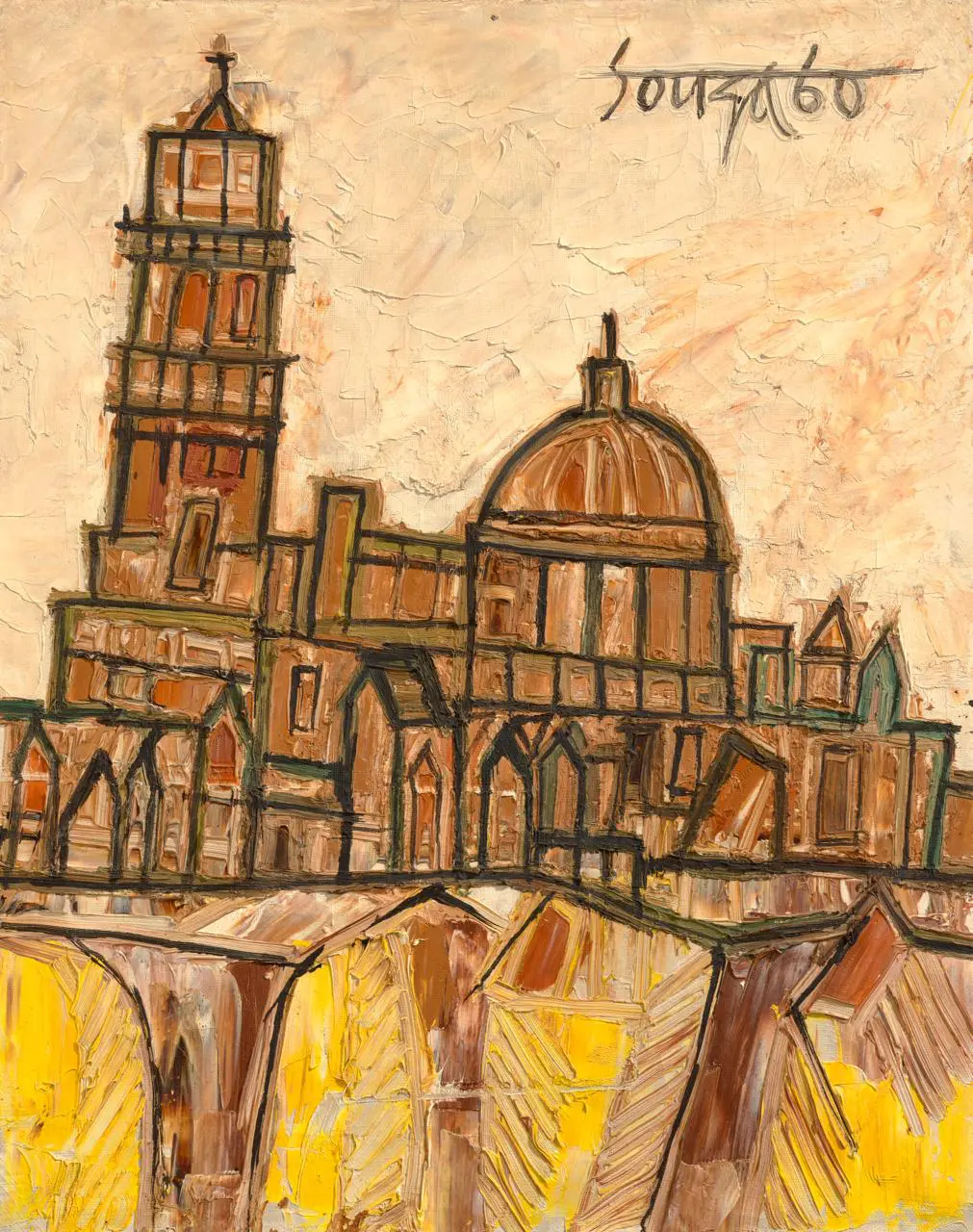
Damian Vessey: With family based in Kolkata, Ganesh Pyne is always a favourite artist of mine. However, we have a fantastic selection of paintings by F.N. Souza spanning the 40s through to the 80s. As a Londoner, Building in Trafalgar Square, 1955, is a masterpiece and close to home, only a stone’s throw away from Christie’s salerooms, but it is Rome (Church by Tiber) that, for me, is the jewel in the group. Painted in the 1960s during a six-month stint in Rome on a scholarship from the Italian government, Souza’s time in Rome greatly influenced his practice, both in his choice of subject and in his painting style. Rome is a city I have always loved; in fact, my mother lives there, and this sumptuous scene is a recognisable view of St. Peter’s Basilica across the Ponte Sant’Angelo in Vatican City. Souza characteristically distorts the architecture slightly to create this leaning tower against the Catholic architecture which informed so much of his oeuvre. Souza’s Rome series is very rare, and all the works have this joyous palette that sets them apart.
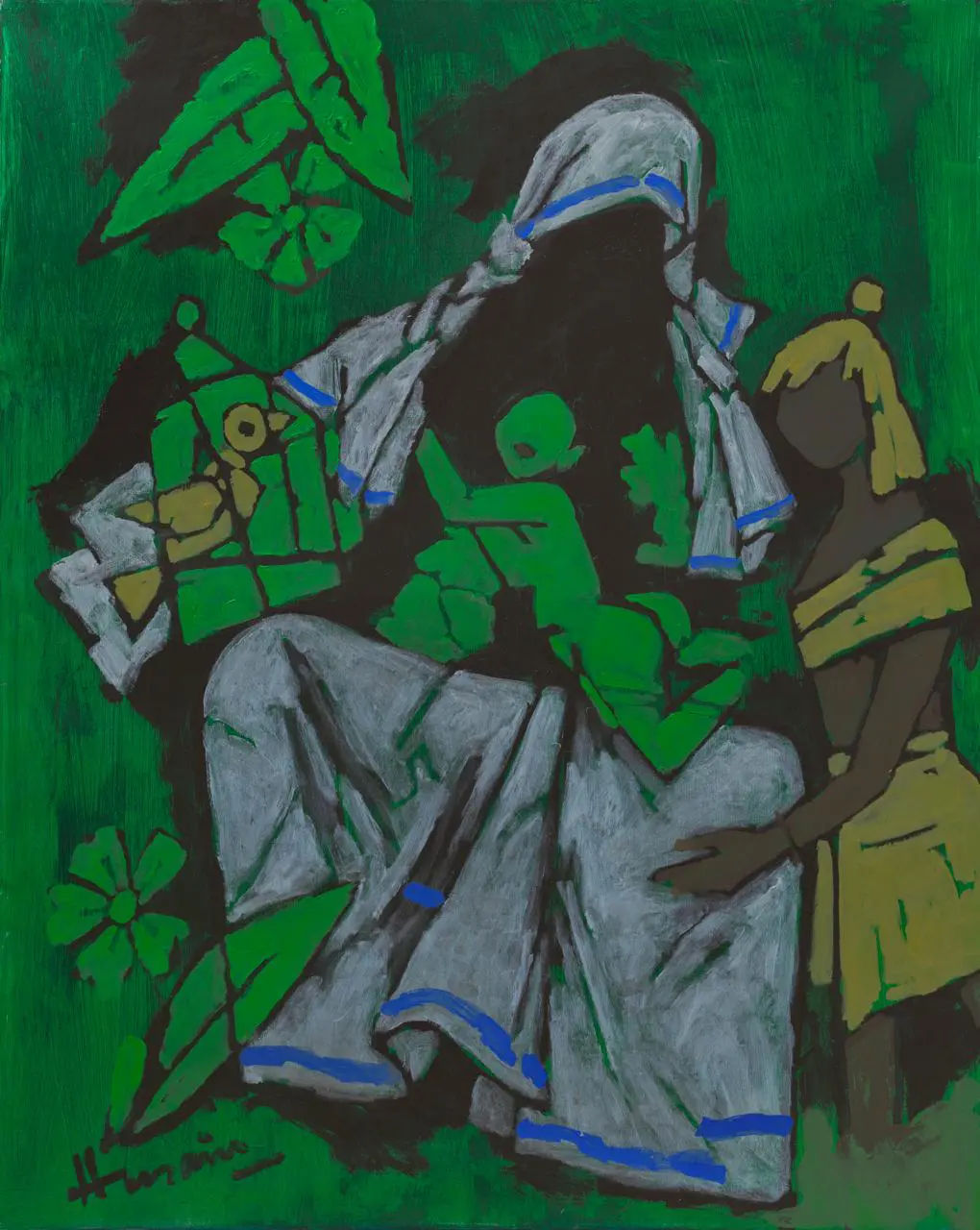
LuxeBook: As the category continues to evolve, where do you see the next chapter of South Asian art emerging? Are there artists, regions or practices that you believe deserve greater international attention?
Damian Vessey: This is something I feel passionate about, and this summer in London we have seen two moments that signal the vast potential here. Christie’s recent auction of Sublime Shadows: South Asian Art from a Distinguished Collection, with its emphasis on art from Bengal, showed that collectors are looking to widen their scope when it comes to modernism in particular. We have also seen second-generation moderns and postmodern artists such as Sudhir Patwardhan, Gulam Mohammed Sheikh and his wife, Nilima Sheikh, all see demand grow. I only predict this growing, and we will see more focus on artists from different cultural centres across the subcontinent.
The second moment this summer is the exhibition The Meeting Ground: Scenes from the KNMA Collection, a landmark non-selling exhibition at Christie’s, London, running until 21 August 2026. It is the first time Christie’s has dedicated its annual summer exhibition to a single South Asian institution. Curated into five scenes, each offers a different lens, bringing together works from the Kiran Nadar Museum of Art’s collection. With almost 180 works and featuring works by 67 artists from across India, Pakistan, Bangladesh and Sri Lanka, the exhibition explores the richness and complexity of South Asian art.
One of the most exciting aspects of this ambitious exhibition is that it presents the modern masters alongside indigenous, folk, contemporary, video and installation practices from across the subcontinent, presenting them to international audiences for the very first time. We had a Christie’s Lates evening around the exhibition that brought over 800 visitors. So hopefully the art is reaching new and wider audiences who can fall in love with art from the region.
LuxeBook: Beyond auction records, what qualities distinguish a truly important work of art? How should collectors weigh factors such as provenance, exhibition history, rarity and art-historical significance?
Damian Vessey: Beyond auction records, a truly important work of art is defined by its ability to represent a pivotal moment in an artist’s career, a broader cultural movement, or a significant development in art history. Market performance is certainly one indicator of importance, but it is often the consequence, rather than the cause, of a work’s significance.
Art-historical significance, provenance, exhibition history and rarity are all critical factors. The most desirable works are often those that collectors may only have one opportunity to acquire during their lifetime.
LuxeBook: Christie’s has achieved several landmark results for South Asian modern art in recent years. Do you see this as a lasting structural shift in the market, or is the momentum still centred around a relatively small group of blue-chip artists?
Damian Vessey: That combination of scarcity, scholarship and global visibility is what is driving this sustained momentum. This creates a virtuous cycle: stronger prices attract better works, better works attract more global buyers, and that in turn strengthens the market.
With international auctions in this category exceeding $29 million, as we saw in Christie’s March auction in New York, it is clear that the market is already operating on a global stage. This is also reflected institutionally, with strong representation from South Asia at platforms such as the Venice Biennale, through national pavilions and major curated exhibitions.
What will ultimately drive Indian modernists further into the international canon is this continued alignment between the market, institutions and curatorial focus. As visibility and scholarship deepen, so too will global recognition.
The Meeting Ground: Scenes from the KNMA Collection, a landmark non-selling exhibition at Christie’s King Street, London, is running until 21 August 2026. It is the first time Christie’s has dedicated its annual summer exhibition to a single South Asian institution.
Featuring works by 67 artists from across India, Pakistan, Bangladesh and Sri Lanka, the exhibition explores the richness and complexity of South Asian art and makes a broader art-historical argument: that South Asian modernism should be understood as part of a global story of twentieth-century and contemporary art.
LuxeBook: As someone who has spent years studying South Asian art, what continues to surprise or inspire you? Is there something about this field that even seasoned collectors often overlook?
Damian Vessey: Personally, having worked in my role at Christie’s for fifteen years now, what continues to inspire me is the joy and thrill of discovery. Sometimes it is almost a treasure hunt, chasing down clues and researching to track down important collections and artworks. Other times it is a call out of the blue with a request for a valuation. Those rare times when we unearth an undiscovered or rediscovered artwork are so exciting. As an auction house, we have to do an awful lot of primary research, and it is incredibly rewarding when we make these discoveries that affect the scholarship around an artist or movement and offer new insights into artists and their oeuvre we thought we knew well. For me, Gram Yatra (The Volodarsky Husain) was just such a moment and was thirteen years in the making. There is a unique excitement in being among the first people to see a significant work after it has been rediscovered or after remaining out of public view for decades. Those moments remind us that art history is never truly fixed.
LuxeBook: Many of these works have lived in private collections for decades before returning to the market. Is there a story of provenance or rediscovery in this sale that you find particularly fascinating?
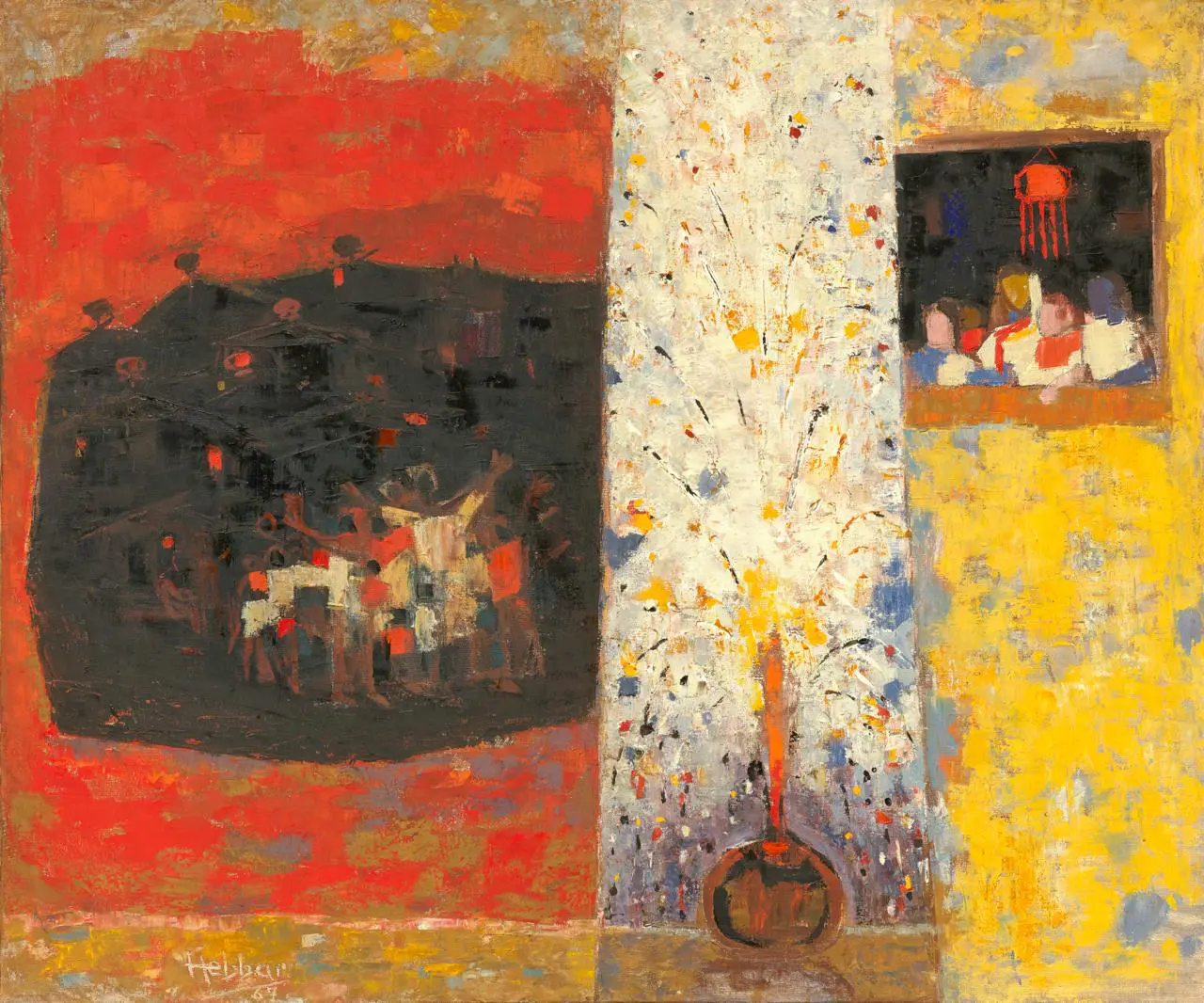
Damian Vessey: This auction has lots of these stories. This is only a small selection of the highlights for the September auction. However, I love that one canvas by K.K. Hebbar, Untitled (Diwali), 1967, actually comes from a private collection in Sydney. We discovered that Hebbar actually exhibited extensively in Australia in the 1960s, and this has been in the same collection ever since it was acquired.
LuxeBook: If you were introducing a first-time collector to South Asian modern and contemporary art today, which artists, movements or themes would you encourage them to explore first and why?
Damian Vessey: I would encourage newcomers to see as much as possible, as widely as possible. Trust their eyes and spend as much time as possible looking at art. Visiting exhibitions, galleries and museum shows is invaluable in developing both the eye and personal taste, allowing collectors to build confidence in their own judgment over time. When it comes to buying art, I would say it is a combination of instinctive reaction and research. Always buy what you love, but do your research around an artist and artwork. There is so much access to information out there. Whether it is $100 or $1 million, it is worth taking the time to learn about each work, and that is a rewarding and exciting process. Also, our tastes evolve, and that is part of the journey. I know mine have, and that is all part of the process.
You may also read: The 104 gm Legacy Emerald’s journey: A conversation with gem expert Liran Eshed