péro’s Aneeth Arora & Dream Theatre’s Jiggy George on reimagining Barbie through Indian craft
- Fashion Featured
 Anushka Manik
- 10 minutes read

As a girl who grew up in her own little fantasyland, much like so many of us, Barbie has always added a little whimsy to my life in more ways than one. She was never just a doll to me, or to many of us. Rather, a one-way ticket to a fairytale world where the clouds were pink, chocolate fountains overflowed, and Barbies danced as if nobody was watching. And even after all these years, the very word Barbie still holds that power.
Hence, it’s only natural for your expectations to head straight through the roof when Barbie decides to collaborate with péro, the Indian label known for its playful take on craft and fashion.
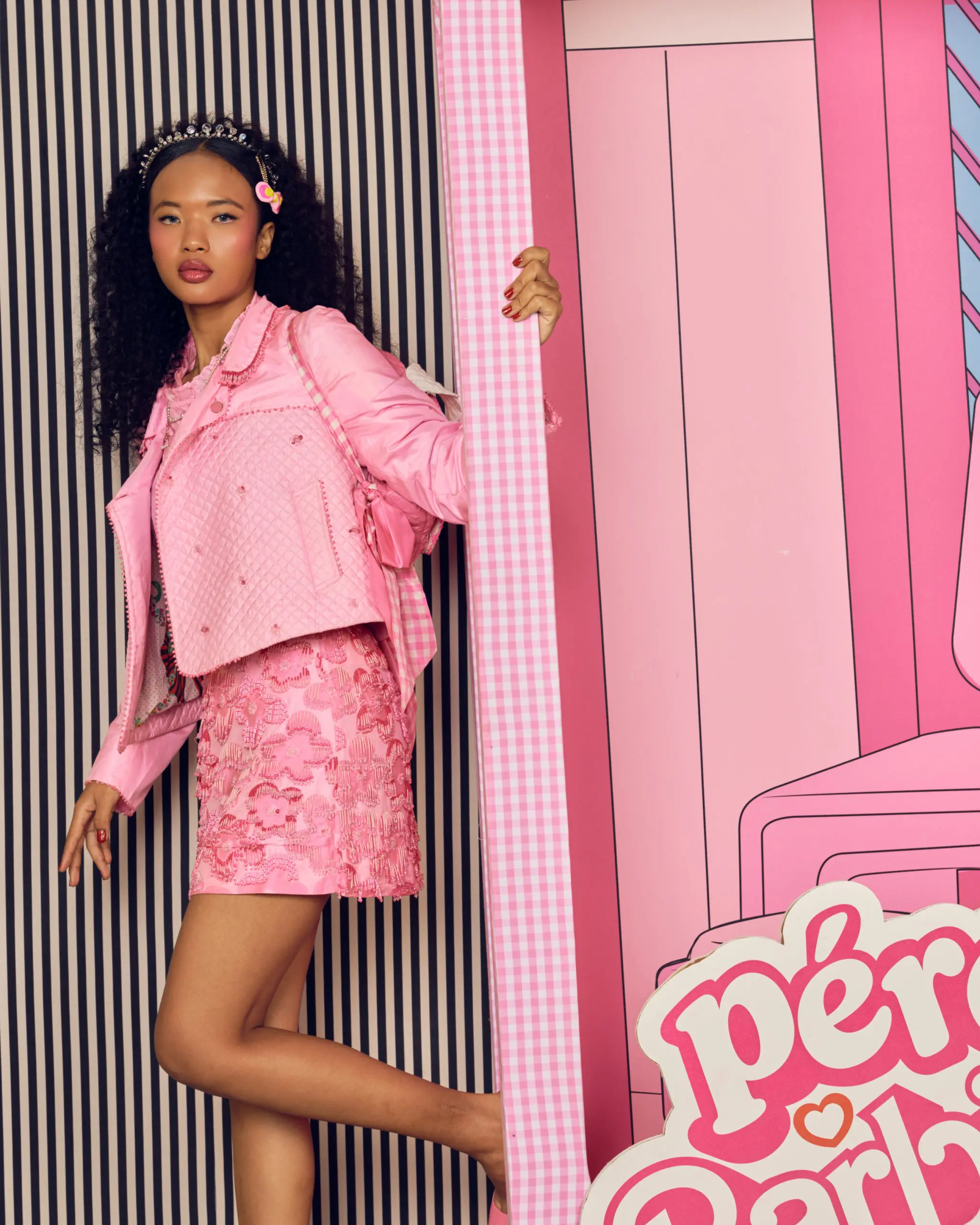
“Given Barbie’s theme, the first thing I wanted to do was create a dream wardrobe for her. She has one of the most versatile wardrobes imaginable, and her style has evolved tremendously since she was first introduced in 1959. Over the decades, we’ve seen so many different sides of her emerge, each reflecting the time she lived in. I felt there was an opportunity to bring all these facets together and offer her a wardrobe that celebrates this evolution. That’s how the name of the collection, Dream Dress Up came about,” shares Aneeth Arora, founder of péro.
For Jiggy George, founder of Dream Theatre, Mattel’s licensing agency in India, the appeal of the collaboration lay in seeing a familiar global icon enter a very different design universe while remaining unmistakably herself.
“That is always the real test with a partnership like this. It cannot just be about putting a name on a product. The creative partner has to have a point of view, and the result has to feel like it belongs in their world. Barbie brings a highly recognisable visual world, while péro can interpret it through its own language rather than simply reproduce it. People do not just want to see a familiar brand appear in another category. They want a new take on it, something thought through that gives them a reason to look again.”
Inside Barbie’s dream wardrobe
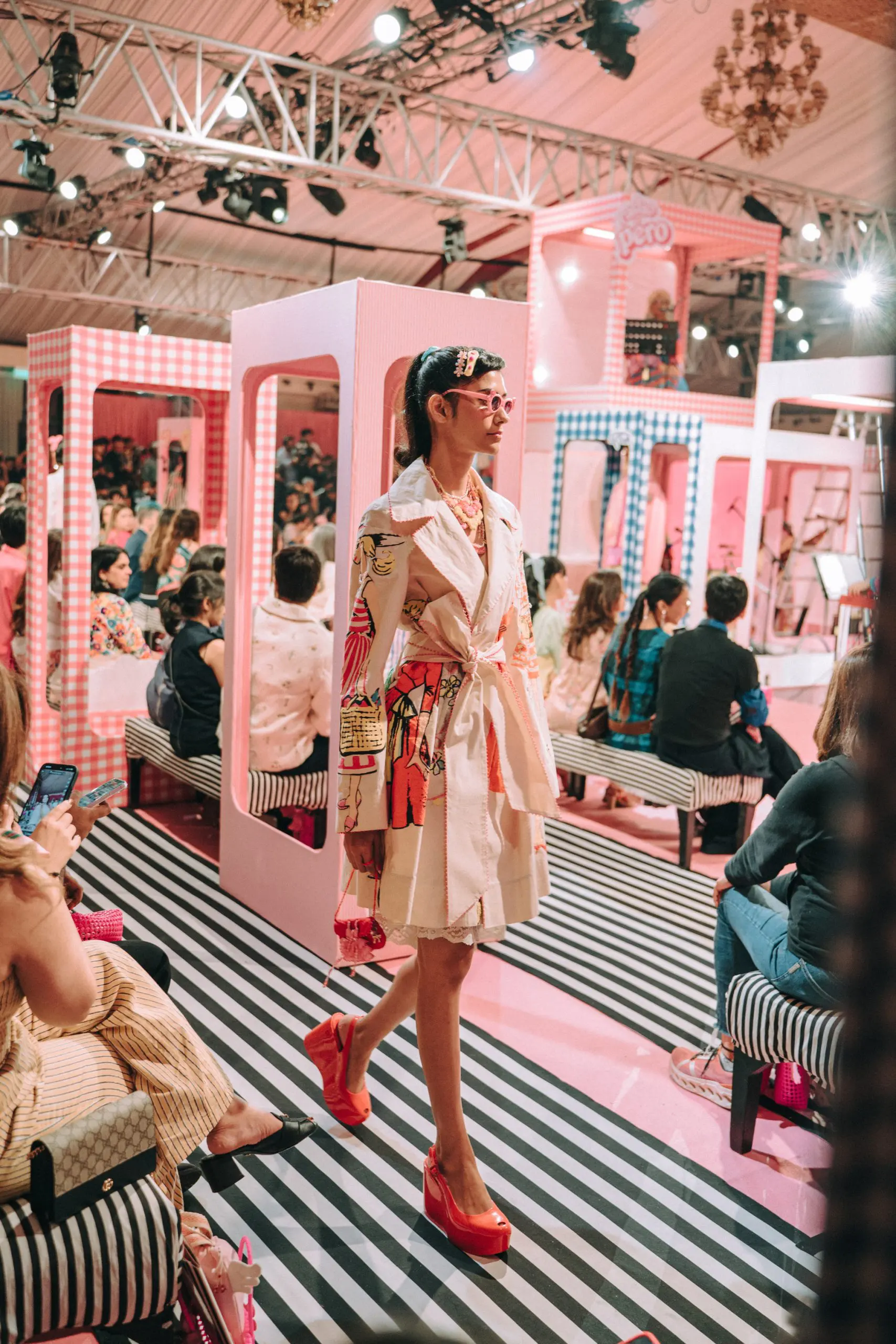
At the Spring/Summer 2027 showcase, the iconic pink box became a metaphor for the freedom that lies beyond it. After all, a Barbie box is meant to be opened because that is where the dreaming, imagining and becoming begin.
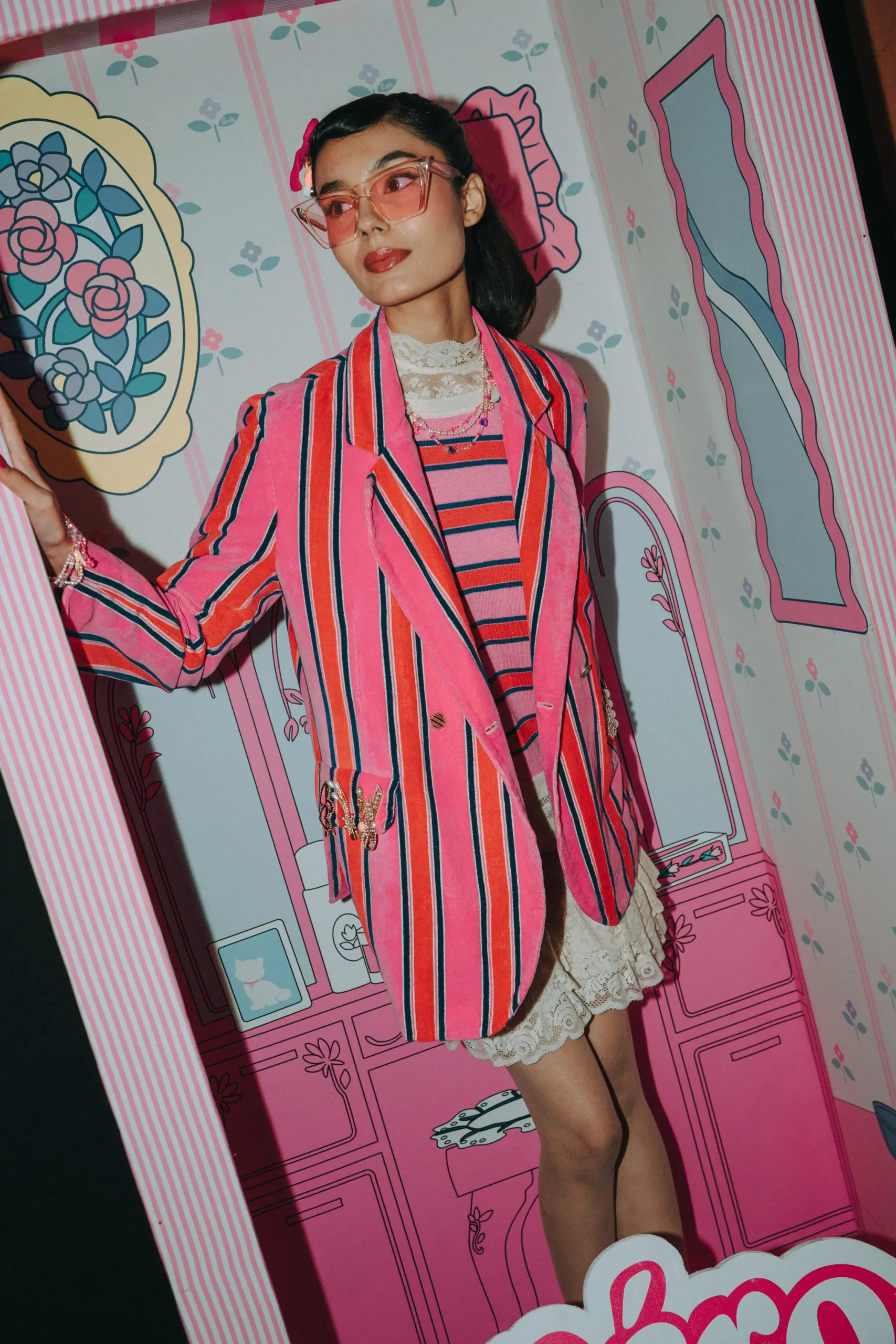
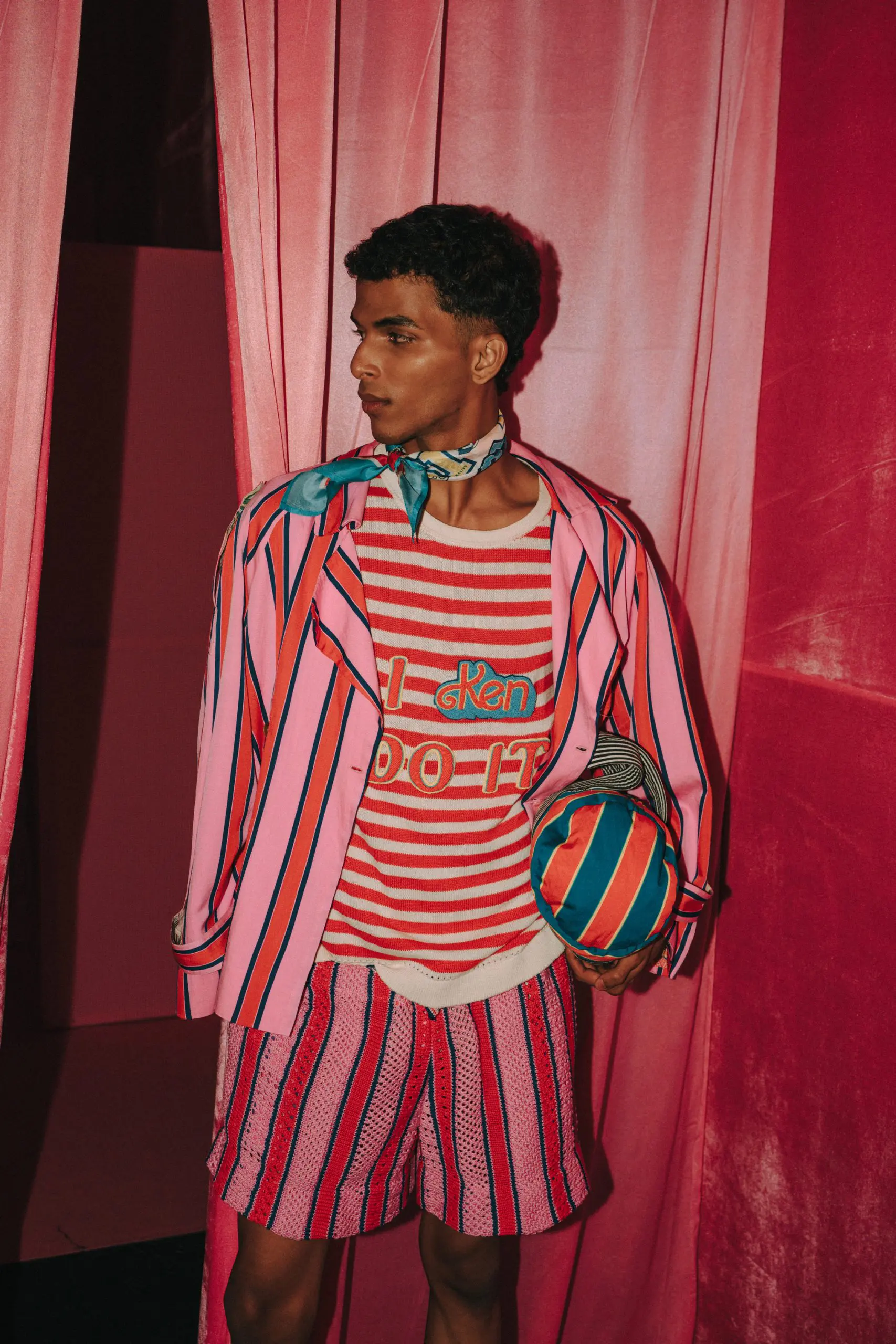
Gender felt fluid, pink belonged to everyone, and getting dressed became an invitation to play. péro brought its own language of joy, craft and childlike curiosity to Barbie’s universe; we saw a lot of prints, crochet and lace detailing. Stripes, in particular, were having a moment on the runway, but with a distinctly péro twist.
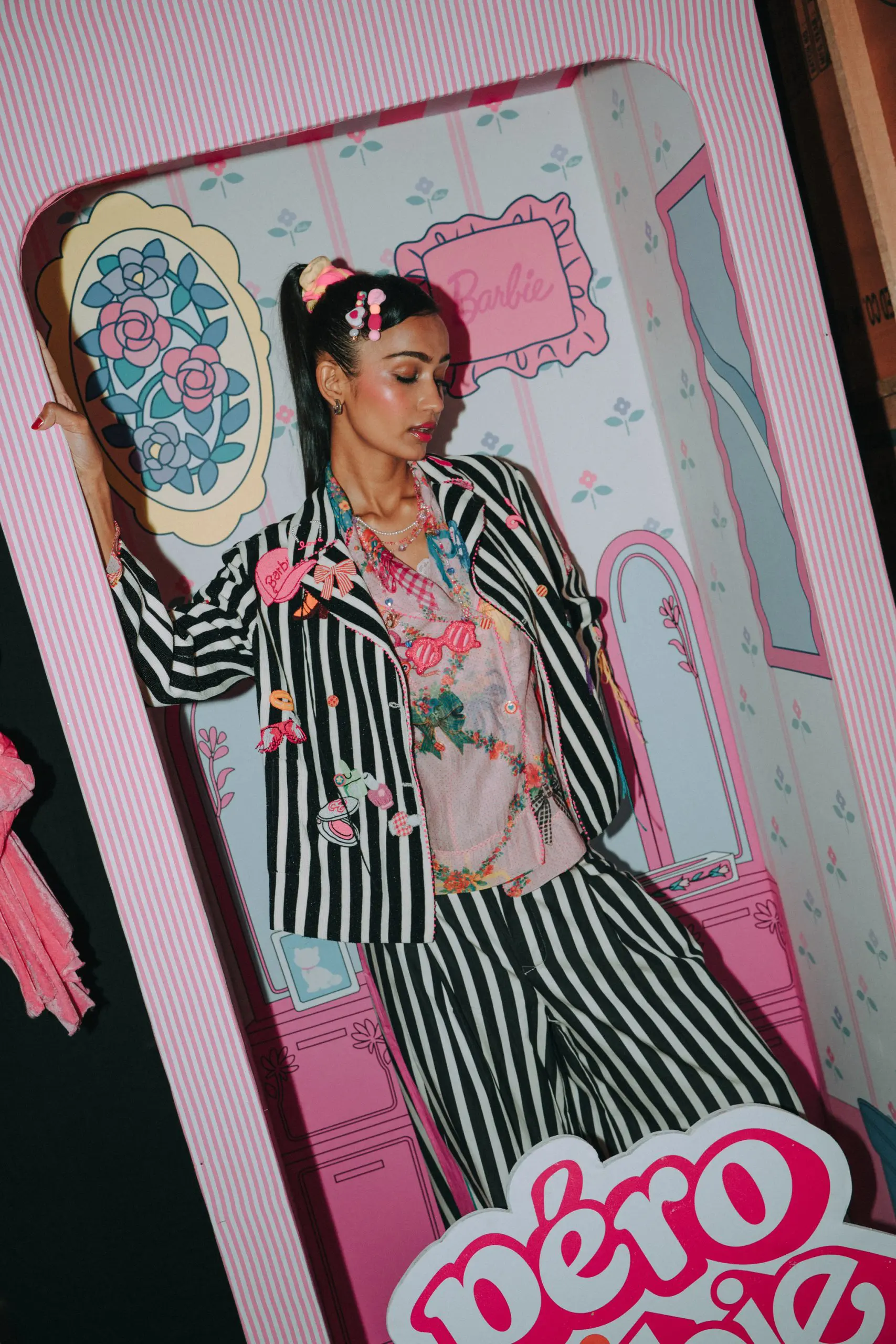
The inspiration, though, was Barbie’s iconic black-and-white swimsuit. “We returned to Barbie’s iconic black-and-white striped swimsuit. Knits and jerseys were also very much a part of the fashion landscape around that time, so we explored stretchable textiles in a way we hadn’t before, including hand-knitted jerseys, crochet and flatbed knits. We interpreted those black-and-white stripes through a range of Indian crafts and techniques. We developed mashru stripes in Gujarat, explored block-printed stripes, worked with blue-and-white stripes from West Bengal, and created woven silk stripes in India. It was exciting to take something so instantly recognisable and reinterpret it through different textile traditions,” says Aneeth.
Another element she wanted to explore was Barbie’s longstanding association with pink and plastic. “The song Barbie Girl famously gave us the line, ‘Life in plastic, it’s fantastic.’ At péro, we work predominantly with natural textiles and are conscious about avoiding synthetic fabrics, so this presented an interesting creative challenge. Pink and the idea of Barbie’s plastic world, from her toys to the iconic box she comes in, are so integral to her identity that we couldn’t simply leave them out.”
And the result is one of the collection’s more unexpected little delights – a miniature kudai, a traditional plastic basket made in South India using handwoven recycled plastic wires. “Whenever we discover something interesting during our travels, we like to give it a péro touch. We felt this was the perfect opportunity to work with the material in a new way and create a mini kudai for Barbie. It is one of the new pieces launching with the collection,” shares Aneeth.
The collaboration also marks another first for the label – the launch of péro Intimate, its debut intimate-wear line. And no, it isn’t lingerie in the conventional sense. “We deliberately aren’t calling it lingerie because it moves away from the conventional idea of lingerie, with its emphasis on spandex and underwires. This is a much more relaxed line, made with the idea of clothing that sits closest to your skin. We’re working with exceptionally fine textiles, including Chanderi and 500-count khadi.”
The idea, Aneeth explains, was to extend the notion of a wardrobe beyond what Barbie wears to what she carries and what sits closest to her skin.
Barbie’s world through a designer’s eyes
It’s fascinating how differently each of us imagines Barbie. For some, she is the ultimate fashion girl; for others, she is a reminder of childhood make-believe. But, as Aneeth sees it, Barbie cannot be defined by a particular country or culture.
“She has always been seen through the eyes of the person playing with her. When a child opens a Barbie box, they don’t necessarily think about the stereotypes associated with her – that she has to be pink, perfect or look a certain way. They simply transform her into whoever they want her to be. At péro, we approached this collaboration with that same childlike sense of imagination.”
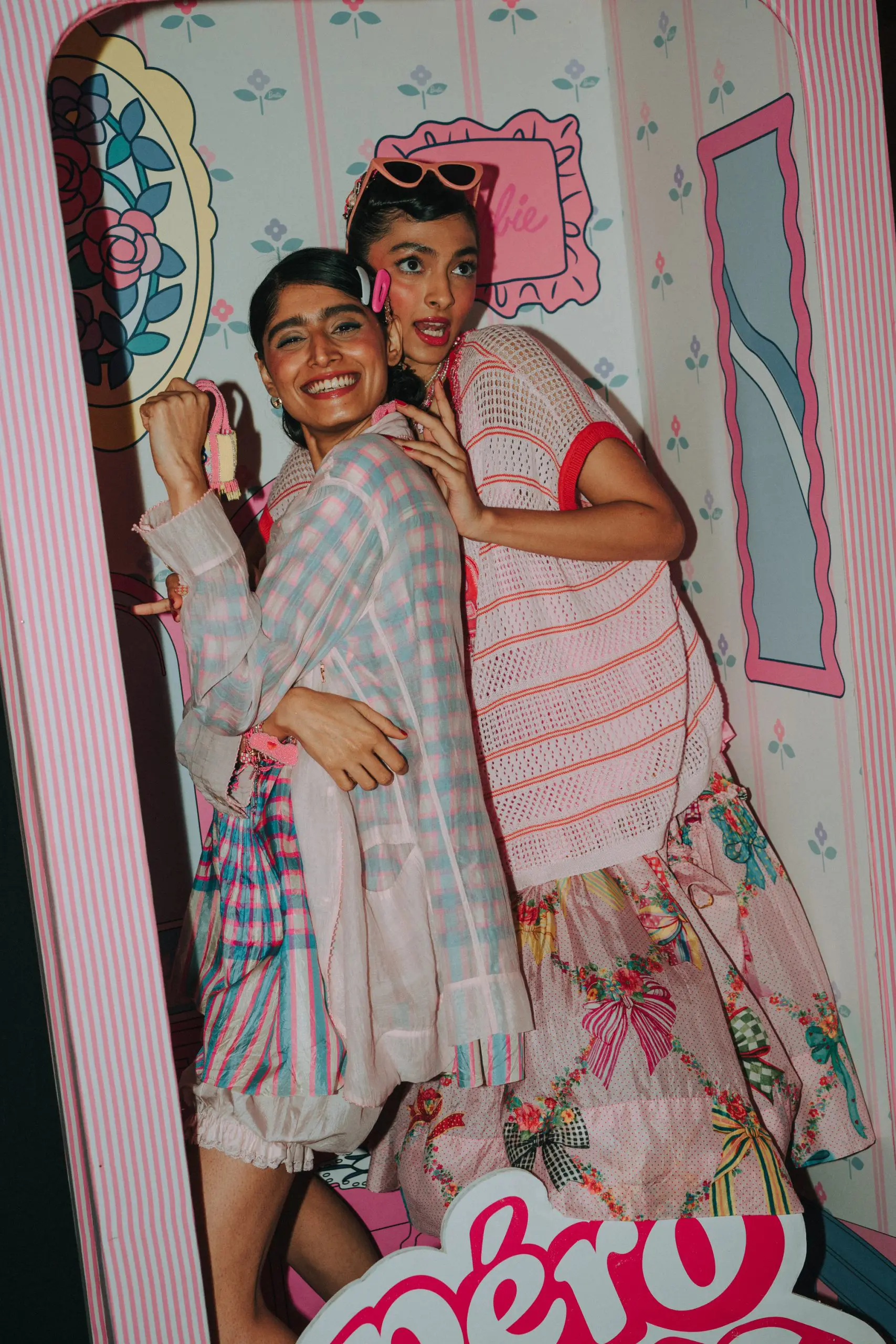
She has lived through so many fashion moments, from the retro era to the present day. What she wanted to create was a modern Barbie who remains connected to her roots. “Take her very first swimsuit, for instance: the black-and-white stripes reflected the chevron patterns that were fashionable at the time. She was always current, but she also had a strong, recognisable sense of style. That balance between being contemporary and staying true to her identity became central to our interpretation of Barbie at péro.”
Is nostalgia fashion’s biggest commercial currency?
Barbie may be a global icon, but part of her enduring appeal lies in the memories she brings back. Which begs the question: is nostalgia the biggest commercial currency in fashion right now?
For Jiggy George, the answer is a little more nuanced. Nostalgia certainly has commercial value, but its appeal goes beyond the familiar. “We are living through a fairly unsettled time globally, economically, politically, and socially. When the world feels uncertain, people often look for things that feel familiar, comforting, and connected to a happier time in their lives. That is one reason older brands, characters, music, and design references are finding such a strong response again. But nostalgia can only get you in the door. If the whole idea is simply ‘remember this?’, it wears thin very quickly. The past may create an emotional connection, but a collaboration still needs to say something new.”
And perhaps that is what makes the péro x Barbie partnership interesting. It taps into the collective nostalgia of growing up with Barbie, but it doesn’t stop at revisiting the past. It reimagines an icon through the lens of Indian craft and a label that has always marched to the beat of its own drum.
You may also read: Pranav Kirti on making destruction beautiful