Chanel to Chatbots: How AI is Rewriting Luxury Resale
- Featured Retail
 Yashita Damani
- 7 minutes read

Online luxury resale has always been a tightrope act. Platforms juggle the challenge of attracting both buyers and sellers while pouring resources into infrastructure that can handle unpredictable inventories varying wildly in quality, size, and authenticity. Add to that the cultural tension between rising sustainability consciousness and deep-rooted price sensitivity, along with resistance from luxury houses keen on protecting full-price sales, and least of all, ‘profitability’ becomes a moving target.
One way companies are attempting to close this gap is through artificial intelligence. The RealReal, for instance, uses AI to help authenticate its inventory: a costly, time-consuming process when done manually. . Meanwhile, Vestiaire Collective and Rebag have invested in machine-learning tools that streamline authentication and automate resale pricing. These technologies not only reduce operational costs but also strengthen consumer confidence in a market where authenticity directly impacts value.
Take a Chanel handbag: before it goes up on the site, employees capture high-resolution images of details such as the quilting, hardware, and chain strap, sometimes using tiny cameras to record even the most microscopic nuances. The data is then cross-referenced with the brand’s known design signatures, allowing AI to flag inconsistencies faster than the human eye.
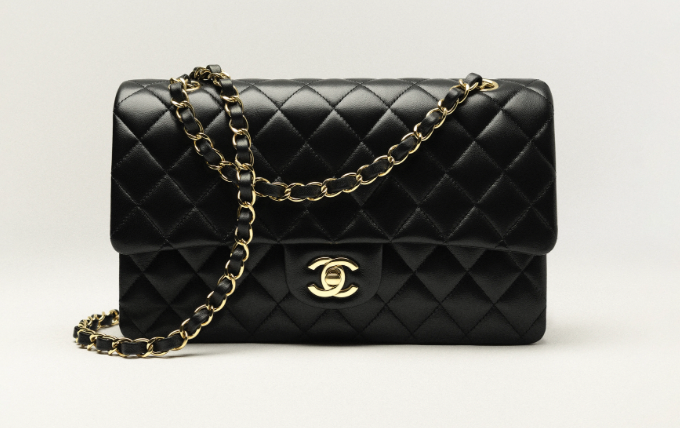
Vestiaire Collective has also invested in machine learning tools to streamline authentication, while platforms like Rebag use AI-powered pricing engines to instantly calculate resale value based on brand, style, and historical demand. These technologies not only reduce labor costs but also build consumer trust in an industry where authenticity is everything.

In 2024, the market was valued at approximately USD 32.47 billion, with projections indicating it could reach USD 50.06 billion by 2030, reflecting a compound annual growth rate (CAGR) of 7.48% (sourced from Arizton’s Global Luxury Resale Market Research Report 2025–2030).
On June 10, this year- Rebag, the rapidly growing luxury resale platform, announced its collaboration with Amazon’s Luxury Stores, bringing nearly 30,000 authenticated pre-owned items: from Cartier and Chanel to Hermès…to the e-commerce giant.
This move places Rebag alongside vintage luxury players like myGemma and What Goes Around Comes Around, both of which have already carved out a presence on Amazon, further expanding the online secondhand fashion market.
Although Rebag remains smaller than heavyweights such as The RealReal, which generated $549 million in revenue in 2023, or Vestiaire Collective, valued at $1.2 billion, its tech-focused approach continues to differentiate it in the competitive luxury resale landscape.
The partnership with Amazon allows Rebag to scale rapidly without the overhead of physical stores or low-margin mass resale, leveraging its direct-purchase model in tandem with Amazon’s reach and efficiency.
Strategically, this positions Rebag to challenge larger resale competitors, making coveted luxury items:like Birkin bags, almost as accessible as everyday essentials. Currently, a Birkin bag on Rebag can start at $12,670, significantly below the typical $30,000-$200,000 range for pre-owned pieces.
As luxury resale continues to scale, AI may prove to be its most valuable asset: speeding up authentication, predicting pricing trends, and smoothing out inefficiencies across the supply chain. The question is whether these innovations can shift the business from precarious to profitable, finally cracking the code of online resale. All signs point toward reaching USD 50–95 billion globally within the next decade, with regions like Europe and India leading the charge.
Luxury Brands Can No Longer Ignore the Secondary Market
The resale economy is evolving from a parallel marketplace into a core part of luxury’s business ecosystem. According to ThredUp’s 2026 Resale Report, the global secondhand market is projected to reach $393 billion by 2030, growing twice as fast as the broader apparel industry. Hard luxury brands have already demonstrated how resale can reinforce brand equity rather than dilute it. Rolex’s Certified Pre-Owned program and Vacheron Constantin’s Les Collectionneurs initiative show how brands can maintain control over pricing, authentication, and storytelling within the secondary market. For fashion houses like Chanel, resale is increasingly becoming a public reflection of desirability, cultural relevance, and long-term value retention.
The Next Growth Phase Will Be Driven by Technology and Younger Consumers
Gen Z and Millennials are expected to drive more than 70 percent of resale market growth through 2030, fundamentally changing how luxury is discovered and consumed. Social feeds, creators, and influencers are now becoming major discovery channels for secondhand fashion, shifting the resale experience away from traditional marketplaces. At the same time, partnerships like Rebag’s collaboration with Amazon Luxury Stores are making authenticated luxury resale more accessible to mainstream consumers. As AI continues to improve authentication, pricing accuracy, and personalised discovery, the luxury resale market is moving closer to scalable profitability; transforming secondhand luxury from a niche category into a mainstream global business opportunity.
You may also read:
How luxury resale is impacted by recession
Gucci endorses resale of its products, partners with The RealReal