Sarab Khanijou on what men really want to wear to an Indian wedding
- Fashion Featured
 Yashita Damani
- 7 minutes read

From Chanderi and kalgis to Delhi’s drama and Mumbai’s ease, Sarab Khanijou breaks down the art of dressing the modern Indian man.
There is a certain kind of man who approaches wedding dressing with the seriousness of a military operation. There is also the man who would quite happily wear one good kurta, call it a day and spend the rest of the evening wondering when he can take it off. According to designer Sarab Khanijou, the latter may actually be closer to the truth. At his Pernias pop-up studio in Kala Ghoda, we spoke to Khanijou about the increasingly fluid world of Indian menswear, from the fabrics worth investing in to the accessories that can make an entire wedding look. Somewhere between Chanderi, kalgis and the eternal Delhi versus Mumbai style debate, the conversation also established one very important fact: that men are simple creatures, Khanijou says.
Delhi brings the drama, Mumbai brings the ease
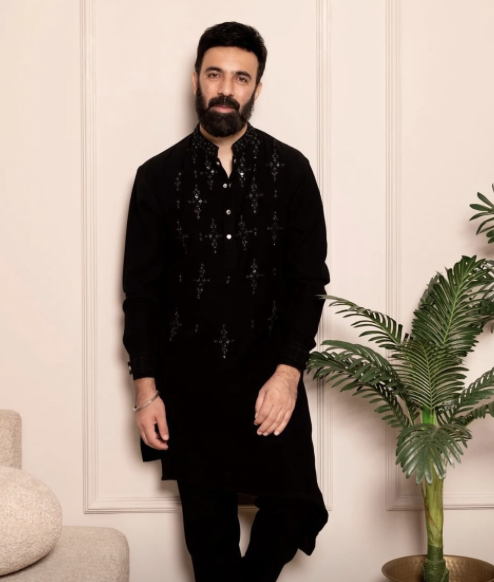
So, what really separates the well-dressed Delhi man from his Mumbai counterpart? Khanijou sees it less as a rigid city divide and more as a difference in attitude. According to him, Delhi tends to embrace more drama, while Mumbai gravitates towards ease. The Mumbai wardrobe, he explains, allows considerably more freedom, where turning up to an event in pyjamas or shorts is not necessarily considered a fashion emergency.
His own approach, however, is not dictated by geography. Khanijou says his collections are designed for the same man across India, rather than being tailored to different cities. The common denominator is someone who notices the details. And that detail need not necessarily scream for attention.
Look closer than the embellishments
When asked whether men should rely on ruffles, embellishments and statement details to make an outfit interesting, Khanijou points towards something far subtler: the fabric and construction. While discussing his own look, the stitching, rather than the embellishment, was what caught our eye first. He agrees that fabric can do much of the heavy lifting on its own, particularly in menswear, where a beautiful textile can determine the entire character of an outfit. And if he had to choose one fabric to swear by? “Chanderi,” he says.
There is no hesitation. Chanderi silk, he explains, is used extensively across his sarees and silk creations, making it one of the materials he repeatedly returns to. For Khanijou, masculinity in clothing is less about conventional ideas of power dressing and more about silhouette. When asked what makes a man feel most masculine in fashion, he points to a part of a wedding trousseau collection. The silhouette, he explains, works because it creates a strong, flattering torso while giving the wearer a distinctly regal presence. It is a reminder that sometimes the most effective menswear does not need to be complicated. It simply needs to understand proportion.
Wait, what exactly is a kalgi?
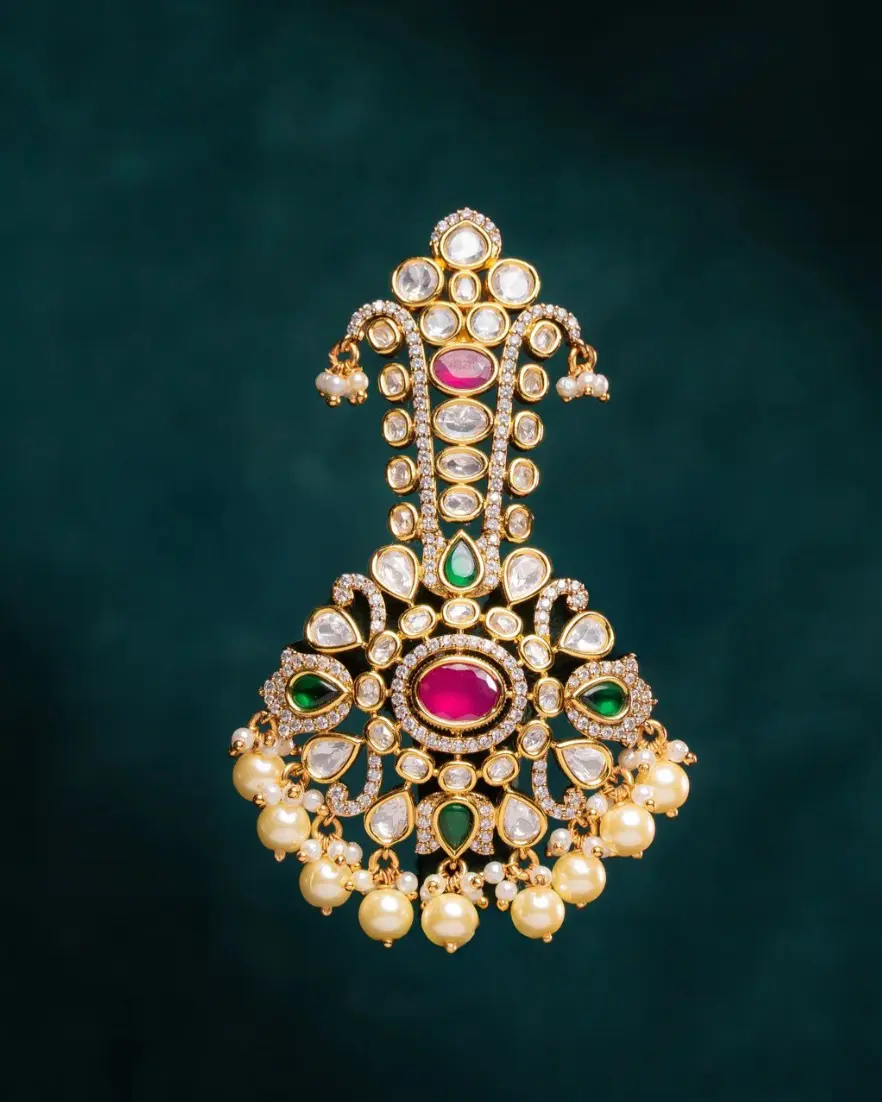
Then came the question that may be familiar to anyone who has ever stared at a groom’s safa and wondered what the tiny piece of jewellery sitting on it actually does. “What is a kalgi?” we asked. A kalgi, Khanijou explains, is the jewellery worn on top of the safa, or turban. Small in size, it can have a disproportionately large effect on the final look. “It’s a little tiny piece which really makes a difference to the outfit”.
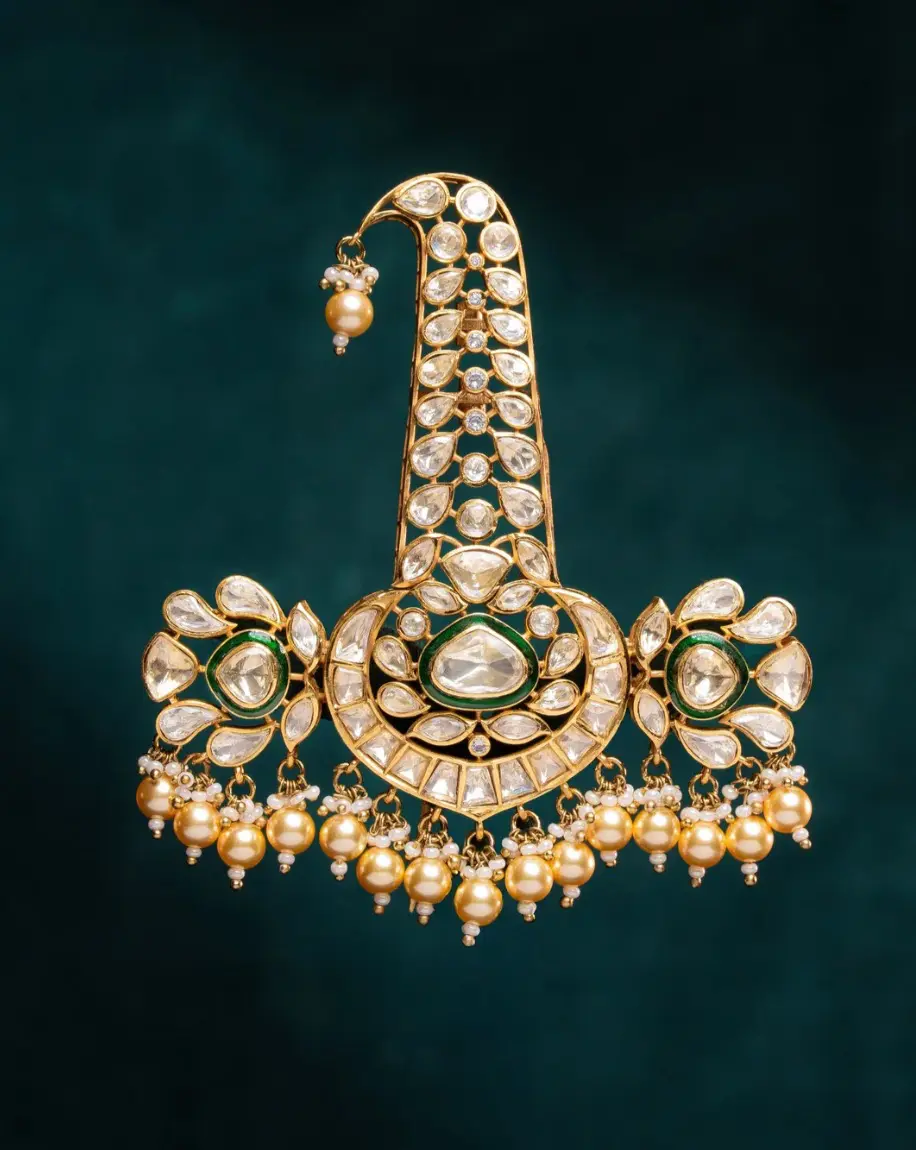
And it is not merely decorative. According to him, the right kalgi can add to the overall sense of provenance while also accentuating the wearer’s height. For the groom building his wedding wardrobe, his recommendation is therefore surprisingly simple: invest in a good one.
Layering is good, but men have their limits
Layering has become increasingly important in Indian occasionwear, but Khanijo believes it should always respond to the season and setting. For winter weddings, he is all for layering. For summer celebrations, perhaps less so. Because, as we established earlier, men like things easy. “Well, that’s it. That’s how men are.” The philosophy extends to the way he designs his kurtas. Rather than creating pieces that require multiple layers to make sense, Khanijou believes a well-embroidered kurta should be capable of standing on its own. His reasoning is practical too. If a man is likely to remove a layer halfway through a summer wedding, the garment underneath should still look complete. Or, as Khanijou puts it, “So, get your money’s worth.”
The Udaipur wedding formula
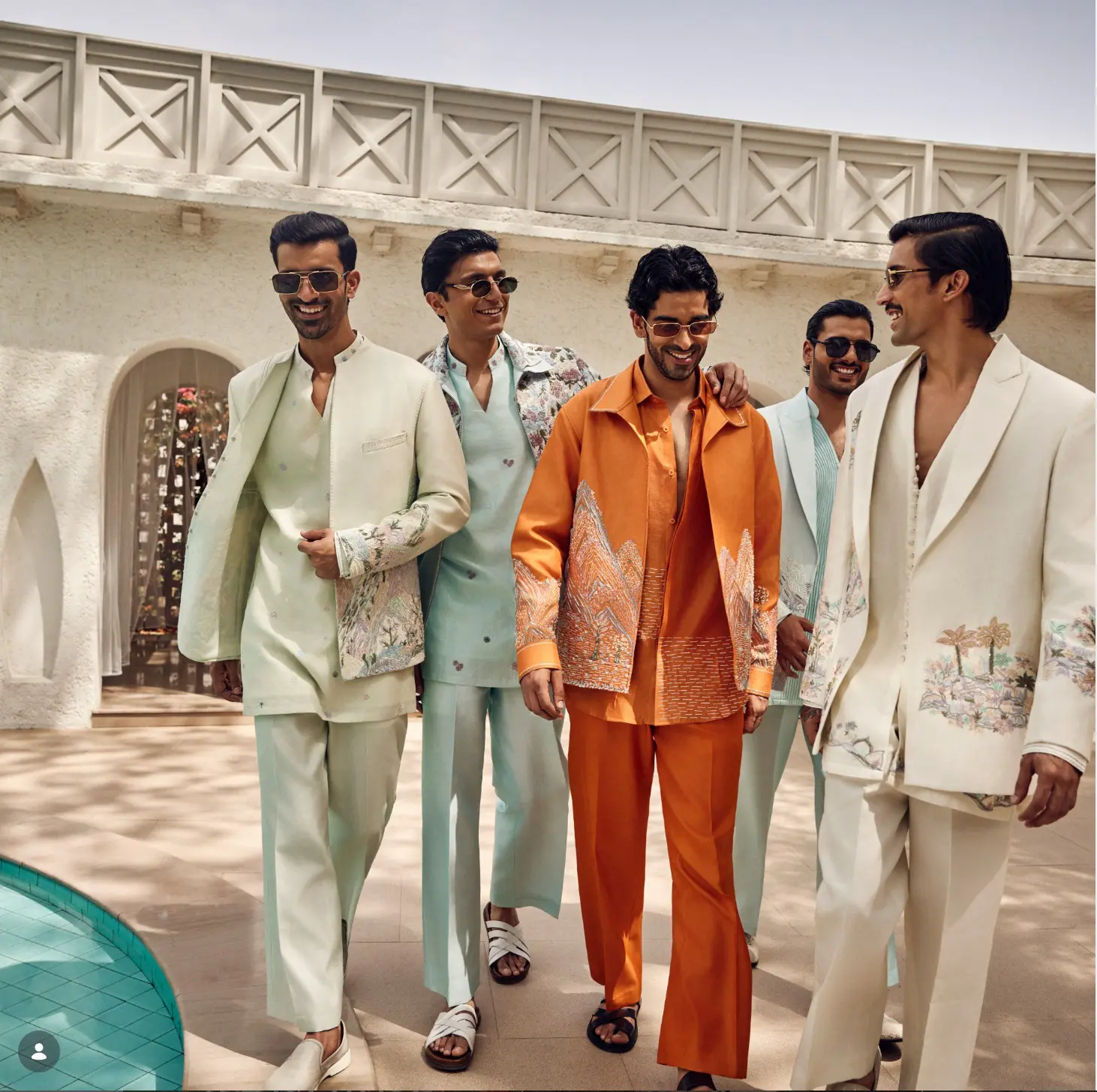
For a wedding in Udaipur, Khanijou points towards a floral-accented look that can be styled with an ivory trouser. The idea is to allow a statement kurta to work without overwhelming the wearer. It is also an example of his broader approach to occasionwear: pieces should have enough personality to stand apart, but enough versatility to be worn independently. The embroidered kurta, he explains, is designed as a standalone outfit precisely because men may want to shed additional layers once the temperature rises. The result is wedding dressing that feels considered without becoming ‘costume’.
After all the discussion around fabric, layering, silhouettes and accessories, there was only one question left. What does luxury mean to him? “Understated. Refined.” Two words, but perhaps the most fitting conclusion to the conversation. Because Khanijou’s approach to menswear seems to operate on exactly that premise. The luxury is in the Chanderi. In the stitching you notice only when you look closer. In the tiny kalgi that transforms a safa. And perhaps, occasionally, in knowing when to keep things easy.
You may also read: From heirloom to aisle: The bridal collections of 2026